CFFB, CFHC, CLCB Engine
- Engine
- 1968 cm3
- Aspiration
- Turbocharger, Intercooler
- Fuel
- Diesel
- Fuel injection system
- Diesel Commonrail
- Power
- 140 hp @ 4200 rpm
- Torque
- 320 Nm
- Cylinders
- 4
- Cylinders position
- Inline
- Oil capacity
- 4.3 l
- Coolant
- 8 l
# Vehicles powered by this engine
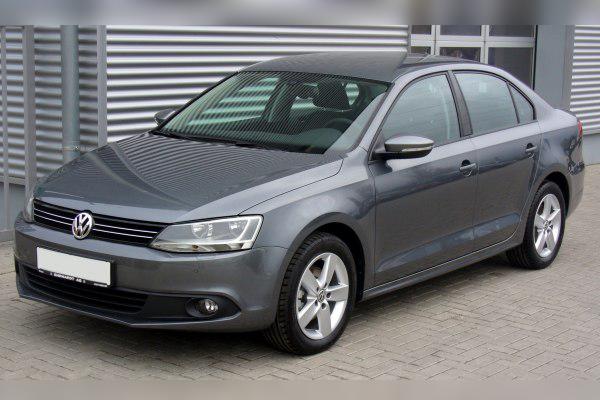
2.0 TDI (CFFB, CFHC, CLCB) – Experiences, problems, fuel consumption and buying used
1. The most important in short (TL;DR)
- Common Rail system: These are second-generation 2.0 TDI (EA189) engines that solved most of the issues of the old "Pumpe-Düse" (PD) engines. They are much quieter and more refined.
- Reliability: Considered among the best diesels in their class, provided they are regularly maintained. They can easily exceed 300,000+ km without opening the engine.
- EGR valve: The Achilles' heel of this engine. It often clogs or the EGR cooler starts leaking.
- Timing belt service: Although the factory states 210,000 km, in practice the timing belt should be replaced significantly earlier.
- Dual-mass flywheel: A wear item that will certainly need replacement at some point, especially on manual-gearbox cars driven mostly in the city.
- Recommendation: An excellent balance of power and fuel consumption for sedans such as the Jetta VI.
Contents
- Introduction: About the CFFB, CFHC, CLCB engines
- Technical specifications
- Reliability and maintenance
- Specific parts (Costs)
- Fuel consumption and performance
- Additional options and modifications
- Gearbox: Manual vs DSG
- Buying used and conclusion
Introduction: About the CFFB, CFHC, CLCB engines
When you open the hood of a Volkswagen Jetta VI or similar models from the VAG group (Golf, Octavia, Passat, Superb) produced between 2010 and 2015, there is a high chance you will find one of these engine codes. These are 2.0 TDI Common Rail units from the EA189 family.
These engines came as successors to the problematic 2.0 TDI PD (Pumpe-Düse) engines, which were known for cracked cylinder heads and oil pump issues. The CFFB (and its variants CFHC, CLCB) bring smoother operation, more linear power delivery and, most importantly, significantly better reliability. With 140 horsepower, this is the "sweet spot" – the engine is not as stressed as the 170+ hp versions, but it’s far from underpowered.
Technical specifications
| Displacement | 1968 ccm (2.0 L) |
| Power | 103 kW (140 hp) at 4200 rpm |
| Torque | 320 Nm at 1750–2500 rpm |
| Engine codes | CFFB, CFHC, CLCB |
| Injection type | Common Rail (Bosch) |
| Charging | Turbocharger with variable geometry (VGT) + intercooler |
| Engine block | Cast iron |
| Cylinder head | Aluminum, 16 valves, DOHC |
Reliability and maintenance
Timing belt or chain?
These engines use a timing belt to drive the camshafts. This is good news because the system is quieter and cheaper to replace compared to the complex chains that caused problems on some TSI engines.
Major service: Factory vs reality
The factory recommendation for timing belt replacement is often optimistic – it states up to 210,000 km for markets with "low dust content". However, as an experienced technical editor, I advise you to ignore this.
Recommendation: Do the major service (belt, tensioners, water pump) every 160,000 to 180,000 km or every 5 to 6 years, whichever comes first. A snapped belt leads to piston-to-valve contact, which is a catastrophic failure. Also, always replace the water pump with every major service, as it can start leaking or seize before the next interval.
Oil: Capacity and consumption
The engine holds approximately 4.3 liters of engine oil. Always use oil that meets the VW 507.00 specification. Most often this will be a 5W-30 grade. This is a "Low SAPS" oil, crucial for preserving the DPF filter.
Does it burn oil? Common Rail engines are much better in this regard than the old PD engines. Between two services (every 10–15 thousand km), it is normal for the level to drop by a few millimeters on the dipstick (up to 0.5 L). If you have to top up more than 1 liter per 10,000 km, this indicates the beginning of a problem – most often with the turbocharger or piston rings, although these engines are not known for ring issues.
Most common failures
Besides standard wear items, these engines have a few characteristic problems:
- EGR valve and cooler: The most common issue. The EGR cooler can crack, which leads to coolant loss, or the valve itself can get stuck due to soot build-up. Symptoms are the "Check Engine" light and loss of power (safe mode).
- Fuel pressure regulator: Can occasionally cause problems, leading to rough running.
- Thermostat: Tends to stick open, so the engine struggles to reach operating temperature in winter, which increases fuel consumption and wear.
Injectors
These engines use Bosch electromagnetic (solenoid) injectors (mostly; depending on the exact sub-version, some 170 hp versions have piezo injectors). The solenoid injectors on CFFB/CFHC engines have proven to be very durable. It is not uncommon for them to last over 250,000–300,000 km without overhaul. Symptoms of bad injectors are smoke on cold start, rough idle and increased fuel consumption. Refurbishment is possible and the price is moderate (depends on the market).
Specific parts (Costs)
Dual-mass flywheel
Yes, this engine has a dual-mass flywheel (DMF). Its role is to dampen diesel engine vibrations. Its lifespan is usually between 150,000 and 200,000 km, but it heavily depends on driving style. City driving and hard acceleration "kill" it quickly.
Symptoms: Metallic knocking when starting and stopping the engine, vibrations in the clutch pedal or shuddering when taking off. The cost of replacing the clutch kit with the flywheel is high, so be sure to check this before buying.
Turbocharger
The engine has a single turbocharger with variable geometry. The turbo is reliable if the car is driven properly (not shut off when very hot, not pushed hard when cold). Problems usually arise with the variable geometry mechanism, which gets clogged with soot (the so‑called "sticky vanes"), leading to overboost and safe mode under strong acceleration. Cleaning is often a sufficient solution. Turbocharger overhaul is a mid-range expense.
DPF, EGR and AdBlue
DPF (Diesel particulate filter): Standard on these engines (Euro 5). If you drive 80% of the time on open roads, it will last virtually forever. If you drive only in the city, it will clog quickly. Symptoms are frequent active regenerations (raised idle at around 1000 rpm, radiator fan running).
EGR valve: As mentioned, this is a weak point. Cleaning sometimes helps, but replacement is the permanent solution.
AdBlue: Most CFFB/CFHC engines in Europe (Euro 5 standard) DO NOT have AdBlue systems. They rely only on DPF and EGR. However, there are variants for specific markets (e.g. US "Clean Diesel" or later Euro 6 models) that have an SCR catalyst and AdBlue. If your car has it, the AdBlue tank heater is a common failure and repairs are expensive (often the entire pump/tank module must be replaced). Checking by VIN is mandatory.
Fuel consumption and performance
City driving
Real-world consumption in heavy traffic for a Jetta VI 2.0 TDI is between 6.5 and 8.0 l/100 km, depending on whether it’s summer or winter and how heavy your right foot is. The Start-Stop system (if fitted) can slightly reduce this figure.
Is the engine "lazy"?
Absolutely not. With 320 Nm of torque available from just 1750 rpm, this engine moves the Jetta (which weighs around 1400 kg) with ease. In-gear acceleration is excellent, and overtaking is safe without the need to downshift. The driving impression is that the car has more power than the spec sheet suggests.
Highway
This is the natural habitat of this engine. At 130 km/h in 6th gear, the engine spins at a relaxed 2200–2400 rpm (depending on the gearbox). The cabin is quiet, and fuel consumption is around 5.0 to 5.5 l/100 km. With one tank you can easily cover 1000 km on the open road.
Additional options and modifications
Chip tuning (Stage 1)
This engine block is very suitable for remapping. The stock 140 hp is deliberately limited for classification and emissions reasons.
A safe "Stage 1" can raise power to 170–180 hp and torque to 380–400 Nm.
Warning: Increasing power puts additional stress on the dual-mass flywheel and clutch. If these parts are already near the end of their life, a remap will accelerate their failure. Also, choose reputable tuners so you don’t damage the DPF with poor fueling.
Gearbox: Manual vs DSG
Types of gearboxes
With this engine in the Jetta VI you will most commonly find two options:
- 6-speed manual gearbox: Very precise, robust and durable. The gearbox designation is usually from the MQ350 series.
- 6-speed DSG (DQ250): Dual-clutch automatic gearbox. This is the version with "wet" clutches (oil-cooled clutch packs).
Failures and maintenance
Manual: There are no specific issues with the gearbox itself. The problem, as mentioned, is the clutch kit and dual-mass flywheel. They are replaced when the clutch starts slipping or the flywheel starts knocking. The factory does not prescribe oil changes in the manual gearbox, but it is recommended to change it every 100,000 km for smoother shifting in winter.
DSG (DQ250): This gearbox is great to drive, but it requires strict maintenance.
Service: Oil and filter in the DSG must be changed every 60,000 km. If this is neglected, the solenoids and mechatronics will fail.
Failures: The most expensive failure is the mechatronics unit (the "brain" of the gearbox). Symptoms are jerking when taking off, hesitation when changing gears or shifting into "N" while driving. Also, the DSG has a dual-mass flywheel that wears out and can be heard as knocking in "P" or "N" mode.
Buying used and conclusion
When buying a Jetta VI with this engine, pay attention to the following:
- Cold start: The engine should start immediately, without long cranking and without clouds of smoke (white smoke can indicate injector or head gasket problems, blue smoke indicates oil).
- Idle: It should be smooth. Vibrations can point to the flywheel or engine mounts.
- Test drive: Floor the throttle in 3rd or 4th gear from 1500 rpm. Acceleration should be linear, without hesitation. Listen to the turbo whine – a slight whistle is OK, but a "siren" sound (loud wailing) means the turbo is near the end of its life.
- Diagnostics: Check DPF saturation (ash load) and injector correction values.
Conclusion
The 2.0 TDI (140 hp) engine in its CFFB/CFHC variants is probably the best choice for a used Jetta VI or Golf 6/7. It offers far better reliability than the old PD engines, low fuel consumption and very good performance. Maintenance is not the cheapest (due to the flywheel, EGR and major service), but parts are widely available and every mechanic knows how to work on them. If you find a car with genuine mileage and a proper service history, it is a purchase you are unlikely to regret.
Was this content useful to you?
Your opinion helps us to improve the quality of the content.