CFNA Engine
- Engine
- 1595 cm3
- Aspiration
- Naturally aspirated engine
- Fuel
- Petrol (Gasoline)
- Fuel injection system
- Multi-port manifold injection
- Power
- 102 hp @ 5600 rpm
- Torque
- 148 Nm @ 3800 rpm
- Cylinders
- 4
- Valves
- 16, 4 per cylinder
- Cylinders position
- Inline
- Valvetrain
- DOHC
- Oil capacity
- 3.6 l
# Vehicles powered by this engine
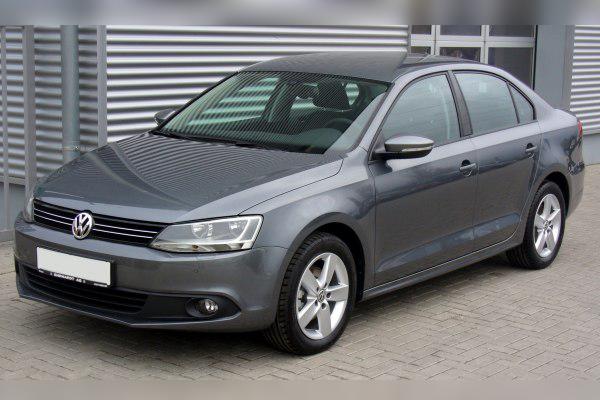
Volkswagen 1.6 16V (CFNA) – Experiences, problems, fuel consumption and buying tips
1. The most important in short (TL;DR)
- Problematic pistons: The biggest downside of this engine is the notorious piston slap on cold start, which can lead to cylinder wall damage.
- Timing chain: Unlike the old 1.6 8V engine, the CFNA uses a chain that is not lifetime and can stretch.
- Ideal for LPG: Thanks to the classic MPI injection, this engine works very well on LPG.
- Oil consumption: Not as alarming as on TSI engines, but it appears with age.
- Performance: The engine is sluggish for the Jetta VI body; it needs high revs for overtaking.
- Maintenance: Generally cheaper than diesel or TSI petrol engines (no turbo, no DPF, no dual-mass flywheel on the manual).
Contents
- Introduction: About the CFNA engine
- Technical specifications
- Reliability and maintenance (failures)
- Specific parts and costs
- Fuel consumption and performance
- Additional options (LPG and tuning)
- Gearbox: Manual and DSG
- Conclusion and buying advice
Introduction: About the CFNA engine
The engine with the code CFNA belongs to the EA111 engine family of the Volkswagen Group. It is very important not to confuse it with the older, legendary 1.6 MPI engine (codes BSE/BSF), which had 8 valves and a timing belt. The CFNA is a more modern but also more controversial unit with 16 valves, an aluminum block and a chain-driven timing system.
It was primarily installed in the “budget” sedans of the VW Group, such as the Volkswagen Jetta VI, Polo Sedan (in Eastern markets), Škoda Rapid and Roomster. Its main role was to offer a simple petrol alternative to the more complex TSI engines, but in practice it turned out to be an engine with specific “childhood diseases”.
Technical specifications
| Parameter | Value |
|---|---|
| Name / Engine code | CFNA (EA111 series) |
| Displacement | 1598 cc (commonly referred to as 1.6) |
| Power | 77 kW (105 hp) *Often stated as 102 hp depending on the market |
| Torque | 153 Nm at 3800 rpm (Input: 148 Nm – varies by map) |
| Fuel type | Petrol (Gasoline) |
| Injection system | MPI (Multi-Point Injection) – Indirect |
| Aspiration | Naturally aspirated |
| Timing drive | Chain |
Reliability and maintenance
Does this engine have a timing belt or a chain?
The CFNA engine has a timing chain. Although in theory a chain should last “forever”, on this engine (as on many from the EA111 series) it has proven to be a weak point. The chain can stretch, which manifests as rattling at startup or uneven running. It is recommended to check the condition of the chain and tensioner after 100,000 km.
What are the most common failures on this engine?
The most serious problem of the CFNA engine is piston slap. This happens due to the specific piston design and block material, where the piston skirt comes into contact with the cylinder wall.
- Symptoms: A metallic knocking sound (“like a diesel”) while the engine is cold. At first it disappears when the engine warms up, but in later stages it knocks constantly.
- Consequences: Cylinder wall damage (scoring), increased oil consumption and loss of compression. VW later released modified pistons (ET marking) that solve the problem, so when buying it is important to check whether the engine has already been rebuilt.
- Cracked exhaust manifold: A common issue where the manifold cracks between the pipes, which sounds like an exhaust leak and causes a smell of petrol in the cabin.
Service intervals and oil
Minor service: Although the manufacturer may recommend longer (LongLife) intervals, for this engine it is crucial to change the oil every 10,000 km to a maximum of 15,000 km. Frequent oil changes are the best prevention against chain issues and piston wear.
Major service: Since it has a chain, a classic “major service” is not done at a fixed mileage. The chain is replaced as needed, usually when rattling is heard (often between 120,000 and 150,000 km). The auxiliary belt and tensioners should be checked every 60,000 km.
Oil quantity and type: The sump holds approximately 3.6 liters of oil. A viscosity of 5W-30 or 5W-40 with VW 502.00 / 504.00 specification is recommended.
Oil consumption and spark plugs
A healthy CFNA engine should not consume much oil. Consumption of up to 0.5 liters per 10,000 km is acceptable. If it consumes more (e.g. 1L per 2–3 thousand km), this is a clear sign that the rings are stuck or the cylinders are damaged due to the above-mentioned piston issue.
Spark plugs: They should be replaced every 30,000 to 60,000 km. More frequent replacement (30k km) is recommended if you mostly drive in the city, in order to protect the ignition coils, which are also wear items.
Specific parts (costs)
Does the engine have a dual-mass flywheel?
Versions with a manual gearbox usually do not have a dual-mass flywheel, but a classic solid one, which significantly reduces clutch kit replacement costs. However, versions with a DSG gearbox can have a flywheel specific to that gearbox, but it is not subjected to the same loads as on diesels.
Injection system and injectors
This is the bright side. The CFNA uses MPI (Multi-Point Injection) into the intake manifold. The injectors are simple, cheap and very rarely cause problems. They are not as sensitive to fuel quality as direct injection systems (FSI/TSI).
Turbo, DPF, EGR, AdBlue?
- Turbo: NONE. This is a naturally aspirated engine, which means one (expensive) worry less.
- DPF filter: NONE (this is a petrol engine).
- EGR valve: PRESENT. The EGR valve can get clogged from city driving, which triggers the Check Engine light. Cleaning often solves the problem, but sometimes replacement is needed.
- AdBlue: NONE.
Fuel consumption and performance
Real-world consumption and “sluggishness”
City driving: Expect 8 to 10 liters/100 km. In heavy traffic and winter conditions, consumption can go up to 11 liters. The Jetta VI is a heavy car for this engine.
Is the engine sluggish? Yes, by today’s standards it is. With 153 Nm of torque available only at 3800 rpm, the engine needs to be revved hard to pull the heavy Jetta body. Overtaking requires downshifting and full throttle. It is not meant for sporty driving.
Highway: At 130 km/h, the engine spins at about 3500 to 4000 rpm (depending on the gearbox). This means noticeable engine noise in the cabin and fuel consumption of around 7.5–8 liters. It is not an ideal long-distance cruiser due to the noise and the lack of a sixth gear on some manual versions.
Additional options and modifications
LPG conversion
This is an ideal engine for LPG conversion. Due to the indirect MPI injection and hydraulic tappets, the conversion is simple, cheap and reliable (it is not an expensive “direct injection kit”). With LPG, running costs become very reasonable. It is recommended to install a quality system and service it regularly.
Remapping (Stage 1)
Not worth it. On a naturally aspirated petrol engine of this displacement, a remap can give at most 5–8 hp, which is barely noticeable in real driving. It is better to invest that money in proper maintenance or good tyres.
Gearbox
Types of gearboxes and failures
The CFNA engine in the Jetta VI most commonly comes with:
- Manual (5-speed): Very reliable and precise. Clutch kit replacement is not expensive (depends on the market, but it is on the cheaper side). It is advisable to change the gearbox oil every 80,000–100,000 km, even though the manufacturer claims it is “lifetime”.
- Automatic (DSG 7, DQ200): This is where you need to be careful. This engine is often paired with the DQ200 dry-clutch gearbox.
- Problems: Sensitive mechatronics and clutch pack wear in stop-and-go city driving. Repairs are expensive (often very expensive).
- Maintenance: Although it is “dry”, there is oil in the mechatronics and gears that should be checked.
- Conventional automatic (Aisin 6-speed): In some markets (e.g. Russia, USA) a classic Tiptronic was used. It is more reliable than the DSG but increases fuel consumption by 1–2 liters.
Buying used and conclusion
What to check before buying? The most important step is: Listen to the engine when it is completely cold (first start of the day). If you hear a pronounced metallic knocking that follows piston movement, walk away – this is a sign that the pistons/cylinders are damaged. Also check for chain rattling at startup.
Conclusion: The Volkswagen Jetta with the CFNA 1.6 engine is a car of contrasts. On the one hand, it offers simplicity (no turbo, no DPF) and suitability for cheap LPG running. On the other hand, the risk of serious engine failure (pistons) and chain stretching requires caution.
Who is it for? For drivers who cover moderate mileage, want a simple car to maintain and plan to install LPG, and are willing to thoroughly check the engine’s history before purchase or proactively replace the chain. Avoid examples that were used as taxis or company cars with dubious maintenance.
Was this content useful to you?
Your opinion helps us to improve the quality of the content.