CAWB Engine
- Engine
- 1984 cm3
- Aspiration
- Turbocharger, Intercooler
- Fuel
- Petrol (Gasoline)
- Fuel injection system
- Direct injection
- Power
- 200 hp @ 5190 rpm
- Torque
- 350 Nm @ 1610 rpm
- Cylinders
- 4
- Valves
- 16, 4 per cylinder
- Cylinders position
- Inline
- Valvetrain
- DOHC
- Oil capacity
- 4.7 l
- Coolant
- 8 l
# Vehicles powered by this engine
VW 2.0 TSI (CAWB) – Experiences, problems, oil consumption and buying used
Key points (TL;DR)
- Timing: The engine uses a timing chain, not a belt. The chain tensioner is a critical weak point and must be checked before purchase.
- Oil consumption: Like most early EA888 engines, it tends to "drink" oil. A faulty PCV valve or worn piston rings are the main culprits.
- Performance: Excellent throttle response, not sluggish at all, and the tuning potential (Stage 1) is huge.
- Maintenance: Requires regular oil changes (every 10–15,000 km at most) and quality fuel due to direct injection.
- Gearbox: Often paired with a DSG gearbox which is fast, but requires expensive servicing every 60,000 km.
- Carbon build-up: Intake valves get dirty because fuel does not pass over them (direct injection), which requires mechanical cleaning at higher mileage.
- Conclusion: A fun engine to drive, but risky if there is no service history. Not for those who want a simple “fill up and drive” philosophy.
Contents
- Introduction and applications
- Technical specifications
- Reliability and maintenance (Chain, oil, failures)
- Specific parts and costs
- Fuel consumption and performance
- Additional options and modifications (LPG, chip tuning)
- Gearbox (DSG and manual)
- Buying used and conclusion
Introduction: A bridge between generations
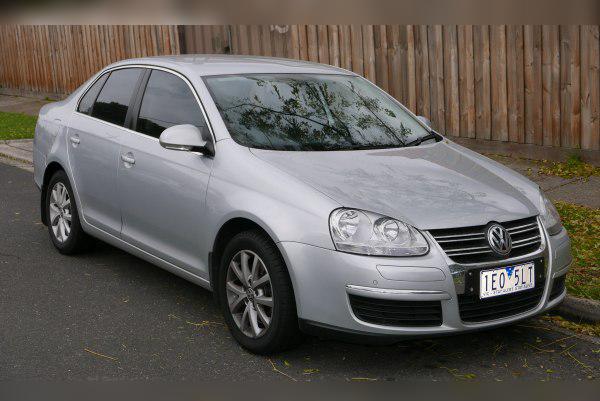
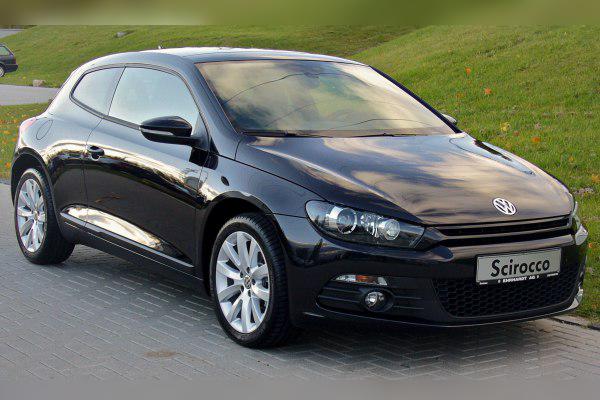
The engine with the code CAWB belongs to the first generation of the famous (and sometimes infamous) EA888 engine family. This is a 2.0 TSI unit that represented a transition from the older EA113 engines (which used a timing belt) to more modern chain-driven systems. It was installed in popular models such as the Volkswagen Scirocco III and late versions of the Volkswagen Jetta V.
Why is this engine important? Because it offered a fantastic power-to-fuel-consumption ratio for its time, but it also came with the “childhood diseases” of switching to a new timing system. Buyers often choose it for the sporty character of the Scirocco, but it is crucial to know what’s hiding under the hood before money changes hands.
Technical specifications
| Specification | Data |
|---|---|
| Displacement | 1984 cc (2.0 L) |
| Power | 147 kW / 200 hp |
| Torque | 280 Nm (factory)* *350 Nm is often a figure for diesel or a Stage 1 map |
| Engine code | CAWB (EA888 Gen 1) |
| Injection system | Direct injection (TSI/FSI) |
| Forced induction | Turbocharger + intercooler |
| Timing drive | Chain |
Reliability and maintenance
Does this engine have a timing belt or a chain?
The CAWB engine uses a timing chain. Although the theory was that a chain is “lifetime”, practice has shown the opposite. The biggest problem of the first and second generation EA888 engines is the hydraulic chain tensioner.
Symptoms: Rattling on cold start (metal-on-metal sound) that lasts a few seconds. If ignored, the tensioner can fail, the chain can jump a tooth, which leads to contact between pistons and valves. This is a catastrophic failure that requires an engine replacement or full rebuild.
What are the most common failures on this engine?
Besides the chain, the CAWB has several typical issues:
- PCV valve (oil separator): The membrane inside the separator often tears. Symptoms: Rough idle, whistling noise from under the hood and increased oil consumption.
- Deposits on intake valves: Due to direct injection, fuel does not “wash” the valves. Symptoms: Loss of power, poorer throttle response and rough cold running after 100,000+ km.
- Intake manifold (flaps): The mechanism that controls the flaps in the intake manifold fails (plastic parts). Symptoms: “Check Engine” light and fault code P2015. Often the entire intake manifold has to be replaced.
- Ignition coils: They fail quite often, which leads to the engine running on 3 cylinders. It is recommended to use quality coils (e.g. NGK or Bosch), especially the ones with the red top (R8 coils) if the engine is chipped.
At what mileage should the major service be done?
Since it has a chain, there is no fixed interval like with a belt. However, experienced mechanics recommend checking the condition of the chain (stretch) via diagnostics (“phase position” in degrees) at every service after 100,000 km. Preventive replacement of the chain set and tensioner is advised between 120,000 km and 150,000 km, or as soon as you hear rattling. Replacement includes the chain, guides, tensioner and often the timing cover.
Oil consumption and service intervals
This engine takes approximately 4.6 to 4.7 liters of oil. Fully synthetic oil with viscosity 5W-30 or 5W-40 that meets VW standards 502.00 or 504.00 is recommended.
Does it burn oil? Yes. CAWB engines are known for oil consumption, although somewhat less extreme than the later Gen 2 series (2009–2011).
Normal consumption: VW says that up to 0.5 l/1000 km is “within normal limits”, but in practice a healthy engine should not consume more than 0.5 to 1 liter per 5000 km. If it uses a liter per 1000 km, the problem is most likely piston rings (oil scrapers) or the PCV valve.
Tip: Change the oil every 10,000 km (15,000 km at most), never at LongLife intervals of 30,000 km, as that accelerates wear of the chain and rings.
At what mileage should the spark plugs be replaced?
For this turbo petrol engine, spark plugs should be replaced every 60,000 km. If the engine is “chipped” or driven aggressively, the interval should be shortened to 30,000–40,000 km. Use only iridium or platinum spark plugs specified for this engine.
Specific parts (costs)
Does this engine have a dual-mass flywheel?
Yes. Both manual and DSG automatic versions have a dual-mass flywheel. On petrol engines it lasts longer than on diesels due to lower vibrations, but it is still a wear item.
Price: Expensive (depends on the market), but usually cheaper than for TDI engines.
Injection system and turbocharger
The system is direct injection (high pressure). Injectors are generally reliable, but sensitive to poor-quality fuel. They can start leaking, which washes oil off the cylinder walls.
Turbocharger: The engine uses a KKK K03 (or similar IHI) turbocharger. It is very responsive (spools up quickly). Service life is long if oil is changed regularly and the engine is not switched off immediately after hard driving. The diverter valve (blow-off/recirculation valve) can be problematic – the factory version had a rubber membrane that tears (later replaced by a piston-type version).
DPF, EGR and AdBlue
As a petrol engine from that period, this engine DOES NOT have a DPF filter (it has a catalytic converter) and DOES NOT have an AdBlue system. It also does not have a conventional EGR valve that clogs with soot like on diesels; exhaust gas recirculation is handled by the variable valve timing system. This means fewer “emissions-related” problems compared to diesels, but keep in mind the intake valve deposit issue mentioned earlier.
Fuel consumption and performance
What is the real-world fuel consumption?
Don’t expect miracles. 200 horsepower has to be fed.
- City driving: Expect between 10 and 13 l/100 km. In heavy traffic it can go even higher.
- Open road: Here the engine is efficient. With gentle driving it can drop to 6.5–7.5 l/100 km.
- Motorway (130 km/h): Consumption is around 8–9 l/100 km.
Performance and cruising
This engine is anything but sluggish. With 200 hp and 280 Nm available from low revs (around 1700 rpm), the Scirocco and Jetta with this engine really “fly”. Overtaking is safe and quick.
At 130 km/h in 6th gear (both manual and DSG), the engine runs at relatively low revs (around 2,800–3,000 rpm), which makes for quiet and comfortable cruising.
Additional options and modifications
Is this engine suitable for LPG conversion?
Conditionally yes, but it is expensive. Since this is a direct-injection engine (FSI/TSI), a standard sequential LPG system is not the best solution because the petrol injectors must keep working so they don’t overheat. There are two options:
1. A system that uses a mixture of LPG and petrol (e.g. 80% LPG, 20% petrol).
2. A “liquid phase” system that uses the petrol injectors to inject LPG (the best, but very expensive solution).
Conclusion: Due to the high installation cost, it only pays off if you cover very high annual mileage.
How far can this engine be safely chipped (Stage 1)?
EA888 engines are legendary for their tuning potential. With just a remap (Stage 1), without mechanical changes, power can be safely raised from 200 hp to 240–250 hp, and torque jumps from 280 Nm to as much as 350–370 Nm. The engine handles this very well, provided the chain is in good condition and the spark plugs/coils are new.
Gearbox
Manual and automatic (DSG)
Two options come with the CAWB engine:
1. Manual gearbox (6-speed): Very precise and reliable.
2. DSG gearbox (6-speed, code DQ250): This is a gearbox with a “wet” clutch pack.
Gearbox failures and maintenance
- Manual: The most common expense is the clutch kit and dual-mass flywheel. The clutch can start slipping after a remap. Oil change in the gearbox is not officially prescribed, but is recommended at high mileage.
- DSG (DQ250): This gearbox is robust, but requires an oil and filter change every 60,000 km. If this is neglected, the mechatronic unit (the gearbox “brain”) fails, and repairs are extremely expensive (often over 1000 EUR). The dual-mass flywheel on a DSG can be heard as a metallic “clatter” at idle when it is worn.
Buying used and conclusion
When buying a used car with a CAWB engine, make sure to do the following:
1. Listen to a cold start: The engine must be completely cold. If you hear chain rattling for more than 2–3 seconds, walk away or negotiate the price to cover chain replacement.
2. Diagnostics: Check the camshaft “phase position”. If the deviation is large, the chain is stretched.
3. Exhaust smoke: Blue smoke when you press the throttle or on engine braking indicates oil consumption (rings or turbo).
Final conclusion
The VW 2.0 TSI (CAWB) is an engine for enthusiasts. It offers great performance, a nice sound and a lot of driving pleasure, especially in the Scirocco body. However, it is not for drivers who want low running costs. If you are willing to regularly check the oil level, replace the chain preventively and use quality fuel, this engine will put a smile on your face every time you press the throttle. If you are looking for economy, look at the TDI versions instead.
Was this content useful to you?
Your opinion helps us to improve the quality of the content.