CUFA Engine
- Engine
- 1798 cm3
- Aspiration
- Turbocharger, Intercooler
- Fuel
- Petrol (Gasoline)
- Fuel injection system
- Direct injection
- Power
- 180 hp
- Torque
- 300 Nm
- Cylinders
- 4
- Valves
- 16, 4 per cylinder
- Cylinders position
- Inline
# Vehicles powered by this engine
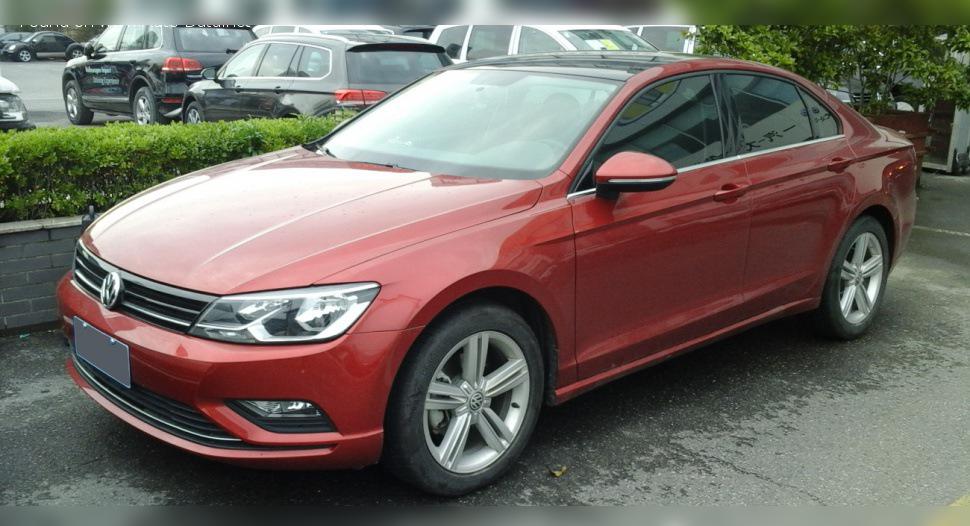
VW 1.8 TSI (CUFA) – Experiences, problems, fuel consumption and used car buying guide
Key points (TL;DR)
- Performance: With 180 hp and 300 Nm, this is a very potent engine that offers an excellent balance between power and efficiency, and is far from being “lazy”.
- Architecture: Belongs to the EA888 Generation 3 engine family. It solved the infamous oil consumption issue that ruined the reputation of the previous generation (Gen 2), but it is not immune to all failures.
- Biggest weakness: The thermostat module and water pump are weak points. The housing is plastic and often cracks, leading to coolant loss.
- Timing system: Uses a chain. Although the system is significantly improved, the chain still needs to be monitored, especially after 150,000 km.
- Gearbox: Pairing with a DSG gearbox requires strict maintenance (gearbox oil changes).
- Recommendation: An excellent choice for drivers who want a petrol engine with diesel-like torque, provided that the service history is verifiable.
Contents
- Introduction and applications
- Technical specifications
- Reliability and maintenance
- Specific parts and costs
- Fuel consumption and performance
- Additional options and modifications
- Gearbox and drivetrain
- Used car buying tips and conclusion
Introduction and applications
The engine with the code CUFA is a variant of Volkswagen’s well-known 1.8 TSI unit from the EA888 family (Generation 3). Specifically, this code is most commonly associated with the Volkswagen Lamando model, a sporty sedan (similar to the Passat CC or Arteon) primarily developed for the Asian market, but which can also be found elsewhere through individual imports or specific market channels.
Why is this engine important? Because it represents the “golden middle ground”. It offers significantly better performance and more refined operation than the smaller 1.4 TSI engine, while being cheaper to maintain and register than its bigger 2.0 TSI brother, and it shares almost the same technological base with it. This is an engine for enthusiasts who want petrol quietness in the city and serious overtaking capability on open roads.
Technical specifications
| Feature | Data |
|---|---|
| Engine displacement | 1798 cc (1.8 L) |
| Power | 132 kW (180 hp) |
| Torque | 300 Nm at 1450–4100 rpm |
| Engine code | CUFA (EA888 Gen 3 family) |
| Injection system | Direct injection (TSI/FSI) + multi-point (depending on market) |
| Induction | Turbocharger + intercooler |
| Number of cylinders / valves | 4 / 16 |
Reliability and maintenance
Does this engine have a timing belt or a chain?
The CUFA engine uses a timing chain for valve timing. This is the third generation of EA888 engines, where the chain stretching problem (which was catastrophic on older 1.8 TSI models up to 2012) has been largely solved. The chain is now more robust and the tensioners are more reliable. However, that does not mean it will last forever. It is recommended to check the chain “stretch” via diagnostics or visually through the inspection port at around 150,000 km. If you hear metallic rattling on a cold start that lasts longer than 2–3 seconds, that is a sign you should visit a workshop immediately.
What are the most common failures on this engine?
Although it is more reliable than its predecessor, owners should pay attention to the following:
- Thermostat module and water pump: This is the “Achilles’ heel” of EA888 Gen 3 engines. The housing is made of plastic which deforms over time due to heat cycles, leading to coolant leaks. Symptoms are dropping coolant level and the smell of coolant under the hood.
- PCV valve (oil vapor separator): When the membrane in this valve tears, the engine starts to run roughly, the “Check Engine” light comes on, and a characteristic whistling sound may be heard. It can also increase oil consumption.
- Camshaft solenoids: They can fail, which leads to poorer performance.
At what mileage is the major service done?
Since the engine has a chain, the classic “major service” (belt replacement) is not done at a fixed interval. However, the serpentine belt (auxiliary belt) that drives the alternator and A/C, together with the tensioners, should be replaced every 100,000 to 120,000 km. Chain replacement is done only when needed (rattling, stretching), but in practice this often happens between 180,000 and 250,000 km.
Oil: quantity, grade and consumption
This engine takes approximately 5.7 liters of oil (always check the exact amount while filling). The recommended grade is usually 5W-30 (VW 504.00 standard) or the newer 0W-20 (VW 508.00) for newer model years, but for used cars with higher mileage, a quality 5W-30 or 5W-40 is the safest option.
Does it consume oil? Unlike the notorious Generation 2 (2008–2012), which consumed oil due to bad piston rings, CUFA (Gen 3) engines have drastically reduced this problem. Still, turbo petrol engines tend to “drink” a bit of oil under spirited driving. Consumption of 0.5 liters per 8,000–10,000 km is considered completely acceptable and normal. If it consumes a liter per 2,000 km, you have a problem (turbo, PCV valve or a leak).
Spark plugs and ignition coils
Spark plugs on this engine should be replaced every 60,000 km. Do not skimp on them; use iridium or platinum plugs according to factory specification (NGK or Bosch). Coils (ignition coils) are sensitive and can fail suddenly, so it is not a bad idea to keep one spare in the trunk if you are going on a long trip.
Specific parts and costs
Does the engine have a dual-mass flywheel?
Yes. Since it is paired with a DSG gearbox and has high torque (300 Nm), a dual-mass flywheel is necessary to neutralize vibrations. Its lifespan is usually between 150,000 and 200,000 km, depending on driving style (city driving wears it out faster). Replacement is quite expensive (depends on the market).
Injection system and injectors
The CUFA engine uses an advanced direct injection system (TSI). Many EA888 Gen 3 versions have dual injection (8 injectors – 4 direct and 4 in the intake manifold). This is great because the manifold injectors “wash” the valves and prevent carbon buildup, which was a problem with older direct-injection petrol engines. Injectors are generally reliable but sensitive to poor fuel quality.
Turbocharger
The engine uses a single turbocharger (usually IHI IS12 or similar, depending on the variant). The turbo’s lifespan is long and often exceeds 250,000 km with regular oil changes and proper engine cool-down before switching off. Failure symptoms are blue smoke from the exhaust, loss of power and a whistling (siren-like) sound.
EGR, DPF and GPF
This petrol engine does not have a DPF (that’s for diesels) and does not have a classic EGR valve that clogs with soot like on diesels, because it uses variable valve timing for exhaust gas recirculation. However, newer model years (usually from 2018/2019 onwards, depending on the market) may have a GPF (OPF) filter – a gasoline particulate filter. It rarely clogs because exhaust gas temperatures on petrol engines are higher, so it is passively cleaned while driving.
AdBlue
No. AdBlue is used exclusively on diesel engines to reduce NOx emissions. This engine does not use any additional fluids apart from fuel, oil and coolant.
Fuel consumption and performance
Is the engine “lazy”?
Absolutely not. With 180 hp and 300 Nm, this engine makes the Lamando (or any other VW model of similar size) very agile. The 0–100 km/h sprint is usually under 8 seconds. Torque is available from as low as 1450 rpm, which means the engine “pulls” immediately, without the need for high revs.
Real-world fuel consumption
- City driving: Expect between 9 and 11 l/100 km. In heavy traffic and with a “heavy right foot”, this can easily go up to 12–13 liters. After all, it is a 1.8 turbo petrol.
- Country roads: This is where the engine shines and can consume around 6.0–7.0 l/100 km.
- Motorway (130 km/h): Consumption is around 7.0–8.0 l/100 km.
Behaviour on the motorway
This is the natural habitat of this engine. Thanks to the 7-speed DSG gearbox, at 130 km/h the engine runs at relatively low revs (usually around 2200–2400 rpm), which makes driving quiet and comfortable. Power reserves for overtaking are always available, even at speeds of 150 km/h.
Additional options and modifications
LPG conversion
Not recommended unless you cover very high mileage. Since this is a direct-injection engine, it requires a specific and expensive sequential system (the so-called “liquid phase” or a system that uses both petrol and LPG at the same time to cool the injectors). Installation is very expensive (depends on the market, but falls into the “very expensive” category), and cost-effectiveness is questionable if you do not drive at least 20–30 thousand km per year.
Remapping (Stage 1)
This engine is extremely tuning-friendly. With software optimization (Stage 1), power can be safely raised to 220–230 hp, and torque to 350–370 Nm. However, keep in mind that higher torque puts additional stress on the DSG gearbox and the dual-mass flywheel.
Gearbox
Type of gearbox
With the CUFA engine in the Lamando model, a 7-speed DSG gearbox is almost exclusively installed. At this power and torque level (300 Nm), it is most often a gearbox with a wet dual clutch (codes DQ380 or similar variants for the Asian market, related to the European DQ381/DQ250). Older or less powerful models used the DQ200 (dry clutch), but it is limited to 250 Nm, so for this engine the “wet” DSG is standard.
DSG maintenance and failures
- Service: DSG gearbox oil and filter MUST be changed every 60,000 km (on some newer models 120,000 km, but experts still recommend 60k). If this is skipped, the clutch packs and mechatronics will fail.
- Failures: The most expensive failure is the mechatronics unit (the “brain” of the gearbox). Symptoms are harsh gear changes, delay when setting off, or the gearbox shifting into “N” while driving.
- Clutch: The clutch pack wears out. If the gearbox slips or shudders when setting off, it is time for an overhaul.
Used car buying tips and conclusion
Before buying a used car with a CUFA engine, make sure to do the following:
- Cold start: Listen to the engine while it is completely cold. Any chain rattling is a red flag.
- Smell: After a test drive, open the hood and check if you can smell a sweet coolant odor (sign of a leaking water pump).
- DSG test: The gearbox must shift imperceptibly. Try setting off uphill without throttle – the car must not roll back or jerk.
Conclusion
The VW 1.8 TSI (CUFA) is an excellent engine for drivers who enjoy driving. It offers performance close to GTI models, but in a more discreet package. It is far more reliable than older generations, but it requires an owner who will not skimp on quality oil and regular gearbox servicing. It is not the cheapest to maintain (because of the DSG, turbo and complexity), but in return it provides a top-notch driving experience.
Was this content useful to you?
Your opinion helps us to improve the quality of the content.