CSSA Engine
- Engine
- 1395 cm3
- Aspiration
- Turbocharger, Intercooler
- Fuel
- Petrol (Gasoline)
- Fuel injection system
- Direct injection
- Power
- 150 hp @ 5000 rpm
- Torque
- 250 Nm
- Cylinders
- 4
- Valves
- 16, 4 per cylinder
- Cylinders position
- Inline
# Vehicles powered by this engine
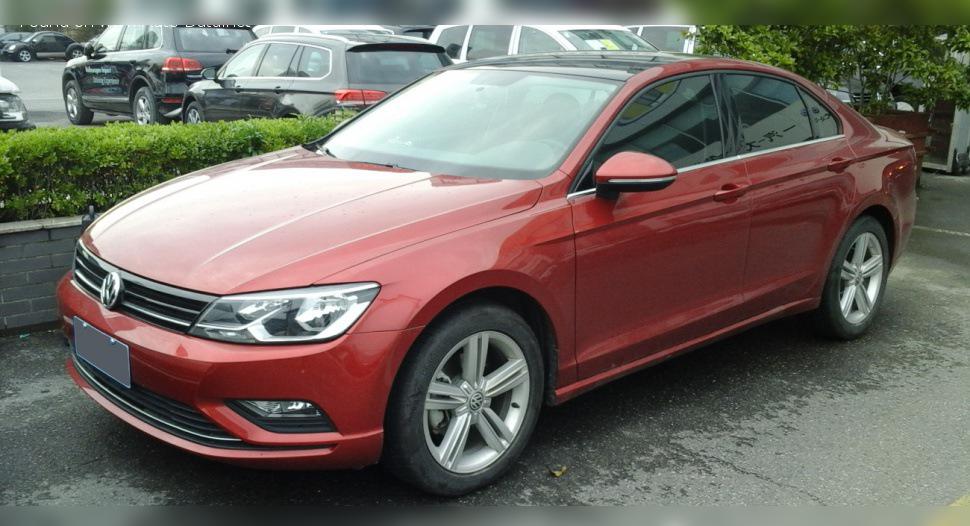
Volkswagen 1.4 TSI (CSSA) – Experiences, issues, fuel consumption and maintenance
Key points (TL;DR)
- Timing drive: This engine (EA211 family) uses a timing belt, not a chain, which solved the biggest problems of previous generations.
- Performance: With 150 hp and 250 Nm, this is the “golden middle” – pulls very well while using little fuel.
- Main issue: The water pump and thermostat module is prone to leaking.
- Gearbox: In the Lamando it often comes with a DSG gearbox (DQ200 with dry clutch) which requires caution when buying used.
- Carbon buildup: As a direct-injection engine, it is prone to intake valve deposits at higher mileage.
- Recommendation: An excellent petrol engine, much more reliable than the old 1.4 TSI (EA111) units.
Contents
Introduction and engine applications
The engine with the code CSSA belongs to Volkswagen’s modern EA211 engine family. Although this particular code is most often associated with the Volkswagen Lamando (primarily intended for the Asian market, but it can also be found in Europe through individual imports or on similar platforms), the technology under the hood is identical to what we know in Europe from the Golf 7, Passat B8 or Octavia III.
This is the engine that restored trust in Volkswagen’s small petrol units after the fiasco with timing chain failures on the old EA111 engines. The CSSA is a 1.4‑liter turbo petrol that offers the balance many drivers are looking for: the power of a 2.0 naturally aspirated engine with diesel-like fuel consumption (if driven sensibly).
Technical specifications
| Parameter | Data |
|---|---|
| Engine displacement | 1395 cc (1.4 liters) |
| Power | 110 kW (150 hp) |
| Torque | 250 Nm at 1750–3000 rpm |
| Engine code | CSSA (EA211 family) |
| Injection system | Direct injection (TSI) |
| Charging | Turbocharger + intercooler (water-cooled) |
| Number of cylinders | 4 in-line |
Reliability and maintenance
Timing belt or chain?
This is the most common question, and there is good news. The CSSA engine (like the entire EA211 series) uses a timing belt. Volkswagen learned its lesson from the problematic chains of the past. The belt on this engine is reinforced and designed to last a very long time, which makes the engine run quieter and more reliably.
Most common failures
Although reliable, the CSSA is not without flaws. Here is what mechanics most often see:
- Water pump/thermostat leaks: This is the “Achilles’ heel” of EA211 engines. The thermostat housing and water pump are combined in a single plastic module. Over time, the housing can deform or the gasket can crack, leading to coolant loss. If you smell coolant, this is the first suspect.
- Carbon buildup: Due to direct injection, fuel does not wash over the intake valves. At mileages over 100,000–120,000 km, soot deposits can form and restrict airflow, causing rough idle or loss of power.
- Turbo actuator (wastegate): The lever that regulates turbo pressure can seize, which leads to the “Check Engine” light and the car going into safe/limp mode (reduced power).
Major service and oil changes
According to factory data for EA211 engines, the timing belt replacement interval is often listed as 210,000 km with no time limit (or with an inspection after 10 years). However, speaking as an experienced editor, you should not wait that long. A realistic and safe interval for the major service is between 150,000 km and 180,000 km, or every 7 to 8 years (whichever comes first).
The engine takes approximately 4.0 to 4.5 liters of engine oil (always buy 5 liters). The recommended viscosity is usually 5W-30 (VW 504.00 standard) or the newer 0W-20 (VW 508.00) for the latest variants for emissions reasons. For our climate and slightly older engines, a quality 5W-30 oil is the ideal choice.
Oil consumption
Unlike the old 1.8 and 2.0 TSI engines that drank oil like fuel, the 1.4 TSI CSSA is much better in this regard. Oil consumption between services is usually negligible (up to 0.5 liters per 10,000 km). If it uses more than 1 liter per service interval, this points to an issue with piston rings or the turbo, or to leaks at the oil seals.
Spark plugs
Since this is a turbocharged direct-injection petrol engine, the spark plugs are under heavy load. It is recommended to replace them every 60,000 km. Use only high-quality iridium or platinum plugs (NGK or Bosch) specified for this engine.
Specific parts (costs)
Dual-mass flywheel
Yes, this 150 hp version does have a dual-mass flywheel, regardless of whether it is paired with a manual or DSG gearbox. Its job is to absorb vibrations and protect the gearbox. Its lifespan is usually around 150,000–200,000 km, depending on driving style. Replacement is expensive (varies by market, but count on it as a major cost).
Injection system
The engine uses high-pressure direct injection. The injectors are precise and generally durable, but sensitive to poor fuel quality. If an injector fails, replacement is expensive because it is a sophisticated component, not a simple nozzle. Symptoms include engine misfires and a strong smell of raw petrol from the exhaust.
Turbocharger
The CSSA has a single turbocharger. The turbo is integrated with the exhaust manifold (fewer parts, faster warm-up) and the intercooler is water-cooled. With regular oil changes, the turbo’s lifespan is generally equal to the engine’s lifespan. It is not known for catastrophic failures, apart from the mentioned “wastegate” actuator issue, which can often be resolved without replacing the entire turbo.
GPF and EGR
Models produced before 2018/2019 (depending on the market) usually do not have a GPF (gasoline particulate filter). Newer models do. As for the EGR valve, EA211 engines use variable valve timing (VVT) to achieve an internal exhaust gas recirculation effect, so a classic external EGR valve that clogs up is often not present here in the same way as on diesels, which is a big plus.
AdBlue: This is a petrol engine and does not have an AdBlue system.
Fuel consumption and performance
Real-world fuel consumption
- City driving: Expect between 7.5 and 9.0 l/100 km. In heavy stop‑and‑go traffic it can go up to 10 liters, but the start‑stop system helps a bit.
- Open road: This is where the engine shines. Consumption can drop to 5.0 to 6.0 l/100 km with moderate driving on country roads.
Is the engine “lazy”?
Absolutely not. With 150 hp and 250 Nm of torque available from just 1750 rpm, this engine moves the Lamando (and similar cars like the Octavia) with ease. Acceleration is linear and convincing, and overtaking is safe.
Motorway driving
This is an excellent cruiser. At 130 km/h, in top gear (usually 7th with DSG or 6th with the manual), the engine spins at around 2,200 to 2,400 rpm. That means the cabin is quiet and fuel consumption remains reasonable (around 6.5–7.0 l/100 km with cruise control).
Additional options and modifications
LPG conversion
Since this is a direct-injection engine, LPG conversion is complex and expensive. It requires a special system (Direct Liquid Injection or a system that mixes petrol and LPG to cool the injectors).
The cost-effectiveness is questionable unless you cover very high mileages (over 20–30k km per year), because the system still uses a certain percentage of petrol (10–15%) while running on LPG.
Chip tuning (Stage 1)
This engine responds very well to remapping. A safe Stage 1 tune raises power to about 170–180 hp and torque to about 300–320 Nm. However, be careful if you have a DSG gearbox (DQ200), as its torque limit is around 250–260 Nm. Excessive torque increase can drastically shorten the life of the gearbox clutches.
Gearbox
Types of gearboxes
With the CSSA engine in the VW Lamando you most commonly get:
- DSG (7‑speed): Code DQ200. This is a dual‑clutch gearbox with dry clutches.
- Manual (5 or 6‑speed): Less common in higher trim levels of the Lamando, but standard and reliable.
Gearbox issues
Manual gearbox: Very reliable. Failures mostly come down to normal wear of the clutch kit and dual‑mass flywheel.
DSG (DQ200): This is the sensitive point. As it uses “dry” clutches, it is more prone to overheating in city traffic (crawling in queues). The most common failures are:
- Clutch wear: Symptoms are shuddering when moving off or when shifting from 1st to 2nd gear.
- Mechatronics unit: The brain of the gearbox. Failure can lead to complete gearbox malfunction. Repair is very expensive.
Gearbox maintenance
On the manual gearbox, the oil is changed preventively at high mileage (e.g. 150,000 km), even though VW often claims it is “lifetime fill”.
On the DQ200 DSG, the manufacturer also states that the oil does not need changing (because of the dry clutches; the oil is only for the gears and mechatronics, in a separate circuit), but experienced mechanics recommend checking and, if possible, replacing the hydraulic oil in the mechatronics to extend the life of the solenoids.
Buying used and conclusion
When buying a used VW Lamando or any car with the CSSA engine, make sure to check:
- Cold start: Listen to the engine while it is cold. There should be no strange noises, knocking or uneven running in the first few seconds.
- Signs of coolant leaks: Look in the engine bay on the left side (viewed from the front), around the belt and water pump. White or pink stains are a sign of coolant leakage.
- DSG test: Release the brake in “D” mode without pressing the accelerator. The car should start moving smoothly, without jerks. Try starting uphill. Any “hesitation” or shuddering is a sign that the clutches are worn.
Final conclusion
The 1.4 TSI (CSSA) engine is one of the best choices in its class. It has successfully overcome the early issues of older TSI engines. It offers excellent performance with low fuel consumption. It is ideal for drivers who cover up to 20–25 thousand kilometers per year and want the refinement that a diesel cannot provide. Just be careful when checking the DSG gearbox, as it can be a hidden cost.
Was this content useful to you?
Your opinion helps us to improve the quality of the content.