DMB Engine
- Engine
- 1498 cm3
- Aspiration
- Naturally aspirated engine
- Fuel
- Petrol (Gasoline)
- Fuel injection system
- Multi-port manifold injection
- Power
- 116 hp @ 6000 rpm
- Torque
- 150 Nm @ 4000 rpm
- Cylinders
- 4
- Cylinders position
- Inline
- Systems
- Particulate filter
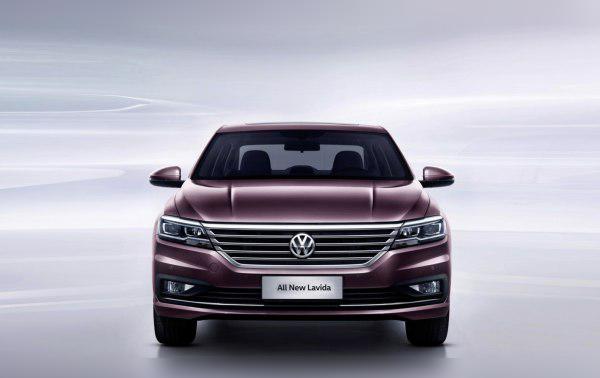
# Vehicles powered by this engine
In short (TL;DR)
If you don’t have time to read the whole article, these are the key things you need to know about the VW 1.5 MPI (DMB) engine:
- Simplicity over performance: This is a naturally aspirated engine without a turbo. It won’t pin you to the seat, but there are no expensive turbo or intercooler failures either.
- Cheap maintenance: No dual-mass flywheel, it uses simple injectors and a classic timing belt. Ideal for drivers who don’t want costly trips to the workshop.
- Reliable automatic: Often paired with a Tiptronic (Aisin) gearbox, which is a conventional automatic and much more reliable than the notorious dry DSG gearboxes in this class.
- LPG friendly: An excellent candidate for LPG (autogas) conversion thanks to its indirect injection system (on most variants with this code).
- Performance: With 150 Nm of torque, the engine is “lazy”. Overtaking requires high revs, and on the motorway the manual version really misses a sixth gear.
- Verdict: A perfect engine for taxi drivers, fleet vehicles and calm family drivers who value longevity more than speed.
Table of contents
VW 1.5 MPI (DMB) – Back to the roots of reliability
In an era when all engines are getting smaller while being paired with ever larger turbochargers, the VW 1.5 MPI (engine code DMB and related) is a refreshing return to simplicity. This engine is the direct successor to the legendary 1.6 MPI units, but modernized to meet stricter emission standards and offer slightly better efficiency.
It is primarily installed in models such as the Volkswagen Lavida III (a very popular sedan on the Asian market, but a technological twin of European models), as well as in certain entry-level VW Group models on developing markets. Its main role is not to break speed records, but to cover 500,000 kilometers with minimal running costs. This is an engine for people who see a car as a means of transport from point A to point B, with as few headaches as possible.
Technical specifications
| Parameter | Value |
| Engine displacement | 1498 cc (1.5 L) |
| Power | 85 kW (116 hp) |
| Torque | 150 Nm at 4000 rpm |
| Engine code | DMB (EA211 family) |
| Injection type | MPI (Multi-Point Injection) – Indirect |
| Aspiration | Naturally aspirated – No turbo |
| Number of cylinders / valves | 4 / 16V |
Reliability and maintenance: Workshop experience
When you open the bonnet, you’ll see plenty of space. That’s the first piece of good news for your wallet, because mechanics can access components more easily, which reduces labor hours.
Timing belt or chain?
The 1.5 MPI (DMB) belongs to the modern EA211 engine series and uses a timing belt. This is a big advantage over older generations of VW engines (EA111) that had problematic chains. The belt system here is very reliable.
Major service (timing belt replacement)
The factory recommendation for inspection and replacement of the belt is often optimistic (first check at 210,000 km), but practice and real-world experience show that it is best to do the major service between 150,000 km and 180,000 km, or every 7 to 8 years in terms of time. The material loses its properties over time regardless of mileage. A timing belt kit with water pump is not expensive (falls into the “affordable” category).
Oil consumption and service intervals
Unlike some TSI engines, this 1.5 MPI is not known as a heavy oil consumer.
Oil capacity: The engine takes approximately 4.0 to 4.5 liters (always check the dipstick).
Viscosity: Fully synthetic 5W-30 or 0W-20 is recommended (depending on climate and the exact VW 504.00/508.00 specification).
Oil consumption: Consumption of up to 0.5 liters per 10,000 km is considered perfectly normal. If it uses more than 1 liter, check the valve stem seals or the PCV valve, although this is rare at lower mileages.
Most common issues
This engine is pretty much “bulletproof”, but here’s what can still go wrong:
- Ignition coils: As with most petrol engines, coils can fail, which shows up as the engine running on three cylinders and the “Check Engine” light coming on. Not an expensive repair.
- Camshaft/crankshaft position sensor: They can sometimes act up, causing hard starting.
- Deposits on valves and throttle body: Although MPI is better than direct injection in this respect, prolonged city driving can dirty the throttle body, leading to unstable idle. Cleaning solves the problem.
Spark plugs
Spark plugs should be replaced every 60,000 km. Don’t wait longer, because worn plugs can shorten the life of the ignition coils.
Specific parts (costs)
This is the section where this engine really shines, because it does not have most of the expensive components that plague modern diesels and turbo petrol engines.
Dual-mass flywheel: NONE. Due to the relatively low torque (150 Nm), this engine uses a classic solid flywheel. This is a huge saving when replacing the clutch kit. The clutch kit itself is cheap.
Turbocharger: NONE. The engine is naturally aspirated. No worries about cooling the turbo after driving, no oil leaks on the turbo, no costly turbo overhauls.
Fuel injection system: It mainly uses an MPI (Multi-Point Injection) system. The injectors are simple, operate at lower pressure than direct injection systems and are extremely durable. They are not as sensitive to fuel quality as diesel or TSI injectors.
EGR and DPF/GPF: Petrol engines do not have a DPF (which is for diesels), but newer versions (from 2018/2019 onwards, depending on the market) may have a GPF (Gasoline Particulate Filter). However, on naturally aspirated petrol engines, exhaust gas temperatures are naturally high, so these filters rarely clog compared to diesels. There is an EGR valve, but it rarely fails before 200,000 km.
AdBlue: This engine does not have an AdBlue system.
Fuel consumption and performance: Real-world driving
This is where the compromise comes in. 116 hp on paper sounds decent, but 150 Nm of torque is modest by today’s standards and for a body as heavy as the Lavida III (similar in size to a Passat/Jetta).
Is the engine “lazy”?
Yes, somewhat. In city driving it is perfectly adequate and feels lively enough at the lights. However, the problem appears when the car is loaded with passengers and luggage. Hills and overtaking require dropping down a gear and revving the engine to 4000–5000 rpm. If you enjoy spirited driving, this engine will frustrate you.
Fuel consumption
- City driving: Expect between 7.5 and 9.0 l/100 km. In heavy traffic and with an automatic gearbox, it can reach 10 l/100 km.
- Country roads: This is where it’s most economical, using around 5.0 to 6.0 l/100 km.
- Motorway (130 km/h): Due to the lack of power and torque, the engine runs at higher revs (often around 3000–3500 rpm in top gear). Consumption is then around 7.0 to 8.0 l/100 km, and cabin noise increases.
Additional options and modifications
LPG conversion
Absolutely yes. This is one of the best modern engines for conversion to LPG (autogas). Thanks to the MPI injection system, installation is simple (sequential system), cheaper than on TSI engines, and the engine handles LPG very well. This drastically reduces running costs.
Remapping (Stage 1)
Not worth it. Since the engine has no turbocharger, a software remap (Stage 1) might give you 5 to 8 hp and an almost unnoticeable increase in torque. It’s a waste of money. If you want a faster car, buy a 1.4 TSI or 1.5 TSI.
Gearbox: Manual and Tiptronic
With the DMB 1.5 engine in the Lavida III you most often get two gearbox options:
- Manual gearbox (5-speed): Precise, with a typically “Volkswagen” feel. Failures are extremely rare. The only drawback is the lack of a 6th gear for motorway driving, which would reduce noise and fuel consumption.
- Automatic gearbox (6-speed Tiptronic): This is a key difference compared to European models that push DSG. Here you often get a classic Aisin torque-converter automatic.
- Advantages: Much more comfortable for stop‑and‑go city driving than DSG, no jerking, and generally more durable (no mechatronics failures).
- Maintenance: It is recommended to change the gearbox oil every 60,000 km (by flushing or at least a partial change). If maintained regularly, this gearbox can easily exceed 300,000+ km.
Clutch replacement cost: On the manual gearbox, since there is no dual-mass flywheel, replacing the clutch kit is very affordable (falls into the “not expensive” category).
Buying used and conclusion
If you’re looking at a used Lavida or a similar model with this engine, here’s what to check:
- Cold start: Listen to the engine when it’s cold. Do you hear metallic knocking? It could be hydraulic lifters or piston slap, although this is rarer on the 1.5 than on the old 1.4/1.6 engines.
- Oil leaks: Check the joint between the gearbox and engine, as well as the valve cover.
- Gearbox service history: If it’s an automatic, insist on proof of gearbox oil changes if the car has done more than 80,000 km.
Conclusion
The VW 1.5 MPI (DMB) is not an engine for enthusiasts. It is slow, boring and characterless. But that is also its greatest virtue.
This is the right engine for you if:
- You cover a lot of kilometers in the city.
- You want to install LPG and drive “for next to nothing”.
- You are afraid of expensive turbo, dual-mass flywheel and injector failures.
- You want a reliable automatic that won’t demand 1000+ EUR for mechatronics repairs.
If you’re looking for excitement behind the wheel, skip it. If you want peace of mind and cheap maintenance – this is an excellent buy.
Was this content useful to you?
Your opinion helps us to improve the quality of the content.