CSRA Engine
- Engine
- 1598 cm3
- Aspiration
- Naturally aspirated engine
- Fuel
- Petrol (Gasoline)
- Fuel injection system
- Multi-port manifold injection
- Power
- 110 hp @ 5800 rpm
- Torque
- 155 Nm @ 3800 rpm
- Cylinders
- 4
- Valves
- 16, 4 per cylinder
- Cylinders position
- Inline
# Vehicles powered by this engine
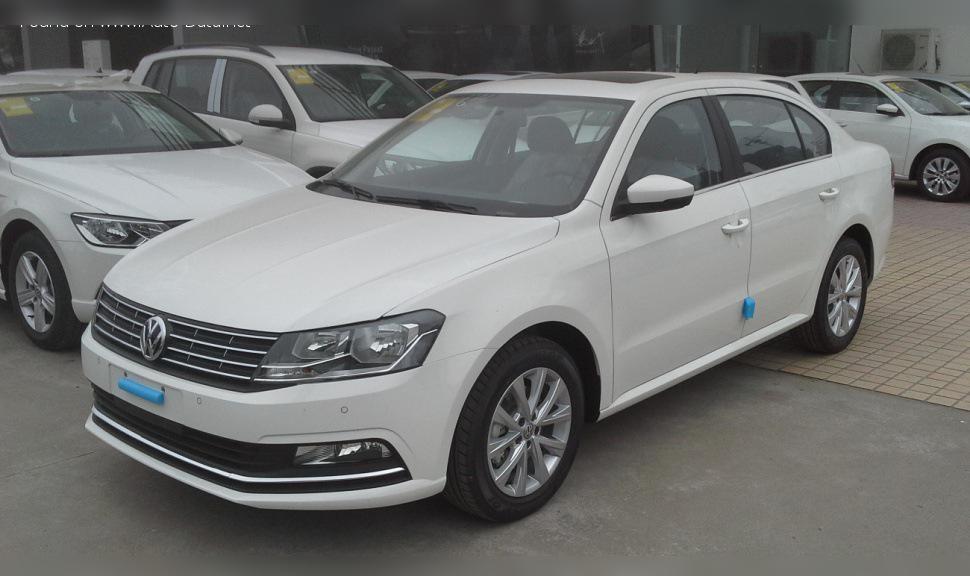
Volkswagen CSRA 1.6 MPI (110 HP): Experiences, issues, fuel consumption and buying tips
If you’re looking for the “last of the Mohicans” among simple petrol engines in modern bodies, Volkswagen’s 1.6 MPI with the CSRA code is exactly that. Although this specific engine code is most often associated with the Lavida model (popular on the Asian market), it belongs to the famous EA211 engine family, well known in Europe from the VW Golf VII, Škoda Octavia and similar models. This is an engine for people who don’t want the complications of turbochargers, direct injection and expensive repairs.
Key points (TL;DR)
- Reliability: Extremely high. This is a simple naturally aspirated engine without sensitive components.
- Timing system: Uses a timing belt (not a chain), which is a big improvement over the previous generation.
- LPG (Autogas): An ideal candidate for LPG conversion thanks to indirect injection.
- Performance: Not a racer. Needs high revs for overtaking, but 110 HP is more than enough for the average driver.
- Gearbox: Often paired with a conventional automatic (Tiptronic), which is more reliable than older dry-clutch DSG gearboxes.
- Maintenance: Cheap and simple. Parts are available everywhere.
- Recommendation: An excellent choice for city driving and taxi use.
Contents
- Technical Specifications
- Reliability and Maintenance
- Specific Parts and Costs
- Fuel Consumption and Performance
- Additional Options and Modifications
- Gearbox
- Buying Used and Conclusion
Technical Specifications
The CSRA engine is part of the modern EA211 series, which means it is lighter and more efficient than the old cast-iron blocks, but has retained simple fuel injection.
| Specification | Data |
|---|---|
| Displacement | 1598 cc (1.6 liters) |
| Power | 81 kW / 110 HP |
| Torque | 155 Nm at 3800 rpm |
| Engine code | CSRA (EA211 family) |
| Injection type | MPI (Multi-Point Injection) – Indirect |
| Aspiration | Naturally aspirated (No turbo) |
| Cylinders/valves | 4 cylinders / 16 valves |
Reliability and Maintenance
Timing belt or chain?
This is a key question for every VW Group fan. Unlike the older EA111 engines (1.4 TSI, 1.6 FSI) which had problematic chains, the CSRA engine (EA211) uses a timing belt. This is excellent news. The belt is quiet, reliable and cheaper to replace than a chain. Factory intervals are optimistic (you often see “inspection” at 240,000 km), but in practice it should be replaced at 160,000 to 210,000 km or every 5 to 7 years, whichever comes first.
Most common issues
The engine is very robust, but not completely trouble-free:
- Thermostat housing and water pump: This is a weak point of the EA211 series. The module is plastic and over time coolant leaks can appear. The symptom is a dropping coolant level in the expansion tank without visible puddles under the car (because it evaporates on the block).
- Ignition coils: They can fail, causing rough running (“misfiring”) and a lit “Check Engine” light.
- Oil vapour build-up (PCV valve): Although less of an issue than with direct injection, the crankcase ventilation system can clog, leading to a slight increase in oil consumption.
Service intervals and oil
The major service, as mentioned, is recommended preventively between 150,000 and 180,000 km. Minor service (oil and filters) should be done every 10,000–15,000 km or once a year.
The engine takes approximately 4.0 to 4.5 liters of oil (depending on filter and sump size on the specific model). The recommended grade is 5W-30 or 5W-40 with specification VW 502.00 / 504.00. Quality fully synthetic oil is a must.
Oil consumption
EA211 engines are dramatically better in terms of oil consumption than older generations. Still, with more aggressive driving or higher mileage, consumption of 0.3 to 0.5 liters per 10,000 km is perfectly acceptable and considered normal. If it uses a liter per 2,000 km, that points to a problem with piston rings or valve stem seals, but this is rare on CSRA engines.
Spark plugs
Spark plugs are replaced every 60,000 km. Since this is an MPI engine, the plugs are not under as much thermal stress as in TSI engines, so they are cheaper. The recommendation is to use NGK or Bosch according to factory specification.
Specific Parts (Costs)
This is where we come to the biggest advantage of this engine – the absence of expensive components.
- Dual-mass flywheel: Generally NO. Manual gearboxes paired with this engine usually use a solid flywheel. Models with automatic gearboxes (Tiptronic) use a torque converter, so there is no classic dual-mass flywheel. That means saving several hundred euros when servicing the clutch.
- Fuel injection system: Uses conventional solenoid injectors in the intake manifold (MPI). They are very durable, cheap to clean and rarely fail. They are not as sensitive to poor fuel quality as injectors on TSI/FSI engines.
- Turbocharger: There isn’t one. One less thing to worry about.
- EGR and DPF: There is no DPF filter (because it’s a petrol engine). An EGR valve is present, but since the engine runs cleaner than a diesel, clogging is rare. If it does happen, cleaning is usually enough. There is no AdBlue system.
Fuel Consumption and Performance
City driving and “sluggishness”
With 110 HP and 155 Nm, the CSRA engine in a body the size of a Lavida (or an equivalent Jetta/Octavia) is adequate, but not exciting. Peak torque comes only at 3800 rpm. In other words: for the car to pull properly, you need to press the accelerator.
Is it sluggish? In city driving, no, because the lower gears are usually short. However, if the car is fully loaded with passengers and luggage, you will feel the lack of torque on uphill sections.
Real-world city consumption: Expect between 8 and 10 l/100 km of petrol, depending on traffic and how heavy your right foot is. The automatic can add about 0.5 to 1 liter to this figure.
Highway
On the highway the engine behaves decently, but it lacks a sixth gear (if it’s a 5-speed manual). At 130 km/h the engine spins at around 3500–3800 rpm (depending on the gearbox). This means the cabin is a bit noisier than in diesels or turbo petrols. Fuel consumption on open roads is around 6.0–7.0 l/100 km.
Additional Options and Modifications
LPG (Autogas)
YES, absolutely. This is one of the best modern engines for conversion to liquefied petroleum gas. Since it has indirect injection (MPI), installation is simple, cheaper (standard sequential systems) and the engine handles LPG very well. There is no need for expensive “Direct Injection” kits that also use petrol while running on gas. Cost-effectiveness is guaranteed.
Chip tuning (Remap)
On naturally aspirated petrol engines, chip tuning is not worth it. A “Stage 1” remap might give you maybe 5 to 8 HP, which you won’t really feel in everyday driving. It’s better to invest that money in quality tyres or regular servicing.
Gearbox
With the CSRA engine in the Lavida (and similar models) you usually get two options:
- Manual gearbox (5-speed): Very precise and durable. Failures are rare. A clutch kit is relatively cheap (depends on the market, but falls into the “not expensive” category) because there is no dual-mass flywheel. An oil change in the gearbox is recommended every 100,000 km, even though the manufacturer often claims it is “lifetime”.
- Automatic gearbox (Tiptronic, 6-speed): This is usually a conventional automatic with a torque converter (often of Aisin origin in these models, although you should check by VIN, as some models also received DSG). If it is a conventional automatic, it is more reliable in stop-and-go city driving than a DSG gearbox.
- Automatic maintenance: The gearbox oil and filter MUST be changed every 60,000 km. If this is not done, harsh shifting and valve body failure can occur, which is very expensive (depending on the market, repairs can reach 1500–2000 EUR).
Buying Used and Conclusion
If you’re looking at a Volkswagen Lavida or any other VAG model with this 1.6 MPI (CSRA) engine, here’s what to check:
- Coolant leaks: Look around the thermostat housing (right side of the engine when viewed from the front). Pink deposits are a sign of leakage.
- Noise on cold start: Although there is no chain, hydraulic lifters can be heard if poor-quality oil has been used. The engine should run smoothly and quietly after a few seconds.
- Gearbox: If it’s an automatic, it should start moving as soon as you release the brake, without jerks or bangs when changing gears.
Conclusion
The CSRA 1.6 MPI engine is a “safe bet” choice. It is not modern in terms of performance, but it is modern in terms of materials and reliability. It is intended for drivers who cover a lot of kilometres (especially in the city), want the option of LPG conversion and don’t want to think about turbochargers and dual-mass flywheels. If you don’t mind having to reach for the gear lever more often when overtaking, this engine will serve you for hundreds of thousands of kilometres with minimal running costs.
Was this content useful to you?
Your opinion helps us to improve the quality of the content.