CXEB Engine
- Engine
- 1968 cm3
- Aspiration
- Turbocharger, Intercooler
- Fuel
- Diesel
- Fuel injection system
- Diesel Commonrail
- Power
- 204 hp @ 4000 rpm
- Torque
- 450 Nm
- Cylinders
- 4
- Valves
- 16, 4 per cylinder
- Cylinders position
- Inline
- Oil capacity
- 7.4 l
- Systems
- Start & Stop System, Particulate filter
# Vehicles powered by this engine

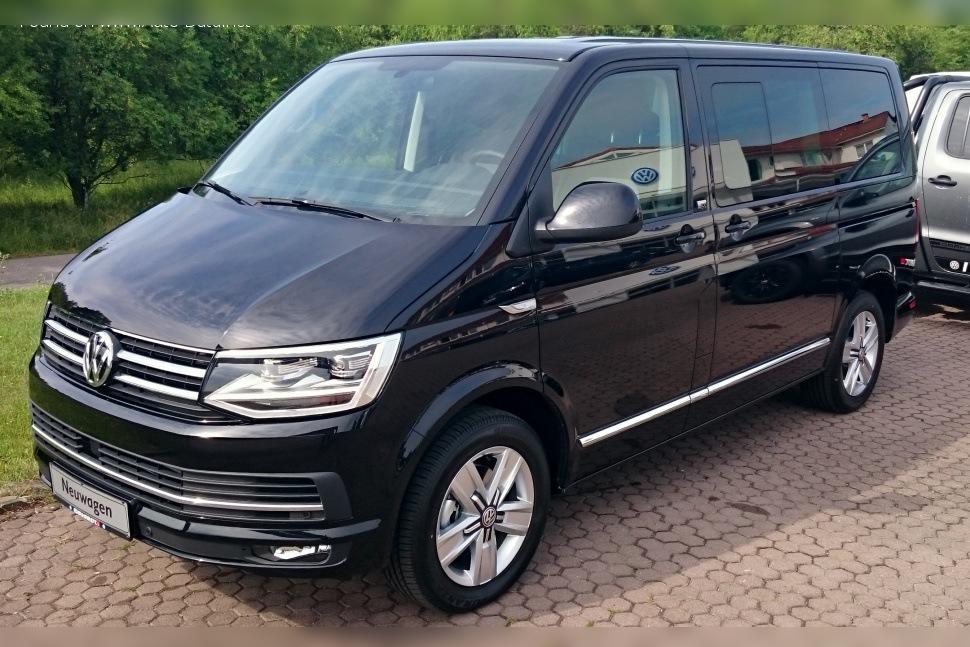
2.0 BiTDI (CXEB) 204 HP – Experiences, problems, fuel consumption and buying tips
Key points (TL;DR)
- Performance: The most powerful diesel in the T6 range, offering excellent acceleration and towing capacity thanks to the Bi-Turbo system.
- Main issue (EGR): These engines (especially early series) are notorious for problems with the EGR cooler, which disintegrates and destroys the cylinders, causing massive oil consumption.
- Bi-Turbo setup: Two turbochargers mean more complex maintenance and more expensive repairs compared to the 150 HP version.
- Gearbox: The DSG (DQ500) is extremely robust and reliable if serviced regularly.
- Fuel consumption: Not exactly economical, especially in city driving and in “Long” versions with 4MOTION all-wheel drive.
- Recommendation: Buying requires caution – look for a car with a replaced engine or a revised “D” version of the EGR cooler.
Contents
- Introduction and application
- Technical specifications
- Reliability, failures and maintenance
- Specific parts and costs
- Fuel consumption and performance
- Additional options and modifications
- Gearbox and drivetrain
- Used-buying tips and conclusion
Introduction and application
The engine with the code CXEB represents the top of the diesel range in Volkswagen’s T6 generation (Multivan, Transporter, Caravelle). It is a two‑liter four‑cylinder which, with the help of two turbochargers, delivers a respectable 204 horsepower and 450 Nm of torque.
This engine is designed to give a van weighing over two tons the performance of a passenger car. It was installed in the most luxurious Multivan variants, often combined with 4MOTION all‑wheel drive and a DSG gearbox. Although it offers a fantastic driving experience, the CXEB has gained a controversial reputation among mechanics due to specific factory flaws that can lead to engine failure at relatively low mileage.
Technical specifications
| Engine displacement | 1968 cc (2.0 l) |
| Power | 150 kW (204 HP) |
| Torque | 450 Nm at 1400–2400 rpm |
| Engine code | CXEB |
| Injection type | Common Rail (Direct injection) |
| Charging system | Bi‑Turbo (Two different‑size turbochargers + intercooler) |
| Number of cylinders / valves | 4 / 16 |
| Emissions standard | Euro 6 (with AdBlue system) |
Reliability, failures and maintenance
Timing belt or chain?
The CXEB engine uses a timing belt to drive the camshafts. This is the standard solution for VW TDI engines of this generation (EA288 family). The water pump is also driven by the timing belt, so it must be replaced during the major service.
Most common failures: “Death by EGR”
The biggest and most dangerous problem with this engine is the EGR cooler (exhaust gas recirculation cooler). In factory versions (up to roughly 2018/2019), the internal fins of the cooler are made of aluminum, which corrodes over time and starts to break apart. Tiny particles of aluminum oxide (an extremely hard material) are then drawn back into the engine.
Symptoms and consequences: These particles act like sandpaper inside the cylinders. They damage the cylinder walls (liners) and piston rings. The result is a drastic loss of compression and extreme oil consumption. Symptoms are often invisible until it’s too late – the engine runs smoothly, but the oil warning light comes on more and more frequently.
Major service and oil changes
The factory interval for the major service (timing belt) is often set at 210,000 km, which is far too optimistic for a vehicle used under heavy load. Experienced mechanics recommend doing the major service at a maximum of 150,000 km or 5–7 years of age.
The engine takes a large amount of oil, about 7.4 liters. The recommended grade is 5W‑30 with the VW 507.00 specification. Due to the sensitivity of the turbochargers and DPF regeneration issues, experimenting with other oils is not recommended.
Oil consumption
Does it burn oil? A healthy CXEB engine consumes a negligible amount of oil (e.g. 0.5 liters per 10,000 km). However, if you notice that the engine consumes 0.5 to 1 liter per 1,000 km, this is an almost certain sign that the cylinders are already damaged due to the aforementioned EGR problem. In that case, the repair usually involves a full engine overhaul (boring the block, new pistons) or replacement of the complete short block, which is very expensive (depends on the market).
Injector durability
The CXEB uses piezoelectric injectors operating at pressures up to 2,000 bar. In general, they have proven durable and can last over 200,000–250,000 km with good‑quality fuel. The first symptoms of failure are rough idle or increased smoke under hard acceleration. These injectors can be refurbished, but it is often demanding.
Specific parts (costs)
Dual‑mass flywheel
Yes, this engine, regardless of whether it is paired with a manual or DSG gearbox, has a dual‑mass flywheel. In the Multivan it is under heavy load due to the vehicle’s weight and high torque. Its lifespan is usually between 150,000 and 200,000 km, depending on driving style. A metallic knocking sound when switching the engine off is a clear sign that it needs replacement.
Turbochargers (Bi‑Turbo)
The CXEB has two turbochargers: a smaller one for quick response at low revs and a larger one for power at higher revs. This eliminates “turbo lag”, but doubles the risk of failure. Their lifespan depends on regular oil changes and driving style (cool‑down after motorway driving). Repairing a Bi‑Turbo system is significantly more expensive than a single turbo because it includes a complex system of vacuum valves and flaps for redirecting air.
DPF and EGR
In addition to the aforementioned fatal EGR cooler issue, the DPF filter is a standard concern. On engines that already burn oil, the DPF clogs very quickly with burnt oil and ash, which further chokes the engine. Cleaning is possible, but if the engine is “throwing” oil, the DPF will clog again after just a few hundred kilometers.
AdBlue system
Yes, this is a Euro 6 engine and it uses AdBlue (SCR catalyst). The system is complex and prone to failures of the heater in the AdBlue tank, as well as dosing pump failures. Repairs are expensive, and if the system fails, the ECU will, after a certain number of kilometers, prevent the engine from starting.
Fuel consumption and performance
Real‑world fuel consumption
Don’t expect miracles. The T6 Multivan is a “box” weighing over 2 tons with the aerodynamics of a brick.
- City driving: Expect between 10 and 13 l/100 km, depending on traffic and how heavy your right foot is. 4MOTION adds about 1 liter to this figure.
- Country roads: It is possible to get it down to 7.5–8.5 l/100 km.
- Motorway (130 km/h): Consumption is around 9–10 l/100 km.
Is the engine “lazy”?
Absolutely not. With 450 Nm and two turbochargers, this engine moves the Multivan body with ease. Acceleration is linear and strong. Overtaking is safe even when the vehicle is fully loaded with passengers and luggage. This is one of the few vans that can keep up with faster passenger cars on the motorway.
At 130 km/h the engine runs relaxed thanks to long gear ratios (especially with the 7‑speed DSG), usually below 2,200 rpm, which contributes to acoustic comfort.
Additional options and modifications
Chip tuning (Stage 1)
The engine can be “chipped”, raising power to about 240 HP and torque to over 500 Nm. However, given the sensitivity of the thermal group (pistons/cylinders) and the high thermal load that the Bi‑Turbo system already endures, tuning is not recommended unless you are 100% sure of the engine’s “health” and you do not plan to drive aggressively. Increasing combustion pressure can hasten the end of an already sensitive engine.
Gearbox
Types of gearboxes
- Manual gearbox (6‑speed): Rarer in combination with this most powerful engine. Reliable, but the flywheel suffers heavy shocks.
- DSG (DQ500 – 7‑speed): The most common choice. This is a dual‑clutch gearbox with wet clutches.
Gearbox failures and maintenance
The DQ500 is considered one of the strongest and best DSG gearboxes VW produces (it is also used in the Audi RS3). It can handle enormous torque. Mechatronic failures are less common than on smaller models, but they do happen.
The key to longevity is changing the gearbox oil and filter every 60,000 km. If this is skipped, the clutch packs wear out faster and the channels in the mechatronic unit become clogged. Replacing the clutch pack on a DSG gearbox is a very expensive job.
Buying used and conclusion
What to check before buying?
- EGR cooler version: This is the most important thing. Ask for service history. If the cooler has been replaced with the “D” version (latest revision), the risk is lower.
- Oil consumption: Ask the owner directly. Look at the exhaust tip – if it is black and oily, walk away.
- Camshaft chain noise: Although it has a timing belt, the camshafts are interconnected by a small chain. Rattling on cold start indicates it is stretched.
- DSG behavior: The gearbox must shift smoothly, without jerks when moving off or when coming to a stop.
Conclusion
The VW T6 Multivan with the 2.0 BiTDI (CXEB) engine is fantastic to drive, but risky to own once it is out of warranty. It offers the best performance in its class, excellent towing capability and comfort.
It is aimed at buyers who want a premium van and are willing to pay for preventive maintenance. If you are buying used, the ideal scenario is a vehicle whose engine has already been replaced at an authorized service center (many were replaced under warranty), or one with proof that a revised EGR system was installed before any damage occurred. For those on a tighter budget, the weaker 150 HP version (single turbo) is a much safer and cheaper option to maintain.
Was this content useful to you?
Your opinion helps us to improve the quality of the content.