CAAB, CXGB Engine
- Engine
- 1968 cm3
- Aspiration
- Turbocharger, Intercooler
- Fuel
- Diesel
- Fuel injection system
- Diesel Commonrail
- Power
- 102 hp @ 3500 rpm
- Torque
- 250 Nm @ 2500 rpm
- Cylinders
- 4
- Valves
- 16, 4 per cylinder
- Cylinders position
- Inline
- Oil capacity
- 7 l
- Systems
- Particulate filter
# Vehicles powered by this engine

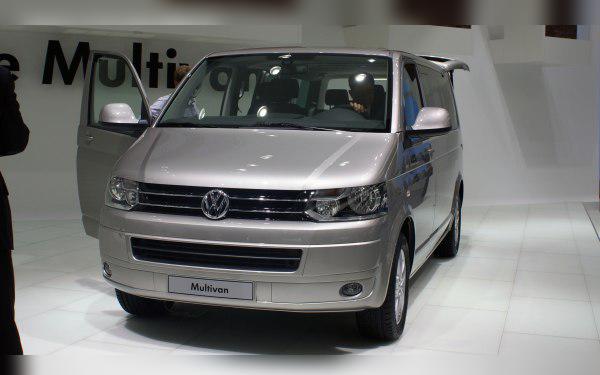
2.0 TDI (CAAB, CXGB) 102 HP: Experiences, problems, fuel consumption and used-buying guide
Volkswagen’s 2.0 TDI in the 102 horsepower version (engine codes CAAB for the T5 facelift and CXGB for the T6) is the basic, so‑called “workhorse” in the world of transporters and passenger vans. This is not an engine for racing, but a unit designed to cover hundreds of thousands of kilometres with moderate maintenance costs. Although many consider it underpowered for the heavy Multivan body, its simplicity compared to the BiTDI models (which have two turbochargers) makes it a favourite among buyers who value reliability over performance.
Key points in short (TL;DR)
- Durability: These are among the most reliable modern VW engines for commercial vehicles, far better than the old PD (Pumpe-Düse) units.
- Performance: Be ready for compromise. With 102 HP, overtaking is risky and uphill driving requires lower gears.
- Gearbox: Most often comes with a 5-speed manual gearbox, which means more noise and higher fuel consumption on the motorway (no 6th gear).
- AdBlue system: On T6 models (CXGB), the AdBlue system is a common source of problems and dashboard warnings.
- EGR valve: The Achilles’ heel of this engine – it often clogs up or the EGR cooler starts leaking.
- Chip tuning potential: Excellent. It is “detuned” in software, so it can easily be raised to the power of stronger versions (around 140 HP).
Contents
- Technical specifications
- Reliability and maintenance
- Specific parts (costs)
- Fuel consumption and performance
- Additional options and modifications
- Gearbox
- Buying used and conclusion
Technical specifications
| Specification | Data |
|---|---|
| Engine displacement | 1968 cc (2.0 L) |
| Power | 75 kW / 102 HP |
| Torque | 250 Nm at 1500–2500 rpm |
| Engine codes | CAAB (Euro 5, T5.1), CXGB (Euro 6, T6) |
| Injection type | Common Rail (CR) |
| Charging | Variable-geometry turbocharger + intercooler |
| Valves | 16V (DOHC) |
Reliability and maintenance
Timing belt or chain?
This engine uses a timing belt to drive the camshafts. This is good news because the system is quieter and generally more predictable than a chain, which caused problems on older TSI engines and some other brands. Along with the timing belt, the water pump, tensioners and idler pulleys are also replaced.
Most common failures
Although robust, CAAB/CXGB engines have their “quirks”:
- EGR valve and EGR cooler: This is the most common issue. Symptoms include loss of coolant (which evaporates through the exhaust) or the engine going into “safe mode” (loss of power). Soot blocks the valve, especially with city driving.
- Exhaust gas pressure sensors (DPF sensors): They often fail, triggering the “Check Engine” light. They are not expensive, but they are annoying.
- Oil leaks: Often appear on the crankshaft seal or valve cover as mileage increases.
- Auxiliary (serpentine) belt: If it snaps, its fragments can get under the timing belt and cause catastrophic engine damage. Regular visual inspection of the serpentine belt tensioner is recommended.
Major service
The manufacturer (VW) often states optimistic intervals of 210,000 km. However, experienced mechanics and real-world practice suggest doing the major service at no more than 150,000 to 160,000 km or every 5 to 7 years, whichever comes first. The risk of belt failure is too high to wait for the factory limit.
Oil: quantity and grade
What surprises many is the oil capacity. These engines in the T5/T6 body have a larger oil sump than those in the Golf or Passat. The engine takes about 7.0 litres of oil. Fully synthetic 5W-30 oil that meets the strict VW 507.00 specification (because of the DPF filter) must be used.
Oil consumption
Modern CR (Common Rail) engines consume less oil than the old PD engines. Still, consumption of 0.5 to 1 litre per 10,000 km is considered completely normal and acceptable, especially if the vehicle is often driven under load or on the motorway.
Injectors
The injection system is Common Rail. These injectors have proven to be very durable and can cover over 250,000–300,000 km without issues, provided quality fuel is used. Symptoms of bad injectors include rough idle (fluctuating revs), smoke on cold start and increased fuel consumption.
Specific parts (costs)
Dual mass flywheel
Yes, this engine has a dual mass flywheel (DMF). Although engine power is low (102 HP), the vehicle is heavy (the Multivan is heavy), which puts a lot of stress on the transmission, so the dual mass flywheel serves to absorb vibrations and protect the gearbox. Its lifespan is usually between 150,000 and 200,000 km. A knocking sound when switching the engine off or vibrations on the clutch pedal are signs that it needs replacing.
Turbocharger
The engine uses a single turbocharger with variable geometry. This is a big advantage compared to the BiTDI (180/204 HP) engines, which have two turbochargers and are known for catastrophic failures. The turbo on the 102 HP version is lightly stressed and very durable with regular oil changes.
DPF and EGR
Both systems are present. The DPF filter (CAAB and CXGB) requires regular regenerations. If you drive only in the city (stop‑and‑go), the DPF will clog quickly. Symptoms include a warning light on the dashboard and increased idle speed. The EGR valve is, as mentioned, a consumable item on these engines.
AdBlue (CXGB only – Euro 6)
The CAAB (T5 facelift) engine has no AdBlue. The CXGB (T6) engine has an AdBlue system. On T6 models, the AdBlue system is complex. Heater failures in the AdBlue tank or pump, as well as NOx sensor failures, are common. Repairs to this system can be expensive (depending on the market).
Fuel consumption and performance
City driving
The Multivan is heavy (around 2.2 tonnes empty). In the city, real-world fuel consumption is between 8.5 and 10 litres/100 km. If the air conditioning is on and traffic is heavy, it can go up to 11 litres.
Is the engine “sluggish”?
Honestly – yes. With 102 HP and 250 Nm, this engine struggles with the vehicle’s mass. Acceleration to 100 km/h takes an “eternity” (around 18 seconds). For relaxed driving it is perfectly adequate, but overtaking on country roads requires serious planning and a good run‑up. If the van is full of passengers and luggage, the feeling of sluggishness is even more pronounced.
Motorway driving
This is where the lack of power and (most often) the lack of a 6th gear are most noticeable. At 130 km/h, the engine spins at about 3,000 rpm (in 5th gear), which creates noise in the cabin and raises fuel consumption to around 8.5–9.5 litres. The most comfortable cruising speed is around 110–120 km/h.
Additional options and modifications
Chip tuning (Stage 1)
This is one of the best things about this engine. The 102 HP version is hardware‑wise very similar (and sometimes identical, depending on the code) to the 114 HP or even 140 HP versions. With a safe remap (Stage 1), power can be raised to 140–150 HP, and torque to over 320 Nm. This drastically changes the character of the vehicle, reduces fuel consumption because the engine “struggles” less, and makes driving much more pleasant. It is recommended to do this only at reputable tuning shops.
Gearbox
Manual gearbox
With the 102 HP engine, you most often get a 5-speed manual gearbox (02Z series). It is robust, but suffers from wear of the 2nd and 3rd gear synchros if handled roughly. Its biggest drawback is the lack of a 6th gear for motorway driving. Note: There are rare versions with 6 gears, but they are mostly reserved for more powerful engines.
Automatic gearbox (DSG)
On the 102 HP version, a DSG gearbox is very rare (it is more common on 140/150 HP models). If you find one, it is the DQ500, a 7-speed gearbox with “wet” clutches. It is one of the best and most durable DSG gearboxes ever made. It requires an oil and filter change every 60,000 km. Failures are rare, but if they occur (mechatronics), repairs are very expensive (depending on the market).
Clutch and replacement
The cost of replacing the clutch kit with the dual mass flywheel is a significant expense. Since removing the gearbox on a van is a more demanding job than on a car, labour costs are higher.
Gearbox service
For the manual gearbox, VW says the oil is “lifetime”, but the recommendation is to change it every 150,000 km or 8–10 years to preserve the bearings and synchros.
Buying used and conclusion
What to check before buying?
- Flywheel noise: Listen for metallic rattling while the engine is idling and whether the sound changes when you press the clutch.
- EGR/DPF condition: Diagnostic check is a must. Check DPF load (anything over 50–60 g of ash is near the end) and whether the EGR has been software‑closed and disabled.
- Air conditioning: On the Multivan, the rear A/C pipes often corrode and leak refrigerant. Check whether the A/C cools in the rear as well.
- Service history: Check when the major service was done and whether the oil has been changed regularly.
Final conclusion
The Volkswagen Multivan with the 2.0 TDI 102 HP engine is an ideal choice for families, taxi drivers and transport operators for whom speed is not a priority. It is the “safest buy” in the used T5/T6 world because you avoid the problematic BiTDI engine. Although it is slow, with a quality remap (chip tuning) it becomes a perfectly adequate vehicle. Maintenance is not cheap (it is still a commercial VW), but it is cheaper than on the more powerful versions.
Was this content useful to you?
Your opinion helps us to improve the quality of the content.