CFCA Engine
- Engine
- 1968 cm3
- Aspiration
- BiTurbo, Intercooler
- Fuel
- Diesel
- Fuel injection system
- Diesel Commonrail
- Power
- 180 hp @ 4000 rpm
- Torque
- 400 Nm @ 2000 rpm
- Cylinders
- 4
- Valves
- 16, 4 per cylinder
- Cylinders position
- Inline
- Oil capacity
- 7 l
- Systems
- Particulate filter
# Vehicles powered by this engine

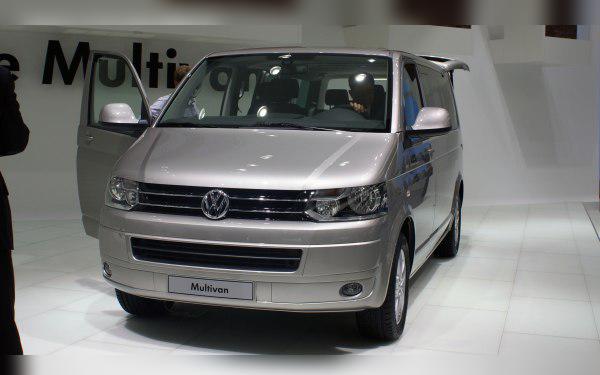
VW 2.0 BiTDI (CFCA) 180 HP – Experiences, oil consumption issues, maintenance and used-buying guide
Key points (TL;DR)
- Notorious oil consumption: This is the main problem of the CFCA engine. The cause is a factory defect in the EGR cooler, which disintegrates and destroys the cylinders.
- Performance: With 180 HP and 400 Nm, this is the most powerful diesel in the T5 facelift (GP) range and offers excellent acceleration for a van.
- BiTurbo system: Two turbochargers provide power across the entire rev range, but increase complexity and maintenance costs.
- DSG gearbox: The DQ500 gearbox (7-speed) is extremely robust, but requires regular oil changes.
- Expensive maintenance: Engine repair (block rebore or short-block replacement) is financially very demanding (depends on the market, but count on “very expensive”).
- Risk when buying used: Buying this model without proof of an engine replacement or an updated EGR cooler is a lottery.
- Recommendation: Fantastic to drive, but only for those with deep pockets or fully documented service history.
Contents
- Introduction and applications
- Technical specifications
- Reliability, maintenance and failures
- Specific parts and costs
- Fuel consumption and performance
- Additional options and modifications
- Gearbox (manual and DSG)
- Buying used and conclusion
Introduction: Successor to the legendary “five-cylinder”
The engine with the code CFCA was introduced in 2009 as part of the facelift update of the Volkswagen T5 model (often called T5.1 or T5 GP). Its task was difficult – it had to replace the beloved 2.5 TDI five-cylinder. To achieve this with a smaller 2.0-liter displacement, VW implemented BiTurbo technology (twin turbocharging).
This engine is primarily installed in the most luxurious and heaviest versions of the Multivan, Caravelle and California models, often combined with 4MOTION all-wheel drive and a DSG gearbox. Although on paper it appears to offer the perfect balance of power and efficiency, in practice it has turned out to be one of the most controversial engines in the recent history of VW commercial vehicles.
Technical specifications
| Parameter | Value |
|---|---|
| Displacement | 1968 cc (2.0 L) |
| Power | 132 kW (180 HP) |
| Torque | 400 Nm at 1500–2000 rpm |
| Engine code | CFCA |
| Injection type | Common Rail (direct injection) |
| Charging | BiTurbo (two turbochargers of different sizes) |
| Number of cylinders / valves | 4 / 16v |
Reliability and maintenance: The “Achilles’ heel” of the CFCA engine
Does this engine have a timing belt or a chain?
The CFCA engine uses a timing belt to drive the camshafts. Factory intervals are often optimistically set at 210,000 km, but real-world experience from mechanics says otherwise. The recommendation is to do the major service (timing kit and water pump) at a maximum of 120,000 to 150,000 km or every 5 years, whichever comes first. A snapped belt leads to catastrophic engine failure.
What are the most common failures on this engine? (Problem no. 1: Oil consumption)
The biggest and most serious problem of this engine is the EGR cooler (exhaust gas recirculation cooler). Factory-installed coolers (up to 2015, revisions A, B, C) are made of aluminum, which corrodes over time and starts to crumble. Detached aluminum and oxide particles go directly into the cylinders.
Symptoms and consequences: These particles act like sandpaper (abrasive) and create deep scratches on the cylinder walls. The result is a drastic loss of compression and massive oil consumption. Once the process starts, simply replacing the EGR does not help – the engine is already damaged. The solution is a full rebuild (block rebore and new pistons) or, more commonly, replacement of the complete short block.
Other failures include issues with the BiTurbo system (vacuum valves, actuators) and failure of the auxiliary (serpentine) belt, which can get caught under the timing belt (this is why the auxiliary belt must be replaced regularly).
Oil: Capacity and consumption
The CFCA engine takes about 7.0 liters of engine oil (a larger sump due to the cooling needs of the pistons and turbochargers). The recommended grade is 5W-30 with VW 507.00 specification.
Does it burn oil? A healthy CFCA engine may consume up to 0.5 L per 10,000 km. However, due to the above-mentioned EGR problem, these engines are known to burn 1 to 2 liters per 1,000 km in the terminal stage of failure. Any consumption higher than 0.5 L per 1,000 km is a red flag and calls for an urgent compression test and inspection of the cylinders.
Injectors
The system uses Common Rail injection. The injectors are generally reliable and can last over 250,000 km with good-quality fuel. Symptoms of bad injectors include smoke on cold start, rough idle and increased fuel consumption. Still, they are a less common issue compared to mechanical damage to the engine block.
Specific parts (costs)
Dual-mass flywheel
Yes, the CFCA engine (both manual and DSG) uses a dual-mass flywheel. Due to the high torque of 400 Nm, the flywheel is heavily stressed, especially on heavy Multivan models that tow trailers. Symptoms of failure include metallic noise when switching the engine off and vibrations at idle. Replacement is expensive (depends on the market).
Turbochargers
The engine has two turbochargers (BiTurbo). The smaller turbo works at low revs for quick response, while the larger one takes over at higher revs. Although the turbochargers themselves are mechanically solid, the control system (vacuum hoses, pressure valves) is complex. Failure of one turbo often requires removal of the entire assembly, which significantly increases labor costs.
DPF and EGR
DPF filter: The engine is equipped with one, and it often clogs up as a consequence of oil consumption. When the engine burns oil, ash quickly fills the DPF. Cleaning is possible, but if the engine is burning oil, the DPF will clog again after just a few hundred kilometers.
EGR valve/cooler: As explained, this is the critical point. Since the end of 2015 there has been a revised version of the cooler (part number ending with the letter “D”) which solves the crumbling issue. If you are buying this engine, check whether the “D” version of the cooler is installed.
AdBlue
Most T5 Facelift (GP) models with Euro 5 emission standard do not have an AdBlue system. This simplifies maintenance compared to newer T6 models (Euro 6), as there are no urea tank heaters, pumps and AdBlue injectors that can fail.
Fuel consumption and performance
Real-world fuel consumption
- City driving: Expect between 10 and 12 l/100 km. The Multivan is heavy, and with an automatic gearbox and 4x4, consumption easily rises in stop-and-go traffic.
- Country roads: On main roads it can drop to 7.5–8.5 l/100 km.
- Motorway: At 130 km/h, consumption is around 9–10 l/100 km.
Is the engine sluggish?
Absolutely not. With 400 Nm available from low revs, the CFCA copes very well with a body weight of over 2 tons. Overtaking is safe, and the engine responds eagerly to throttle input. The driving feel is much better than with the weaker 140 HP versions.
Motorway cruising
Thanks to the 7-speed DSG gearbox, the engine is not heavily loaded. At 130 km/h the engine spins at a relaxed 2,200–2,400 rpm (depending on the final drive ratio), which makes driving quiet and comfortable.
Additional options and modifications
Remapping (Stage 1)
Theoretically, this engine can be taken up to about 210 HP and 450 Nm. However, given that it is already thermally highly stressed from the factory and has a predisposition for engine block issues, remapping is NOT recommended unless you are 100% sure about the engine’s health and the quality of the tune. Increasing cylinder pressure can accelerate the end of an already compromised engine.
Gearbox: Manual and DSG
Available gearboxes
Two options are available with the CFCA engine:
- 6-speed manual: Precise and robust. The main cost is the clutch and flywheel kit.
- 7-speed DSG (DQ500): This is a “wet” DSG gearbox, designed for high torque loads (up to 600 Nm).
Failures and maintenance
DQ500 (DSG): This is one of VW’s best gearboxes. It is far more reliable than the older 6-speed versions. Still, the mechatronics unit can fail (symptoms: harsh shifts, loss of gears), which is a very expensive repair.
Gearbox service: Oil and filter in the DSG gearbox MUST be replaced every 60,000 km. Skipping this service drastically shortens the life of the mechatronics and clutch packs.
Buying used and conclusion
What to check before buying?
- Oil consumption: Ask the owner directly. Check the exhaust – is it black and oily? Does it emit blue smoke when revved?
- EGR cooler version: Try to see the part number on the EGR cooler. If it ends with “D”, that is a good sign (it has been replaced). If it is “A”, “B” or “C”, the risk is huge.
- Engine history: Ideally, find a car whose engine has already been replaced at an authorized service center (many were replaced under warranty or goodwill).
- Gearbox operation: The DSG must pull away smoothly, without jerks, and shift gears imperceptibly.
Conclusion
The VW T5 with the 2.0 BiTDI (CFCA) engine is a vehicle you buy with your heart, not your head, unless you are technically very knowledgeable. It offers top-notch performance, all-wheel drive and passenger-car comfort in a van body. However, the risk of catastrophic engine failure is real and well documented.
This engine is intended for buyers who are aware of the potential costs or for those who find a car with the issue already resolved (new engine/new type of EGR). If you are looking purely for reliability and low running costs, the 140 HP version (single turbo) is a much safer, although slower, choice.
Was this content useful to you?
Your opinion helps us to improve the quality of the content.