EA211 Engine
- Engine
- 999 cm3
- Aspiration
- Turbocharger, Intercooler
- Fuel
- Petrol / Ethanol - E85
- Fuel injection system
- Direct injection
- Power
- 116 hp @ 5500 rpm
- Torque
- 200 Nm @ 3500 rpm
- Power ethanol E85
- 128 hp @ 5500 rpm
- Torque ethanol E85
- 200 Nm @ 2000 rpm
- Cylinders
- 3
- Valves
- 12, 4 per cylinder
- Cylinders position
- Inline
- Oil capacity
- 4 l
- Systems
- Start & Stop System, Particulate filter
# Vehicles powered by this engine
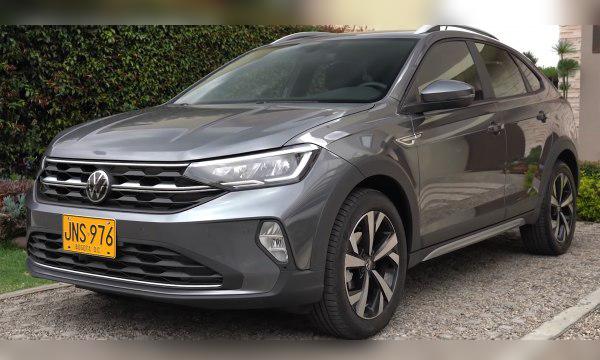
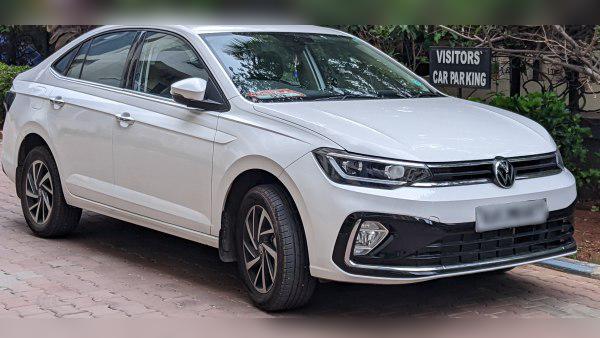
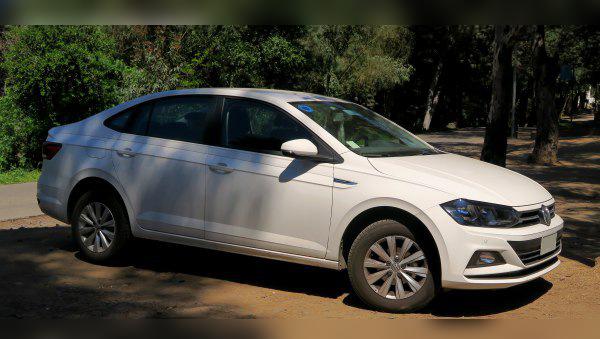
EA211 1.0 TSI (116 hp): Experiences, issues, fuel consumption and used car buying guide
Key points (TL;DR)
- Timing drive: Uses a timing belt (and not the problematic chain from older generations), which is a big plus for reliability.
- Performance: With 200 Nm of torque, the engine is surprisingly lively and not “lazy” even in models the size of the Virtus or Nivus.
- Main weakness: The thermostat housing and water pump are weak points – prone to coolant leaks.
- Maintenance: Requires high-quality oil and regular spark plug changes; direct injection does not tolerate poor fuel.
- Gearbox: Often paired with reliable Tiptronic (automatic) transmissions in these models, which is a comfortable option.
- Sound: Like any three-cylinder, it has a specific, rougher sound under acceleration and mild vibrations at idle.
- Recommendation: An excellent choice for those who want modern petrol technology with low fuel consumption, but without the fear of the old chain-driven TSI “gremlins”.
Contents
Introduction and applications
The EA211 1.0 TSI engine with 116 hp (sometimes rated as 115 hp or 85 kW) represents the “sweet spot” in Volkswagen’s downsized engine lineup. It is a three-cylinder turbocharged petrol engine designed to replace older naturally aspirated 1.6 units, offering dramatically higher torque and lower fuel consumption.
In models such as the Volkswagen Nivus and Virtus (popular on South American markets, and also used as the basis for the European VW Taigo), this engine has proven to be very capable. The versions you mention (Flex Fuel / Ethanol) are specific to markets like Brazil, where the engine can produce up to 128 hp on ethanol, but the basic mechanical design is identical to the global EA211 engine that powers half of Europe. This is a modern, all-aluminium unit that has solved most of the teething problems of the previous EA111 series.
Technical specifications
| Engine displacement | 999 cc (1.0 L) |
| Configuration | R3 (3 cylinders in-line), 12 valves |
| Power output | 85 kW (116 hp) / Up to 128 hp on ethanol |
| Torque | 200 Nm at 2000–3500 rpm |
| Injection type | Direct injection (TSI) |
| Induction | Turbocharger with intercooler |
| Engine family code | EA211 |
Reliability and maintenance
Timing belt or chain?
This is the most important question and there is good news for owners: this engine uses a timing belt. With the EA211 series, Volkswagen abandoned the problematic chains that used to stretch on the old 1.2 and 1.4 TSI engines. The belt on this engine is reinforced and designed for long life. Although the manufacturer often states inspection intervals around 210,000 km, in practice and from a preventive standpoint, the major service (replacement of the timing kit and water pump) is recommended between 150,000 km and 180,000 km, or every 5 to 7 years, depending on climate conditions.
Most common issues
Although more reliable than its predecessors, the EA211 1.0 TSI has its weak spots:
1. Water pump and thermostat housing: This is the Achilles’ heel. The housing is made of plastic and over time it cracks or deforms from heat, which leads to coolant leaks. Symptoms include a dropping coolant level in the expansion tank or the smell of coolant under the bonnet.
2. Carbon buildup: As with any direct-injection engine, the intake valves are not “washed” by fuel. Over time, carbon deposits build up, which can lead to rough running and loss of power at higher mileages.
3. Turbo actuator: Sometimes the wastegate lever can stick, which triggers the “Check Engine” light and causes a loss of power (safe mode).
Engine oil and oil consumption
The engine takes approximately 4.0 litres of oil (check the exact amount by VIN, as sumps can vary). The recommended grades are 0W-20 (VW 508.00 standard for newer models) or 5W-30 (VW 504.00).
As for oil consumption, these engines are significantly better than older generations. Consumption of up to 0.5 litres per 10,000 km is considered perfectly normal. If it uses more than 0.5 litres per 1,000 km, that points to an issue with piston rings or the turbo, but this is rare on well-maintained examples.
Spark plugs
Since this is a highly stressed three-cylinder engine, the spark plugs are under a lot of load. Replacement is recommended every 60,000 km or 4 years. Do not wait longer, because a bad spark plug can damage the ignition coil (which is also a wear item).
Specific parts (costs)
Dual-mass flywheel
Yes, the 116 hp version (and more powerful ones) usually has a dual-mass flywheel when paired with a manual gearbox, in order to neutralise the inherent vibrations of the three-cylinder engine. In models with an automatic gearbox (such as the Nivus and Virtus Tiptronic), a conventional dual-mass flywheel is not used in the same way as with manuals (a different damping system is integrated into the torque converter or a flywheel adapted to the automatic), so that cost is a smaller risk than with manual cars.
Injection system and injectors
The engine uses high-pressure direct injection. The injectors are precise and generally durable, but they are sensitive to poor fuel quality. They are not known as a widespread problem, but if they do fail, replacement is expensive (cost varies by market). It is advisable to occasionally use fuel system cleaning additives.
Turbocharger
The engine has a single small turbocharger that spools up quickly to eliminate turbo lag. Its service life is generally equal to the life of the engine if oil changes are done regularly. It is not prone to cracking, but as mentioned, the electronic turbo actuator can cause issues.
DPF / GPF / EGR
This is a petrol engine, so there is no DPF (that’s for diesels), but newer models (especially in Europe from 2018/2019 onwards) have a GPF (Gasoline Particulate Filter). It rarely clogs because petrol engines run with higher exhaust temperatures. There is an EGR valve, but it is integrated and controlled via software – problems with it are less common than on diesels.
AdBlue
No. This engine does not use AdBlue fluid. That is reserved exclusively for diesel engines.
Fuel consumption and performance
Real-world fuel consumption and city driving
Do not trust the official figures of 4–5 litres. In real city driving, with models such as the Virtus or Nivus (which are raised or sedan-type bodies), you should expect consumption between 7.0 and 8.5 litres per 100 km, depending on traffic and how heavy your right foot is. On the open road this drops to around 5.0–6.0 litres.
Is the engine “lazy”?
Absolutely not. With 200 Nm of torque available from as low as 2,000 rpm, this engine pulls better than the old naturally aspirated 1.8. In a Nivus or Virtus body, in-gear acceleration is excellent. A feeling of “laziness” may appear only if the car is fully loaded with passengers and luggage on steep climbs, but for the average driver there is more than enough power.
Behaviour on the motorway
The engine behaves in a civilised manner. At 130 km/h, depending on the gearbox (6th gear), the engine spins at around 2,800 to 3,000 rpm. Noise levels are acceptable, and the engine has enough power in reserve for overtaking without having to drop a gear, except in extreme situations.
Additional options and modifications
LPG conversion
Since this is a direct-injection engine (TSI), an LPG conversion is complex and expensive. It requires a “direct liquid” system or a setup that also injects a small amount of petrol for injector cooling. The conversion only pays off if you cover very high mileages (over 20–30k km per year). For the average driver – it is not cost-effective.
Remapping (Stage 1)
This engine responds very well to remapping. A safe Stage 1 tune can raise power to around 130–140 hp and torque to 230–240 Nm. However, keep in mind that this is a small 1.0-litre engine; the extra load increases thermal stress on the turbo and pistons. If you decide to do this, shorten the oil change interval to 8,000 km.
Gearbox
Types of gearboxes
In the mentioned models (Nivus, Virtus), you most commonly get a 6-speed automatic Tiptronic gearbox (a conventional hydraulic automatic, often made by the Japanese manufacturer Aisin) or a 6-speed manual. In some variants you may also find a 7-speed DSG (dual-clutch), but Tiptronic is more common in South America.
Gearbox issues and maintenance
Automatic (Tiptronic/Aisin): Very reliable, more robust than DSG in city driving. Its main enemy is old oil. Even though manufacturers sometimes claim it is “filled for life”, change the oil in the automatic every 60,000 km. If this is done, the gearbox can cover hundreds of thousands of kilometres without failure. Failures are mostly related to solenoids if the oil is not changed.
Manual: Generally very reliable. Issues are related to the clutch kit and dual-mass flywheel (if fitted). Replacing the clutch kit together with the flywheel is a costly job (varies by market, but expect a significant expense).
Used car buying tips and conclusion
When buying a used Nivus or Virtus with this engine, pay attention to:
- Cold start: Listen to the engine when it is cold. There should be no metallic rattling or rough running for more than a couple of seconds.
- Coolant leaks: Check around the thermostat housing (on the right-hand side of the engine when viewed from the front) for whitish or reddish traces of dried coolant.
- Service history: Check whether the oil has been changed on time (a maximum of 15,000 km, ideally every 10,000 km).
Conclusion
The EA211 1.0 TSI (116 hp) is an excellent, modern engine. Do not let the one-litre displacement fool you – performance is on par with older 1.8 engines, while registration and fuel costs are low. It is ideal for drivers who spend most of their time in city and suburban driving, but are not afraid of long trips either. In combination with the Tiptronic automatic in Nivus/Virtus models, it offers very comfortable and worry-free motoring, provided that the cooling system is maintained regularly.
Was this content useful to you?
Your opinion helps us to improve the quality of the content.