EA888 / DTDA Engine
- Engine
- 1984 cm3
- Aspiration
- Turbocharger, Intercooler
- Fuel
- Petrol (Gasoline)
- Fuel injection system
- Direct injection
- Power
- 174 hp @ 5000 rpm
- Torque
- 280 Nm @ 1700 rpm
- Cylinders
- 4
- Valves
- 16, 4 per cylinder
- Cylinders position
- Inline
- Valvetrain
- DOHC
- Oil capacity
- 5.7 l
- Coolant
- 10 l
# Vehicles powered by this engine
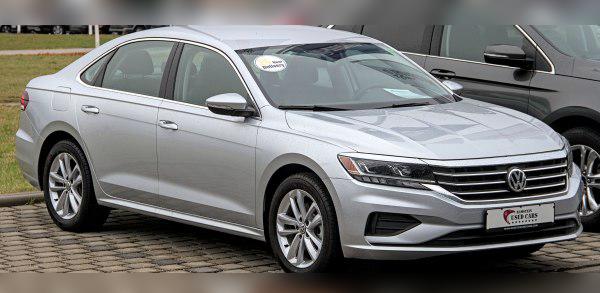
2.0 TSI (EA888 Gen 3B / DTDA) – Experiences, Issues and Maintenance
The engine with the code DTDA belongs to the famous, yet controversial Volkswagen EA888 family. However, this is not the "usual" 2.0 TSI we’re used to seeing in the Golf GTI. This is the Generation 3B, which operates on the so‑called “Budack” cycle (a modified Miller cycle). What does that mean for you? It means this engine is designed primarily for efficiency and comfortable driving, not for racing.
Specifically, the 174 hp (129 kW) variant is most commonly found in the Volkswagen Passat for the North American market (NMS – New Midsize Sedan). Although it shares DNA with European models, there are key differences in the fuel injection system, transmission and thermal management. Below is a detailed analysis of this power unit.
Key points in short (TL;DR)
- Optimized for fuel economy: Thanks to the “Budack” cycle, it consumes less fuel on the open road than standard 2.0 TSI engines.
- Timing chain: Uses a timing chain, which in this generation is significantly more reliable than in earlier ones (Gen 1 and 2).
- Thermostat and water pump: The “Achilles’ heel” of this engine. The thermostat housing is plastic and prone to coolant leaks.
- Transmission is not DSG: In this configuration (Passat USA), the engine is paired with a conventional Tiptronic automatic (torque converter), which means more comfortable driving and cheaper clutch-related maintenance, but slightly slower shifting.
- Direct injection: Requires good-quality fuel and regular intake valve carbon cleaning at higher mileage.
- Recommendation: An excellent choice for those who want diesel-like torque and petrol refinement, and who don’t cover huge annual mileage.
Contents
- Technical Specifications
- Reliability and Maintenance
- Specific Parts and Costs
- Fuel Consumption and Performance
- Additional Options and Modifications
- Transmission (Tiptronic)
- Buying Used and Conclusion
Technical Specifications
| Parameter | Data |
| Engine displacement | 1984 cc (2.0 L) |
| Power | 129 kW / 174 hp (at 4400 rpm) |
| Torque | 280 Nm (at 1600–4300 rpm) |
| Engine code | DTDA (EA888 Gen 3B) |
| Injection system | Direct injection (TSI/FSI) |
| Induction | Turbocharger (IS12 or similar small turbo) + intercooler |
| Recommended oil | 0W-20 (VW 508 00 specification) |
Reliability and Maintenance
Timing system: Chain or belt?
The EA888 Gen 3B (DTDA) engine uses a timing chain. The good news is that in this generation Volkswagen resolved most of the chain-stretching and tensioner-failure issues that used to destroy engines before 2012. Still, the chain is not eternal. It’s recommended to check chain condition (stretch) via diagnostics or visually after about 150,000 km. If you hear rattling on cold start that lasts longer than 2–3 seconds, that’s a sign you should visit a workshop immediately.
Most common failures
Although mechanically robust, the engine’s peripheral components can cause issues:
- Thermostat module and water pump: This is problem number one. The housing is made of plastic that deforms over time due to heating and cooling cycles, which leads to coolant leaks. Symptom: coolant level dropping without a visible puddle under the car (it often leaks onto the engine block and evaporates) or a “sweet” smell from the engine bay.
- PCV valve (oil vapor separator): When the membrane in this valve tears, the engine starts running rough, the “Check Engine” light comes on, and oil consumption may increase. A whistling sound from the engine is a common symptom.
- Carbon buildup: Since this is a direct-injection engine, the valves are not “washed” by fuel. Over time, carbon deposits build up on the intake valves, causing power loss and rough idle. Cleaning (walnut shell blasting) is recommended at around 100,000 km.
Major and minor service
A classic “major service” (timing belt replacement) does not exist because this engine uses a chain. However, the serpentine belt, tensioners and water pump (often replaced preventively due to leaks) should be inspected/replaced at around 100,000–120,000 km or 5–6 years of age.
Spark plugs on this turbocharged petrol engine should be replaced every 60,000 km. Don’t postpone replacement, as worn plugs can damage the ignition coils (which are also wear items).
Oil: Capacity and consumption
The engine holds approximately 5.7 liters of oil. Due to the “Budack” cycle and tight tolerances, the manufacturer strictly recommends 0W-20 (VW 508 00) oil. This oil is “thin” like water to reduce friction and fuel consumption. Although many mechanics advocate 5W-30, for this specific engine (Gen 3B) it’s best to stick to the factory recommendation, or move to 5W-30 only if you live in extremely hot regions and drive aggressively.
Oil consumption: Gen 3B engines consume significantly less oil than their predecessors. Still, consumption of about 0.5 liters per 5,000–7,000 km is considered acceptable and normal, especially if the car is driven mostly on highways.
Specific Parts (Costs)
Dual-mass flywheel:
This model (Passat NMS 2.0 TSI with Tiptronic transmission) DOES NOT have a conventional dual-mass flywheel like models with manual or DSG gearboxes. It uses a torque converter and a flexplate. This is a big advantage because it eliminates one of the most expensive failures on modern cars. The cost of replacing the flexplate is minimal and it rarely fails.
Fuel injection system:
The engine uses high-pressure injectors for direct injection. The injectors are generally reliable but sensitive to poor fuel quality. Replacing a full set of injectors is expensive (market-dependent), so it’s advisable to occasionally use fuel system cleaning additives.
Turbocharger:
It uses a single turbocharger (usually an IHI IS12). This is a small turbo designed for quick response (fast spool) at low rpm. Service life is long, often over 200,000 km with regular oil changes and proper cool-down of the engine before shutting it off.
EGR and GPF/DPF:
Petrol engines do not have a DPF. As for the GPF (Gasoline Particulate Filter), it is fitted to newer models (mainly after 2018/2019 in Europe), while US models from that period often don’t have a GPF, which simplifies maintenance. An EGR valve is present, but it rarely clogs on petrol engines compared to diesels.
AdBlue:
This is a petrol engine, so it does not have an AdBlue system, no urea tank and no crystallization issues.
Fuel Consumption and Performance
City driving:
The Passat is a heavy car. In pure stop‑and‑go city traffic, you can expect real-world consumption between 9 and 11 liters per 100 km. In winter or with a heavy right foot, this can go up to around 12 l/100 km.
Open road and highway:
This is where the “Budack” cycle shows its strengths. At a steady 80–90 km/h, consumption can drop to an impressive 5.5–6 liters. On the highway at 130 km/h, the engine spins at a low 2,000–2,200 rpm (thanks to long gear ratios) and uses about 6.5–7.5 l/100 km.
Is the engine “lazy”?
With 174 hp and 280 Nm, the engine is no sports car unit, but it’s far from lazy. 280 Nm is available from as low as 1600 rpm, which means the car pulls nicely from a standstill. However, at high revs the engine runs out of breath quicker than the standard 2.0 TSI (220 hp). For normal family driving and overtaking, there is more than enough power.
Additional Options and Modifications
LPG conversion:
Since this is a direct-injection engine, LPG installation is complex and expensive. It requires a system that either uses “liquid phase” (using petrol injectors for LPG) or a system that injects a small amount of petrol while running on gas to cool the injectors. The installation cost is very high (market-dependent), often over 800–1000 EUR, so it only pays off for those who drive more than 30,000 km per year.
Chiptuning (Stage 1):
This engine is “software‑detuned” for the sake of economy. That means it has huge potential to be “unlocked”. A safe Stage 1 remap can raise power to about 210–220 hp and torque to over 350 Nm. This drastically changes the character of the car, but keep in mind it voids the warranty and can shorten turbocharger life if the car is not driven sensibly.
Transmission: Tiptronic (Automatic)
Unlike European models that use DSG (dual-clutch), this model is most commonly paired with the Aisin 6-speed automatic transmission (code 09G or newer variants AQ250/AQ450).
- Reliability: This is a classic hydraulic automatic. It is considered a very robust and long-lasting transmission, provided it is maintained properly. It is less sensitive than DSG in city driving (no jerking when taking off).
- Maintenance: Although VW often states the oil is “lifetime”, you MUST change the transmission fluid every 60,000 to 80,000 km. If the oil is not changed, the valve body will eventually fail, resulting in harsh shifts.
- Failures: The most common issues are overheating if the car is driven hard, or oil leaks at the driveshaft seals. There is no clutch replacement cost because there is no conventional clutch (there are internal clutch packs that usually last as long as the transmission itself, typically over 250,000 km with regular fluid changes).
Buying Used and Conclusion
Before buying a Passat with this engine, pay attention to the following:
- Cold start: The engine should run smoothly immediately after starting. Any chain rattling lasting more than a couple of seconds is a red flag.
- Signs of coolant leaks: Look carefully under the intake manifold (where the water pump is located) for white or pink traces of dried coolant.
- Transmission service history: If the car has over 100,000 km and the transmission fluid has never been changed, be cautious. Test drive the car – gear changes should be seamless, without jerks.
Conclusion:
The 2.0 TSI DTDA (174 hp) engine is arguably the “sweet spot” for the average driver. It offers the simplicity of a conventional automatic, avoids expensive dual-mass flywheel and DPF repairs, and delivers perfectly adequate performance with impressively low fuel consumption on the open road for a petrol engine of this size. If you can accept the risk of a water pump replacement and slightly higher city consumption, this is an excellent, refined powertrain.
Was this content useful to you?
Your opinion helps us to improve the quality of the content.