07K / CBTA, CBUA Engine
- Engine
- 2480 cm3
- Aspiration
- Naturally aspirated engine
- Fuel
- Petrol (Gasoline)
- Fuel injection system
- Multi-port manifold injection
- Power
- 170 hp @ 5700 rpm
- Torque
- 240 Nm @ 4250 rpm
- Cylinders
- 5
- Valves
- 20, 4 per cylinder
- Cylinders position
- Inline
- Valvetrain
- DOHC
- Oil capacity
- 6 l
- Coolant
- 7.1 l
# Vehicles powered by this engine
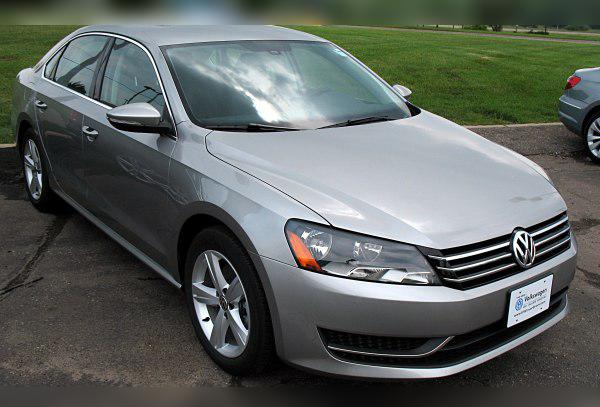
VW 2.5 R5 (07K) – The Last Mohican: Real-world experience, fuel consumption and maintenance
Key points (TL;DR)
- Reliability: Extremely robust engine, probably one of the most reliable modern VW petrol engines.
- Sound: Unique 5-cylinder sound (“half a V10 engine”) that many enthusiasts love.
- LPG: An ideal candidate for LPG conversion thanks to its port (indirect) injection.
- Fuel consumption: Quite thirsty, especially in city driving where it behaves like a larger-displacement engine.
- Most common issue: PCV valve (integrated into the valve cover) and oil leaks from the vacuum pump.
- Timing chain: The chain is located at the back of the engine (next to the gearbox), which makes replacement more complicated, but it is fortunately very durable.
- Recommendation: An excellent choice for drivers who want to avoid turbo-related complications and prefer simple “raw” power, provided they accept higher fuel consumption.
Contents
- Introduction and applications
- Technical specifications
- Reliability and maintenance
- Specific parts and costs
- Fuel consumption and performance
- Additional options and modifications (LPG/Tuning)
- Gearbox and drivetrain
- Buying used and conclusion
Introduction and applications
The engine with the code 07K, better known as the VW 2.5 R5 (inline-5), is something of an exotic sight on European roads, while in North America it served as a “workhorse” of the Volkswagen Group for almost a decade. It was primarily installed in models such as the North American Passat (NMS – New Midsize Sedan), Jetta and Golf (known there as the Rabbit).
This is a naturally aspirated inline 5-cylinder engine. It was developed as a cheaper and simpler alternative to complex turbocharged engines. Because of its design, it is often called “half a Lamborghini V10” (as they share the same bore and stroke, as well as cylinder spacing). Its biggest advantage is simplicity – no turbo, no high-pressure direct injection, which makes it extremely long-lived.
Technical specifications
| Parameter | Value |
|---|---|
| Engine displacement | 2480 cc (2.5 L) |
| Configuration | R5 (Inline, 5 cylinders) |
| Power | 125 kW (170 hp) @ 5700 rpm |
| Torque | 240 Nm @ 4250 rpm |
| Engine codes | CBTA, CBUA (common versions in the NMS Passat) |
| Injection type | MPI (Multipoint / Port injection) |
| Aspiration | Naturally aspirated |
Reliability and maintenance
Timing system (chain)
This engine uses a timing chain, not a belt. A specific feature of the 07K is that the chain is located at the back of the engine (between the engine and the gearbox). Although this sounds scary (because replacement requires removal of the engine or gearbox), in practice these chains are extremely durable. Unlike the notorious TSI chains from the same era, the chain on the 2.5 engine rarely causes problems before 250,000–300,000 km, provided the oil has been changed regularly. If you hear rattling on a cold start that does not disappear after a few seconds, that is a red flag and a sign of an expensive repair.
Most common failures
Although the engine itself is a “tank”, there are peripheral components that tend to fail:
- PCV valve (oil separator): This is the most common issue. The diaphragm in the valve tears, which leads to rough idle, whistling noises and dashboard errors (Check Engine). The problem is that the valve is integrated into the valve cover, so the entire cover has to be replaced, which makes the repair more expensive.
- Vacuum pump: It often leaks oil at the pump gasket, or the pump itself fails. Oil leaks here can be quite heavy.
- MAP sensor: Due to contamination it can send incorrect readings, resulting in poor performance.
Service intervals and oil
There is no “major service” in the classic sense (no timing belt replacement). The accessory belt and tensioners should be inspected every 100,000 km. The engine takes about 5.5 to 6.0 liters of oil (check precisely by VIN, as oil pan designs may vary). A 5W-40 or 0W-40 oil with VW 502.00 approval is recommended. Minor services should be done every 10,000 km, up to a maximum of 15,000 km. “Long Life” 30,000 km intervals are not advisable if you want to preserve the timing chain.
Oil consumption
In general, the 2.5 R5 does not consume oil to the extent that TSI engines do. Consumption of up to 0.5 liters per 10,000 km is acceptable. If it uses more, the issue is usually an external leak (vacuum pump) or the PCV valve, and piston rings are rarely to blame.
Spark plugs
Spark plugs on this engine are replaced every 60,000 to 90,000 km, depending on the plug type (iridium plugs last longer). Since the engine has 5 cylinders, you need 5 plugs, which is an odd number, and some sellers only offer packs of 4, so pay attention.
Specific parts (costs)
Dual-mass flywheel: Models with automatic transmissions (most common in the A32 Passat) do not have a dual-mass flywheel, but use a torque converter instead. Manual versions (rarer) usually do have a dual-mass flywheel, but on this engine it tends to last a very long time because there are no sudden torque spikes like on diesels.
Fuel injection system: This is a classic MPI (Multi Point Injection) engine. Injectors are very simple, inexpensive and tolerant of lower-quality fuel. They are not problematic and rarely need replacement. A major advantage of this system is that fuel “washes” the intake valves, so this engine does not suffer from carbon buildup on the intake valves like FSI/TSI engines do.
Turbocharger: The engine does not have a turbocharger. It is a traditional naturally aspirated engine. This means: no turbo failures, no intercooler issues, no expensive boost control valves. As a result, overall engine life is significantly longer.
DPF, EGR and AdBlue: Being a petrol engine, it has no DPF filter and no AdBlue system. There is an EGR system and a secondary air injection system to reduce emissions during cold starts. The secondary air pump can sometimes fail, but this does not prevent driving; it only triggers a warning light.
Fuel consumption and performance
Real-world fuel consumption: Here we come to the biggest downside of this engine.
- City driving: Expect between 11 and 14 l/100 km. In heavy traffic and in winter, it can easily go higher.
- Country roads: On open roads it can drop to around 7–8 l/100 km.
- Highway: At 130 km/h it uses about 8.5–9.5 l/100 km.
Is the engine “sluggish”? With 170 hp and 240 Nm, the engine is not sluggish, but it is not a sports engine either. The Passat is a heavy car, but the 5 cylinders provide nice low-end torque, so the car pulls well from a standstill. There is no turbo lag; throttle response is linear. For an average driver, there is more than enough power for safe overtaking.
Highway driving: The engine is very refined. At 130 km/h it runs at relatively low rpm (thanks to the tall gearing of the automatic transmission) and is very quiet. Under acceleration, the 5-cylinder sound is deep and pleasant, giving the impression of driving a more expensive car.
Additional options and modifications
LPG conversion: YES, absolutely! This is one of the best modern engines for LPG conversion. Thanks to its port injection, installation is simple, cheaper (standard sequential system) and the engine handles LPG very well. Given the high petrol consumption, LPG is almost a must for economical driving. The tank is usually installed in place of the spare wheel.
Remapping (Stage 1): Since the engine is naturally aspirated, gains are small. A Stage 1 remap can bring around 10 to 15 hp and slightly better throttle response, but do not expect miracles like with turbo engines. Disabling the rev limiter or tuning for better sound are more common reasons for a remap than chasing extra power.
Gearbox
In the Passat (North America), this engine is most commonly paired with:
- Automatic gearbox (Tiptronic): This is a conventional 6-speed automatic (Aisin 09G), not a DSG.
- Reliability: A very reliable gearbox IF maintained properly. Volkswagen once claimed the fluid was “lifetime”, which led to valve body failures at around 150,000–200,000 km. Symptoms are harsh shifts (especially from 1st to 2nd or when decelerating).
- Maintenance: The transmission fluid should be changed every 60,000 km. If you do that, the gearbox can last as long as the engine.
- Manual gearbox (5-speed): Rarer in the Passat, more common in the Jetta.
- Extremely robust, and the clutch is not expensive (compared to diesels with dual-mass flywheels). Replacing the clutch kit is a standard expense (cost depends on the market, but it is in the mid-range).
Buying used and conclusion
When buying a used car with the 2.5 engine, pay attention to:
- Cold start: Listen for any chain rattle from the back of the engine.
- Oil leaks: Check around the vacuum pump (gearbox side) and around the valve cover.
- Test drive (automatic): The gearbox should shift smoothly and almost imperceptibly. If it starts “kicking” once warm, walk away from that car or budget for a valve body overhaul.
- Noise: If you hear a loud whistling while the engine is running, the PCV valve membrane has likely torn.
Conclusion
VW 2.5 (07K) is an engine for people who want peace of mind. It is not the most economical, nor the fastest, but it will probably start and get you where you need to go even when all the modern turbo engines have given up. It is ideal for those who drive long distances on open roads or plan to install LPG. In the Passat, it provides a comfortable, quiet and “gentlemanly” driving experience.
Maintenance costs: Medium (regular services are inexpensive, but specific parts such as the valve cover or timing chain can be more costly).
Was this content useful to you?
Your opinion helps us to improve the quality of the content.