BZB, CDAA Engine
- Engine
- 1781 cm3
- Aspiration
- Turbocharger, Intercooler
- Fuel
- Petrol (Gasoline)
- Fuel injection system
- Direct injection
- Power
- 150 hp @ 5700 rpm
- Torque
- 210 Nm @ 1750 rpm
- Cylinders
- 4
- Valves
- 20, 5 per cylinder
- Cylinders position
- Inline
- Valvetrain
- DOHC
- Oil capacity
- 4.7 l
- Coolant
- 5.6 l
# Vehicles powered by this engine
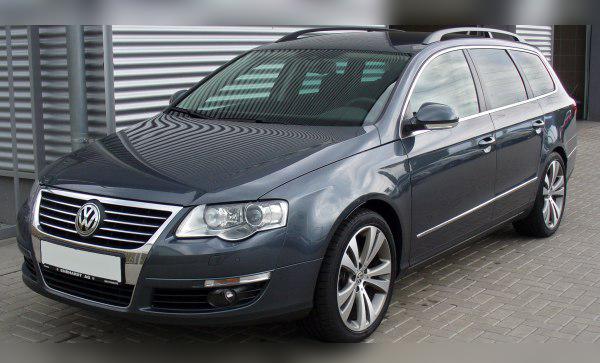
1.8 TSI (BZB, CDAA) 150 HP – Experiences, Problems, Fuel Consumption and Buying Tips
Key points in short (TL;DR)
- Achilles’ heel – Timing chain: The timing chain tensioner is the critical point. If it fails, it leads to catastrophic engine damage. Mandatory inspection and preventive replacement.
- Oil consumption (CDAA): Engines with the CDAA code (from 2008/2009) are notorious for excessive oil consumption due to poor piston ring design. BZB engines are significantly better in this regard.
- Performance: The engine is not “lazy”. The turbo gives it enough punch even for the heavy Passat body, and it is easy to remap (“chip tune”).
- Direct injection: Carbon buildup on intake valves is inevitable after higher mileage and requires mechanical cleaning.
- DSG gearbox: If it comes with the 7-speed DSG (DQ200), be careful – this is a “dry” clutch gearbox, more sensitive than the “wet” ones.
- Recommendation: BZB is a safer purchase than CDAA, unless the CDAA has documented proof (invoice) that pistons and rings have been replaced with the revised version.
Contents
- Introduction and Engine Codes
- Technical Specifications
- Reliability and Maintenance
- Specific Parts and Costs
- Fuel Consumption and Performance
- Additional Options and Modifications
- Gearbox and Drivetrain
- Conclusion and Used-Car Buying Advice
Introduction and Engine Codes
The 1.8 TSI engine from the Volkswagen Group belongs to the EA888 family (Gen 2), although the BZB version still has some first-generation elements. It is one of the most popular yet most controversial modern petrol engines. It was widely used in the VW Passat B6, Škoda Octavia and Superb, as well as Audi models.
The 150 HP variant was often intended for specific markets or fleet customers as a replacement for older naturally aspirated engines, offering better torque thanks to the turbocharger. The difference between the BZB and CDAA codes is crucial: BZB is the older version, mechanically more robust in terms of the piston assembly, while CDAA (Euro 5) introduced changes for emissions which unfortunately caused major oil consumption issues.
Technical Specifications
| Displacement | 1781 cc (1.8 L) |
| Power | 110 kW (150 HP) |
| Torque | 210 Nm (standard versions often have 250 Nm, depending on the map) |
| Engine codes | BZB, CDAA |
| Injection type | Direct injection (TSI/FSI) |
| Induction | Turbocharger + intercooler |
| Cylinders / Valves | 4 cylinders / 16 valves |
Reliability and Maintenance
Does this engine have a timing belt or a chain?
The engine uses a timing chain. Unfortunately, this is not a “lifetime chain” as it was once marketed. The timing system is one of the weakest points of this engine. The problem is not only chain stretch, but also the hydraulic chain tensioner. Older versions of the tensioner had a factory defect where the pawl could slip, leading to piston-to-valve contact. Symptoms include rattling at cold start (sounds like a diesel for the first few seconds). The recommendation is preventive replacement of the complete chain and tensioner set (with the revised version) at around 100,000 to 120,000 km, or immediately after purchase if there is no proof it has been done.
What are the most common failures on this engine?
Besides the chain, there are:
1. Oil consumption (CDAA): Due to thin “eco” rings and small oil drain holes in the pistons that get clogged with carbon.
2. PCV valve (oil separator): When the membrane tears, the engine loses vacuum, runs rough, “struggles”, and oil consumption increases. A relatively cheap failure.
3. Water pump: The housing is plastic and often cracks, or the thermostat fails, causing coolant leaks.
4. Carbon buildup: Due to direct injection, fuel does not wash the intake valves, so carbon deposits build up and choke the engine.
At what mileage should the major service be done?
Since the engine has a chain, a classic “major service” as with a belt is not prescribed at a fixed interval, but in practice the chain is replaced when it stretches (often around 120,000 km). The auxiliary belt, tensioners and water pump should be regularly inspected and replaced as needed, usually at intervals of about 90,000–120,000 km.
How many liters of oil does this engine take and which viscosity is recommended?
The sump holds approximately 4.5 to 4.7 liters of oil. Recommended viscosity is 5W-30 or 5W-40 synthetic oil that meets VW 504.00 / 507.00 (for LongLife) or VW 502.00 standards. A strong recommendation is to switch to 5W-40 and a fixed change interval (10,000 km) instead of the LongLife regime, especially due to chain and ring issues.
Does it consume oil between services and what amount is considered normal?
This is where the main difference lies.
BZB engines: Moderate consumption, up to 0.5 L per 10,000 km, which is acceptable.
CDAA engines: Often consume enormous amounts, from 0.5 L up to even 1 L per 1,000 km! The manufacturer claims up to 0.5 L/1000 km is “within normal limits”, but this is unacceptable for an owner. If a CDAA engine consumes a liter every 2–3 thousand km, it is a sign that the rings need replacement, which is a very expensive job (full rebuild).
At what mileage should the spark plugs be replaced?
On turbo petrol engines with direct injection, spark plugs are under higher stress. The recommendation is to replace them every 60,000 km. If the car is remapped, the interval should be shortened to 30,000–40,000 km. Use only iridium or platinum plugs according to factory specification (NGK or Bosch).
Specific Parts (Costs)
Does this engine have a dual-mass flywheel?
Yes, it does. Both with the manual and DSG gearboxes, the 1.8 TSI uses a dual-mass flywheel (DMF). Its lifespan is usually around 150,000–200,000 km, depending on driving style. Symptoms include metallic noise when switching the engine off and vibrations at idle. Replacement is not cheap (depends on the market, but it is among the more expensive items).
What kind of injection system does it have and are the injectors problematic?
The system is high-pressure direct injection (FSI/TSI). Injectors are generally reliable and rarely fail before 200,000 km. However, the high-pressure fuel pump (HPFP) can fail, which manifests as loss of power and “stuttering” under acceleration. A bigger issue than the injectors themselves is the aforementioned carbon buildup on the valves.
Does this engine have a turbocharger (or two) and what is their lifespan?
It has a single turbocharger (usually a BorgWarner K03). The turbo is water-cooled and generally very durable. With regular oil changes and allowing the engine to cool down before switching off after hard driving, the turbo can last as long as the engine itself. There are no issues with a “twin-charger” system like on the smaller 1.4 TSI.
Does this model have a DPF filter or an EGR valve that often clogs?
Being a petrol engine, it does not have a DPF filter (GPF filters came much later). Also, a classic EGR valve is often not present in the same way as on diesels, because exhaust gas recirculation is done via “internal EGR” using variable valve timing. That means – one less worry compared to diesel engines! However, the catalytic converter can fail if the engine burns a lot of oil.
Does this engine use AdBlue?
No. AdBlue is used exclusively on newer-generation diesel engines (Euro 6) to reduce NOx emissions. The 1.8 TSI does not use any additional fluids besides fuel, oil, coolant and windshield washer fluid.
Fuel Consumption and Performance
What is the real fuel consumption in city driving?
The Passat B6 is not a light car. In pure city driving (stop-and-go), you can realistically expect between 10 and 12 liters per 100 km. In winter or with a “heavy foot” this can go up to 13–14 liters. This is not an engine for those who want maximum fuel savings in the city.
Is this engine “lazy” for the weight of the body it is installed in?
Absolutely not. Although 150 HP (or 160 HP in some variants) does not sound like much by today’s standards, the 1.8 TSI has an excellent torque curve available from low revs (from about 1,500 rpm). The car pulls linearly and strongly. Subjectively, it feels faster than the numbers on paper suggest. For overtaking on country roads it is more than adequate.
How does the engine behave on the highway and at what rpm does it cruise at 130 km/h?
This is the natural habitat of the Passat 1.8 TSI. On the highway it is quiet, refined and stable. Fuel consumption drops to a reasonable 7 to 8 liters. Thanks to the 6-speed gearbox (manual or DSG), at 130 km/h it runs at about 2,800–3,000 rpm, which provides quiet cruising with enough power in reserve for acceleration without downshifting.
Additional Options and Modifications
Is this engine suitable for LPG (autogas) conversion?
Conditionally yes, but it is expensive. Due to direct injection, you cannot install a regular sequential LPG system. A special system for FSI/TSI engines is required. There are two options:
1. A system that uses a mixture of LPG and petrol (to cool the petrol injectors) – cheaper, but you still use about 10–15% petrol while driving on gas.
2. A liquid-phase LPG injection system (LPDI) that uses the factory injectors – the best solution, the engine runs 100% on LPG, but installation is very expensive (often over 1,000 EUR). Whether it pays off depends on annual mileage.
How far can this engine be safely tuned (Stage 1)?
EA888 engines are “tuning kings”. With just a software remap (Stage 1), this engine can be safely raised to 190–200 HP and about 300–320 Nm of torque. The difference in driving is dramatic. However, before tuning, the engine must be mechanically perfect (chain, turbo, spark plugs), and the clutch (especially with a manual gearbox) will wear out faster.
Gearbox
Which manual and automatic gearboxes are paired with this engine?
It was paired with a 6-speed manual gearbox (very precise) and automatic gearboxes. For automatics, it is important to distinguish:
1. Tiptronic (traditional automatic): Rarer in Europe with the 1.8 TSI, more common in the USA.
2. 7-speed DSG (DQ200): The most common option in Europe. This is a dual-clutch gearbox with dry clutches.
What are the most common failures of the manual and automatic gearboxes?
Manual: Robust. Failures are mostly related to wear items – clutch kit and dual-mass flywheel.
DSG (DQ200): This is a problematic point. It is designed for torque up to 250 Nm. In a heavy Passat, city driving quickly wears out the clutch packs. There are also frequent failures of the mechatronics unit, which is a very expensive repair. Symptoms include jerking when taking off, hesitation when shifting, or warning lights and error messages on the dashboard.
What is the cost of clutch replacement?
For the manual gearbox, a clutch kit with flywheel is a significant cost, but standard for this class. For the DSG gearbox, replacement of the clutch pack is also an expensive job and requires special tools and calibration. (Depends on the market: consider it in the “expensive” category.)
At what mileage should the gearbox be serviced and the oil changed?
Manual: The oil is not changed often, but a change at 150,000 km is recommended.
DSG (DQ200): VW officially states that the oil in this gearbox is “lifetime”. However, workshop experience says otherwise. It is recommended to change the oil in the mechanical and hydraulic parts every 60,000 km to extend the life of the bearings and mechatronics.
Used-Car Purchase and Conclusion
What should be checked before buying?
- Cold start: Insist that the engine is completely cold. Listen for the first 3–5 seconds. If you hear loud chain rattling, walk away or lower the price by the cost of chain replacement.
- Exhaust: Wipe your finger inside the tailpipe. If it is oily and black with soot, the engine probably burns a lot of oil (especially if it is a CDAA engine). Dry grey/black soot is OK.
- Service history: Has the chain been replaced? If it is a CDAA engine, has a rebuild been done due to oil consumption?
- Diagnostics: Checking the “phase position” values can reveal how much the chain has stretched before it starts rattling.
Final conclusion
The Passat B6 with the 1.8 TSI engine is a fantastic car to drive – fast, quiet and comfortable. However, it is a risky purchase if you are not familiar with its maintenance history.
If you find a BZB variant (mostly up to 2008), that is “bingo” – a lower chance of oil consumption issues, leaving only the chain to worry about.
If you are looking at a CDAA (2009 and newer), buy only if you have proof that the piston issue has been resolved or if the price is low enough to cover the cost of opening the engine.
Was this content useful to you?
Your opinion helps us to improve the quality of the content.