BGH, BGJ Engine
- Engine
- 4172 cm3
- Aspiration
- Naturally aspirated engine
- Fuel
- Petrol (Gasoline)
- Fuel injection system
- Multi-port manifold injection
- Power
- 335 hp @ 6500 rpm
- Torque
- 430 Nm @ 3500 rpm
- Cylinders
- 8
- Valves
- 40, 5 per cylinder
- Cylinders position
- V-engine
- Valvetrain
- DOHC
- Oil capacity
- 7.5 l
- Coolant
- 9 l
# Vehicles powered by this engine
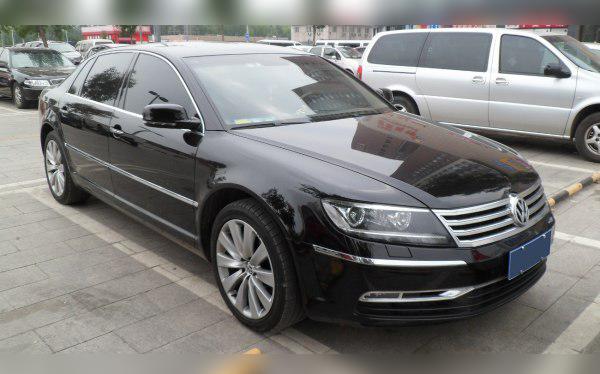
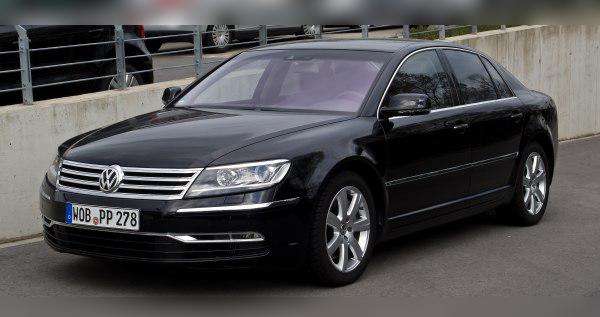
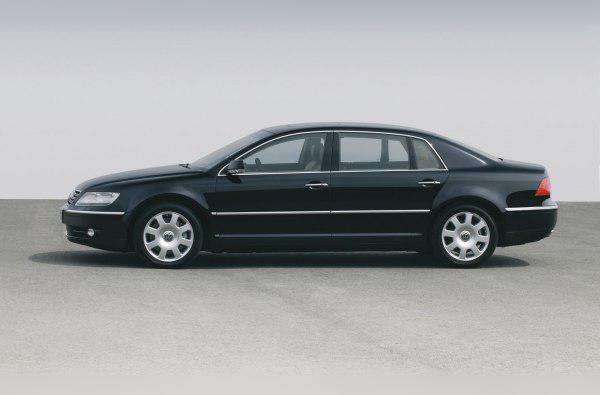
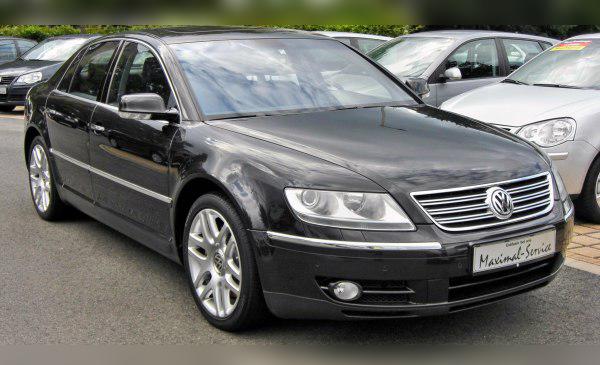
VW Phaeton 4.2 V8 (BGH, BGJ): Experiences, problems, fuel consumption and maintenance of the royal cruiser
The Volkswagen Phaeton is Ferdinand Piëch’s engineering marvel, a car built to humble the S-Class and 7 Series, but one that had a thorny path on the market. Under the hood of this heavy limousine there were various engines, from the problematic V10 TDI to the complex W12. However, the 4.2 V8 (codes BGH and BGJ) is often considered the “golden mean” and the most rational choice for those who want petrol refinement without the extreme maintenance costs that come with the W12.
This is a classic naturally aspirated V8 engine with 40 valves (5 per cylinder), which delivers linear power and a sound no diesel can replace. But is maintaining this noble powerplant a nightmare, or an acceptable cost for enjoying luxury? Find out below.
Key points in short (TL;DR)
- Durability: Extremely robust engine if regularly maintained. Can cover huge mileages.
- Biggest downside: Oil and coolant leaks in hard-to-reach places (expensive labor, cheap parts).
- Major service: Uses a timing belt for the main drive, but also has camshaft chains at the back that can cause issues.
- Fuel consumption: High. In the city expect an average of around 20 liters.
- LPG: An excellent candidate for LPG conversion because it uses multipoint injection (MPI), not direct injection (FSI).
- Gearbox: Reliable ZF 6-speed automatic, requires oil changes even though the factory says it doesn’t.
- Recommendation: The best engine for the Phaeton if you want a balance of reliability and performance and don’t mind high fuel consumption.
Contents
- Technical specifications
- Reliability and maintenance
- Specific parts (costs)
- Fuel consumption and performance
- Additional options and modifications
- Gearbox and drivetrain
- Buying used and conclusion
Technical specifications
| Feature | Data |
|---|---|
| Engine codes | BGH, BGJ |
| Displacement | 4172 cc (4.2 L) |
| Configuration | V8, 40 valves (5 valves per cylinder) |
| Power | 246 kW (335 hp) at 6500 rpm |
| Torque | 430 Nm at 3500 rpm |
| Injection type | MPI (Multipoint – indirect injection) |
| Aspiration | Naturally aspirated |
| Drivetrain | 4MOTION (Torsen permanent all-wheel drive) |
Reliability and maintenance
Timing belt or chain?
This is a question that often confuses owners. The 4.2 V8 (BGH/BGJ) uses a timing belt to drive the camshafts from the front of the engine. However, that’s not all. On the rear side of the cylinder heads there are small chains that connect the intake and exhaust camshafts and serve for synchronization and variable valve timing. So you have a belt as the main element (which is cheaper for regular servicing), but the chains and their tensioners can become noisy at higher mileages.
Most common failures
Although the engine is mechanically “indestructible” as long as it has oil, the peripherals are known to cause problems:
- Oil leaks: Valve cover gaskets and camshaft seals are a standard issue. The symptom is a burning smell in the cabin when oil drips onto the hot exhaust manifold.
- Plastic pipes and coolant lines: There is an infamous plastic pipe in the oil cooler (deep in the V of the engine) that becomes brittle and cracks over the years. The part is cheap, but a large portion of the engine has to be disassembled to replace it.
- Variable intake manifold: The flap system in the intake manifold that regulates airflow can stick or the linkages can break. The symptom is loss of power at low revs and a “Check Engine” light.
- Coil packs (ignition coils): As with most VW petrol engines, coils are consumable items. If the engine runs rough, one has probably failed.
- Cam chain tensioners: If you hear metal-on-metal rattling on cold start that lasts longer than 2–3 seconds, the tensioners have weakened. This is a more expensive repair.
Major service
The major service (replacement of timing belt, tensioners, water pump and thermostat) is recommended every 90,000 to 120,000 km or every 5 to 6 years, whichever comes first. Since a snapped belt leads to catastrophic piston-to-valve contact, postponing this is not recommended.
Oil: capacity and consumption
This engine takes a considerable amount of oil, usually between 7.5 and 8.5 liters (always check the exact level on the dipstick). Full synthetic oil of grade 5W-40 or 5W-30 that meets VW standards (e.g. VW 502 00) is recommended. As for consumption, V8 engines are known to “like a drink”. Consumption of 0.5 to 1 liter per 2,000–3,000 km on older examples is considered acceptable, especially if driven aggressively. If it exceeds a liter per 1,000 km, that indicates a problem with valve stem seals or piston rings.
Spark plugs
The spark plugs (there are 8 of them) should be replaced every 60,000 km. High-quality iridium or platinum plugs (NGK or Bosch) are recommended to ensure optimal combustion and protect the coils.
Specific parts (costs)
Dual-mass flywheel and clutch
The Phaeton with this engine comes exclusively with an automatic gearbox. Because of that, this engine does not have a conventional dual-mass flywheel like diesels with manual gearboxes. Instead, it has a torque converter. That’s good news, as there is no clutch and flywheel set to replace as regular wear items, but torque converter refurbishment (if it starts slipping or shuddering) can be expensive (depends on the market, but count on the “expensive” category).
Fuel injection system
This is one of the biggest advantages of the BGH/BGJ engines. They use an MPI (Multipoint Injection) system. The injectors are robust, rarely fail and are not as sensitive to fuel quality as on FSI/TSI engines. Also, this system does not suffer from carbon buildup on the intake valves, which is a common problem on newer 4.2 FSI engines.
Turbocharger
The engine is naturally aspirated, which means it does not have a turbocharger. That’s one big worry less. There is no turbo to fail, no intercooler that can leak, no complex vacuum hoses for turbo control.
EGR, DPF and AdBlue
Since this is a petrol engine:
- DPF: None.
- AdBlue: None.
- EGR: It has an exhaust gas recirculation system and a secondary air injection (SAI) pump for faster catalyst warm-up. The SAI pump can become noisy or fail, but this does not drastically affect drivability; it mainly triggers a warning light on the dash. Catalytic converters are present and are expensive if they need to be replaced (there are several of them).
Fuel consumption and performance
Real-world fuel consumption
Let’s be honest – the Phaeton is a heavy car (over 2 tons), and the V8 is big.
City driving: Expect between 17 and 22 l/100 km. In heavy traffic it can be even more.
Country roads: On secondary roads with a light foot it can drop to around 10–11 l/100 km.
Highway: At 130 km/h it uses around 12–13 l/100 km.
If fuel consumption is an important factor for you, this car is not for you.
Is the engine “lazy”?
With 335 hp and 430 Nm, the engine is by no means weak, but the Phaeton is special. Due to its enormous weight and sound insulation, you don’t get that “kick in the back” feeling. Acceleration is linear and gentlemanly. It needs about 6.9 seconds to reach 100 km/h, which is respectable. It’s not a sports car, but on the highway it maintains high cruising speeds (200+ km/h) without effort.
Highway cruising
Thanks to the 6-speed gearbox and high torque, the engine is very relaxed. At 130 km/h in sixth gear it runs at relatively low revs (below 3000 rpm), which contributes to cabin quietness. Sound insulation in the Phaeton is such that at that speed you often won’t even hear the engine.
Additional options and modifications
LPG conversion
YES, absolutely. This is an ideal engine for LPG conversion. Since it is MPI (indirect injection), installation is simpler and cheaper than on FSI engines, and the engine handles LPG very well. Given the fuel consumption, investing in a quality sequential LPG system pays off quickly. It is only important that the vaporizer is strong enough to “feed” 335 hp and that you don’t skimp on components. The tank usually goes in place of the spare wheel, but keep in mind that this reduces the luggage space, which on the Phaeton is already not particularly large for this class.
Remapping (Stage 1)
Since the engine is naturally aspirated, remapping doesn’t make much sense. You might gain 15–20 hp and slightly better throttle response, but you won’t feel a dramatic difference as with turbo engines. It’s better to invest that money in quality maintenance or fuel.
Gearbox
Type of gearbox
With this engine, the Phaeton was fitted exclusively with an automatic gearbox. It is the famous ZF 6HP (6-speed Tiptronic). This is one of the best gearboxes of its time, also used in BMW, Audi and Jaguar.
Gearbox issues and maintenance
Although VW often states that the gearbox oil is “lifelong”, the gearbox manufacturer (ZF) strictly recommends changing the oil and filter (the gearbox pan is often integrated with the filter) every 80,000 to 100,000 km.
Failure symptoms: Jerks when changing gears, “thinking” before engaging a gear, fluctuating revs at constant speed (torque converter problem).
If the oil is changed regularly, this gearbox can easily exceed 300,000 km.
4MOTION drivetrain
The drivetrain is based on a Torsen differential. It is pure mechanics, extremely reliable and efficient. There is no electronics inside the differential itself that can fail (as with Haldex systems). You only need to occasionally check the oil level in the differentials, but failures are rare.
Buying used and conclusion
Buying a used Phaeton V8 is a risky but potentially rewarding move. You get a car that cost over 100,000 euros when new for a fraction of the price. However, maintenance costs are as if it were still worth that much.
What to check before buying?
- Cold start: Insist that the engine is completely cold. Listen to the chain noise for the first 2–3 seconds. A short rattle is OK, anything longer points to tensioner issues.
- Leaks: Lift the car. Remove the plastic undertrays. Look at the joints between the gearbox and engine, as well as for traces of reddish residue (coolant).
- Electronics: The Phaeton is packed with electronics. Check if every button works, from window switches to seat adjustment and the infotainment system. A diagnostic scan is mandatory.
- Suspension: Air suspension is standard. Check whether the car sits level and whether the compressor runs too often. Refurbishing air springs is (depending on the market) a very expensive item.
Conclusion: The VW Phaeton 4.2 V8 is intended for true comfort enthusiasts who understand that the premium class requires premium maintenance. This is not a car for a “just fill it up and drive” approach with cheap parts. If you are ready to invest in maintenance and fuel (or LPG), you will get one of the most comfortable and safest sedans ever made, with an engine that is probably the most reliable link in that complex chain.
Was this content useful to you?
Your opinion helps us to improve the quality of the content.