CHNA, CMVA Engine
- Engine
- 3597 cm3
- Aspiration
- Naturally aspirated engine
- Fuel
- Petrol (Gasoline)
- Fuel injection system
- Multi-port manifold injection
- Power
- 280 hp @ 6250 rpm
- Torque
- 370 Nm @ 3500 rpm
- Cylinders
- 6
- Cylinders position
- V-engine
- Oil capacity
- 6.2 l
# Vehicles powered by this engine
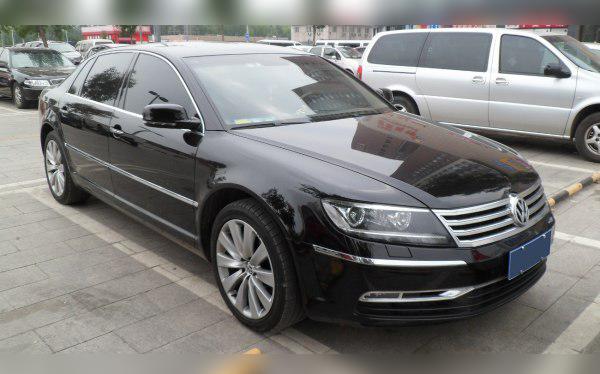
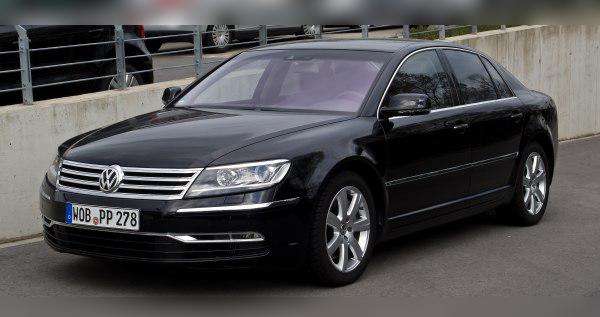
3.6 V6 FSI (CHNA, CMVA): Experiences, issues, fuel consumption and maintenance of the heavy cruiser
Key points in short (TL;DR)
- Engine design: Although it’s labeled as a V6, this is technically a VR6 engine with a very narrow angle between the cylinders. That means a compact design, but also a specific sound and specific maintenance.
- Achilles’ heel: The timing chain is located at the rear of the engine (next to the gearbox). Replacement is expensive and demanding (often requires engine removal).
- Injection system: FSI direct injection means the valves are prone to carbon buildup, which can affect smooth running.
- Fuel consumption: In the heavy Phaeton body, this is not an economical engine. Expect high figures in city driving.
- Reliability: Generally a robust naturally aspirated engine without a turbo, long‑lasting if the oil is changed regularly and chain issues are not ignored.
- Maintenance: Many engine parts are shared with models like the Passat R36 or Superb 3.6, but Phaeton‑specific parts are expensive (depends on the market).
Contents
- Introduction and Models
- Technical Specifications
- Reliability, Failures and Maintenance
- Specific Parts and Costs
- Fuel Consumption and Performance
- LPG and Tuning
- Gearbox and Drivetrain
- Buying Tips and Conclusion
Introduction: Successor to the legendary VR6 engines
Engines with codes CHNA and CMVA represent the peak of development of Volkswagen’s legendary VR6 architecture, although for marketing purposes in the Phaeton they are often simply labeled as V6. This is a naturally aspirated 3.6‑liter petrol engine that replaced the older 3.2 and 4.2 V8 units as the “entry‑level” or mid‑range powerplant for the flagship sedan after the 2010 facelift.
Its role in the Volkswagen Phaeton is specific: it has to move a car weighing over 2 tons with maximum smoothness, quietness and sufficient power reserve, while at the same time meeting stricter emissions standards (Euro 5) compared to its predecessors. In this application it is not a sports engine, but a refined power unit for comfortable cruising.
Technical Specifications
| Characteristic | Value |
|---|---|
| Engine codes | CHNA, CMVA |
| Displacement | 3597 cc (3.6 L) |
| Configuration | VR6 (narrow V angle of 10.6 degrees) |
| Power | 206 kW (280 hp) at 6200 rpm |
| Torque | 370 Nm at 3500 rpm |
| Injection type | FSI (Fuel Stratified Injection) – Direct |
| Aspiration | Naturally aspirated |
| Camshaft drive | Chain (Timing chain) |
Reliability and Maintenance
Timing belt or chain?
This engine uses a chain to drive the camshafts. And this is where we come to the most critical point of this engine. The chain system is located at the rear of the engine (between the engine and the gearbox). Although the chain is marketed as “lifetime” in factory brochures, in practice the tensioners and guides can fail, or the chain itself can stretch, usually at mileages between 150,000 and 200,000 km (although with frequent oil changes it can last longer).
Symptoms of problems are a characteristic rattling noise on cold start that lasts longer than a few seconds, or the “Check Engine” light coming on with errors related to camshaft/crankshaft correlation. Replacement is very expensive because on the Phaeton it requires removing the engine due to poor accessibility.
Most common issues
Besides the chain, the most common problems include:
- Carbon buildup on intake valves: Due to FSI direct injection, fuel does not wash over the intake valves. Over time, carbon deposits build up and restrict airflow. Symptoms are rough idle (shaking) and a slight loss of power. The fix is mechanical cleaning (walnut shell blasting).
- Ignition coils: As with most VW petrol engines, coils can fail, causing the engine to run on fewer cylinders (misfire). Not expensive to fix.
- PCV valve (oil vapor separator): If the membrane tears, the engine may “whistle”, consume oil or have an unstable idle due to unmetered air.
- Fuel pressure sensors: They can occasionally cause issues in the FSI system.
Major and minor service
Since the engine uses a chain, a classic “major service” at fixed intervals like on belt‑driven engines does not exist. However, the complete auxiliary (serpentine) belt set, tensioner and water pump should be inspected every 100,000 km and replaced as needed.
Spark plugs: For FSI engines it is recommended to replace spark plugs every 60,000 km. Do not wait for 90 or 100 thousand, because worn plugs put extra strain on the coils.
Oil: Capacity and Consumption
The engine takes approximately 5.5 to 6.0 liters of oil (always check with the dipstick). The recommended grade is 5W‑30 or 5W‑40 that meets VW 504.00/502.00 standards.
Oil consumption: 3.6 FSI engines are known to “drink” some oil, especially if driven more aggressively. Consumption of around 0.5 liters per 2,000–3,000 km is often considered acceptable for this unit in older vehicles. If it uses a liter per 1,000 km, that points to an issue with piston rings or the PCV valve.
Specific Parts (Costs)
Injection system
It uses an FSI system with a high‑pressure fuel pump (HPFP) and injectors that spray directly into the cylinder. The injectors are generally durable but sensitive to poor fuel quality. Replacing them is more expensive than on conventional port‑injected petrol engines. The HPFP is driven by the camshaft and you should check the condition of the cam follower located between the pump and the camshaft, as its wear can damage the camshaft.
Dual‑mass flywheel
Since the Phaeton with this engine comes exclusively with an automatic (hydraulic) gearbox, it does not have a conventional dual‑mass flywheel like manual gearboxes or DSG units. Instead, it has a flexplate that connects the engine and the torque converter. This is good news because this part is significantly cheaper and fails less often than a dual‑mass flywheel.
Turbo, DPF, EGR
Turbo: The engine is naturally aspirated, it does not have a turbocharger. This is a big advantage for long‑term ownership, as it eliminates potentially expensive failures of the turbo, intercooler and piping.
DPF/AdBlue: Being a petrol engine, it does not have a DPF filter or AdBlue system.
Catalytic converters and EGR: It has catalytic converters which can be expensive (there are two primary ones). There is an EGR valve and it can get dirty, but on petrol engines it is a smaller issue than on diesels. Still, check the condition of the catalytic converters (fault codes P0420/P0430), as they are extremely expensive for the Phaeton (depends on the market).
Fuel Consumption and Performance
Real‑world fuel consumption
Do not fool yourself – the Phaeton is a heavy car, and a 3.6‑liter engine needs fuel.
- City driving: Realistically expect between 14 and 18 l/100 km, depending on traffic and how heavy your right foot is. In winter it can be even higher.
- Country roads: This is where the engine is most efficient. At 80–100 km/h it can go down to about 8–9 l/100 km.
- Motorway (130 km/h): Consumption is around 10–11 l/100 km.
Is the engine “lazy”?
With 280 hp and 370 Nm, the engine is not weak, but the Phaeton weighs around 2.2 tons. The engine is not as “explosive” as turbo engines (there is no big torque hit at low revs). It delivers power linearly. For normal driving and overtaking it is perfectly adequate and reasonably agile, but do not expect sports‑car performance. You have to rev it higher to make it really “wake up”, which produces a beautiful VR6 sound.
At 130 km/h the engine is relaxed, usually below 3,000 rpm (depending on the gearbox), which ensures a quiet cabin.
Additional Options and Modifications
LPG conversion
Is it possible? Yes, but it is complicated and expensive. Because of FSI direct injection, you cannot install a simple sequential LPG system. You need either a system that uses a mixture of petrol and LPG (to cool the petrol injectors) or a liquid LPG injection system that uses the petrol injectors. Installation is more expensive (often over 1,000 EUR), and the cost‑effectiveness is questionable if you do not cover high annual mileage. Also, the tank takes up space in the boot which, although large in the Phaeton, is not particularly deep.
Chip tuning (Stage 1)
This is a naturally aspirated engine. Chip tuning does not make much sense. Gains are minimal, realistically around 10–15 hp and a slightly better throttle response. You will not get a dramatic difference as with turbo engines. It is better to invest that money in proper maintenance.
Gearbox
Type of gearbox
With the CHNA/CMVA engine in the Phaeton, a manual gearbox is NOT available. It comes exclusively with a 6‑speed automatic gearbox (Tiptronic), usually of ZF or Aisin design (depending on the exact year and specification, but for the 3.6 FSI in the Phaeton it is most often a robust 6‑speed torque‑converter automatic). Drive is always 4MOTION (all‑wheel drive).
Gearbox maintenance and failures
The gearbox is generally reliable and very smooth. However, “lifetime” oil is a myth.
- Gearbox service: Oil and filter in the automatic gearbox MUST be changed every 60,000 to 80,000 km. If this is not done, you will eventually get slipping, harsh shifts or complete mechatronic failure.
- Failure symptoms: Delay when engaging D or R, harsh shift from 2nd to 3rd gear, fluctuating revs at constant speed (torque converter issue).
- Repair cost: Rebuilding an automatic gearbox is very expensive (depends on the market, but expect a serious bill).
Buying a used one and Conclusion
When buying a Phaeton with the 3.6 FSI engine, focus on the following:
- Cold start: Insist that the engine is completely cold. Listen to the chain. If it rattles for more than 2–3 seconds, walk away or lower the price by the cost of chain replacement (which is a huge job on the Phaeton).
- Diagnostics: Check the camshaft “phase position” via diagnostics (VCDS). If the values are outside the allowed range, the chain is stretched.
- Gearbox: It must shift imperceptibly. Any jolt is a red flag.
- Suspension and air suspension: Although not part of the engine, the Phaeton has expensive air suspension. Check whether the car “sags” overnight.
Conclusion:
The 3.6 V6 FSI (CHNA/CMVA) is probably the most sensible choice for a used Phaeton. It avoids the complications of the W12 engine and the expensive issues of the V10 diesel. It is cheaper to maintain than the V8 variants, yet offers enough power. If you accept the high fuel consumption and the potential timing chain expense as the entry ticket into the world of high‑class motoring, this is a fantastic machine for long journeys, giving you the feeling of driving a 100,000‑euro car for a fraction of the price.
Was this content useful to you?
Your opinion helps us to improve the quality of the content.