CEXB Engine
- Engine
- 2967 cm3
- Aspiration
- Turbocharger, Intercooler
- Fuel
- Diesel
- Fuel injection system
- Diesel Commonrail
- Power
- 245 hp @ 4000 rpm
- Torque
- 500 Nm
- Cylinders
- 6
- Valves
- 24, 4 per cylinder
- Cylinders position
- V-engine
- Oil capacity
- 8.3 l
- Coolant
- 13 l
- Systems
- Particulate filter
# Vehicles powered by this engine
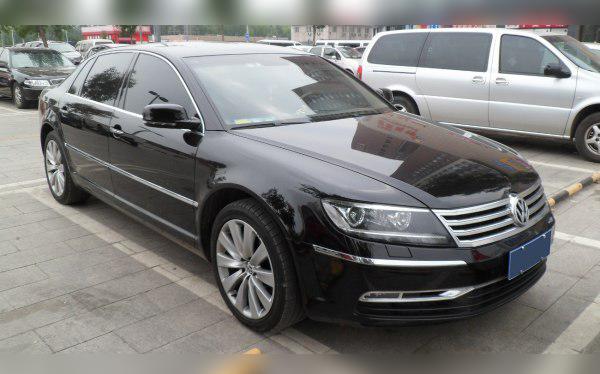
VW 3.0 V6 TDI CEXB (245 HP) – Experiences, problems, fuel consumption and used-car buying tips
1. The most important in short (TL;DR)
- Powerful and refined: With 245 HP and 500 Nm, this engine handles the heavy Phaeton body perfectly.
- Chain-driven: It has a complex timing chain system located at the rear of the engine. Replacement is very expensive because it often requires engine removal.
- AdBlue system: As a "Clean Diesel" variant, it has an AdBlue system prone to failures of heaters and pumps.
- Fuel consumption: Economical on the open road, but in the city you can expect double-digit consumption due to the vehicle’s high weight.
- Maintenance: This is not an engine for “budget” maintenance. Parts are expensive, and the injection system and DPF require high-quality fuel and regular highway driving.
- Recommendation: An excellent choice for long-distance and highway driving, a poor choice for short city trips.
Contents
- Introduction
- Technical specifications
- Reliability and maintenance
- Specific parts (costs)
- Fuel consumption and performance
- Additional options and modifications
- Gearbox
- Buying used and conclusion
Introduction
The engine with the code CEXB is one of the evolutions of Volkswagen’s famous 3.0 V6 TDI unit. Specifically, this 245 HP (180 kW) version was primarily installed in the facelifted Volkswagen Phaeton from 2010 onwards. It is a "Clean Diesel" engine designed to meet stricter emission standards while providing the huge torque needed to move a limousine weighing over two tons.
This engine is important because it represents the peak of the diesel offering for this model at the time (excluding the earlier discontinued V10), offering a balance between near-petrol performance and acceptable range.
Technical specifications
| Specification | Data |
|---|---|
| Engine displacement | 2967 cc (3.0 L) |
| Configuration | V6 |
| Power | 180 kW (245 HP) |
| Torque | 500 Nm at 1500–3000 rpm |
| Engine code | CEXB |
| Injection type | Common Rail (Piezo injectors) |
| Charging | Turbocharger with variable geometry (VGT) |
| Emission standard | Euro 5 (Clean Diesel) |
Reliability and maintenance
Timing system: chain or belt?
The CEXB engine uses a chain system for the timing drive. It is not a single chain, but a complex system with several chains and tensioners. The problem is in the design: the timing system is located at the rear of the engine (towards the gearbox). Although it was factory-intended for the chain to last “forever”, in practice it stretches and the tensioners weaken. The symptom is a characteristic metallic rattling noise on cold start lasting a few seconds. If this is ignored, the chain can jump a tooth or break, leading to catastrophic engine failure. Replacement is very expensive (depends on the market) because it requires removal of the engine or gearbox.
Most common failures
Besides the chain, owners encounter the following issues:
- Intake manifold (swirl flaps): The flaps in the intake manifold get clogged with soot and stick, or the linkage that actuates them wears out. The "Check Engine" light comes on.
- Oil and coolant leaks: The V6 configuration has a “V” valley between the cylinder heads where oil often accumulates (due to the oil cooler) or coolant (due to plastic junctions and the thermostat housing).
- Crankshaft pulley: The rubber in the pulley can fail, causing vibrations and potentially throwing off the auxiliary (serpentine) belt.
Service intervals and oil
A minor service is recommended every 10,000 km to 15,000 km, although the manufacturer specifies longer intervals (LongLife). For chain longevity, more frequent oil changes are crucial. A “major service” in the classic sense (belt replacement) does not exist because of the chain, but replacement of the auxiliary belt, rollers and water pump is done preventively at around 100,000 - 120,000 km.
The engine holds a large amount of oil, approximately 7.7 to 8.2 liters (depending on the exact oil pan variant). You must use 5W-30 oil that meets the strict VW 507.00 specification (Low SAPS due to the DPF).
Oil consumption
A healthy engine of this type should not consume a significant amount of oil. Consumption up to 0.5 liters per 10,000 km is acceptable. If it consumes more (e.g. 1 liter per 2,000 km), this points to a problem with the turbocharger, piston rings or leaks at the oil seals.
Injectors
It uses Piezo injectors. They are precise and quiet, but sensitive to poor-quality fuel. Their typical lifespan is over 200,000 - 250,000 km. When they wear out, symptoms include: rough idle, increased smoke under acceleration and difficult starting. Overhauling Piezo injectors is difficult and often unsuccessful, so they are usually replaced with new or factory-refurbished units, which is expensive (depends on the market).
Specific parts (costs)
Dual-mass flywheel
Since the CEXB in the Phaeton is paired with an automatic gearbox (Tiptronic), it does not have a classic dual-mass flywheel like manual gearboxes that is replaced as a clutch wear item. Instead, it has a torque converter. However, there is a flexplate which rarely fails.
Turbocharger
The engine has a single turbocharger with variable geometry. It is very durable if the oil is changed regularly and the engine is allowed to cool down after spirited driving. The electronic turbo actuator can fail earlier than the turbo itself, which leads to loss of power ("safe mode").
DPF, EGR and AdBlue
This is an environmentally complex engine. It has:
- DPF filter: It often clogs if the car is driven exclusively in the city. Replacement or professional cleaning is expensive.
- EGR valve: Prone to fouling and sticking, returning soot into the intake. The EGR cooler can also leak.
- AdBlue system: The CEXB is a "Clean Diesel". The urea injection system is sensitive. Failures of the AdBlue fluid heater (which is part of the tank or pump) and NOx sensors are common. Repairs to this system are expensive, and without a functioning AdBlue system the engine may refuse to start after a certain number of kilometers.
Fuel consumption and performance
City driving and “sluggishness”
A Phaeton with this engine weighs around 2.2 tons. In heavy city traffic, real-world consumption ranges from 11 to 14 l/100 km. In winter and on short trips it can be even higher.
Is the engine sluggish? Absolutely not. With 500 Nm of torque available from low revs, the car pulls with authority. It is not a sports car due to its weight in corners, but acceleration is linear and strong.
On the highway
This is the natural habitat of this engine. On the highway it is an extremely quiet and stable cruiser. At 130 km/h, the engine runs at a low ~2,000 rpm (depending on the gearbox, 6-speed). Fuel consumption on the open road is between 7.5 and 9.0 l/100 km, which is an excellent result for this class.
Additional options and modifications
Chiptuning (Stage 1)
3.0 TDI engines respond very well to remapping. A safe Stage 1 can raise power to about 280-300 HP and torque to 600 Nm. This significantly improves throttle response and elasticity. However, before chiptuning you must check the condition of the chain and gearbox, as the higher torque puts additional stress on these components. Also, AdBlue and DPF systems can cause issues if the remap is not done properly.
Gearbox
Type of gearbox
With the CEXB engine in the VW Phaeton, only a 6-speed automatic gearbox (ZF 6HP series) with all-wheel drive (4MOTION) was installed. It is a conventional automatic with a torque converter (Tiptronic), not a DSG gearbox.
Gearbox maintenance and failures
Although VW often states that the gearbox oil is “lifetime”, the gearbox manufacturer (ZF) recommends changing the oil and filter every 80,000 to 100,000 km. This is critical for longevity.
Failure symptoms: Jerking during gear changes, hesitation when setting off or fluctuating revs at constant speed (torque converter problem). Rebuilding an automatic gearbox is very expensive (depends on the market), so regular oil changes are the best investment.
Buying used and conclusion
What to check before buying?
- Cold start: Insist that the engine is completely cold. Listen to the chain during the first 3 seconds. Any rattling longer than 1–2 seconds is a red flag.
- Diagnostics: Check injector correction values, DPF status (ash load) and errors related to the AdBlue system.
- Leaks: Remove the plastic engine cover and look deep into the engine’s “V” valley. If you see a “pool” of oil or coolant, you can expect sealing-related expenses.
- Gearbox: It must shift imperceptibly, both when cold and hot.
Conclusion
The 3.0 V6 TDI CEXB engine is an engineering gem that offers top-class comfort and performance worthy of a presidential limousine like the Phaeton. However, it requires meticulous and expensive maintenance. It is not intended for those who want to save on parts. It is ideal for drivers who cover high mileages on the open road and are willing to pay for a premium driving experience.
Was this content useful to you?
Your opinion helps us to improve the quality of the content.