CGGB, CDDA Engine
- Engine
- 1390 cm3
- Aspiration
- Naturally aspirated engine
- Fuel
- Petrol (Gasoline)
- Fuel injection system
- Multi-port manifold injection
- Power
- 85 hp @ 5000 rpm
- Torque
- 132 Nm @ 3800 rpm
- Cylinders
- 4
- Valves
- 16, 4 per cylinder
- Cylinders position
- Inline
- Oil capacity
- 3.2 l
# Vehicles powered by this engine
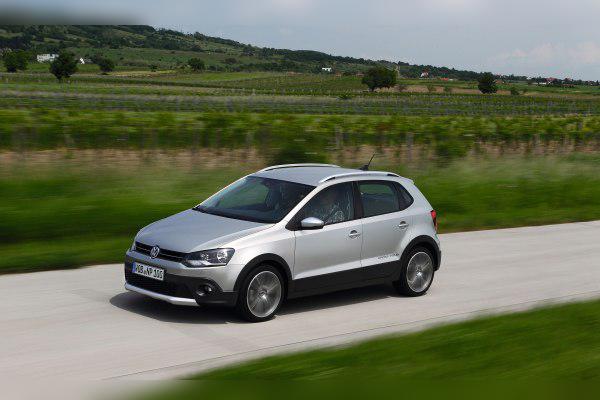
1.4 16V (CGGB, CDDA) – Experiences, issues, fuel consumption and used car buying guide
Key points (TL;DR)
- Reliability: One of the most reliable VW engines from the era when TSI units still had “teething problems”. Old-school and simple.
- Maintenance: Cheap and straightforward. No turbo, no direct injection, parts are available everywhere.
- Performance: The engine is rather underpowered for the CrossPolo body. Overtaking requires patience and high revs.
- Fuel consumption: City consumption can be (negatively) surprising, but it’s moderate on the open road.
- LPG: An ideal candidate for LPG conversion.
- Gearbox: The manual is bulletproof, but the DSG (DQ200) requires caution and a thorough check.
- Recommendation: An excellent choice for drivers who value low running costs more than speed.
Contents
- Introduction and applications
- Technical specifications
- Reliability and maintenance
- Specific parts and costs
- Fuel consumption and performance
- Additional options (LPG and tuning)
- Gearbox and drivetrain
- Used car buying tips and conclusion
Introduction and applications
The engines with codes CGGB and CDDA represent the last generation of Volkswagen’s legendary naturally aspirated 1.4 16V petrol units. While the world was moving to more complex turbocharged (TSI) engines, this unit stayed faithful to simplicity. It was primarily installed in the Volkswagen CrossPolo V (and the standard Polo), offering 85 hp.
Why is this engine important? Because it’s an alternative to the problematic chain-driven TSI engines from the same period. If you’re looking for a used car that won’t leave you stranded due to complex electronics or a snapped timing chain, this is the engine you should be looking at.
Technical specifications
| Parameter | Value |
|---|---|
| Engine displacement | 1390 cc (1.4 L) |
| Power | 63 kW (85 hp) |
| Torque | 132 Nm at 3800 rpm |
| Engine codes | CGGB, CDDA |
| Injection type | MPI (Multi-point injection) – Indirect |
| Aspiration | Naturally aspirated (No turbo) |
| Number of valves | 16 (4 per cylinder) |
Reliability and maintenance
Timing belt or chain?
Unlike the 1.2 TSI or 1.4 TSI engines from the same generation, which had problematic timing chains, CGGB/CDDA engines use a timing belt. This is very good news. The system actually consists of two belts (one main belt and a small one that connects the two camshafts). Belt failure is rare if replacement intervals are respected.
Major service and maintenance
The recommendation is to perform a major service every 180,000 km (according to factory data), but considering the age of these cars, experienced mechanics and real-world practice suggest doing it every 90,000 to 120,000 km or every 5–6 years. A timing belt kit with water pump falls into the category: Not expensive (Depends on the market).
Oil: Quantity and consumption
The sump holds approximately 3.2 to 3.6 liters of oil (always buy 4 liters). The recommended grade is 5W-40 or 5W-30 (VW 502.00 standard). These engines are known to consume some oil, especially if often driven on the motorway at high revs. Consumption of up to 0.5 liters per 2,000–3,000 km is tolerated on older units, but if it exceeds one liter per 1,000 km, that points to worn piston rings or valve stem seals.
Spark plugs and coils
Spark plugs are replaced every 60,000 km. However, a weak point of this engine are the ignition coils. Each cylinder has its own coil. Symptoms of failure are rough idle, jerking and the “Check Engine” light coming on. Fortunately, replacement is simple and cheap.
Most common issues
Besides coils, a frequent problem is a dirty throttle body. Symptoms include fluctuating idle speed or stalling when stopping at traffic lights. Cleaning and recalibration usually solve the issue. The coolant temperature sensor can also misbehave, causing cold start problems.
Specific parts (Costs)
Dual-mass flywheel: Versions with a manual gearbox DO NOT HAVE a dual-mass flywheel. They use a classic solid flywheel which is practically lifetime. This drastically reduces clutch replacement costs. Versions with a DSG gearbox have a specific flywheel, but it’s not a classic “dual-mass” in the diesel sense; it’s part of the dual-clutch system.
Fuel injection system: Uses a classic MPI system. The injectors are very reliable, inexpensive and rarely cause problems. They are not as sensitive to poor fuel quality as FSI/TSI injectors.
Turbocharger: This engine HAS NO turbocharger. One less thing to worry about. No intercooler, no oil leaks from the turbo, no expensive overhauls.
DPF and EGR: There is no DPF (it’s a petrol engine) and no AdBlue system. It does have an EGR valve which can get clogged from city driving (“sooty” engine). Symptoms are weaker throttle response and a warning light on the dash. Cleaning is often possible; replacement falls into the category: Moderately expensive (Depends on the market).
Fuel consumption and performance
City driving
Although the engine is small in displacement, the CrossPolo is not a light car and its aerodynamics aren’t great either. Realistic city consumption is between 7.5 and 9.0 liters per 100 km. If you have a “heavy right foot” or drive short distances in winter, it can go up to 10 liters.
Performance: Is it “lazy”?
Honestly – yes. The 132 Nm of torque comes only at 3800 rpm. That means you have to rev it to make it go. For relaxed city driving it’s perfectly adequate, but uphill with a full car and the A/C on you’ll need to downshift and floor it.
Motorway
At 130 km/h, this engine (depending on gearbox) spins at around 3,500 to 4,000 rpm. That means it’s quite noisy in the cabin and fuel consumption increases. It’s not an ideal long-distance cruiser, but it can do the job. Overtaking on the motorway requires planning.
Additional options and modifications
LPG conversion: YES, absolutely. This is one of the best engines for conversion to LPG. It has a metal intake manifold (on most variants), indirect injection and hydraulic lifters. The system pays for itself quickly and the engine handles it very well.
Remap (Stage 1): Not worth it. On a naturally aspirated engine of this size, a remap might give you 3–5 hp, which is unnoticeable in real driving. Better invest that money in good tyres or proper servicing.
Gearbox
Manual gearbox (5-speed)
A 5-speed manual gearbox (type 02T) was fitted as standard. It’s very precise and easy to use. Failures are rare, but oil leaks can occur at the gear selector seal. Clutch kit replacement cost: Not expensive (Depends on the market).
Automatic gearbox (DSG – 7-speed)
This is where you need to be careful. This engine was paired with the DQ200 gearbox with a dry dual clutch. Although it offers comfort and lowers fuel consumption:
- Failures: The mechatronic unit (the “brain” of the gearbox) is prone to failure. Clutches (friction plates) wear out faster in stop-and-go city traffic.
- Symptoms: Jerking when moving off, harsh shifts, delayed response.
- Maintenance: VW claims the oil is “lifetime fill”, but specialists recommend changing it every 60,000 km (both in the mechatronic unit and in the gear set).
- DSG repairs fall into the category: Very expensive (Depends on the market).
Buying used and conclusion
When buying a CrossPolo with this engine, pay attention to the following:
- Engine noise: When cold, listen for any “ticking” (hydraulic lifters). If the noise disappears when warm, that’s acceptable. If it keeps knocking, it may be piston slap (piston clearance), which is a sign of wear.
- Gearbox: If it’s a DSG, test it on an uphill. Release the brake – the car shouldn’t roll back before moving forward, and it shouldn’t jerk.
- Usage pattern: Check whether the car was mainly used in the city. Such cars have more engine hours than kilometers, so the condition of the clutch and catalytic converter may be questionable.
Conclusion:
Volkswagen’s 1.4 16V (85 hp) in the CrossPolo is a rational choice. It’s not fast, it’s not sporty, but it’s cheap to maintain and predictable. If you avoid the problematic DSG gearbox (or find one with a refurbished mechatronic unit) and you’re fine with a manual, you’ll get a faithful car that will serve you for years with minimal running costs. It’s ideal for beginner drivers, as a second family car, or for those who spend most of their time in the city and on regional roads.
Was this content useful to you?
Your opinion helps us to improve the quality of the content.