EA111 / CGGB Engine
- Engine
- 1390 cm3
- Aspiration
- Naturally aspirated engine
- Fuel
- Petrol (Gasoline)
- Fuel injection system
- Multi-port manifold injection
- Power
- 85 hp @ 5000 rpm
- Torque
- 132 Nm @ 3800 rpm
- Cylinders
- 4
- Valves
- 16, 4 per cylinder
- Cylinders position
- Inline
- Valvetrain
- DOHC
- Oil capacity
- 3.2 l
- Coolant
- 5.6 l
# Vehicles powered by this engine
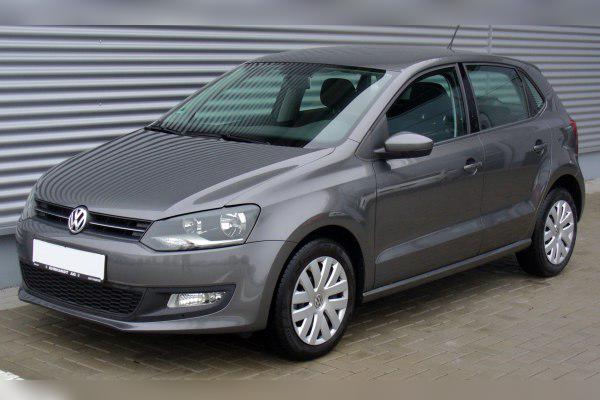
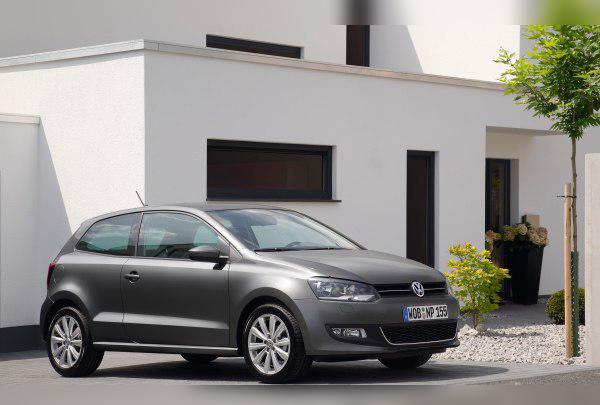
VW 1.4 16V (EA111 / CGGB) – Experiences, problems, fuel consumption and buying used
When talking about the fifth generation of the Volkswagen Polo (6R), most of the attention usually goes to the modern TSI engines or the frugal TDI diesels. However, the real “unsung hero” for used-car buyers who want simplicity and low running costs is this engine: the 1.4 16V with 85 hp (engine code CGGB). It belongs to the EA111 family, but unlike its turbocharged relatives, it relies on old, proven naturally aspirated technology.
This engine is the “golden middle ground” for drivers who want something stronger than the basic 1.2 three‑cylinder, but are afraid of potential chain and turbo issues on the 1.2 TSI and 1.4 TSI engines from that period. It was installed in the Polo (3‑ and 5‑door) and represents one of the last simple petrol engines in the VW Group before turbo technology completely took over.
Key points (TL;DR)
- Reliability: High. This is a simple engine without complicated systems.
- Big plus: Uses a timing belt, not the problematic chain found on same‑generation TSI engines.
- Ideal for LPG: Thanks to MPI injection, it’s a perfect candidate for LPG installation.
- Gearbox: The manual gearbox is an excellent choice. The 7‑speed DSG can be a “ticking time bomb” with expensive repairs.
- Performance: Adequate for city driving, but on the motorway it lacks a sixth gear and power for overtaking.
- Main drawback: Possible occurrence of piston slap on cold start at higher mileages.
- Verdict: The best choice for drivers who want cheap maintenance and mostly drive in the city.
Contents
- Technical specifications
- Reliability and maintenance
- Specific parts and costs
- Fuel consumption and performance
- Additional options and modifications (LPG & Tuning)
- Gearbox (Manual vs DSG)
- Buying used and conclusion
Technical specifications
| Specification | Data |
|---|---|
| Engine displacement | 1390 ccm (1.4 L) |
| Power | 63 kW (85 hp) at 5000 rpm |
| Torque | 132 Nm at 3800 rpm |
| Engine code | CGGB (EA111 family) |
| Injection type | MPI (Multi-Point Injection) – Indirect |
| Induction | Naturally aspirated |
| Number of cylinders / valves | 4 cylinders / 16 valves |
Reliability and maintenance
Does this engine have a timing belt or a chain?
Unlike its problematic relatives from the same era (1.2 TSI and 1.4 TSI EA111), which had chains prone to stretching and failure, the CGGB engine uses a timing belt. This is excellent news for owners. The system is more reliable, quieter and cheaper to maintain in the sense that there are no sudden catastrophic failures if replacement intervals are respected.
What are the most common issues with this engine?
Although very reliable, years of use have revealed a few weak points:
- Piston slap: This is a specific issue for 1.4 16V engines. Due to the design of the pistons with a short skirt (to reduce friction), they can tilt slightly in the cylinder when the engine is cold. Symptom: A diesel‑like knocking sound during the first couple of minutes after a cold start, which disappears once the engine warms up. If the noise does not disappear when the engine is hot, the problem is serious (cylinder damage).
- Ignition coils: A common problem on VW petrol engines. If the engine runs rough, misfires or the “Check Engine” light comes on, one of the four coils (one per cylinder) has likely failed.
- Crankcase ventilation (oil vapour separator): In winter, condensation in the oil vapour separator can freeze if the car is driven only on short trips, which can cause oil to be pushed out through the dipstick tube.
- Throttle body: It gets dirty from soot and oil vapours, causing fluctuating idle speed. Cleaning and recalibration usually solve the problem.
At what mileage should the major service be done?
The factory recommendation for the first timing belt inspection is often at a very high 210,000 km, which is too risky in real life. Experienced mechanics recommend that the first major service (replacement of the timing kit and water pump) be done no later than 120,000 km or after 6 to 7 years of age, whichever comes first. After that, intervals should be reduced to 60,000 – 80,000 km.
How many litres of oil does this engine take and which grade is recommended?
The sump holds approximately 3.2 to 3.6 litres of oil (including the filter). The recommended grade is 5W-30 or 5W-40. The oil must meet VW specification VW 502.00 or VW 504.00. Due to the hydraulic valve lifters, good‑quality oil is crucial for quiet engine operation.
Does it consume oil between services?
Yes, 1.4 16V engines are known to “drink” a bit of oil, especially when driven on the motorway at high revs. Consumption of 0.5 to 1 litre per 10,000 km is considered completely acceptable and normal for this engine. If consumption exceeds 0.5 litres per 1,000 km, this points to worn piston rings or valve stem seals.
At what mileage should the spark plugs be replaced?
On this engine, spark plugs are replaced every 60,000 km. If you run the car on LPG, it is recommended to shorten this interval to 30,000 – 40,000 km and use spark plugs designed for LPG operation.
Specific parts (costs)
Does the engine have a dual-mass flywheel?
The version with a manual gearbox does NOT have a dual-mass flywheel, but a classic solid flywheel. This significantly reduces the cost of maintenance and clutch kit replacement. Models with the DSG gearbox have a specific flywheel adapted to the dual‑clutch system, which is more expensive.
What type of injection system does it have and are the injectors problematic?
The engine uses an MPI (Multi-Point Injection) system with injection into the intake manifold. This is an older, more robust system compared to direct injection (FSI/TSI). The injectors are extremely durable, rarely fail and are not as sensitive to fuel quality as on newer engines.
Does this engine have a turbocharger?
No. This engine is naturally aspirated. It has no turbocharger, no intercooler and no associated turbo pressure sensors. That means one (expensive) worry less for the owner.
Does this model have a DPF filter or an EGR valve?
As a petrol engine, it does NOT have a DPF filter (which is reserved for diesels). However, it does have an EGR valve (exhaust gas recirculation valve). The EGR valve can get clogged due to city driving, which triggers the engine warning light. Cleaning is often possible, but sometimes replacement is needed (cost: moderately expensive, depending on the market).
Does this engine use AdBlue?
No. The AdBlue system is used exclusively on modern diesel engines (Euro 6 standard). This petrol engine does not require any additional fluids other than fuel, oil, coolant and brake fluid.
Fuel consumption and performance
What is the real fuel consumption in city driving?
Even though it’s a small‑displacement engine, don’t expect miracles. To get a roughly 1.1‑ton Polo moving briskly, this engine has to rev. Real‑world city consumption is between 7.5 and 9.0 l/100 km, depending on traffic and how heavy your right foot is. In winter and on short trips it can reach 10 litres.
Is this engine “underpowered” for the weight of the car?
With 85 hp and 132 Nm, the engine is adequate but not sporty. For city driving it is perfectly sufficient and fairly agile. However, if the car is fully loaded with passengers and luggage, the lack of torque becomes noticeable, so you’ll have to use the gearbox more often and downshift on inclines.
How does the engine perform on the motorway?
This is not the natural habitat of this Polo. The lack of a sixth gear is most noticeable here. At 130 km/h the engine spins at around 3,800 to 4,000 rpm. This results in more noise in the cabin and fuel consumption rising to about 7.0 – 8.0 l/100 km. Cruising is more comfortable at speeds up to 110–120 km/h.
Additional options and modifications
Is this engine suitable for LPG installation?
Absolutely YES. This is one of the best newer‑generation engines for conversion to LPG. It has MPI injection, a metal intake manifold (in most versions) and hydraulic valve lifters. Installation is simple, inexpensive (standard sequential system) and the engine handles LPG very well, drastically reducing running costs.
How much can this engine be safely tuned (Stage 1)?
On naturally aspirated petrol engines, chiptuning doesn’t make much sense. The gain is negligible – maybe 5 to 8 hp and a few Nm of torque, which you won’t really feel in everyday driving. It’s better to invest that money in quality maintenance or tyres.
Gearbox
Which manual and automatic gearboxes are fitted?
- Manual: 5‑speed gearbox (code MQ200/02T).
- Automatic: 7‑speed DSG dual‑clutch gearbox with dry clutches (code DQ200).
Most common gearbox issues?
- Manual: Very reliable and precise. Occasional issues with bearings or second‑gear synchros at high mileage. Oil change is not prescribed by the manufacturer (“lifetime”), but it is strongly recommended to change it every 100,000 km to preserve the mechanics.
- DSG (DQ200): Be cautious. This is the version with “dry” clutches, notorious for failures. The most common problems are failure of the mechatronics unit (the gearbox brain) and premature wear of the clutch pack. Repairs are very expensive. Symptoms include jerking when setting off, hesitation when changing gears or metallic noises over bumps.
Does this model have a dual-mass flywheel and how much does clutch replacement cost?
As mentioned, the manual version does not have a dual‑mass flywheel. The clutch kit for the manual gearbox is not expensive (affordable for the average driver). On DSG models, clutch pack replacement is a much more expensive job that requires special tools and calibration.
Buying used and conclusion
What should you check before buying?
- Cold start: Insist that the engine be completely cold when you inspect the car. Listen to the sound during the first 30 seconds. If you hear loud metallic knocking that doesn’t go away, those are the pistons – walk away from that car.
- Timing belt: Ask for proof of replacement. If there is no paperwork, immediately factor the cost of a major service into the price.
- Test drive (DSG): If you’re buying an automatic, test it in stop‑and‑go city traffic and on an incline. Any jerking is a sign of an expensive failure in the making.
- Air conditioning: Check if it cools properly. A/C compressors on this Polo generation are known to fail.
Conclusion: Who is this engine for?
The VW Polo 1.4 16V (85 hp) is an ideal choice for the rational buyer. It is intended for those whose priorities are low routine maintenance costs, simplicity and reliability, and who are willing to sacrifice motorway performance. If you plan to drive mainly in the city and on country roads, and you want the more modern look of the fifth‑generation Polo without the risks associated with the first TSI engines, this is the engine for you. The version with the manual gearbox is especially recommended.
Was this content useful to you?
Your opinion helps us to improve the quality of the content.