EA111 / CMAA Engine
- Engine
- 1390 cm3
- Aspiration
- Naturally aspirated engine
- Fuel
- Petrol / LPG
- Fuel injection system
- Multi-port manifold injection
- Power
- 85 hp @ 5000 rpm
- Torque
- 132 Nm @ 3800 rpm
- Power LPG
- 82 hp @ 5000 rpm
- Torque LPG
- 126 Nm @ 3800 rpm
- Cylinders
- 4
- Valves
- 16, 4 per cylinder
- Cylinders position
- Inline
- Valvetrain
- DOHC
- Oil capacity
- 3.2 l
- Coolant
- 5.6 l
# Vehicles powered by this engine
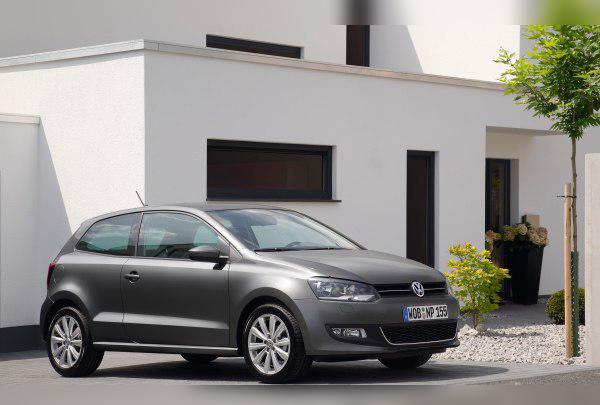
VW 1.4 16V (EA111 / CMAA) BiFuel experiences, problems, fuel consumption and used car buying guide
Key points (TL;DR)
- Timing belt drive: Unlike the notorious TSI engines from the same EA111 family, this naturally aspirated 1.4 uses a timing belt, which is a big plus for reliability.
- Factory LPG (BiFuel): The CMAA code indicates a factory "BiFuel" system, with reinforced valves and valve seats designed for LPG.
- Cheap maintenance: No turbo, no dual-mass flywheel, no DPF. Parts are widely available and relatively cheap.
- Performance: With 85 hp this is a solid city engine, but on open roads and uphill it runs out of breath, especially when the car is fully loaded.
- Oil consumption: Older units can consume oil (piston slap effect or valve stem seals), so regularly checking the dipstick is a must.
- Ideal for: Beginner drivers, city driving and anyone who wants the lowest possible cost per kilometer.
Contents
Introduction and applications
The 1.4 16V engine from the EA111 series is one of the last “Mohicans” of the simple Volkswagen school before the full transition to turbo petrol engines. The specific variant we’re talking about carries the code CMAA and is special because it is factory-adapted to run on liquefied petroleum gas (LPG/BiFuel).
It was primarily installed in the Volkswagen Polo V (6R generation). Why is this engine important? Because it represents the “golden middle ground” for a used-car buyer – it avoids the expensive failures of modern diesels, while offering cheaper running than conventional petrol engines thanks to LPG. This is not a racer; it is a workhorse designed to cover a lot of kilometers with minimal fuel costs.
Technical specifications
| Specification | Data |
|---|---|
| Displacement | 1390 cc (1.4 L) |
| Power | 63 kW (85 hp) at 5000 rpm |
| Torque | 132 Nm at 3800 rpm |
| Engine code | CMAA (BiFuel variant) |
| Injection type | MPI (Multi-point injection) – indirect |
| Aspiration | Naturally aspirated (no turbo) |
| Configuration | 4 cylinders, 16 valves (DOHC) |
| Fuel | Petrol / LPG (Liquefied petroleum gas) |
Reliability and maintenance
Timing belt or chain?
This is where confusion often arises. Although many EA111 engines (especially TSI variants) have problematic chains, this naturally aspirated 1.4 16V (CMAA) uses a timing belt. This is excellent news. The system is more reliable, quieter and cheaper to maintain than the troublesome chains from that period. The timing kit is replaced at predictable intervals and there are no sudden catastrophic failures if the schedule is followed.
Most common issues
Although robust, time takes its toll. The most common problems are:
- Ignition coils: They often fail, which shows up as the engine running on 3 cylinders, engine shaking and the “Check Engine” light coming on.
- Piston slap: This is a known quirk of 1.4 16V engines. It sounds like metallic knocking when the engine is cold, which disappears once it warms up. The cause is a slightly shorter piston that has some play in the cylinder. Although it sounds scary, engines with this noise can cover hundreds of thousands of kilometers without failure, but they may consume more oil.
- Throttle body: It gets dirty from oil vapors. Symptoms are fluctuating idle speed or stalling when coming to a stop. Cleaning usually solves the problem.
- Sensors: Lambda (oxygen) sensors and the coolant temperature sensor are consumable items.
Major service (timing belt)
The recommended interval for replacing the timing belt, tensioner and water pump is at 90,000 to 120,000 km or every 5 years (whichever comes first). Do not wait for the factory 180,000 km or more, because rubber ages. The cost of the major service falls into the category of not expensive (depends on the market).
Oil: quantity and grade
The sump holds about 3.2 to 3.5 liters of oil. Fully synthetic 5W-40 or 5W-30 meeting VW specs (VW 502.00 / 504.00) is recommended. Since the engine runs on LPG (which has a higher combustion temperature), good-quality oil is crucial. Regular changes every 10,000–15,000 km (or once a year) are mandatory.
Oil consumption
Yes, this engine tends to “drink” some oil. The manufacturer covers itself by stating that up to 0.5 l/1000 km is “normal”, but in practice a healthy engine should not consume more than 0.5 to 1 liter per 10,000 km. If it uses more, the usual culprits are valve stem seals or oil control rings (often linked to the aforementioned piston slap).
Spark plugs and injectors (LPG/Petrol)
Since this is a petrol/LPG engine:
- Spark plugs: Due to LPG operation, spark plugs are exposed to higher thermal loads. It’s recommended to replace them more often, every 30,000 to 40,000 km. Use dedicated LPG plugs or quality iridium plugs.
- Petrol injectors: Because the car often runs on LPG, petrol injectors can “fall asleep” or clog. It’s advisable to occasionally drive on petrol only (e.g. one full tank of petrol for every 5 tanks of LPG) to keep the system clean.
Specific parts and costs
Dual-mass flywheel
This engine DOES NOT have a dual-mass flywheel. It uses a conventional solid flywheel. This is a huge saving in maintenance, because a clutch kit is much cheaper than on diesels or more powerful petrol engines.
Fuel injection system
It uses classic MPI (Multi Point Injection) into the intake manifold. This is the cheapest and most reliable system. Petrol injectors are rarely a problem unless they are left unused for years (due to constant LPG driving). The LPG injectors are factory-fitted (usually Landi Renzo components for VW), and they have a finite service life (typically 100,000–150,000 km), after which they are overhauled or replaced.
Turbocharger
The engine is naturally aspirated, so it DOES NOT have a turbocharger. One less thing to worry about.
DPF, EGR and AdBlue
- DPF: None (that’s for diesels).
- AdBlue: None.
- EGR valve: Present. The EGR valve recirculates exhaust gases and can clog with soot, which can trigger the check engine light. Fortunately, on petrol engines it gets less dirty than on diesels, and cleaning is relatively straightforward.
Fuel consumption and performance
Real-world consumption (LPG and petrol)
This engine is not a fuel economy champion in liters, but it is in terms of money (thanks to LPG price).
- City driving (LPG): Expect between 9 and 11 liters of LPG per 100 km. On petrol that’s around 8–9 l/100 km.
- Highway / open road (LPG): About 7–8 liters of LPG per 100 km.
Is the engine “sluggish”?
For the weight of the Polo V (which is not very heavy), 85 hp is enough for city driving. The car sets off briskly. However, as soon as you hit open roads, you will feel the lack of torque. Overtaking requires downshifting and high revs. If you turn on the A/C and take three passengers, the engine becomes noticeably sluggish.
Behavior on the motorway
This is not its natural habitat. The gearbox is “short” (5-speed). At 130 km/h in fifth gear, the engine spins at a high 3800–4000 rpm. This means the cabin is noisy and fuel consumption increases. It’s not ideal for long high-speed journeys, but it can manage if you’re patient.
Additional options and modifications
Aftermarket LPG installation
Since CMAA is already factory BiFuel, this question is solved. But in general, this type of engine (EA111 MPI) is a perfect candidate for LPG. If you’re buying a version that is not BiFuel (e.g. CGGB code), installation is simple, inexpensive and the engine handles the conversion very well.
Remapping (Stage 1)
Forget about it. On a naturally aspirated 1.4-liter engine, a remap doesn’t bring any noticeable gains. You might get 3–5 hp, which you won’t feel in real driving. It’s better to invest that money in quality tires or a full major service.
Gearbox
Gearbox type
This engine is almost always paired with a 5-speed manual gearbox (02T gearbox family). Automatic (DSG) gearboxes were usually reserved for TSI models, while the 1.4 MPI/BiFuel stayed loyal to the manual for the sake of simplicity and cost.
Gearbox failures and maintenance
The gearbox is precise and typically “Volkswagen-like” light to operate.
- Failures: Rare. You may encounter bearing issues at high mileage (whining noise), or difficulty engaging reverse (which is often normal for these gearboxes if the car hasn’t come to a complete stop).
- Gearbox oil: VW says it’s “lifetime fill”. Experienced mechanics say: change it at 150,000 km. It takes about 1.5–2 liters of 75W-90 oil. A cheap investment that protects the gearbox.
- Clutch cost: Replacing the clutch kit is affordable (depends on the market), because there is no concentric hydraulic release bearing (it’s often mechanical or external) and no dual-mass flywheel.
Buying used and conclusion
What to check before buying?
- Cold start: Insist on starting the car when the engine is completely cold. Listen for knocking (pistons) or rattling hydraulic lifters. If the knocking doesn’t disappear after a minute or two, skip that car.
- Running on LPG: Check how it switches from petrol to LPG. There should be no jerks, hesitation or stalling. Check whether the LPG system is certified and in date (tank re-certification every 10 years, depending on local regulations).
- Coolant: Look at the coolant reservoir. It must not be oily (oil in coolant) and the level should be stable. Plastic thermostat housings are a known weak point.
- Check Engine light: A diagnostic scan is mandatory. Even if the light is off, the seller may have cleared catalyst or lambda sensor errors before your visit.
Final verdict
The VW Polo 1.4 BiFuel (CMAA) is not a car for enthusiasts or racers. It is common sense in metal form. It is aimed at people who cover a lot of city kilometers, students, delivery drivers or as a second family car. If you don’t mind noise on the motorway and average performance, and you want reliability and cheap running costs, this engine is one of the safer used-car buys in its class.
Was this content useful to you?
Your opinion helps us to improve the quality of the content.