BZG Engine
- Engine
- 1198 cm3
- Aspiration
- Naturally aspirated engine
- Fuel
- Petrol (Gasoline)
- Fuel injection system
- Multi-port manifold injection
- Power
- 70 hp @ 5400 rpm
- Torque
- 112 Nm @ 3000 rpm
- Cylinders
- 3
- Valves
- 12, 4 per cylinder
- Cylinders position
- Inline
- Valvetrain
- DOHC
- Oil capacity
- 2.8 l
# Vehicles powered by this engine
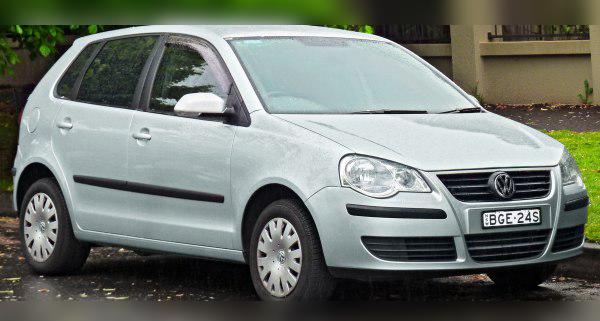
VW 1.2 HTP 12V (BZG) – Experiences, problems, fuel consumption and used-car buying tips
Key points (TL;DR)
- Timing chain: Although BZG is an improved version, the chain and tensioner are still a weak spot. Rattling noise at startup is a red alert.
- Three cylinders: Expect characteristic vibrations (especially at idle) and a specific “sewing machine” sound.
- City hero: Short gearbox ratios make it lively in the city, but tiring on the motorway.
- LPG-friendly: Indirect injection makes this engine an ideal candidate for LPG conversion.
- Ignition coils: Consumable parts – they fail often, but are cheap and easy to replace.
- Catalytic converter: On neglected cars, the honeycomb of the catalytic converter can disintegrate, which can destroy the engine (fragments being sucked into the cylinders).
Contents
Introduction and applications
The BZG engine is Volkswagen’s three-cylinder petrol unit with a displacement of 1.2 litres. It belongs to the EA111 engine family. This is the 12V (twelve-valve) version, which means it has two camshafts and 4 valves per cylinder, unlike the weaker 6V versions. It was primarily installed in the VW Polo IV (facelifted 9N3 model from 2005), but can also be found in sister models from the VW Group (Škoda Fabia, SEAT Ibiza).
This engine was VW’s answer to the need for a cheap, economical city engine that meets Euro 4 standards. The BZG came as a replacement or complement to older codes such as AZQ, bringing certain mechanical improvements to address timing system issues.
Technical specifications
| Parameter | Value |
|---|---|
| Engine displacement | 1198 cc (1.2 l) |
| Configuration | Inline, 3 cylinders, 12 valves |
| Power | 51 kW (70 hp) @ 5400 rpm |
| Torque | 112 Nm @ 3000 rpm |
| Engine code | BZG |
| Injection type | MPI (Multi Point Injection) – indirect |
| Aspiration | Naturally aspirated |
Reliability and maintenance
Does this engine have a timing belt or a chain?
The BZG engine uses a chain to drive the camshafts. In theory this is a “lifetime” solution, but in practice on 1.2 HTP engines it is the weakest point. Although the BZG is improved compared to earlier versions (modified guides and tensioner), the chain can still stretch. The problem is often the hydraulic tensioner which, due to lack of oil pressure or old oil, does not tension the chain quickly enough at startup, which can lead to the chain jumping a tooth (timing “skipping”).
What are the most common failures on this engine?
Apart from the chain, owners most often encounter the following issues:
- Ignition coils: Each cylinder has its own coil. They often fail; the symptom is the engine running on two cylinders, a drastic loss of power and the “Check Engine” light coming on.
- Throttle body: It gets dirty relatively quickly, which leads to unstable idle and the engine stalling when stopping at traffic lights. Cleaning and recalibration usually solve the problem.
- Cylinder head overheating: Due to the design and frequent high-rev driving (motorway), valves can overheat, and even valve seats can burn, resulting in loss of compression.
- PCV valve (crankcase ventilation): If it clogs, oil consumption can increase and oil can start leaking from seals.
At what mileage should the major service be done?
Since it has a chain, the classic “major service” as with a belt is not strictly defined by mileage. However, experienced mechanics recommend replacing the chain set (chain, sprockets, guides, tensioner) preventively between 120,000 km and 150,000 km, or as soon as you hear a metallic rattling noise on cold start lasting longer than 2–3 seconds.
How many litres of oil does this engine take and which grade is recommended?
The oil capacity is small, which is a double-edged sword. The engine takes about 2.8 to 3.0 litres of oil with the filter. The recommended grade is 5W-40 or 5W-30 (VW specification 502.00 or 504.00). Because of the small quantity, the oil degrades faster (thermal load), so regular changes are crucial.
Does it consume oil between services and what amount is considered normal?
A healthy BZG engine should not consume a significant amount of oil. Consumption up to 0.5 litres per 10,000 km is acceptable. If it uses more (e.g. 1 litre every few thousand km), this points to problems with piston rings, valve stem seals or leaks. On this engine, oil consumption often goes hand in hand with catalytic converter issues.
At what mileage should the spark plugs be replaced?
For the BZG engine, it is recommended to replace the spark plugs every 40,000 to 60,000 km. If you mostly drive in the city (stop-and-go), shorten this interval to 30,000 km. Worn spark plugs can kill the ignition coils.
Specific parts (costs)
Does the engine have a dual-mass flywheel?
No. This engine uses a conventional solid flywheel. This is great news for owners, as it eliminates one of the most expensive failures on modern cars.
What kind of injection system does it have and are the injectors problematic?
The engine uses an MPI (Multi Point Injection) system with indirect injection into the intake manifold. The injectors are robust, cheap and rarely cause problems. They are not as sensitive to fuel quality as injectors on direct-injection engines (FSI/TSI).
Does this engine have a turbocharger?
No. This is a naturally aspirated engine. There is no turbo, no intercooler, no complex vacuum hoses that crack. Fewer parts = lower chance of failure.
Does this model have a DPF filter or an EGR valve?
Being a petrol engine, it does not have a DPF filter. However, it does have an EGR valve. On this engine, the EGR can get clogged with soot, which triggers the “Check Engine” light and causes rough running. Cleaning is possible, and replacement is not excessively expensive (depends on the market).
Does this engine use AdBlue?
No, AdBlue is used exclusively on newer-generation diesel engines. This petrol engine does not have such systems.
Fuel consumption and performance
What is the real fuel consumption in city driving?
Although it is a small engine, the weight of the Polo (over 1 tonne) plays a role. Real-world city consumption is between 7 and 8.5 litres per 100 km. In winter and heavy traffic it can reach 9 litres. If you expect 5 litres in the city, this engine will disappoint you.
Is this engine “underpowered” for the body it is installed in?
In the city, the engine is perfectly adequate. Short gearbox ratios make it nippy up to 60 km/h. However, as soon as you hit an open road or a hill with more passengers and the A/C on, the engine becomes very sluggish. Overtaking requires serious planning and dropping down a gear or two.
What is it like on the motorway and at what rpm does it cruise at 130 km/h?
The motorway is not its natural habitat. At 130 km/h, the engine spins at a high 4000–4200 rpm in fifth gear. This results in a lot of noise in the cabin and increased fuel consumption (around 7–8 l/100 km at that speed). Long motorway drives at these revs are not recommended due to thermal stress on the oil and engine.
Additional options and modifications
Is this engine suitable for LPG conversion?
Yes, absolutely. Thanks to the MPI injection system and hydraulic tappets (which self-adjust valve clearance), this engine handles LPG very well. Installation is simple and relatively cheap (depending on the market). Given its city fuel consumption on petrol, LPG pays off quickly.
How much can this engine be safely “chipped” (Stage 1)?
On small-displacement naturally aspirated petrol engines, remapping is basically a waste of money. A Stage 1 map might bring an extra 3 to 5 hp, which is imperceptible in real driving. It is better to invest that money in quality tyres or regular servicing.
Gearbox
Which manual and automatic gearboxes are fitted to this engine?
With the BZG engine in the Polo 9N3 you almost exclusively get a 5-speed manual gearbox (type 02T). Automatic gearboxes are rare with this engine in this generation (they usually came with 1.4 or 1.6 engines).
What are the most common failures of the manual gearbox?
The manual gearbox is generally reliable, but on high-mileage cars the bearings inside the gearbox can wear (you hear a humming noise that follows wheel speed). Also, the gear selector mechanism can become imprecise.
Does this model have a dual-mass flywheel and how much does clutch replacement cost?
As mentioned, it does not have a dual-mass flywheel. A clutch kit (pressure plate, disc, release bearing) is relatively cheap and falls into the category of affordable maintenance (depends on the market, but it is not expensive).
At what mileage should the gearbox be serviced and the oil changed?
VW often claims that gearbox oil is “lifetime”, but that is a marketing trick. It is recommended to change the oil in the manual gearbox every 100,000 km or 5–6 years. This will preserve the bearings and synchros, and the gearbox will operate smoothly.
Buying used and conclusion
When buying a Polo with the BZG engine, it is crucial to do the following:
- Cold start: Insist that the engine is completely cold. Listen carefully during the first 3–5 seconds of running. If you hear loud metallic rattling, the chain needs replacing.
- Test drive: Warm the engine up and let it idle. If it shakes irregularly, it could be coils, spark plugs or (worst case) poor compression on one cylinder (burnt valves).
- Diagnostics: Check for fault codes related to misfires and catalytic converter efficiency.
Conclusion: The VW Polo with the 1.2 BZG engine is an ideal car for students, beginners and people who spend 90% of their time driving in the city. Maintenance is cheap (no turbo, no dual-mass flywheel, no DPF), road tax/registration is low, and parts are available everywhere. However, if you plan frequent motorway trips or are bothered by three-cylinder vibrations, look for the 1.4 16V engine, which is much more refined.
Was this content useful to you?
Your opinion helps us to improve the quality of the content.