CLSA Engine
- Engine
- 1598 cm3
- Aspiration
- Naturally aspirated engine
- Fuel
- Petrol (Gasoline)
- Fuel injection system
- Multi-port manifold injection
- Power
- 105 hp @ 5250 rpm
- Torque
- 155 Nm @ 3500 rpm
- Cylinders
- 4
- Valves
- 16, 4 per cylinder
- Cylinders position
- Inline
- Valvetrain
- DOHC
- Oil capacity
- 3.6 l
# Vehicles powered by this engine

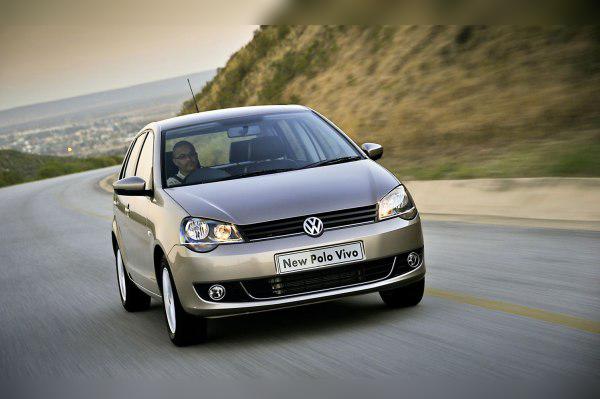
VW 1.6 16V (CLSA) – Experiences, problems, fuel consumption and buying tips
Key points in short (TL;DR)
- Simple design: This is a classic naturally aspirated petrol engine without complicated systems (no turbo, no direct injection), which means cheaper maintenance.
- LPG-friendly: Due to its indirect injection (MPI), it is an ideal candidate for LPG conversion.
- “Cold start” issue: Known issue with piston slap while the engine is cold, which is characteristic of this generation of 1.6 16V engines.
- Fuel consumption: In the city it can be quite thirsty for its displacement (often over 9 l/100 km).
- Gearbox: Comes with a reliable manual gearbox or a classic Tiptronic automatic (more durable than early DSG gearboxes).
- Recommendation: An excellent choice for drivers who want a simple A-to-B car and are afraid of failures on modern turbo-petrol engines.
Contents
Introduction: Old school in a newer package
The CLSA engine is a 1.6-liter naturally aspirated petrol unit that is primarily installed in the Volkswagen Polo Vivo series. Polo Vivo is a specific model (often seen on markets like South Africa, but available more widely as a used car) that represents a budget version of the Polo, combining platforms of previous generations with proven technology.
This engine is a derivative of the famous EA111 family. Why is it important? Because it represents a “safe harbor” for people who don’t want complicated TSI engines. It offers 105 horsepower, which is a golden middle ground for a city car – not too weak, but not a sports car either. Its main philosophy is: fill up, drive, and don’t worry about a turbo.
Technical specifications
| Specification | Data |
|---|---|
| Engine displacement | 1598 cc (1.6 L) |
| Power | 77 kW (105 hp) |
| Torque | 155 Nm at 3500 rpm |
| Engine code | CLSA (EA111 family) |
| Injection type | MPI (Multi-Point Injection) – Indirect |
| Charging | Naturally aspirated |
| Number of cylinders/valves | 4 cylinders / 16 valves |
Reliability and maintenance
Timing chain or belt?
The CLSA 1.6 16V engine uses a timing chain for valve timing. Although the idea of a chain is that it should last “forever”, with this EA111 family that is not always the case. The chain can stretch and the tensioners can weaken.
Symptoms of problems: Metallic rattling at first start (until oil builds pressure in the tensioner) or rough engine operation. If you hear rattling for more than a few seconds on startup, it’s time to replace the chain kit. This usually happens between 120,000 and 150,000 km, although some units go further without intervention.
Most common failures
Besides the chain, this engine has a specific flaw known as “piston slap”. This occurs due to a slight clearance between the piston and the cylinder. It manifests as a sound similar to a diesel engine while the car is cold. When it warms up, the metal expands and the sound disappears. Although it sounds scary, many taxi drivers have covered hundreds of thousands of kilometers with this noise without catastrophic failure, but it does indicate wear.
Other common issues include:
- Ignition coils: They often fail one by one, causing the engine to run on 3 cylinders and triggering the “Check Engine” light.
- PCV valve (oil separator): It can clog, leading to increased oil consumption.
- Throttle body: It gets dirty from oil vapors, which leads to unstable idle. Cleaning usually solves the problem.
Service intervals and oil
Minor service: Recommended every 10,000 km up to a maximum of 15,000 km. Do not follow “Long Life” recommendations of 30,000 km if you want the chain to last.
Major service: Since the engine has a chain, a classic “major service” is not done at a fixed interval like with a belt; instead, the chain is replaced as needed (when it becomes noisy). However, the auxiliary (serpentine) belt and water pump should be checked every 60,000 – 90,000 km.
Oil: The engine takes approximately 3.6 to 4.0 liters of oil. The recommended grade is 5W-40 (VW 502.00 standard). This oil provides better protection for older engine designs than thin 0W-20 oils.
Oil consumption: These engines are known to “drink” some oil, especially when driven on the highway at high revs. Consumption of 0.3 to 0.5 liters per 1,000 km is often considered “within normal limits” by VW, but in practice, a healthy engine should not consume more than 1 liter between services (over 10,000 km). If it uses more, piston rings or valve stem seals are likely the issue.
Spark plugs
Spark plugs are replaced every 30,000 to 60,000 km. Always use quality plugs (NGK or Bosch) because poor plugs can quickly destroy the ignition coils, which are sensitive on this model.
Specific parts (costs)
Injection system and injectors
Here we have great news. The CLSA uses an MPI (Multi-Point Injection) system. The injectors are robust, inexpensive (compared to FSI/TSI injectors) and rarely cause problems. They are not as sensitive to poor fuel quality as direct injection systems.
Dual-mass flywheel, turbo and emissions
- Dual-mass flywheel: NONE. This engine uses a classic solid flywheel. This means clutch kit replacement is significantly cheaper (exact cost depends on the market).
- Turbocharger: NONE. The engine is naturally aspirated. No turbo to fail, no intercooler to crack. One less thing to worry about.
- DPF and AdBlue: As a petrol engine, it DOES NOT HAVE a DPF filter and does not use AdBlue fluid.
- EGR valve: It does have an EGR valve. It can clog with soot (especially in city driving), which causes the engine to “choke”. It can often be cleaned and does not always need to be replaced.
Fuel consumption and performance
Is the engine “lazy”?
With 105 hp and 155 Nm, this engine in the Polo Vivo body (which is not very heavy) offers quite decent performance. It’s not a racer, but it’s not sluggish either. However, like any naturally aspirated engine, it needs revs. To get proper pull when overtaking, you need to drop one or two gears and push it over 3500–4000 rpm. If you’re used to a turbo diesel that pins you to the seat at 2000 rpm, this engine will feel weak until you learn how to drive it.
Real-world fuel consumption
- City driving: This is where the downside of older technology shows. Expect consumption between 8.5 and 10.5 l/100 km, depending on traffic and how heavy your right foot is. In winter it can go up to 11 liters.
- Open road (secondary roads): Here it is economical, using around 5.5 – 6.5 l/100 km.
- Highway (130 km/h): Due to the lack of a 6th gear (on the manual), the engine revs high (around 3800–4000 rpm). Consumption is about 7.5 – 8.5 l/100 km, and cabin noise becomes noticeable.
Additional options and modifications
LPG conversion
YES, absolutely. This is one of the best more modern VW engines for LPG conversion. It usually has a metal intake manifold and indirect injection. The LPG system is standard (sequential), cheaper to install than on TSI engines, and the engine handles LPG very well. This is the only real way to “tame” the high city fuel consumption.
Remapping (Stage 1)
Don’t waste your money. On a naturally aspirated 1.6-liter engine, a Stage 1 remap will give you maybe 5 to 8 hp, which you won’t really feel in everyday driving. It’s better to invest that money in quality tires or a full service.
Gearbox
Manual gearbox
It most commonly comes with a 5-speed manual gearbox. These gearboxes are precise and generally reliable.
Failures: Sometimes bearing wear in the gearbox (whining noise) appears at higher mileage, or issues with the gear selector (difficulty engaging first or reverse).
Clutch replacement: Since there is no dual-mass flywheel, clutch kit replacement is relatively affordable (depends on the market, but it falls into the cheaper category).
Automatic gearbox (Tiptronic)
In Polo Vivo models with the CLSA engine you often find a 6-speed Tiptronic (a classic torque-converter automatic, usually from Aisin), and not the notorious dry DSG (DQ200) that came with TSI engines.
Advantages: This gearbox is very comfortable in the city and far more reliable than early DSG units. There are no clutches that wear out.
Maintenance: Although VW often claims the oil is “lifetime”, you must change the automatic transmission fluid every 60,000 km. If you do that, the gearbox can last as long as the engine. Failures are usually related to the valve body if the oil is not changed regularly.
Buying used and conclusion
What to check before buying?
- Cold start: Insist on starting the car when the engine is completely cold. Listen to the chain (does it rattle for more than 2–3 seconds?) and the pistons (does the engine sound like a diesel?).
- Oil filler cap: Remove the oil filler cap. If you see “mayonnaise” (white emulsion), it can mean just condensation from short trips, but also a possible head gasket issue.
- Test drive: The engine should pull linearly, without “hiccups” (a symptom of bad coils or spark plugs).
- Diagnostics: Check for any fault codes related to misfire or the catalytic converter.
Conclusion
The VW 1.6 CLSA engine is an excellent choice for drivers in countries where fuel quality is questionable, or for those who want to reduce the risk of expensive repairs. It is not the most economical petrol engine in the world, but it is simple, cheap to maintain, and works well on LPG.
Ideal for: City driving, taxi use (on LPG), beginner drivers and those who drive up to 15,000 km per year.
Avoid if: You spend most of your time on the highway at speeds above 130 km/h – then it becomes noisy and tiring.
Was this content useful to you?
Your opinion helps us to improve the quality of the content.