CLPB Engine
- Engine
- 1398 cm3
- Aspiration
- Naturally aspirated engine
- Fuel
- Petrol (Gasoline)
- Fuel injection system
- Multi-port manifold injection
- Power
- 75 hp @ 5000 rpm
- Torque
- 132 Nm @ 3600 rpm
- Cylinders
- 4
- Valves
- 16, 4 per cylinder
- Cylinders position
- Inline
- Valvetrain
- DOHC
- Oil capacity
- 3.2 l
# Vehicles powered by this engine

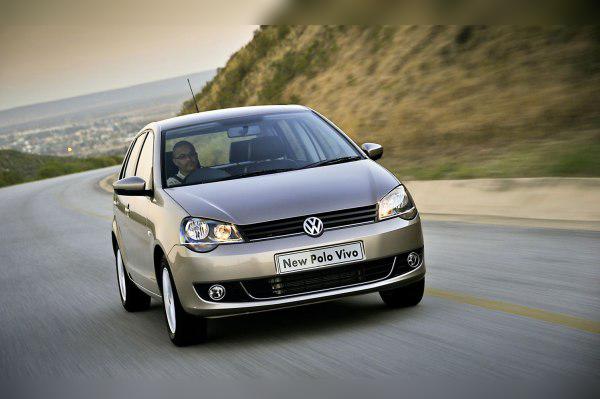
VW 1.4 MPI (CLPB) – Experiences, problems, fuel consumption and buying tips
Volkswagen’s 1.4‑liter naturally aspirated petrol engine with the code CLPB is the heart of models such as the Polo Vivo. It’s an “old-school” engine that has been kept in production primarily because of its simplicity, low production cost and robustness, aimed at markets where durability is valued more than the latest tech trends. With its 75 horsepower, this is not a racer, but a workhorse for city use.
Key points (TL;DR)
- Reliability: Extremely high. Simple design means fewer things that can break.
- Maintenance: Cheap (depends on the market, but generally among the lowest-cost options).
- LPG: An ideal candidate for LPG conversion.
- Performance: The engine is “sluggish”. Overtaking on open roads requires patience and planning.
- Main downside: Fuel consumption can be disproportionately high for the power on offer, especially in the city.
- Recommendation: An excellent choice for beginner drivers, city delivery vehicles, or those who want minimal maintenance costs.
Contents
- Technical specifications
- Reliability and maintenance
- Specific parts and costs
- Fuel consumption and performance
- Additional options (LPG and tuning)
- Gearbox and drivetrain
- Used car buying guide and conclusion
Technical specifications
| Parameter | Value |
|---|---|
| Engine displacement | 1398 cc (1.4 L) |
| Power | 55 kW / 75 hp |
| Torque | 132 Nm at 3800 rpm |
| Engine code | CLPB |
| Injection type | MPI (Multi-Point Injection) – indirect |
| Induction | Naturally aspirated (no turbo) |
| Configuration | Inline 4-cylinder, 16 valves (DOHC) |
Reliability and maintenance
The CLPB belongs to a generation of engines that has already gone through all its “teething problems”. Since it is installed in the VW Polo Vivo (a model that is a specific mix of Polo generations for certain markets), the focus was on durability.
Does this engine have a timing belt or a chain?
This engine uses a timing belt for valve timing. This is important to know because, unlike some problematic chains from that period, the belt here is a quiet and reliable solution. However, it does require regular replacement to avoid catastrophic engine failure.
What are the most common issues?
Although robust, the CLPB is not immune to problems:
- Ignition coils: One of the most common issues. Symptoms include rough idle, jerking under acceleration and the “Check Engine” light coming on. It’s recommended to always keep a spare coil in the trunk.
- Throttle body: Due to crankcase ventilation/oil vapour recirculation, the throttle body can get dirty. Symptoms are fluctuating idle speed or stalling when stopping at traffic lights. Cleaning solves the problem and is not expensive.
- Coolant temperature sensor: Can send incorrect data to the ECU, leading to hard starting (especially when the engine is hot) and increased fuel consumption.
- Oil leaks: On older examples, the valve cover gasket can start to leak.
Service intervals and oil
The major service (timing belt, tensioner and water pump replacement) is recommended every 60,000 to 90,000 km, or every 5 years, whichever comes first. Do not risk exceeding this interval.
The engine takes approximately 3.2 to 3.5 liters of engine oil (always check with the dipstick). The recommended viscosity is usually 5W‑40 or 5W‑30 (VW 502.00 or VW 504.00 standard). Because of the small amount of oil in the sump, regularly checking the level is crucial.
Oil consumption: These engines are known to consume some oil, especially if driven at high revs. Consumption of up to 0.5 liters per 1,000 km is considered “normal” according to the factory, but in practice a healthy engine should not use more than 1 liter between two minor services (over 10,000 km).
Spark plugs
On this petrol engine, spark plugs are replaced every 30,000 to 60,000 km. If you use standard nickel plugs, the interval is shorter. Iridium plugs last longer. Neglected spark plugs directly shorten the lifespan of the ignition coils.
Specific parts (costs)
This is where we come to the biggest advantage of this engine – its simplicity.
- Dual-mass flywheel: NONE. This engine uses a conventional solid flywheel. This means clutch kit replacement is much cheaper than on diesels or more powerful petrol engines.
- Fuel injection system: Uses a classic MPI system (port injection into the intake manifold). The injectors are robust, not very sensitive to poorer fuel quality and very rarely cause problems. Injector cleaning is cheap and straightforward.
- Turbocharger: NONE. This is a naturally aspirated engine. No turbo, no intercooler, no expensive boost-related failures.
- DPF and AdBlue: As a petrol engine, it has no DPF filter and does not use AdBlue.
- EGR valve: It has an EGR valve to meet emissions standards. It can clog up with soot (especially in city driving), which shows up as poor pulling power and a warning light on the dash. Cleaning is possible, and replacement is not excessively expensive (market-dependent).
Fuel consumption and performance
This is the section where buyers need to have realistic expectations. The CLPB engine is not an efficiency champion by today’s standards.
Real-world fuel consumption
- City driving: Expect between 7.5 and 9.0 l/100 km. In heavy traffic with the A/C on, consumption easily goes above 9 liters. The reason is that you have to “push” the engine to keep up with traffic.
- Country roads: This is where it’s most economical, with consumption dropping to around 5.5 – 6.0 l/100 km at speeds up to 80–90 km/h.
- Motorway: At 130 km/h, consumption rises to about 7.5 – 8.5 l/100 km due to high revs and air resistance.
Is the engine “lazy”?
To be honest – yes. With 132 Nm of torque available only at 3800 rpm, you will feel a lack of power on inclines or when the car is fully loaded. It is perfectly adequate for city driving, but any brisk acceleration requires downshifting and high revs.
Behavior on the motorway
At 130 km/h in fifth gear, the engine spins at around 3,800 to 4,000 rpm (depending on the gearbox). This means noticeable engine noise in the cabin and a lack of “breath” for further acceleration. It’s not a long-distance cruiser, even though it can handle long trips without mechanical issues.
Additional options and modifications
LPG conversion
This is an excellent engine for LPG. Thanks to indirect injection and a metal intake manifold (on most variants), the conversion is simple, cheap and very reliable. There is no need for expensive direct-injection LPG systems. Given the petrol consumption, LPG is the most cost-effective option for this engine.
Remapping (Stage 1)
On small-displacement naturally aspirated engines, remapping makes no real sense. The gain would be in the range of 3 to 5 hp, which is imperceptible in everyday driving. It’s better to invest that money in quality tyres or regular servicing.
Gearbox
The CLPB engine is most commonly paired with:
- 5-speed manual gearbox: Very precise and light to operate, typical for the VW Group.
- 6-speed automatic gearbox (Tiptronic): In Polo Vivo models you often find a conventional automatic rather than a DSG.
Most common gearbox issues
Manual: Generally indestructible with normal use. Sometimes the shift linkage can develop play, making it harder to engage gears. Clutch kit replacement is relatively cheap (market-dependent, usually in the lower price range).
Automatic: Conventional automatics are reliable but slow. They can increase fuel consumption by 1–1.5 liters. Failures are rare if the oil is changed, but if something does go wrong (e.g. valve body), repairs are expensive.
Gearbox servicing: Although the manufacturer often claims the oil is “lifetime fill”, it is recommended to change the oil in the manual gearbox every 80,000 – 100,000 km, and in the automatic definitely every 60,000 km.
Used car buying guide and conclusion
If you are looking at a used car with this engine, pay attention to the following:
- Noise on cold start: Listen for ticking from the hydraulic lifters. If the noise does not disappear after a few seconds, the engine may have been run on poor-quality oil.
- Oil filler cap: Unscrew the cap and check for “mayonnaise” (white emulsion). This is a sign of coolant mixing with oil or (more commonly on these engines) that the car has been driven only on very short trips where condensation never has time to evaporate.
- Idle: The engine should idle smoothly. Any shaking points to a dirty throttle body, bad spark plugs or faulty coils.
Conclusion:
The VW 1.4 MPI (CLPB) is an engine for the rational buyer. It is not exciting, it is not particularly frugal when it comes to fuel, but it is cheap to maintain and very durable. It is ideal for drivers who cover moderate mileage, mostly in the city, and want a car that will reliably start in the morning and take them from point A to point B with minimal service costs. If you are looking for performance, skip it. If you are looking for peace of mind – buy it.
Was this content useful to you?
Your opinion helps us to improve the quality of the content.