EA888 / CHHB, DEDA Engine
- Engine
- 1984 cm3
- Aspiration
- Turbocharger, Intercooler
- Fuel
- Petrol (Gasoline)
- Fuel injection system
- Direct injection and Multi-port manifold injection
- Power
- 220 hp
- Torque
- 350 Nm
- Cylinders
- 4
- Valves
- 16, 4 per cylinder
- Cylinders position
- Inline
- Valvetrain
- DOHC
- Oil capacity
- 5.7 l
- Coolant
- 10 l
- Systems
- Start & Stop System
# Vehicles powered by this engine
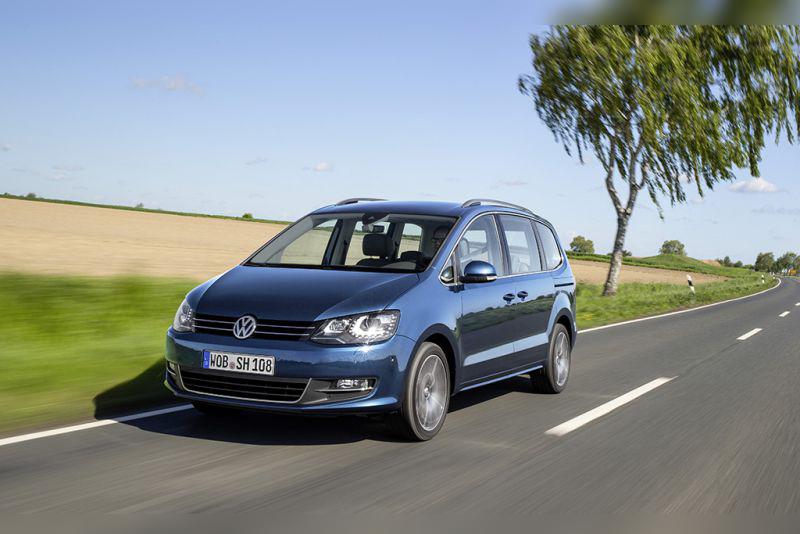
2.0 TSI EA888 (220 hp): Real-world experience, issues, fuel consumption and buying tips
Key points in short (TL;DR)
- Powerful sleeper: With 220 hp and 350 Nm, this engine turns the heavy Sharan into a surprisingly quick family hauler, keeping up with many sporty sedans.
- Oil issue mostly solved: This is the EA888 Generation 3. The notorious piston ring and extreme oil consumption problems from the previous generation are drastically reduced here, though not completely eliminated.
- Achilles’ heel – thermostat: The most common failure is the thermostat and water pump housing. The plastic weakens under thermal cycles and starts leaking coolant.
- Dual injection: The clever solution (MPI + direct injection) means the intake valves are “washed” by fuel, so there’s no carbon buildup problem like on older TSI engines.
- Not a fuel saver: In the Sharan’s heavy body, city driving easily pushes fuel consumption above 12 l/100 km.
- DSG maintenance is crucial: The gearbox is reliable only if the oil is changed on time. Neglect leads to expensive mechatronic failures.
Contents
Introduction: EA888 Gen 3 in a family package
The engines with codes CHHB and DEDA belong to the third generation (Gen 3) of Volkswagen’s famous EA888 series. While the same unit became well-known in the Golf GTI (Mk7), its installation in the VW Sharan II (facelift 2015+) is an interesting engineering move. The goal was to offer a petrol alternative to the dominant TDI diesels, providing refinement, quiet operation and high‑rev performance that diesel simply cannot match.
This engine is for drivers who want van-like space but hatchback-like performance, and who are willing to pay more for fuel in order to avoid DPF and AdBlue issues.
Technical specifications
| Specification | Value |
|---|---|
| Engine displacement | 1984 cc (2.0 L) |
| Power | 162 kW / 220 hp |
| Torque | 350 Nm (at 1500–4400 rpm) |
| Engine codes | CHHB, DEDA |
| Injection type | Combined (Direct FSI + Indirect MPI) |
| Forced induction | Turbocharger (IHI IS20), intercooler |
| Camshaft drive | Timing chain |
Reliability & Maintenance: Timing chain, oil and common issues
Does this engine have a timing belt or a chain?
This engine uses a timing chain. Unlike earlier generations (Gen 1 and 2), where the chain was a “ticking time bomb”, the system is significantly improved on CHHB/DEDA engines. The chain is more robust and the tensioners have been revised. Still, the chain is not eternal. It’s recommended to check its condition via diagnostics (cam/crank correlation) or visually after around 150,000 km. If you hear rattling on cold start that lasts longer than 2–3 seconds, that’s a sign it needs urgent replacement.
What are the most common issues with this engine?
Although it’s more reliable than its predecessors, it has some specific weak points:
- Thermostat and water pump module: This is the most common problem. The housing is plastic and is exposed to very high temperatures (because the exhaust manifold is integrated into the cylinder head). Over time the plastic warps or cracks, causing coolant leaks. Symptoms: coolant level dropping without obvious puddles under the car (until it becomes critical) or a noticeable coolant smell.
- PCV valve (oil separator): When the membrane fails, the engine starts running rough, may whistle, and/or oil consumption increases.
- Camshaft phaser solenoids: They can leak oil through the wiring connector.
At what mileage should the “major service” be done?
Since the engine has a chain, a classic “major timing service” like with a belt is not strictly mileage-based. However, the auxiliary (serpentine) belt, tensioner and water pump (often replaced preventively due to leaks) should be serviced around 100,000–120,000 km or every 5–6 years.
Engine oil: quantity, grade and consumption
The engine takes approximately 5.7 liters of oil. The recommended grade is 5W-30 or 0W-30 with specification VW 504.00 / 507.00.
Does it burn oil? Gen 3 engines have redesigned piston rings and pistons, so they don’t consume oil like the older models. Still, consumption of 0.5 to 1 liter per 10,000 km is considered normal and acceptable for this type of turbo engine. If it uses more than that, first check the PCV valve and turbo leaks before suspecting worn rings.
Spark plugs and replacement interval
It’s recommended to replace the spark plugs every 60,000 km. Use only iridium/platinum plugs according to factory spec (NGK or Bosch). If the engine is tuned, the interval should be shortened to about 30,000 km.
Specific parts (costs)
Fuel injection system and injectors
This engine uses an advanced system with 8 injectors – 4 for direct injection (into the cylinder) and 4 for port injection (into the intake manifold). This is great news for owners. Under light load it runs on port injection, where the fuel “washes” the intake valves, preventing carbon buildup – a major issue on pure FSI/TSI direct-injection engines. The injectors are generally reliable and rarely cause problems before high mileage.
Turbocharger
The engine uses a single IHI IS20 turbocharger. It’s very capable and spools quickly. With regular oil changes and proper cooldown after hard driving, its lifespan is long (over 200,000 km). The electronic wastegate actuator can occasionally cause issues (warning light, loss of power).
Dual-mass flywheel and clutch
Yes, when paired with the DSG gearbox this engine uses a dual-mass flywheel (DMF). It has to cope with high torque (350 Nm) and the Sharan’s weight. Failure symptoms are metallic knocking at idle (which changes when you shift into D or R) and vibrations. Replacement is (expensive/market-dependent), but necessary, as a failing flywheel can damage the gearbox.
Emissions equipment (EGR, DPF, GPF, AdBlue)
Since this is a petrol engine:
- No DPF filter.
- No AdBlue system.
- Models before 2018 generally don’t have a GPF (gasoline particulate filter).
- The function of an EGR valve is handled by variable valve timing, so there is no conventional EGR valve that clogs with soot like on diesels.
Fuel consumption and performance
Real-world fuel consumption
There’s no point in sugar-coating it – the Sharan is heavy (around 1.8 tons), tall and boxy.
- City driving: Expect 11 to 14 l/100 km, depending on traffic and how heavy your right foot is.
- Country roads: On secondary roads it can drop to around 7.5–8.5 l/100 km.
- Motorway (130 km/h): It uses about 9–10 l/100 km.
Is the engine “lazy”?
Absolutely not. With 350 Nm of torque available from just 1500 rpm, this engine behaves similarly to a strong diesel, but with a much wider power band. Overtaking is safe even when the car is fully loaded with passengers and luggage. 0–100 km/h takes under 8 seconds, which is impressive for an MPV.
Behaviour on the motorway
This is the natural habitat of the Sharan 2.0 TSI. Thanks to the DSG gearbox (usually 6 speeds on earlier, or 7 on later facelift models), at 130 km/h the engine runs at relatively low revs (around 2200–2400 rpm), which keeps the cabin quiet.
Additional options and modifications
LPG conversion
Because of the direct injection system, LPG conversion is complex and expensive. You need a special system for TSI engines that either injects liquid gas directly (very expensive) or uses a “mixed” mode (consuming about 15–20% petrol while running on gas to cool the petrol injectors). Given the installation cost (market-dependent, but firmly in the “very expensive” category), it only makes financial sense if you cover very high annual mileage.
Chip tuning (Stage 1)
The EA888 Gen 3 is a tuner’s dream. In stock form the engine is quite “choked”. With just a remap (Stage 1) you can safely raise power to around 280–300 hp and torque to 420–440 Nm. Keep in mind that the extra torque puts more stress on the dual-mass flywheel and the gearbox clutches, so along with the engine tune a TCU tune (gearbox software) is recommended to increase clutch pressure.
Gearbox: DSG and servicing
Gearbox type and maintenance
With the 2.0 TSI (220 hp) in the Sharan you almost always get a DSG dual-clutch gearbox. Depending on the exact model year, it’s usually a DQ250 (6-speed, wet clutch) or in later models a DQ381 (7-speed, wet clutch).
Golden rule: The oil and filter in the DSG must be changed every 60,000 km. This is not a recommendation – it’s mandatory if you want the gearbox to last.
Common DSG issues
- Mechatronic unit: The gearbox control unit. If the oil is not changed, the internal channels clog and the mechatronic fails. Replacement is very expensive.
- Clutch pack: Typically lasts between 200,000 and 250,000 km, depending on driving style (stop‑and‑go city driving wears it out faster).
- Costs: Replacing the clutch pack on a DSG is costly and requires special tools and software recalibration.
Used car buying guide & conclusion
When buying a Sharan with this engine, pay attention to the following:
- Cold start: The engine must be completely cold. Listen to the chain during the first few seconds. Rattling = expense.
- Leaks: Check the area around the water pump (on the belt side of the engine) for white/pink traces of dried coolant.
- DSG test: The gearbox should engage smoothly, without jerks, both forwards and in reverse. Jerking on take‑off points to a bad flywheel or mechatronic issues.
- Service history: Check whether the DSG has been serviced every 60k km. If there’s no proof, it’s a major risk.
Conclusion: The VW Sharan 2.0 TSI (220 hp) is a fantastic vehicle for a large family that doesn’t drive more than 15–20,000 km per year (due to fuel consumption) and wants driving dynamics that are anything but boring. The engine is far better than earlier generations, but it requires strict maintenance of the cooling system and gearbox. If you can afford the fuel, the driving experience is incomparably more pleasant than in the diesel version.
Was this content useful to you?
Your opinion helps us to improve the quality of the content.