CTHA, CZDA, DJKA Engine
- Engine
- 1395 cm3
- Aspiration
- Turbocharger, Intercooler
- Fuel
- Petrol (Gasoline)
- Fuel injection system
- Direct injection
- Power
- 150 hp
- Torque
- 250 Nm
- Cylinders
- 4
- Valves
- 16, 4 per cylinder
- Cylinders position
- Inline
- Oil capacity
- 4 l
- Coolant
- 8 l
- Systems
- Particulate filter
# Vehicles powered by this engine
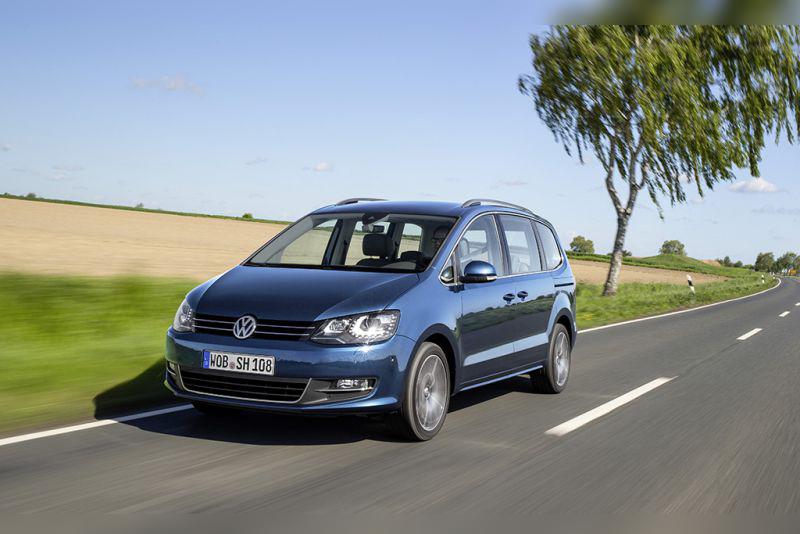
1.4 TSI (CTHA, CZDA, DJKA) – Experiences, issues, fuel consumption and buying tips
Key points (TL;DR)
- Big difference between engines: The CTHA code belongs to the older (problematic) EA111 generation with a timing chain, while CZDA and DJKA are the newer EA211 generation with a timing belt. The recommendation is always EA211 (CZDA/DJKA).
- Power vs. weight: 150 hp is the lower limit for the VW Sharan. The engine is adequate for normal driving, but under full load (7 seats + luggage) it has to be “wrung out”.
- Oil consumption: Very common on CTHA engines (piston rings). On CZDA/DJKA it is much rarer, but possible at higher mileage.
- Maintenance complexity: The direct injection system requires clean fuel and regular spark plug replacement. Carbon buildup on valves is a reality.
- Gearbox: DSG gearboxes are excellent while they work, but require strict maintenance (oil changes). Manuals are “indestructible”.
- Emissions: Newer codes (DJKA) may have a GPF filter (the petrol equivalent of a DPF).
Contents
- Introduction and applications
- Technical specifications
- Reliability and maintenance
- Specific parts (costs)
- Fuel consumption and performance
- Additional options and modifications
- Gearbox and drivetrain
- Used car buying and conclusion
Introduction and applications
The 1.4 TSI engine with 150 hp in a body the size of the VW Sharan is an interesting engineering compromise. The goal was to offer a petrol alternative to the dominant 2.0 TDI diesels, with a lower purchase price and quieter operation. It is installed in the VW Sharan II (facelift models from 2015 onwards), where it serves as an entry-level or mid-range engine option.
For a potential buyer it is crucial to distinguish between engine codes, because behind the “1.4 TSI” label there are two completely different designs. The older CTHA (Twincharger – turbo + supercharger) is known for its problems, while the newer CZDA and DJKA (turbo only) are far more reliable and cheaper to run.
Technical specifications
| Parameter | Data |
|---|---|
| Engine displacement | 1395 cc (1.4 L) |
| Power | 110 kW (150 hp) at 5000–6000 rpm |
| Torque | 250 Nm at 1500–3500 rpm |
| Engine codes | CTHA (EA111), CZDA, DJKA (EA211) |
| Injection system | Direct injection (TSI) |
| Induction (charging) | CTHA: Turbo + mechanical supercharger CZDA/DJKA: Turbocharger + intercooler |
| Camshaft drive | CTHA: Chain CZDA/DJKA: Timing belt |
Reliability and maintenance
Does this engine have a timing belt or a chain?
This is the most important question. The answer depends solely on the engine code:
- CTHA (older EA111 generation): Has a chain. This chain is known as a weak point – it tends to stretch even at low mileage (below 100,000 km), which can lead to timing skip and catastrophic engine failure.
- CZDA / DJKA (newer EA211 generation): Have a timing belt. VW learned its lesson and went back to a belt, which has proven to be extremely reliable and quieter in operation. This is the recommended option.
What are the most common failures on this engine?
For CTHA engines: Piston cracking (the most serious failure), chain stretching, high oil consumption, problems with the supercharger magnetic clutch.
For CZDA/DJKA engines: These engines are much better, but they have their weak spots:
- Thermostat housing and water pump: Coolant often leaks from the thermostat housing, which is plastic. The symptom is a dropping coolant level and a smell of vapour under the bonnet.
- Carbon buildup on valves: Due to direct injection, the intake valves are not washed by fuel. Over time, carbon deposits build up, which can cause rough running and power loss.
- Turbo actuator (wastegate): It can stick, leading to loss of power and the “Check Engine” light coming on (EPC fault).
At what mileage should the major service be done?
For versions with a timing belt (CZDA/DJKA), the manufacturer often states an optimistic 210,000 km or 10 years. However, experienced mechanics strongly recommend that the first major service (replacement of belt, tensioner and water pump) be done between 160,000 km and 180,000 km or after 6–7 years of age, for safety.
For the version with a chain (CTHA), there is no fixed interval. The chain is replaced when it becomes noisy (rattling on cold start) or preventively at around 100,000–120,000 km.
How many litres of oil does this engine take and which grade is recommended?
The engine takes approximately 4.0 to 4.5 litres of oil (always buy 5 litres). The recommended grade is usually 5W-30 or 0W-20 (for the newest models), and the oil MUST meet the strict VW specification: VW 504.00 / 507.00 or VW 508.00 (depending on model year and manual). Check the engine bay for a sticker.
Does it consume oil between services and what amount is considered normal?
Yes, TSI engines are known to “like” oil. On older CTHA units, consumption can be alarming (over 1L per 2–3 thousand km) due to poor piston rings. On newer CZDA/DJKA engines, the situation is much better, but it is completely normal to top up 0.5L to 1L per 10,000–15,000 km, especially if the car is driven aggressively or mostly in the city.
At what mileage should the spark plugs be replaced?
Due to direct injection and the turbocharger, the spark plugs are under heavy load. It is recommended to replace them every 60,000 km or 4 years. Do not skimp on spark plugs – use only iridium or those specified by the manufacturer (NGK/Bosch), because a bad plug can damage the ignition coil.
Specific parts (costs)
Does this engine have a dual-mass flywheel?
Yes. Due to the high torque (250 Nm) and the heavy Sharan body, both manual and DSG gearboxes are paired with a dual-mass flywheel. Symptoms of failure are a metallic noise when switching off the engine or vibrations at idle. This is an expensive maintenance item.
What kind of injection system does it have and are the injectors problematic?
The system is high-pressure direct fuel injection. The injectors are generally durable, but sensitive to poor fuel quality. Injector failure manifests as jerking while driving or fuel leaking into a cylinder (which can wash away the oil film and damage the engine). Replacing a set of injectors is expensive (very expensive, depending on the market), so it is advisable to occasionally use fuel system cleaning additives.
Does this engine have a turbocharger and what is its service life?
All of the engines mentioned have a turbocharger. On CTHA engines there is also a mechanical supercharger (a complex system, expensive to repair). On CZDA/DJKA there is only one turbocharger. The typical service life of the turbo is around 200,000–250,000 km with regular oil changes. If the engine is switched off immediately after fast driving (without cooldown), the turbo can fail earlier.
Does this model have a DPF filter or an EGR valve that often clogs?
This is a petrol engine, so it does not have a DPF (Diesel Particulate Filter) in the classic sense. However, newer models (code DJKA, from around 2018/2019 onwards) have a GPF (Gasoline Particulate Filter) – also called OPF. It rarely clogs because exhaust gas temperatures on petrol engines are higher. There is no EGR valve in the classic form on newer TSI engines (EA211) because exhaust gas recirculation is handled by variable valve timing (internal EGR), which is one less worry for the owner.
Does this engine use AdBlue?
No. AdBlue fluid is used exclusively for diesel engines (TDI) to reduce NOx emissions. This petrol engine does not require any additional fluids apart from fuel, oil and washer/coolant fluids.
Fuel consumption and performance
What is the real fuel consumption in city driving?
The Sharan is a heavy car (over 1,700 kg empty). In real city traffic (stop-and-go), actual consumption is between 9.5 and 11.5 litres per 100 km. In winter or on very short trips it can reach 12–13 litres. Do not trust the catalogue figures of 6–7 litres – those are from laboratory conditions.
Is this engine “sluggish” for the weight of the body it is installed in?
With 150 hp and 250 Nm, the engine is on the edge of acceptable. It is not “sluggish” for normal family driving in town and on country roads – the turbo gives it nice low-end torque so it feels lively. However, if you fill all 7 seats and add a roof box, you will feel the lack of power on climbs. It will require higher revs and more frequent shifting.
What is the engine like on the motorway and at what revs does it cruise at 130 km/h?
On the motorway it is surprisingly quiet and refined. Thanks to the 6-speed manual or 6/7-speed DSG gearbox, at 130 km/h the engine runs at about 2,600–2,800 rpm. Fuel consumption at that speed is around 7.5 to 8.5 litres, depending on wind and load. Overtaking at speeds above 120 km/h requires some patience.
Additional options and modifications
Is this engine suitable for LPG conversion?
It is not an ideal candidate. Due to direct injection, special LPG systems are required (Direct Liquid Injection or a system that mixes petrol and gas to cool the injectors). Installation is very expensive (often over 1000 EUR, depending on the market) and the cost-effectiveness is questionable unless you cover very high mileage.
How far can this engine be safely “chipped” (Stage 1)?
This engine has potential. A Stage 1 remap usually raises power to 170–180 hp and torque to about 300–320 Nm. This significantly helps the Sharan cope with its weight. However, you should be careful with the DSG gearbox (especially if it is the “dry” DQ200), because the increased torque can shorten clutch life.
Gearbox
Which manual and automatic gearboxes are paired with this engine?
There are two options with this engine:
- Manual: 6-speed gearbox (precise, easy to operate).
- Automatic (DSG): Most often a 6-speed DSG (DQ250 – wet clutch) in older/heavier variants, but in some 1.4 TSI versions you can also find a 7-speed DSG (DQ200 – dry clutch). For the Sharan, the more durable “wet” DSG was more commonly used due to the weight.
What are the most common failures of the manual and automatic gearboxes?
Manual: Almost indestructible. Possible issues are limited to the clutch kit and flywheel.
DSG: On the “dry” DQ200, the clutch packs and mechatronics (the gearbox control unit) most often fail at around 150k–200k km. On the “wet” DQ250 problems are rarer, but failure of the mechatronics or valves inside the gearbox can be very expensive to repair.
What is the cost of clutch replacement?
The cost is significant because the dual-mass flywheel is almost always replaced at the same time. For the manual gearbox, the price of the kit (pressure plate, disc, release bearing, flywheel) falls into the “expensive” category. For the DSG gearbox, replacing the clutch pack is even more expensive and requires special tools and calibration.
At what mileage should the gearbox be serviced and the oil changed?
Manual: Factory-filled “for life”, but it is recommended to change the oil at 150,000 km.
DSG (wet clutch): MANDATORY oil and filter change every 60,000 km. Skipping this service is a sure path to gearbox failure.
DSG (dry clutch – DQ200): The gearbox has oil only for the gears, and the mechatronics has its own oil. Officially it is not changed, but inspection and replacement are recommended at higher mileage.
Used car buying and conclusion
Before buying a used VW Sharan 1.4 TSI, make sure you do the following:
- Check the engine code: Insist on CZDA or DJKA (timing belt). Avoid CTHA if at all possible.
- Cold start: Listen to the engine at the first start. Any rattling, knocking or rough running in the first 3–5 seconds is a bad sign (chain or hydraulic lifters/variable cam phaser).
- Test drive: At low speeds and with the steering at full lock, listen for any jerks or hesitation from the DSG gearbox. These are the first signs of worn clutches.
- Leaks: Check the thermostat housing on the right side of the engine (viewed from the front). Traces of pink coolant are a sign that an expense is coming.
Who is this engine for?
The VW Sharan 1.4 TSI is ideal for families who drive less than 15,000–20,000 km per year and do most of their driving in the city and suburbs. If you often travel long distances under full load, the 2.0 TDI is still the better (though more expensive) choice. For everyone else, the 1.4 TSI (in EA211 form) is a refined, quiet and perfectly adequate engine.
Was this content useful to you?
Your opinion helps us to improve the quality of the content.