EA211 / DJKA Engine
- Engine
- 1395 cm3
- Aspiration
- Turbocharger, Intercooler
- Fuel
- Petrol (Gasoline)
- Fuel injection system
- Direct injection
- Power
- 150 hp
- Torque
- 250 Nm
- Cylinders
- 4
- Valves
- 16, 4 per cylinder
- Cylinders position
- Inline
- Valvetrain
- DOHC
- Oil capacity
- 4 l
- Systems
- Start & Stop System
# Vehicles powered by this engine
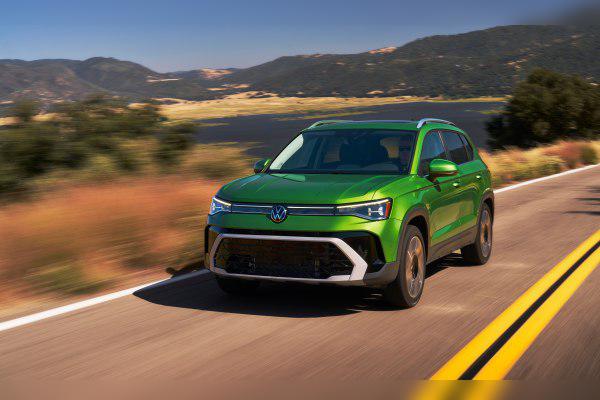
VW 1.4 TSI (EA211 / DJKA) – Experiences, problems, fuel consumption and buying tips
Key points (TL;DR)
- Camshaft drive: Uses a timing belt, not the problematic chain from older generations (EA111), which is a big plus for reliability.
- Most common failure: Thermostat housing and water pump (coolant leaks are common).
- Performance: With 150 hp and 250 Nm, this is an ideal match for a body the size of the VW Taos – enough for overtaking, yet economical.
- Transmission: In the "Tiptronic" version (especially for the US/Russian market and the Taos), it often comes with a classic 8-speed automatic transmission (Aisin), which is more reliable and comfortable than the DSG, but somewhat slower.
- Direct injection: Requires quality fuel and occasional “blowing out” on the open road because of carbon buildup.
- Conclusion: One of the best small turbo-petrol engines today, provided the cooling system is regularly maintained.
Contents
- Introduction and applications
- Technical specifications
- Reliability and maintenance
- Specific parts and costs
- Fuel consumption and performance
- Additional options and modifications
- Transmission (Tiptronic / Aisin)
- Used car buying tips and conclusion
Introduction: A modern classic in an SUV package
The engine with the code DJKA belongs to the well-known EA211 family of Volkswagen power units. This is not the older 1.4 TSI that had a bad reputation because of timing chain failures; this is a completely redesigned unit that uses a timing belt and an aluminum block. It is installed in a large number of VAG group models, but is particularly interesting in the Volkswagen Taos (2024 facelift), where it serves as the entry-level but also the most common option. Its role is clear: to replace larger naturally aspirated engines, offering more torque at lower revs with lower fuel consumption. For drivers coming from older cars, this engine represents a huge leap in refinement.
Technical specifications
| Characteristic | Data |
|---|---|
| Engine code | DJKA (EA211 family) |
| Displacement | 1395 cc (1.4 liters) |
| Power | 110 kW (150 hp) at 5000 rpm |
| Torque | 250 Nm at 1500–4000 rpm |
| Fuel type | Petrol (Recommended 95 or 98 octane) |
| Injection system | TSI – Direct fuel injection |
| Charging | Turbocharger with water-to-air intercooler |
Reliability and maintenance
Belt or chain?
Unlike the old EA111 engines that caused headaches for owners, the EA211 DJKA uses a timing belt. This is excellent news. The system is robust and quiet. The factory replacement interval is often defined as “inspection at 240,000 km”, but don’t push your luck. Experienced mechanics recommend doing the major service (timing kit and water pump) at a maximum of 160,000 to 180,000 km or every 6 to 7 years, whichever comes first. A snapped belt leads to catastrophic engine damage (pistons and valves colliding).
Oil consumption and servicing
This engine holds approximately 4.0 liters of engine oil. For newer models, VW recommends 0W-20 (VW 508.00 specification) for environmental reasons and lower consumption. However, in warmer climates or at higher mileage, switching to 5W-30 (VW 504.00) can provide better protection, but always consult an authorized service center because this depends on model year and market.
As for oil consumption, these engines are significantly better than their predecessors. Still, the turbo and direct injection mean that some consumption is to be expected. Consumption of up to 0.5 liters per 10,000 km is completely normal and acceptable. If it exceeds 0.5 liters per 1,000 km, you have a problem (most often piston rings or valve stem seals, although this is rare at low mileage on the DJKA series).
Spark plugs and ignition coils
Since this is a petrol engine with direct injection, the ignition system is under higher stress. Spark plugs should be replaced every 60,000 km (use only Iridium plugs to factory specification). If you feel hesitation under acceleration, it is often either a spark plug or an ignition coil (one per cylinder).
Most common issues
The Achilles’ heel of this engine is the thermostat housing with the water pump. It is made of plastic and deforms over time due to heat cycles, which leads to coolant leaks. Symptoms include a dropping coolant level in the expansion tank or the smell of coolant under the hood. Also, the turbocharger actuator (wastegate) can stick, resulting in loss of power and the “Check Engine” light coming on.
Specific parts (Costs)
Dual-mass flywheel: This depends on the transmission. Since the VW Taos in the “Tiptronic” version (often for the US market) uses a classic automatic transmission with a torque converter (Aisin 8-speed), it DOES NOT have a dual-mass flywheel in the traditional sense like DSG or manual gearboxes. It has a so-called “flexplate”, which is much cheaper and more durable. If it is a version with a DSG gearbox (often with 4Motion), then it does have a dual-mass flywheel, which is expensive (very expensive, depending on the market).
Injection system: The engine uses high-pressure injectors (direct injection). They are generally reliable but sensitive to poor fuel quality. They are not as problematic as diesel injectors, but replacing the full set is expensive. Prevention is the regular use of fuel system cleaning additives.
Turbocharger: It has a small, fast-responding turbocharger. Its service life is usually equal to the life of the engine with regular oil changes. The intercooler is integrated into the intake manifold (water-cooled), which shortens the air path and reduces turbo lag, but if it develops a leak (rare), repair is complicated because the entire intake assembly must be replaced.
GPF/EGR: Yes, models from 2018 onwards, including the 2024 Taos, have a GPF (OPF) filter (the petrol equivalent of a DPF). It rarely clogs because exhaust gas temperatures on petrol engines are higher. EGR functionality is often handled via variable valve timing (VVT), so there is no classic EGR valve that clogs with soot like on diesels. This engine does NOT use AdBlue fluid.
Fuel consumption and performance
Real-world consumption: Don’t trust brochure figures. In a heavy body like the Taos (compact SUV), the reality is as follows:
- City driving: Expect between 8.5 and 10 liters/100 km, depending on traffic and how heavy your right foot is.
- Highway / open road: This is where the engine shines. Consumption drops to 6.0 to 7.0 liters/100 km.
Is it “lazy”? Absolutely not. With 250 Nm available from just 1500 rpm, the car pulls decisively. It’s not a sports car, but for family needs, overtaking and hills, there is more than enough power. It feels better than the old 2.0 naturally aspirated engines.
Highway driving: Thanks to the 8-speed gearbox (on the Tiptronic version), the engine is very relaxed. At 130 km/h the engine spins at about 2,200 – 2,400 rpm, which means a quiet cabin and reasonable fuel consumption.
Additional options and modifications
LPG conversion: Is it possible? Yes. Is it worth it? Debatable. Because of direct injection, an expensive system is required (liquid injection system or a system that uses a mix of petrol and gas for injector cooling – e.g. 20% petrol, 80% gas). The installation cost is high (often over 1000 EUR, depending on the market), so it only pays off if you drive very high mileage.
Chip tuning (Stage 1): This engine has power reserves. A “safe map” (Stage 1) usually raises power to about 170–180 hp and torque to 300 Nm. However, keep in mind that higher torque puts additional stress on the transmission and turbo. If the car is under warranty (as a 2024 Taos likely is), chip tuning is not recommended because it is easily detected at the dealership.
Transmission: Tiptronic vs. DSG
This is a key point for the Taos. While European models (Tiguan) use DSG (dual-clutch transmission), the Taos for the US and some other markets, in combination with the 1.4 TSI and front-wheel drive (FWD), uses an 8-speed automatic transmission (Aisin AQ300 series).
- Reliability: This conventional automatic is extremely reliable, longer-lasting than the DSG and cheaper to maintain (no expensive dual-mass flywheel and clutch replacement).
- Failures: Rare. Harsh shifts can occur if the oil is not changed regularly, or solenoid issues at very high mileage.
- Maintenance: Although VW often claims the oil is “lifetime fill”, that’s a marketing trick. Change the automatic transmission fluid every 60,000 to 80,000 km. This is a small cost (not expensive) compared to a transmission overhaul.
Buying used and conclusion
If you are considering buying a Taos with this engine, pay attention to the following:
- Cold start: Listen to the engine at first start-up. There should be no metal-on-metal rattling (even though there is no chain, the cam phasers can be heard if the oil is poor).
- Signs of leaks: Check the coolant level. If it is below minimum, the thermostat housing is probably leaking (a common issue).
- Service history: Check whether the oil has been changed on time (maximum 15,000 km intervals, not 30,000 km).
Conclusion: The VW 1.4 TSI (DJKA) combined with the 8-speed Tiptronic transmission is one of the most rational choices in its class. You get an engine that has outgrown the teething problems of the old TSI units, paired with a transmission that is “indestructible” with regular maintenance. It is aimed at drivers who want comfort, quietness and solid power, and who are willing to accept slightly higher city fuel consumption in exchange for lower transmission maintenance costs compared to DSG models.
Was this content useful to you?
Your opinion helps us to improve the quality of the content.