EA288 evo Engine
- Engine
- 1968 cm3
- Aspiration
- Turbocharger, Intercooler
- Fuel
- Diesel
- Fuel injection system
- Diesel Commonrail
- Power
- 193 hp @ 3500 rpm
- Torque
- 400 Nm
- Cylinders
- 4
- Valves
- 16, 4 per cylinder
- Cylinders position
- Inline
- Valvetrain
- DOHC
- Systems
- Start & Stop System, Particulate filter
# Vehicles powered by this engine
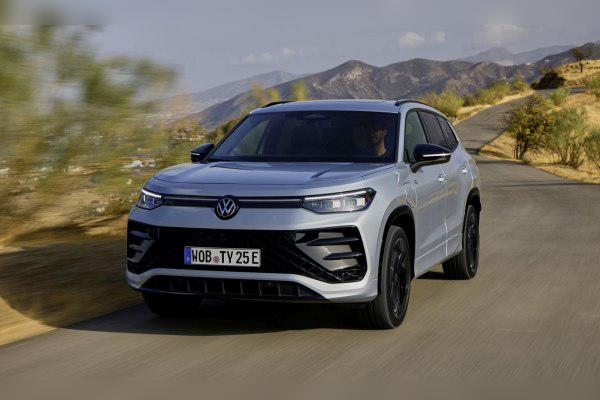
2.0 TDI (EA288 evo) 193 hp: Experiences, problems, fuel consumption and maintenance
Key points (TL;DR)
- Newest generation: EA288 evo is the cleanest diesel from the VW Group so far, equipped with "Twin Dosing" technology.
- Twin Dosing AdBlue: It has two SCR catalysts and two AdBlue injectors. Great for emissions, but potentially twice as expensive to maintain the exhaust aftertreatment system.
- Power and torque: With 193 hp and 400 Nm, this is an ideal balance for heavier SUVs such as the Tayron, providing safe overtaking.
- Gearbox: Comes exclusively with a DSG automatic (most often DQ381); a manual gearbox is not an option at this power level.
- Maintenance: Requires strict adherence to gearbox service intervals and the use of top-quality oil due to the DPF filter.
- Recommendation: Ideal for highway driving and towing a trailer. Not recommended for short city trips due to the complex DPF/SCR system.
Contents
- Technical specifications
- Reliability and maintenance
- Specific parts and systems
- Fuel consumption and performance
- Tuning and modifications
- Gearbox (DSG)
- Buying advice and conclusion
The 2.0 TDI EA288 evo engine with 193 hp represents the peak of the evolution of Volkswagen’s two‑liter diesels. It is installed in the latest models such as the VW Tayron II, Tiguan III, Passat B9 and Škoda Superb IV. Unlike the previous 190 hp version, this engine has been thoroughly revised to meet the strictest Euro 6d (and future Euro 7) standards. Its main characteristic is exceptional efficiency paired with a complex exhaust aftertreatment system. For drivers looking for a strong diesel for long journeys, this is currently one of the best options on the market, but that sophistication also carries certain risks.
Technical specifications
| Characteristic | Data |
|---|---|
| Displacement | 1968 cc (2.0 L) |
| Power | 142 kW (193 hp) |
| Torque | 400 Nm at 1750–3250 rpm |
| Engine code | DXPA (and variations depending on market) |
| Injection type | Common Rail (up to 2200 bar) |
| Engine block | Aluminum |
| Charging | Variable geometry turbocharger (VGT) + intercooler |
| Emissions | Euro 6d-ISC-FCM (Twin Dosing SCR) |
Reliability and maintenance
Timing belt or chain?
This engine uses a timing belt to drive the camshafts. This is a traditional solution for VW diesel engines and is generally quieter and more reliable than a chain in terms of sudden failures, provided it is replaced on time. In addition to the main belt, there is also a small belt running in oil (wet belt) that drives the oil pump – it is often forgotten, and its replacement is recommended when doing the full timing service.
Most common failures
Although the EA288 evo is a reliable unit, the high level of technology brings specific issues:
- NOx sensor electronics: Due to twin dosing, the system has more sensors that can fail and trigger the "Check Engine" light.
- Coolant leaks: The water pump (which is variable, with a movable "shroud" to speed up warm‑up) can start leaking or seize, leading to overheating.
- AdBlue system: Urea crystallization in the injectors or heater failures in the AdBlue tank are possible, especially if the car is driven infrequently.
Major service and oil change
The manufacturer often specifies optimistic timing service intervals of up to 210,000 km. However, experienced mechanics and real‑world practice suggest that the complete timing belt kit, tensioners and water pump should be replaced no later than at 150,000 to 160,000 km or 5–7 years of age. The risk of belt failure is too great to wait for the factory limit.
The engine takes approximately 5.5 to 5.7 liters of oil (check the exact value by VIN). The recommended grade is 0W-30 (VW 507.00 standard) or on the latest models 0W-20 (VW 509.00 "LongLife IV" standard). Do not experiment with oil grades because of the DPF filter and narrow oil passages.
Oil consumption
EA288 evo engines are quite "tight" and should not consume a significant amount of oil. Consumption of up to 0.5 liters per 10,000 km is acceptable. If you notice that the oil level is rising on the dipstick, this is a sign that diesel fuel is diluting the oil in the sump due to unsuccessful DPF regenerations (a common case in city driving). This requires an immediate oil change because diluted oil does not lubricate the turbocharger and bearings properly.
Injectors
The system uses advanced solenoid injectors operating at pressures up to 2200 bar. They have proven to be very durable and can easily last over 250,000 km with good‑quality fuel. Symptoms of bad injectors are rough idle ("hammering") and increased fuel consumption, but this is rare at lower mileages.
Specific parts (costs)
Dual‑mass flywheel
Yes, this engine has a dual‑mass flywheel (DMF). Considering the 400 Nm of torque, the flywheel is subjected to high loads, especially during hard acceleration from low revs. Symptoms of failure are a metallic noise when switching the engine off and vibrations at idle. Replacement is an expensive job.
Turbocharger
The engine uses a single turbocharger with variable geometry (VGT). The turbo’s lifespan is directly linked to regular oil changes and driving style (cool‑down after fast driving). With proper maintenance, the turbo lasts as long as the engine. Rebuilding is possible, but a new unit is very expensive (depends on the market).
DPF, EGR and AdBlue (Twin Dosing)
This is the most complex part of the engine.
- EGR valve: There are low‑ and high‑pressure circuits. Clogging is possible if the car is driven very gently all the time ("lugging" the engine).
- DPF filter: Standard equipment. Problems arise almost exclusively in city driving.
- AdBlue (Twin Dosing): The system injects AdBlue in two places – right after the engine and further down the exhaust. This drastically reduces NOx emissions but doubles the number of components that can fail (two injectors, additional sensors). If the system fails, the car will often refuse to start until the fault is rectified. Maintenance involves regularly topping up good‑quality AdBlue.
Fuel consumption and performance
Fuel consumption
For a vehicle the size of a VW Tayron with 4MOTION all‑wheel drive:
- City driving: Expect between 7.5 and 9.0 l/100 km. The start‑stop system helps, but the vehicle’s weight and AWD take their toll.
- Country roads / secondary roads: This is where the engine shines. Consumption drops to 5.0 – 6.0 l/100 km.
- Motorway (130 km/h): Consumption is around 6.5 – 7.2 l/100 km.
Performance and “sluggishness”
The engine is not sluggish. With 400 Nm available from just 1750 rpm, a Tayron with this engine pulls very convincingly. In‑gear acceleration is excellent. A feeling of "heaviness" may appear only in Eco driving mode when the gearbox upshifts too early to save fuel, but in Normal or Sport mode there is more than enough power for any maneuver.
Motorway cruising
Thanks to the 7‑speed DSG gearbox, the engine is very relaxed. At 130 km/h in seventh gear, revs are around 1,900 – 2,000 rpm (depending on tire size and final drive). This ensures a quiet cabin and good fuel economy.
Additional options and modifications
Chip tuning (Stage 1)
The EA288 evo has a significant power reserve. A safe Stage 1 remap can raise power to about 220 – 230 hp, and torque to 450 – 460 Nm.
Warning: The new Bosch MD1/MG1 ECUs are often factory "locked" and require sophisticated equipment to unlock. Also, increasing power puts additional stress on the DPF and AdBlue system, so caution is advised.
Gearbox
Gearbox type
With the 2.0 TDI 193 hp in the Tayron you get exclusively a DSG dual‑clutch automatic gearbox (7 speeds). In most cases this is the DQ381 model (an improved version of the well‑known DQ380/DQ500 with wet clutches). A manual gearbox is not an option for this power and drivetrain configuration.
Gearbox maintenance and failures
Gearbox service: The oil (and filter) in the DSG gearbox must be changed every 60,000 km (some newer protocols say 120,000 km, but for longevity, 60,000 km is the golden rule). Neglecting this leads to mechatronic failure.
Failures:
- Mechatronic unit: The "brain" of the gearbox. If it gets contaminated with old oil, it starts to delay shifts or shift harshly. Repair is very expensive.
- Clutches: The clutch pack wears out. Service life is usually over 200,000 km with normal driving, but aggressive launches shorten it. Replacing the clutch pack is costly (depends on the market).
Used car purchase and conclusion
What to check before buying?
- Cold start: Listen for any rattling from the camshaft drive (between the cams) or knocking from the flywheel.
- Diagnostics (mandatory): Check DPF saturation (soot mass) and the status of the AdBlue system. Faults related to the AdBlue pump or heaters are expensive to fix.
- Gearbox service history: If the gearbox has not been serviced on time, it is a potential "time bomb" for your wallet.
- Leaks: Remove the lower engine cover and check for oil traces at the engine‑gearbox joint, as well as coolant traces around the water pump.
Conclusion
The 2.0 TDI (193 hp) EA288 evo engine is a fantastic engineering achievement that combines high performance with minimal harmful emissions. It is intended for drivers who cover high annual mileages on open roads (over 20–30 thousand km).
If you drive mostly in the city, the complexity of its Twin Dosing exhaust system will sooner or later cause you problems. For the heavy Tayron and family trips, this is probably the best engine choice, provided you are ready for strict and high‑quality maintenance.
Was this content useful to you?
Your opinion helps us to improve the quality of the content.