EA211 evo2 / DXDC Engine
- Engine
- 1498 cm3
- Aspiration
- Turbocharger, Intercooler
- Fuel
- Petrol (Gasoline)
- Fuel injection system
- Direct injection
- Power
- 130 hp
- Torque
- 220 Nm
- Cylinders
- 4
- Valves
- 16, 4 per cylinder
- Cylinders position
- Inline
- Oil capacity
- 4.1 l
- Systems
- Start & Stop System, Cylinder deactivation system, Particulate filter
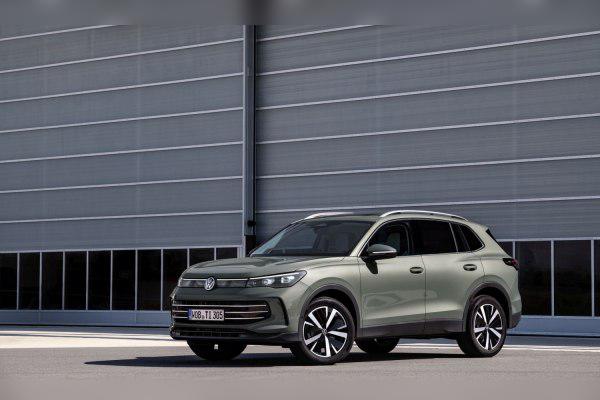
# Vehicles powered by this engine
In short (TL;DR)
- Modern and complex: This is a high-tech engine (evo2 generation) with cylinder deactivation (ACTplus) and a VTG turbo. Excellent efficiency, but expensive technology.
- Timing drive: It uses a timing belt, not a chain. That’s good news because earlier VW engines had issues with timing chains.
- Hybrid system: The eTSI badge means it has a 48V mild-hybrid system. This significantly improves take-off and reduces turbo lag, but adds a lithium battery as a potential future expense.
- Power vs. weight: 130 hp in the heavy Tiguan III is the minimum for decent driving. It’s not for racing, but for relaxed family use.
- Oil consumption: These engines use very thin oil (0W-20). Consumption up to 0.5L per 5,000 km can be considered normal, especially with aggressive driving.
- GPF filter: It’s a petrol engine, but it has a particulate filter (OPF/GPF). No AdBlue, but it does require occasional highway driving.
- Recommendation: A good choice for those who drive moderate annual mileage and want petrol refinement and quietness, but are afraid of diesel bans.
Contents
VW 1.5 eTSI (EA211 evo2) – Real-world experience, issues and buying advice
The engine with the internal code EA211 evo2 represents the current peak of Volkswagen Group engineering when it comes to mid-displacement internal combustion engines. It is installed in the latest Tiguan III, as well as in the facelifted versions of the Golf 8, T-Roc and Passat. The "evo2" designation tells us that engineers have moved the catalytic converter and particulate filter closer to the engine for more efficient emissions control, and that the cylinder deactivation system (ACT) has been further refined so that the transition from 4 to 2 cylinders is imperceptible.
The 130 hp version (engine codes often start with DX) is specific because it uses the Miller cycle and a variable-geometry turbo (VTG), which used to be reserved only for diesels or the more powerful 150 hp versions. Combined with the 48-volt mild-hybrid system (eTSI), this is an engine that tries to reconcile stricter emissions standards with the needs of the average driver.
Technical specifications
| Engine displacement | 1498 cc (1.5 litres) |
| Power | 96 kW / 130 hp |
| Torque | 220 Nm at 1,500–3,500 rpm |
| Engine code | DXDC (and other EA211 evo2 series variants) |
| Injection type | Direct injection (TSI), up to 350 bar |
| Charging system | VTG turbocharger + intercooler + 48V starter-generator |
| Emissions | Euro 6d-ISC-FCM / Euro 7 ready (with OPF filter) |
Reliability and maintenance
Does this engine have a timing belt or a chain?
This engine uses a timing belt. This is important to stress because older TSI engines (EA111 generation) had notorious timing chains that tended to fail. The EA211 evo2 uses a reinforced belt. The manufacturer often states optimistic replacement intervals (up to 210,000 km or even "lifetime" in some manuals for Western markets), but practice and common sense suggest doing the major service between 150,000 km and 180,000 km, or every 7 to 10 years, whichever comes first.
What are the most common issues with this engine?
Although the engine is relatively new, a few things stand out:
1. Software bugs: Since the engine is packed with electronics and sensors, "Check Engine" lights are common that are not mechanical failures, but software glitches in communication between the hybrid system and the engine. A software update at an authorised dealer usually solves the problem.
2. Intake valve carbon build-up: Like any direct-injection engine, over time soot deposits form on the intake valves because they are not washed by fuel. Symptoms include rough idle and a slight loss of power at higher mileage (over 100,000 km).
3. ACT system (cylinder deactivation): Although the system has been improved (ACTplus), some units may show slight vibration or a strange noise when the engine is running on 2 cylinders. Actuator failures are rare, but expensive if they occur.
4. Cooling system: The electronically controlled water pump and thermostat are complex components. Coolant leaks at the thermostat housing are a known weak point of this engine family.
Minor service, oil and spark plugs
This engine takes approximately 4.3 litres of oil (always check the exact figure by VIN). The recommended grade is strictly 0W-20 (VW 508.00 / 509.00 specification). This oil is "like water" and often has a greenish colour. Do not use thicker oils (5W-30 or 5W-40) unless the manufacturer explicitly allows it for your climate, as this can interfere with the operation of the VTG turbo and valve actuators.
Oil consumption: Modern VW petrol engines are more tolerant of oil consumption due to the thin grade and "looser" piston rings for reduced friction. Consumption of 0.2 to 0.4 litres per 1,000 km is considered technically acceptable, even though it may seem high to drivers. Always keep a litre of oil in the boot.
Spark plugs: They should be replaced every 60,000 km or 4 years. Do not postpone replacement, as worn plugs can damage the ignition coils (which sit directly on the plugs) and the catalytic converter.
Specific parts (costs)
Dual-mass flywheel and clutch
Yes, this engine has a dual-mass flywheel. Since it is paired with a DSG gearbox, the flywheel serves to dampen engine vibrations before they reach the transmission. In petrol versions it lasts longer than in diesels due to lower vibrations, but you can expect replacement somewhere around 150,000–200,000 km, especially if the car is used exclusively in city traffic. The price is high (depends on market).
Injection system and turbo
The injection system operates at high pressure (350 bar). Injectors are sensitive to poor fuel quality. Symptoms of a bad injector include engine knocking, fuel leaking into the sump (rising oil level) or uneven running.
Turbocharger: The engine has a single VTG turbocharger (variable geometry). This is a more expensive part than a conventional turbo. Its service life is designed to match that of the engine, but it requires regular oil changes and letting the engine cool down after spirited driving. The VTG mechanism can start sticking due to soot if the car is driven only in a very gentle "pensioner" style.
DPF (OPF) and EGR
This engine has an OPF (Otto Particulate Filter), which is the petrol equivalent of a DPF. It is less prone to clogging than diesel filters because petrol burns cleaner and at higher temperatures. However, if you only drive short trips in winter, a warning light may come on asking for regeneration (a longer drive at higher speeds).
AdBlue: This engine DOES NOT have an AdBlue system. That is reserved for TDI engines.
Fuel consumption and performance
Real-world consumption and power
The Volkswagen Tiguan III is a heavy car (over 1.5 tonnes).
City driving: Thanks to the mild-hybrid system, which shuts the engine off during deceleration and assists when setting off, real-world consumption in heavy traffic ranges between 7.5 and 9.0 l/100 km. Without the hybrid system this would easily exceed 10 litres.
Country roads: This is where the engine shines. Thanks to cylinder deactivation and good aerodynamics, on secondary roads it can use around 5.5–6.0 l/100 km.
Motorway: At 130 km/h the engine runs at relatively low revs (around 2,500 rpm in 7th gear), and consumption is about 6.5–7.5 l/100 km.
Is the engine “lazy”?
For the average driver – no. The electric motor (starter-generator) adds torque instantly when setting off, masking the lack of displacement. However, if the car is fully loaded with passengers and luggage, you will feel it running out of breath when overtaking uphill. You will have to floor the throttle, the gearbox will drop two gears, the engine will become noisy, but it will get the job done. It’s not meant for sporty driving.
Additional options and modifications
LPG conversion
Not recommended. Although it is technically possible to convert a direct-injection engine to run on LPG, it is very expensive (liquid injection system or a system that uses both petrol and LPG at the same time to cool the injectors). An additional complication is the ACT cylinder deactivation system and software integration with the hybrid system. It only makes financial sense if you drive more than about 50,000 km per year.
Remapping (Stage 1)
The engine can be remapped. Stage 1 tunes usually raise power to around 150–160 hp and torque to about 280 Nm. However, on eTSI models this is risky. You must find a tuner who knows how to match the engine map with the DSG gearbox map and the 48V battery system. Also bear in mind that the turbo is already complex (VTG). Any remap will definitely void the factory warranty.
Gearbox
Gearbox type and issues
With the 1.5 eTSI engine in the Tiguan you almost exclusively get a DSG automatic gearbox (dual-clutch), because a manual gearbox cannot efficiently manage the hybrid system (coasting function – sailing with the engine off).
Most commonly it is the DQ200 (or its evolution DQ200e) with 7 gears and dry clutches, although newer Tiguan models, due to their weight, sometimes use more robust variants.
Problems: On versions with dry clutches, the most sensitive components are the mechatronics unit (the gearbox brain) and the clutch pack. Failures manifest as juddering when setting off, hesitation when changing gears or metallic noises.
Maintenance: For dry-clutch gearboxes, VW says the oil is “lifetime”. Experienced mechanics say: change the oil in the mechatronics unit and gearbox every 60,000–80,000 km. If it is a version with a wet clutch (DQ381), oil and filter changes are MANDATORY every 60,000–120,000 km (depending on version). Gearbox servicing is moderately expensive (market-dependent), but cheaper than a full rebuild.
Buying used and conclusion
Before buying a Tiguan with this engine, make sure to check:
- Cold start: The engine must start immediately and idle smoothly. Any misfiring in the first 30 seconds may indicate dirty valves or injector problems.
- Sound when switching to 2-cylinder mode: On a test drive, at a steady speed (e.g. 80 km/h), watch the dashboard when the "ECO" or 2-cylinder icon appears. There should be no jerks or noticeable change in sound in the cabin.
- DSG behaviour: The gearbox must pull away smoothly, without jolts, especially uphill.
Final verdict
The 1.5 eTSI evo2 (130 hp) engine is a rational choice for the modern European buyer. It offers technology that reduces fuel consumption without the drama associated with diesels. It is aimed at drivers who spend most of their time in city and suburban driving, and go on holiday via motorways while respecting speed limits. If you plan to tow a heavy trailer or enjoy aggressive driving, look for a 2.0 TDI or 2.0 TSI. For everyone else – this is the "golden middle ground".
Was this content useful to you?
Your opinion helps us to improve the quality of the content.