DNLA, DNNA Engine
- Engine
- 1984 cm3
- Aspiration
- Turbocharger, Intercooler
- Fuel
- Petrol (Gasoline)
- Fuel injection system
- Direct injection
- Power
- 190 hp @ 5000 rpm
- Torque
- 320 Nm
- Cylinders
- 4
- Valves
- 16, 4 per cylinder
- Cylinders position
- Inline
- Valvetrain
- DOHC
- Oil capacity
- 5.7 l
- Systems
- Start & Stop System, Particulate filter
# Vehicles powered by this engine
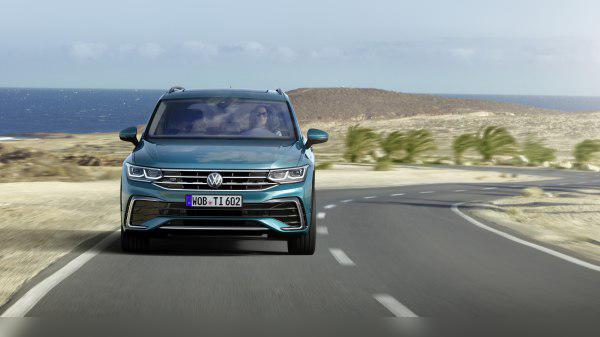
2.0 TSI (190 hp) DNLA / DNNA: Experiences, problems, fuel consumption and maintenance
Key points in short (TL;DR)
- Modern and efficient: This is a newer-generation engine (EA888 Gen 3B/Gen 4) that uses the “B-cycle” combustion process to reduce fuel consumption during cruising.
- Timing chain: Uses a timing chain, which is far more reliable than on older TSI engines, but still requires attention after 150,000 km.
- Thermostat and water pump: The “Achilles’ heel” of this engine. The thermostat housing is plastic and prone to coolant leaks.
- GPF filter: As a petrol engine produced after 2018/2020, it has a gasoline particulate filter (OPF/GPF) that requires occasional longer drives on open roads.
- Gearbox: Comes exclusively with the DSG automatic gearbox (DQ381), which is reliable if serviced regularly.
- Performance: With 190 hp and 320 Nm, this is the ideal balance for a heavy car such as the VW Tiguan. It’s not a sports car, but it’s far from sluggish.
Contents
- Introduction and applications
- Technical specifications
- Reliability and maintenance
- Specific parts and costs
- Fuel consumption and performance
- Additional options and modifications
- Gearbox (DSG)
- Buying used and conclusion
Introduction and applications
The engines with codes DNLA and DNNA are an evolution of Volkswagen’s well-known EA888 series. Specifically, this is a 2.0 TSI unit that is “detuned” compared to GTI versions, but optimized for efficiency and comfort. It is primarily installed in the VW Tiguan II (facelift from 2020), as well as in related models from the VAG group (Škoda Kodiaq, Audi Q3) that require a more powerful petrol engine without being the sporty “R” version.
This engine is important because it fills the gap between the weaker 1.5 TSI engines (which can struggle with a fully loaded SUV and all-wheel drive) and expensive performance models. It is almost always paired with 4MOTION all-wheel drive, making it a serious competitor to diesels.
Technical specifications
| Parameter | Data |
|---|---|
| Displacement | 1984 cc (2.0 L) |
| Power | 140 kW (190 hp) |
| Torque | 320 Nm at 1500–4100 rpm |
| Engine codes | DNLA, DNNA |
| Injection type | Direct (TSI/FSI) high-pressure injection |
| Charging | Turbocharger + intercooler |
| Emissions standard | Euro 6d-TEMP / Euro 6d |
Reliability and maintenance
Timing system: Chain or belt?
This engine uses a timing chain. The VAG group has learned its lessons from the past (the notorious chain issues on engines before 2012). The generation to which DNLA/DNNA belong has a significantly reinforced chain and tensioners. However, the chain is not eternal. It is recommended to check the chain condition via diagnostics (cam/crank phase angle) and by sound (rattling at cold start) after around 150,000 km. Replacing the chain is an expensive job (very expensive – depends on the market), but it is not done often.
Most common failures
Although the engine is generally robust, there are some specific weak points:
- Thermostat module and water pump: This is the most common issue. The housing is made of plastic that deforms over time due to heat cycles, which leads to coolant leaks. If you notice the coolant level dropping, this is the first suspect.
- Carbon buildup: Due to direct injection, the intake valves are not “washed” by fuel. Over time, carbon deposits build up, which can reduce performance and cause rough running. Cleaning (walnut shell blasting) is sometimes needed at around 100,000 km.
- PCV valve (oil separator): If the membrane fails, the engine may start consuming oil, whistling, or idling roughly.
Service intervals and oil
There is no “major service” in the classic sense (as with a timing belt); instead, it comes down to checking/replacing the chain as needed and replacing the auxiliary (serpentine) belt (for alternator/AC) at around 120,000 km.
Oil: This engine takes approximately 5.7 liters of engine oil. For DNLA/DNNA engines, VW often recommends the new 0W-20 grade (VW 508.00/509.00 standard), known as “LongLife IV FE”. This thin oil is intended to reduce fuel consumption. However, many experienced mechanics advise switching to 5W-30 (VW 504.00) and a fixed oil change interval of 10,000 to 15,000 km (or once a year), instead of the factory 30,000 km, to prolong the life of the turbocharger and timing chain.
Oil consumption
Modern 2.0 TSI engines consume significantly less oil than their predecessors. Still, consumption of about 0.5 liters per 5,000 to 7,000 km is considered acceptable and normal, especially with aggressive driving or frequent motorway use. Anything above 1 liter per 2,000 km indicates a problem (piston rings or turbo).
Spark plugs
Since this is a turbocharged petrol engine with direct injection, the spark plugs are under heavy load. The recommended replacement interval is 60,000 km or 4 years. Use only high-quality iridium spark plugs (NGK or Bosch) according to factory specification.
Specific parts (costs)
Dual-mass flywheel
Yes, this engine combined with the DSG gearbox has a dual-mass flywheel. Its function is to reduce engine vibrations before they reach the gearbox. On petrol engines it lasts longer than on diesels due to lower vibrations, but it is still a wear item (typically lasts over 180,000 km). Replacement is expensive (depends on the market).
Injection system and turbo
The engine uses high-pressure direct injection. The injectors are generally reliable, but sensitive to poor fuel quality. An injector failure manifests as fuel “dripping” into the cylinder, which can wash oil off the cylinder walls and cause serious damage.
It has a single turbocharger (usually IHI or Garrett). Turbo lifespan is directly related to regular oil changes and driving style (cooling the engine down after fast driving). With proper maintenance, the turbo lasts as long as the engine.
GPF/OPF filter and EGR
As a newer-generation engine (Euro 6d), this model has a GPF (Gasoline Particulate Filter), which is the petrol equivalent of a DPF on diesels. Unlike diesels, the GPF regenerates much more easily and quickly due to the higher exhaust gas temperatures of petrol engines. Clogging is very rare, unless the car is driven only 1–2 km per day in winter. The engine does not have a classic problematic EGR valve like old diesels; it uses variable valve timing for internal exhaust gas recirculation.
There is no AdBlue fluid. AdBlue is reserved exclusively for diesel engines.
Fuel consumption and performance
Real-world fuel consumption
Expectations should be realistic. You have a 190 hp engine, a heavy SUV (Tiguan), all-wheel drive and an automatic gearbox. That costs fuel.
- City driving: Expect between 10 and 12 l/100 km. In heavy traffic or winter, this can easily go up to 13 l/100 km.
- Country roads: This is where the “B-cycle” efficiency shows. It is possible to get consumption down to 6.5–7.5 l/100 km.
- Motorway (130 km/h): Consumption is around 8–9 l/100 km.
Is the engine “sluggish”?
Absolutely not. With 320 Nm of torque available from as low as 1500 rpm, a Tiguan with this engine accelerates from 0 to 100 km/h in under 8 seconds. It doesn’t have the brutal “kick in the back” of older TDI engines; instead, it delivers power in a linear and smooth way.
Motorway driving
This is an excellent cruiser. Thanks to the 7-speed DSG gearbox, at a speed of 130 km/h the engine runs at about 2,000–2,200 rpm, which means the cabin is quiet and the engine is not stressed.
Additional options and modifications
LPG conversion
Installing LPG on this engine is technically demanding and expensive. Due to direct injection, a regular sequential system cannot be used. You need a system that either injects liquid gas directly through the petrol injectors (very expensive) or a system that uses a mixture of gas and petrol (e.g. 80% gas, 20% petrol) to cool the petrol injectors. Considering the installation cost (very expensive), the payback is questionable unless you cover very high mileages.
Remapping (Stage 1)
DNLA/DNNA engines have a specific compression ratio aimed at efficiency. Nevertheless, they do have some power reserve. A safe Stage 1 remap can raise power to about 220–230 hp and torque to 380–400 Nm. Pushing the power too far is not recommended because the turbo is smaller than on the 245 hp (GTI) versions, and the engine’s main focus is efficiency.
Gearbox: DSG DQ381
This engine is standardly paired with the DQ381, a 7-speed DSG dual-clutch gearbox. This is a “wet” gearbox (the clutch packs are immersed in oil).
- Reliability: The DQ381 is significantly more robust than the older DQ200 (dry) gearboxes. It is considered very reliable.
- Maintenance: Oil and filter changes in the gearbox are mandatory every 60,000 km (some sources say 120,000 km for certain oil versions, but in practice 60,000 km is the only safe option). If the oil is not changed, the mechatronics unit will fail.
- Failures: The most common issue is the mechatronics unit (valve control unit), which can fail due to overheating or old oil. Symptoms include harsh gear changes, delayed take-off, or jolts when downshifting.
- Costs: A clutch pack for this gearbox is expensive (very expensive – depends on the market), but with normal driving it lasts over 200,000 km.
A manual gearbox with this engine configuration (190 hp + 4MOTION) in the Tiguan II facelift is generally not offered.
Buying used and conclusion
What to check before buying?
- Signs of coolant leaks: Open the bonnet and look for whitish or pinkish traces around the thermostat housing (on the driver’s side of the engine). Check the level in the expansion tank.
- Timing chain noise: Start the engine when it is completely cold (first start in the morning). If you hear metallic rattling for more than 2–3 seconds, the chain or tensioner needs replacing.
- Gearbox service history: If the car has 130,000 km and the DSG oil has not been changed twice – skip that example.
- Idle quality: The engine should idle smoothly. Vibrations may indicate dirty valves or worn engine mounts.
Conclusion
The 2.0 TSI (190 hp) engine is probably the best all-round choice for a VW Tiguan if you do not exceed 25,000 km per year. It offers significantly better refinement and quietness than a diesel, has no issues with AdBlue systems and DPFs (the GPF is far less problematic), and provides enough power for safe overtaking and towing a trailer. The price you pay is somewhat higher fuel consumption in the city. It is intended for families who want comfort and reliability and are willing to pay a bit more for fuel in exchange for the quietness and smoothness of a petrol engine.
Was this content useful to you?
Your opinion helps us to improve the quality of the content.