CCTA Engine
- Engine
- 1984 cm3
- Aspiration
- Turbocharger, Intercooler
- Fuel
- Petrol (Gasoline)
- Fuel injection system
- Direct injection
- Power
- 200 hp @ 5100 rpm
- Torque
- 280 Nm @ 1700 rpm
- Cylinders
- 4
- Valves
- 16, 4 per cylinder
- Cylinders position
- Inline
- Valvetrain
- DOHC-VVT
- Oil capacity
- 4.7 l
- Coolant
- 8 l
# Vehicles powered by this engine
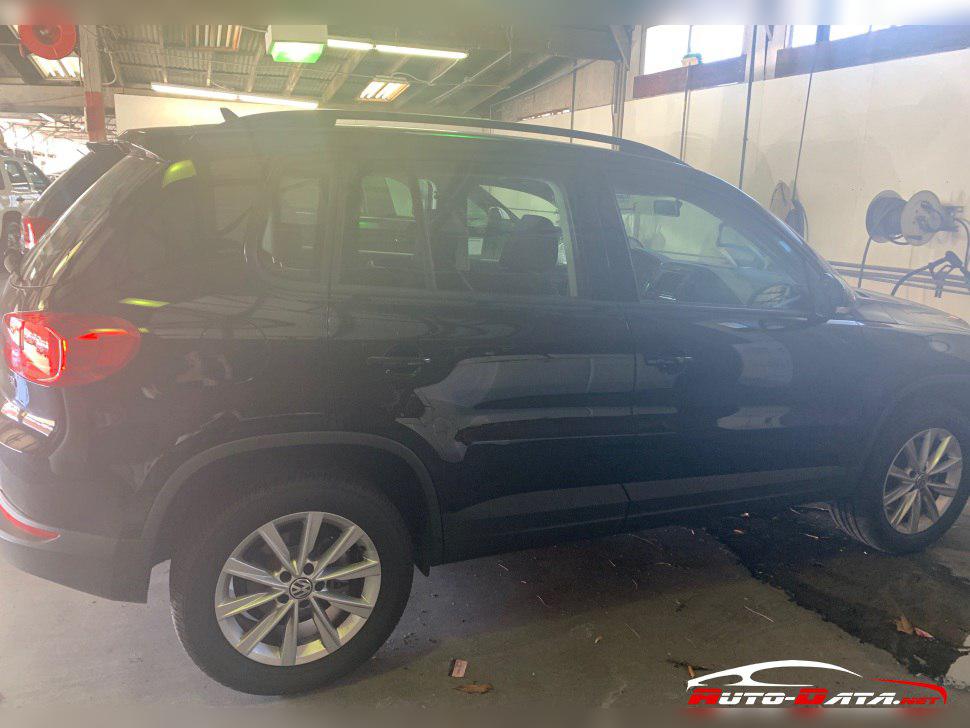
2.0 TSI Engine (CCTA) – Experiences, Problems, Fuel Consumption and Used Car Buying Tips
Most important in short (TL;DR)
- Timing chain tensioner: The biggest weakness of this engine. The old type of tensioner can fail and lead to catastrophic engine damage. It is mandatory to check whether the revised version has been installed.
- Oil consumption: Known for consuming oil, often due to the PCV (crankcase ventilation) valve or piston rings.
- Water pump: The housing is plastic and often cracks, which leads to coolant leaks.
- Performance: Excellent power and torque balance, the engine is lively and potent to drive.
- Intake manifold: Frequent issues with the runner flaps and position sensor, which triggers the "Check Engine" light.
- Recommendation: Buy only if there is proof of timing chain and tensioner replacement, as well as regular servicing.
Contents
Introduction and applications
The engine code CCTA belongs to the first generation of the famous, but also controversial, EA888 family of Volkswagen engines. This 2.0 TSI unit was a key player in the transition from older belt-driven engines (EA113) to more modern chain-driven engines. It is most commonly found in models intended for the North American and global markets, such as the Volkswagen Tiguan Limited.
This engine is important because it offers excellent performance and smooth operation, but it comes with a specific set of mechanical challenges every owner needs to be aware of. Unlike European versions (such as CAWB), the CCTA is adapted to stricter emission standards (ULEV II in the US), which means it has additional sensors and emission control systems that can affect maintenance.
Technical specifications
| Specification | Value |
|---|---|
| Engine displacement | 1984 cc (2.0 L) |
| Power | 147 kW (200 hp) |
| Torque | 280 Nm at 1700–5000 rpm |
| Engine code | CCTA (EA888 Gen 1) |
| Fuel injection system | Direct injection (TSI/FSI) |
| Induction | Turbocharger (K03) + intercooler |
| Cylinder layout | Inline, 4 cylinders |
Reliability and maintenance
When talking about the CCTA engine, the first word any mechanic will say is "chain". This is an engine that requires meticulous maintenance and preventive measures.
Timing belt or chain?
This engine uses a timing chain. Although in theory it was designed to last the lifetime of the car, in practice it is the biggest weakness of this engine. The problem is not so much the chain itself, but the hydraulic chain tensioner. The original tensioners are prone to failure, which leads to the chain skipping and the pistons hitting the valves (catastrophic engine failure).
Symptoms: Metallic rattling noise on cold start (the famous "death rattle"). If you hear this, the engine must not be started again until the tensioner is checked.
Most common failures
Besides the chain, the CCTA engine suffers from several characteristic issues:
- PCV valve (crankcase ventilation): The rubber diaphragm often tears. Symptoms include a whistling sound from the engine, rough idle, increased oil consumption and oil leaks at seals due to excessive crankcase pressure.
- Intake manifold: The air tumble flap system gets stuck or the position sensor fails. This usually results in the "Check Engine" light (fault code P2015). Often the entire manifold has to be replaced.
- Oil leaks: Most commonly at the rear main crankshaft seal and at the timing cover.
- Water pump: The thermostat and pump housing is plastic. Heat cycles cause the plastic to crack and coolant to leak.
Major service and spark plug replacement
Since the engine has a chain, a classic "major service" at a fixed mileage is not specified as it is with a belt, but it is recommended to preventively replace the chain and tensioner (installing the revised, improved tensioner) between 100,000 and 120,000 km, or immediately if you hear rattling.
Spark plugs on this engine should be replaced every 60,000 km. However, if the car is tuned (chipped) or driven aggressively, it is recommended to shorten the interval to 30,000–40,000 km and use higher-quality (iridium) spark plugs.
Oil: capacity, grade and consumption
The CCTA oil pan holds approximately 4.7 liters of oil (always buy 5 liters). The recommended grade is 5W-30 or 5W-40, with mandatory compliance with the VW specification (most commonly VW 502 00).
Does it consume oil? Yes, CCTA engines are known for oil consumption. Consumption of up to 0.5 liters per 1,000 km is often quoted as the "tolerance limit" in the manuals, but realistically, anything over 1 liter per 3,000–4,000 km indicates a problem (PCV valve or worn oil control rings). Owners should always keep a liter of oil in the trunk for topping up.
Specific parts (costs)
Dual-mass flywheel
This depends on the transmission. Since the Tiguan Limited with the CCTA engine most often comes with a automatic transmission (traditional torque converter, not DSG in all variants), it does not have a dual-mass flywheel as a typical wear item that falls apart like on manual or DSG gearboxes. It uses a flexplate and a torque converter, which is a more durable solution. If the vehicle is equipped with a DSG gearbox (less common for the Limited version with this engine in some markets), then it does have a dual-mass flywheel which is expensive to replace.
Fuel injection system and injectors
The engine uses direct injection (FSI/TSI). The injectors are generally reliable, but direct injection has one major downside: carbon buildup on the intake valves. Since the fuel does not wash over the valves, deposits accumulate and choke the engine.
Symptoms: Loss of power, poor throttle response.
Solution: Mechanical valve cleaning (walnut shell blasting) every 80,000–100,000 km.
Turbocharger
The engine uses a single turbocharger (usually a BorgWarner K03). Its lifespan is solid and often exceeds 200,000 km with regular oil changes and proper cooldown before shutting the engine off. A more common issue is the diverter valve (DV) that regulates boost pressure; the original ones had a rubber diaphragm that tears. It is recommended to replace it with the newer piston-type valve.
EGR, DPF and AdBlue
Being a petrol engine, it does not have a DPF filter or AdBlue system, which significantly reduces maintenance costs compared to diesels. It also does not have a conventional EGR valve that clogs up, as exhaust gas recirculation is handled via variable valve timing (VVT). However, the catalytic converter can become clogged if the engine burns a lot of oil.
Fuel consumption and performance
Real-world city fuel consumption
Let’s be honest – the Tiguan is a heavy SUV, often with all-wheel drive (4MOTION) and an automatic transmission. Under these conditions, the CCTA engine is not economical.
In stop-and-go city driving, real-world consumption ranges from 11 to 14 liters per 100 km. In winter or with a heavy right foot, it can go up to 15 l/100 km.
Is the engine "lazy"?
Absolutely not. With 200 hp and 280 Nm of torque available from low revs (1700 rpm), the engine copes very well with the Tiguan’s weight. Acceleration is linear and overtaking is safe. The driving feel is much better than with a 2.0 TDI of similar power due to the wider usable rev range.
Highway driving
This is the natural habitat of this engine. On the highway it is quiet and refined. At 130 km/h in top gear (6th), the engine spins at around 2,800 to 3,000 rpm (depending on the gearbox). Fuel consumption on the open road drops to a more acceptable 8 to 10 liters per 100 km.
Additional options and modifications
LPG conversion
Not recommended or very expensive. Due to direct fuel injection into the cylinders, conventional sequential LPG systems are not suitable because the petrol injectors would overheat. A liquid direct-injection LPG system or a system that "blends" petrol and LPG (e.g. uses about 20% petrol while running on gas) is required. Installing such systems is expensive (depending on the market, often over 1000 EUR) and the cost-effectiveness is questionable unless you cover very high mileages.
Chip tuning (Stage 1)
This engine has huge tuning potential. The CCTA is very robust (once the chain issue is sorted). With a simple Stage 1 remap, power can be safely increased to 240–250 hp, and torque to over 350 Nm. The difference in driving is dramatic. However, before tuning, the engine must be mechanically perfect (spark plugs, coils, turbo).
Transmission
Types of transmissions
The CCTA engine in the Tiguan Limited most commonly comes with the Aisin 6-speed automatic transmission (Tiptronic, code 09M). This is a traditional automatic with a torque converter. In some markets you can also find DSG (dual-clutch automated gearbox), but the Aisin is more common in "Limited" and US versions.
Failures and maintenance
Aisin automatic: A very reliable and robust transmission, often more durable than DSG. The most common issue is overheating if the oil is not changed, or harsh shifting ("thumps") when slowing down, which indicates a problem with the valve body.
Transmission service: Although the manufacturer sometimes claims the oil is "lifetime fill", that is a myth. The oil in the automatic transmission must be changed every 60,000 to 80,000 km. Regular oil changes are crucial for the longevity of the valve body.
Buying used and conclusion
Before buying a Tiguan with the CCTA engine, make sure to do the following:
- Cold start: Insist that the engine is completely cold. Listen to the chain noise for the first 3 seconds. Any rattling is a red flag.
- Diagnostic check: Check the "phase position" (chain stretch) via a diagnostic tool. Values over +/- 4 degrees are risky.
- Leaks: Inspect the area between engine and transmission (rear main seal) and the water pump housing under the intake manifold.
- Smoke: Bluish smoke when revving indicates the engine is burning oil.
Conclusion:
The 2.0 TSI (CCTA) is a true "driver’s" engine. It offers great performance and turns the Tiguan into a fun SUV. However, it is not for those who want a simple "fill up and drive" experience. Maintenance can be expensive if you are hit with timing chain, intake manifold and water pump replacement all at once. It is intended for drivers who appreciate performance and are willing to pay for quality maintenance in order to enjoy driving.
Was this content useful to you?
Your opinion helps us to improve the quality of the content.