DNLA Engine
- Engine
- 1984 cm3
- Aspiration
- Turbocharger, Intercooler
- Fuel
- Petrol (Gasoline)
- Fuel injection system
- Direct injection
- Power
- 190 hp @ 4000 rpm
- Torque
- 320 Nm @ 1500 rpm
- Cylinders
- 4
- Valves
- 16, 4 per cylinder
- Cylinders position
- Inline
- Oil capacity
- 5.7 l
- Systems
- Start & Stop System, Particulate filter
# Vehicles powered by this engine
Key points (TL;DR)
- Golden middle ground: The 190 hp engine is the ideal balance between the weaker 1.5 TSI and the more “thirsty” 220+ hp versions.
- Technology: Uses a timing chain and operates in the “B-cycle” (Budack cycle) for better efficiency.
- Biggest downside: Thermostat housing and water pump are weak points (coolant leaks).
- Fuel consumption: Can be high in the city (heavy car), but surprisingly economical on the open road.
- Gearbox: Comes exclusively with the DSG (DQ381) gearbox, which requires regular maintenance.
- GPF filter: Has a gasoline particulate filter, but it rarely causes issues like diesel DPFs.
- Recommendation: An excellent purchase if you want to avoid diesel but still have enough power for overtaking.
Contents
VW 2.0 TSI (DNLA) – Real-world experience, issues and used-buying guide
The engine with the code DNLA belongs to the newer generation of EA888 (Gen 3B) powerplants from the Volkswagen Group. This is not the same engine you’ll find in the Golf GTI, even though they share the same displacement. The DNLA version with 190 hp (140 kW) is specifically designed to replace the older 1.8 TSI engines and to offer an alternative to the 2.0 TDI diesels.
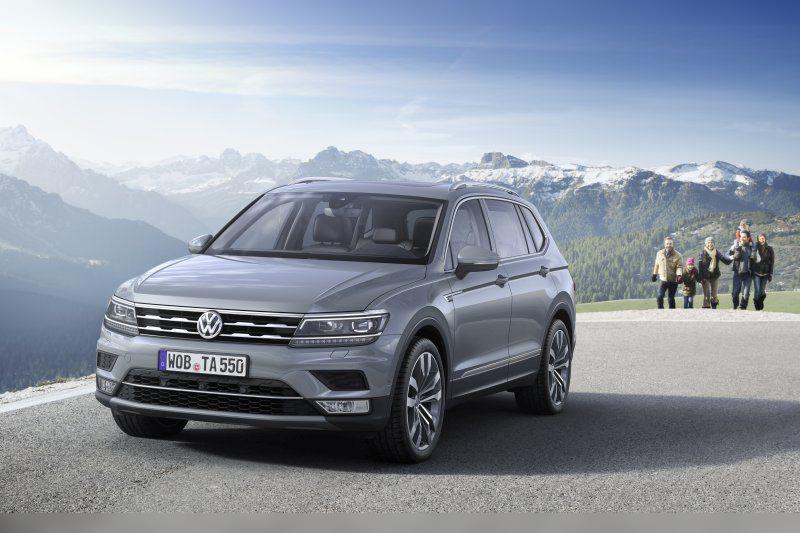
Its key characteristic is operating in the so‑called Budack cycle (a modified Miller cycle), which in practice for the driver means: higher efficiency under low loads and better fuel economy, while still maintaining solid torque. It is primarily installed in heavier vehicles such as the VW Tiguan Allspace, Škoda Kodiaq, SEAT Tarraco and Audi Q3, where torque is crucial.
Technical Specifications
| Specification | Data |
|---|---|
| Engine code | DNLA (EA888 Gen 3B) |
| Displacement | 1984 cc (2.0 L) |
| Power | 140 kW (190 hp) @ 4200–6000 rpm |
| Torque | 320 Nm @ 1500–4100 rpm |
| Fuel type | Petrol (Recommended 95 or 98 RON) |
| Forced induction | Turbocharger (IHI IS20 variant), intercooler |
| Injection | Direct injection (FSI/TSI) – high pressure |
| Emissions | Euro 6d-TEMP (with GPF filter) |
Reliability and Maintenance
EA888 engines have come a long way from their problematic beginnings (the infamous oil consumption on Gen 2 engines up to 2012). The DNLA is a very refined engine, but it has its specifics that owners need to be aware of.
Chain or belt?
This engine uses a timing chain for the valvetrain. In this generation, the chain has been significantly reinforced and issues with chain stretch before 150,000 km are rare, provided the oil has been changed regularly. Still, it is not “lifetime”. A symptom of trouble is rattling (a metallic knocking sound) on cold start that lasts longer than 2–3 seconds. Replacing the full chain kit is a complex and expensive job (very costly, depends on the market).
Minor and major service
A classic “major service” (as with timing belts) does not exist as a fixed interval; instead, the condition of the chain is monitored. However, the water pump and auxiliary belt (driving the alternator and A/C) are replaced preventively, usually around 120,000–150,000 km or as needed.
Spark plugs: On this turbo petrol engine, spark plugs are under high thermal load. It is recommended to replace them every 60,000 km or 4 years. Do not wait for the engine to start misfiring.
Oil and consumption
This engine takes approximately 5.7 litres of oil. The factory recommendation for DNLA engines is often the new “eco” oil grade 0W-20 (VW 508.00 / 509.00 specification), which has a greenish colour. This oil is very thin to reduce friction and fuel consumption.
Does it burn oil? Yes, all modern TSI engines consume a certain amount of oil, especially because they use thin oils. Consumption of 0.5 to 1 litre per 10,000 km is considered completely normal and acceptable for this engine. If you are using more than 1L per 2,000–3,000 km, that points to an issue with piston rings or the oil separator (PCV valve).
Most common issues
- Thermostat and water pump: This is the “Achilles heel”. The housing is plastic and often cracks or deforms from heat, which leads to coolant leaks. Symptom: dropping coolant level in the expansion tank or the smell of coolant under the bonnet. Replacement is not cheap because the module is complicated.
- PCV valve (oil separator): If the membrane tears, the engine may start consuming oil, smoking, or idling roughly (fluctuating rpm).
- Carbon build-up: Although improved, direct injection still means that carbon deposits build up on the intake valves over time. This can lead to a drop in performance at higher mileages (over 150,000 km).
Specific Components (Costs)
When buying a used Tiguan with this engine, be prepared for maintenance costs that are higher than on naturally aspirated petrol engines, but similar to or lower than those of modern diesels.
Dual-mass flywheel
Yes, this engine has a dual-mass flywheel. It is installed to protect the DSG gearbox from engine vibrations. Its lifespan is usually between 150,000 and 200,000 km, depending on driving style. Symptoms of failure are metallic knocking at idle that disappears when you rev the engine, or vibrations when shutting the engine off. Replacement cost is high (expensive).
Fuel injection system and injectors
The system uses high-pressure direct injection. Injectors are generally reliable, but sensitive to poor fuel quality. A failing injector manifests as engine “shuddering”, a misfire fault on a cylinder and the smell of raw petrol from the exhaust. They are not as problematic as on old diesels, but replacing one is still a significant expense.
Turbocharger
The engine uses a single turbocharger. It is very responsive. Its service life is long (often over 200,000 km) if you follow the rule: do not switch the engine off immediately after hard driving and change the oil regularly. Turbo whistling is a warning sign.
Emissions systems (DPF/GPF, EGR, AdBlue)
This petrol engine DOES NOT have an AdBlue system (that is reserved for diesels). However, it does have a GPF (Gasoline Particulate Filter) – the petrol equivalent of a diesel DPF. The GPF regenerates (heats up) much faster and easier because petrol engines run at higher temperatures. GPF clogging is extremely rare, unless you drive exclusively very short trips for years. EGR function is often handled by internal variable valve timing (overlap), so there is no classic EGR valve that clogs up like on older TDI engines.
Fuel Consumption and Performance
Since the DNLA is installed in the VW Tiguan Allspace, which is heavy (around 1,700 kg empty) and has all‑wheel drive (4MOTION), don’t expect miracles, but do expect efficiency.
Real-world fuel consumption:
- City driving: This is the sore point of the heavy body. Expect 10 to 12 l/100 km in heavy traffic. In winter, up to 13 l.
- Open road: This is where the “B-cycle” shines. With relaxed driving on country roads, consumption drops to 6.5–7.5 l/100 km.
- Motorway (130 km/h): Thanks to the 7‑speed DSG, the engine spins at a low 2,000–2,200 rpm. Consumption is around 8–9 l/100 km.
Is the engine “lazy”? Absolutely not. With 320 Nm of torque available from just 1,500 rpm, this engine pulls almost like a diesel. It doesn’t have the explosive character of GTI engines, but it has more than enough power for overtaking and for a fully loaded car on an uphill stretch. 0–100 km/h takes about 8 seconds, which is an excellent result for a family SUV.
Additional Options and Modifications
LPG conversion
Is it suitable? In general, I do not recommend it. Due to direct injection, you need an expensive system (liquid-phase direct injection or a system that uses a mix of petrol and LPG to cool the injectors). The installation cost is very high (over 1,000 EUR, depending on the market), and given the complexity and risk of damaging costly petrol injectors, the cost-effectiveness is questionable unless you drive more than 30,000+ km per year.
Chip tuning (Stage 1)
The EA888 platform is a favourite among tuners. This 190 hp engine is software‑detuned. A safe Stage 1 remap can raise power to 230–240 hp and torque to almost 400 Nm. The engine and gearbox can handle this, but keep in mind that higher boost pressure shortens turbo life and requires even more frequent servicing (every 8,000–10,000 km).
Gearbox: DSG DQ381
With the DNLA engine in the Tiguan Allspace 4MOTION you get a 7‑speed DSG gearbox as standard, code DQ381.
- Type: Dual‑clutch gearbox in an oil bath (“wet” DSG). This is significantly more reliable than the older dry DQ200 gearboxes.
- Maintenance: Oil changes in the gearbox are MANDATORY. The recommended interval is 60,000 km (or up to 120,000 km on newer versions with specific oil, but experts still recommend 60k). If the oil is not changed, the solenoids and mechatronics will fail.
- Most common issues: Clutch pack wear at high mileage (symptoms: slipping, jerks when shifting) and mechatronics failures (expensive repair). The DQ381 is generally robust and can handle up to 420 Nm of torque.
- Clutch replacement: When the time comes to replace the clutches, it is a major expense because the entire clutch pack inside the gearbox is replaced (very expensive).
Buying Used and Conclusion
Before buying, make sure to check the following:
- Cold start: Listen to the engine when it is completely cold. Any chain rattle lasting more than a couple of seconds is a sign to walk away or negotiate the price (cost of chain replacement).
- Signs of leaks: Look around the water pump (on the belt side). Whitish traces mean that the thermostat/pump is leaking.
- Gearbox service history: If the car has 130,000 km and the DSG oil has never been changed – walk away.
- Diagnostics: Check the condition of the GPF filter and whether there are any logged misfire errors.
Conclusion: The VW Tiguan Allspace with the 2.0 TSI (DNLA) engine is an excellent choice for drivers who cover up to 15,000–20,000 km per year, mostly mixed driving. It offers the quietness, refinement and power that the 2.0 TDI provides only with much more noise. Although it uses more fuel than a diesel, the absence of an AdBlue system, DPF issues and old‑generation expensive injectors makes it an attractive modern choice. Just be prepared for regular maintenance of the cooling system and gearbox.
Was this content useful to you?
Your opinion helps us to improve the quality of the content.