DGDB Engine
- Engine
- 1598 cm3
- Aspiration
- Turbocharger, Intercooler
- Fuel
- Diesel
- Fuel injection system
- Diesel Commonrail
- Power
- 115 hp @ 4000 rpm
- Torque
- 280 Nm
- Cylinders
- 4
- Valves
- 16, 4 per cylinder
- Cylinders position
- Inline
- Oil capacity
- 4.7 l
- Systems
- Start & Stop System, Particulate filter
# Vehicles powered by this engine
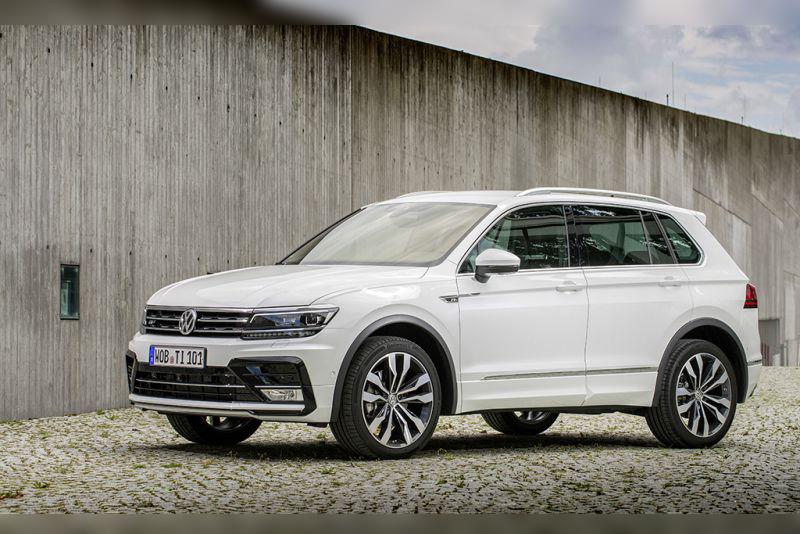
1.6 TDI (DGDB) in VW Tiguan II: Experiences, Issues, Fuel Consumption and Used Car Buying Guide
Key points (TL;DR)
- Power vs Weight: With 115 hp, this is the weakest engine available for the Tiguan II. Perfectly adequate for city driving, but it struggles with overtaking on open roads when the car is fully loaded.
- Efficiency: Extremely low fuel consumption for an SUV of this size, which is its main advantage.
- Water pump: The biggest “weak spot” of this engine. It often starts leaking or seizes before the scheduled timing belt service.
- Emissions: Equipped with both a DPF and AdBlue (SCR) system. The AdBlue system can be expensive to repair (heaters, pumps).
- Maintenance: Generally a reliable unit from the EA288 family, cheaper to maintain than the 2.0 TDI variants, but it still requires high‑quality oil and regular servicing.
- Recommendation: Ideal for calm drivers and taxi use. Not suitable for those who enjoy dynamic driving.
Contents
- Technical specifications
- Reliability and Maintenance
- Specific Parts and Costs
- Fuel Consumption and Performance
- Additional Options and Modifications
- Gearbox
- Buying Used and Conclusion
Introduction
The engine with the code DGDB belongs to the modern EA288 generation of diesel engines from the Volkswagen Group. It is installed in the second-generation VW Tiguan (from 2016 onwards) as the entry-level, basic diesel option. Unlike smaller models such as the Golf, where the 1.6 TDI is the “sweet spot”, in the hefty Tiguan this engine has a tough job moving an SUV weighing over 1,500 kg. Its purpose is clear: to offer buyers the looks of a powerful SUV with registration and fuel costs closer to a compact city car.
Technical specifications
| Displacement | 1598 cc (1.6 l) |
| Power | 85 kW (115 hp) at 3250–4000 rpm |
| Torque | 280 Nm at 1500–3250 rpm |
| Engine code | DGDB |
| Injection type | Common Rail (Direct) |
| Charging | Turbocharger with variable geometry (VGT) + intercooler |
| Number of cylinders/valves | 4 / 16 |
| Emissions standard | Euro 6 (with AdBlue/SCR) |
Reliability and Maintenance
Does this engine have a timing belt or a chain?
The DGDB engine uses a timing belt for the valvetrain. This is good news, as modern VW belts are quiet and reliable, unlike some of the older chain issues on petrol engines. However, the system also includes a water pump driven by the same belt, which brings us to the most common problem.
What are the most common failures on this engine?
Although the EA288 series is significantly better than its predecessor (EA189), there are some specific weaknesses:
- Water pump: This is problem number one. The pump has a variable “shroud” that moves to help the engine warm up faster. That mechanism often seizes, which leads to engine overheating (the temperature gauge jumps above 90°C). Coolant leaks from the pump are also very common.
- Oil leaks: Sometimes appear at the crankshaft seal or valve cover, but this is not a widespread issue.
- Exhaust gas temperature sensors: They can fail, which triggers the “Check Engine” light and puts the engine into limp mode.
At what mileage should the timing belt service be done?
The factory recommendation for timing belt replacement is often optimistic (up to 210,000 km for some markets). However, real‑world experience and mechanics’ practice call for caution. The recommended interval is 160,000 to 180,000 km or every 5 to 7 years, whichever comes first. Due to the water pump issue, many owners are forced to do the full timing belt service earlier, as soon as the pump starts leaking.
How many liters of oil does this engine take and which grade is recommended?
The engine takes approximately 4.7 to 5.0 liters of oil (always buy 5 liters). You must use oil that meets the VW 507.00 specification. The most common grades are 5W‑30 or the newer 0W‑30. Using the wrong oil will permanently damage the DPF filter.
Does it consume oil between services?
A healthy 1.6 TDI DGDB should not consume a significant amount of oil. Consumption of up to 0.5 liters per 10,000 km is acceptable. If it uses more (e.g. a liter every 2–3 thousand km), this points to issues with piston rings or the turbo. A common phenomenon on these engines is an increase in oil level if the car is driven only in the city, due to failed DPF regenerations that push diesel into the sump.
How long do the injectors last and how reliable are they?
This engine uses electromagnetic Common Rail injectors (usually Delphi or Bosch, depending on the batch). They have proven to be quite durable and can easily exceed 250,000 km without issues, provided that quality fuel is used and the fuel filter is changed regularly. Symptoms of worn injectors include rough idle (“knocking”) and increased smoke under acceleration.
Specific Parts (Costs)
Does this engine have a dual‑mass flywheel?
Yes. Even though this is a “small” 1.6 engine, due to its installation in the heavier Tiguan and the need for comfort, it uses a dual‑mass flywheel. Its lifespan is usually between 150,000 and 200,000 km, depending on driving style (city driving wears it out faster).
Does the engine have a turbocharger and what is its lifespan?
It has a single turbocharger with variable geometry. The turbo is reliable and rarely fails before 200,000 km, unless the engine is switched off hot immediately after hard driving or the DPF is clogged, which creates back pressure and overheats the turbo.
Does it have a DPF filter or an EGR valve that often clogs?
It has both. The EGR valve (exhaust gas recirculation valve) is prone to soot build‑up, especially if the car is driven at low revs (“lugging the engine”). The DPF filter is robust, but since this is a weaker engine, it is often under higher load to move the Tiguan, so it fills up with soot faster in urban conditions.
Does this engine have an AdBlue system?
Yes, the SCR designation in the model name confirms the presence of an AdBlue system. This is a critical point. The system is complex and includes a tank, heater, pump and urea injector. Failures of the AdBlue heater or pump are common and repairs are expensive (often the entire module has to be replaced). Regular maintenance only involves topping up the fluid, but if the system fails, the car will often refuse to start after a certain number of kilometers.
Fuel Consumption and Performance
What is the real‑world fuel consumption in city driving?
The Tiguan 1.6 TDI is a fuel‑saving champion in its class. In real city conditions (rush hour, air conditioning), consumption is around 6.5 to 7.5 l/100 km. In smaller towns without heavy traffic it can drop to about 6.0 l/100 km.
Is this engine “lazy” for the weight of the car?
Honestly – yes. The Tiguan is a heavy car, and 115 hp and 280 Nm are at the lower limit of what’s acceptable. For normal, defensive city driving it is perfectly fine. However, as soon as you load the car with passengers and luggage, you will feel the lack of power. Acceleration is slow and overtaking requires planning and frequent downshifts.
How does the engine behave on the motorway and at what revs does it cruise at 130 km/h?
On the motorway the engine behaves decently as long as it is just maintaining speed. At 130 km/h in 6th gear it runs at around 2,200–2,400 rpm. Fuel consumption is then about 6.0–6.5 l/100 km. The problem appears on motorway inclines (for example long uphill sections), where you may have to shift down to 5th gear to maintain pace if the car is fully loaded.
Additional Options and Modifications
How far can this engine be safely tuned (Stage 1)?
This engine is software‑detuned and has potential. A Stage 1 remap can safely raise power to around 140–145 hp and torque to about 320–330 Nm. This drastically changes the Tiguan’s character and makes it much more pleasant to drive, bringing it close to the performance of the 150 hp 2.0 TDI. Since the manual gearbox is robust, it usually handles this increase well, but the clutch may have a shorter lifespan if you drive aggressively.
Gearbox
Which gearboxes are paired with this engine?
With the 1.6 TDI (DGDB) in the Tiguan II, you most commonly get a 6‑speed manual gearbox (MQ350 series), which sends power to the front wheels. There are rare versions with a DSG automatic on certain markets, but about 90% of these models are front‑wheel‑drive manuals (the 4Motion all‑wheel drive system is not available with this engine).
What are the most common manual gearbox issues?
The gearset itself is very durable. Problems are mostly related to the clutch and flywheel. If the gear lever is hard to move into gears, the issue may be with the shift cables or low oil level, but actual gearbox failures are generally rare.
Cost of clutch and flywheel replacement?
The cost of a clutch kit with a dual‑mass flywheel is a significant expense. Depending on the market and brand (LuK, Sachs, Valeo), parts prices range from expensive to very expensive (market‑dependent). Expect this to be one of the biggest one‑off costs around 200,000 km.
At what mileage should the gearbox be serviced and the oil changed?
VW often states that the oil in the manual gearbox is “lifetime fill”. However, any experienced mechanic will recommend changing the gearbox oil every 80,000 to 100,000 km. This extends the life of the bearings and synchros and makes shifting easier, especially in winter.
Buying Used and Conclusion
When buying a used Tiguan 1.6 TDI, pay attention to the following:
- Noise insulation and vibrations: When switching off the engine, listen for a metallic knock (a sign of a worn flywheel).
- Coolant: Check the coolant reservoir. If the level is low or you see traces of dried coolant around the engine (on the right‑hand side when viewed from the front), the water pump is probably due for replacement.
- AdBlue history: Use diagnostics to check for any faults related to the SCR system or NOx sensors.
Conclusion: The VW Tiguan 1.6 TDI (DGDB) is a car for the head, not the heart. It is aimed at drivers who want a spacious, safe and modern SUV, cover a lot of mileage and want minimal fuel consumption. It is ideal for flat regions and moderate driving. If you plan to tow frequently, drive in the mountains or enjoy brisk overtaking, skip this engine and look for a 2.0 TDI. For the average family, with an awareness of its power limitations, this can be an excellent and economical purchase.
Was this content useful to you?
Your opinion helps us to improve the quality of the content.