CZDA, CZEA, CHPB, DJVA Engine
- Engine
- 1395 cm3
- Aspiration
- Turbocharger, Intercooler
- Fuel
- Petrol (Gasoline)
- Fuel injection system
- Direct injection
- Power
- 150 hp
- Torque
- 250 Nm
- Cylinders
- 4
- Valves
- 16, 4 per cylinder
- Cylinders position
- Inline
- Oil capacity
- 4 l
- Systems
- Start & Stop System, Cylinder deactivation system
# Vehicles powered by this engine
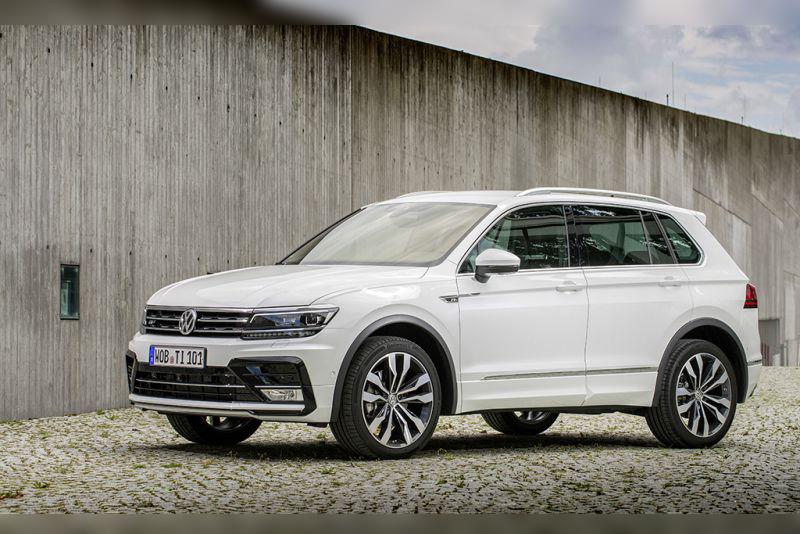
1.4 TSI (150 HP) EA211 in the VW Tiguan II: Experiences, Problems, Fuel Consumption and Buying Used
Key points (TL;DR)
- Timing belt drive: Unlike the older 1.4 TSI engines (EA111) that had problematic chains, this generation (EA211) uses a timing belt, which is significantly more reliable.
- ACT Technology: Many versions (engine code CZEA) come with a system that deactivates two cylinders to save fuel. The system is generally reliable, but it adds complexity.
- Coolant consumption: One of the most common issues is leakage from the thermostat housing/water pump. Keep an eye on the coolant level.
- Performance in the Tiguan: 150 HP is the “sweet spot” for this body. It’s not a sports car, but it’s not as sluggish as the 125 HP 1.4 either.
- Direct injection: Like every modern petrol engine, it is prone to carbon buildup on the intake valves at higher mileage.
- Recommendation: This is probably the best petrol choice for a used Tiguan if you don’t cover huge annual mileage.
Contents
- Introduction: Redeeming the sins of the past
- Technical Specifications
- Reliability and Maintenance
- Specific Parts and Costs
- Fuel Consumption and Performance
- Additional Options and Modifications
- Gearbox: DSG or Manual?
- Buying Used and Conclusion
Introduction: Redeeming the sins of the past
When someone mentions the 1.4 TSI, many drivers still shudder, remembering the old chain-driven engines with snapping chains and cracked pistons. However, the engine we’re talking about today belongs to the EA211 family. This is a completely different unit, designed from scratch to correct all the mistakes of its predecessor.
Installed in the second-generation VW Tiguan, this engine with codes CZDA, CZEA, CHPB, DJVA is your ticket into the world of modern turbo petrol engines that can rival diesels in torque, but with quieter operation and cheaper maintenance of emissions systems. With 150 horsepower, it is aimed at drivers who want refinement in driving, and who do not cover 30,000+ kilometers per year to justify buying a diesel.
Technical Specifications
| Characteristic | Data |
|---|---|
| Engine displacement | 1395 cc (1.4 L) |
| Power | 110 kW (150 HP) at 5000–6000 rpm |
| Torque | 250 Nm at 1500–3500 rpm |
| Engine codes | CZDA, CZEA (ACT), CHPB, DJVA |
| Injection type | Direct injection (TSI) |
| Charging system | Turbocharger with water-cooled intercooler |
| Camshaft drive | Timing belt |
Reliability and Maintenance
Belt or chain?
This is the most important question. This engine (EA211 series) has a timing belt. Volkswagen learned its lesson from the problematic chains of the previous generation. The belt on this engine is extremely durable.
Major service
The manufacturer specifies optimistic belt replacement intervals, often up to 210,000 km for the first inspection. However, considering the age of the vehicles and real-world conditions (city driving, temperature variations), every experienced mechanic will recommend doing the major service between 160,000 km and 180,000 km, or at the latest after 8 to 10 years of age. A timing belt kit with water pump is not excessively expensive (reasonable for this class of vehicle), and peace of mind is priceless.
Most common failures
Although reliable, the engine is not without flaws:
- Water pump and thermostat housing: This is the “Achilles’ heel”. The housing is plastic and contains two thermostats. Over time, the plastic weakens due to heating and cooling cycles, which leads to coolant leaks. Symptoms include a dropping coolant level in the expansion tank or the smell of coolant under the hood.
- Oil consumption: It is significantly lower than on older TSI engines, but not eliminated. With aggressive driving or long oil change intervals, the piston rings can wear. Consumption of up to 0.5 liters per 10,000 km is perfectly acceptable and normal. If it uses a liter every 2–3 thousand km, you have a problem with the rings or the turbo.
- ACT system (Active Cylinder Technology): On engines with the CZEA code, the system shuts down two cylinders under light load. Although the mechanism rarely fails, the camshaft actuators can become noisy or cause electronic issues at high mileage.
- Carbon buildup: Due to direct injection, fuel does not “wash” the intake valves. After 100,000–150,000 km, carbon deposits can build up, causing rough idle and a slight loss of power. Cleaning (with walnut shell blasting or chemicals) solves the problem.
Oil and spark plugs
The engine takes approximately 4.0 to 4.5 liters of oil (depending on whether the filter is changed; always buy 5 liters). The recommended grade is usually 5W-30 (VW 504.00/507.00 standard) or on newer models 0W-20 (VW 508.00). Still, for engines with more than 100,000 km, 5W-30 is the safer choice.
Spark plugs should be replaced every 60,000 km or 4 years. Don’t skimp on them – use only NGK or Bosch specified for this engine, because bad plugs can damage the coils, which are sensitive (one coil per cylinder).
Specific Parts and Costs
Dual-mass flywheel
Yes, this engine in the Tiguan II has a dual-mass flywheel, especially in versions with DSG and manual gearboxes. Due to the 250 Nm of torque, the flywheel is under load. Symptoms of failure are metallic noises (clattering) when starting and stopping the engine, as well as vibrations at idle. Replacement is not cheap (depends on the market), but it usually lasts over 150,000–200,000 km.
Turbo and injection
The engine uses a single turbocharger. Its lifespan is long if the oil is changed on time (a maximum of 15,000 km, never 30,000 km as the manufacturer sometimes claims). On some variants the turbo is integrated with the exhaust manifold, which complicates replacement if the housing cracks, but that is rare. The intercooler is integrated into the intake manifold and water-cooled – this is excellent for throttle response, but if the intercooler leaks, coolant goes directly into the engine (rare, but catastrophic).
Injectors are piezo-electric for direct injection. They are not particularly problematic, but they are sensitive to poor fuel quality.
Emissions: DPF, EGR, GPF and AdBlue
This is a petrol engine, so it does not have a DPF filter and does not use AdBlue fluid (that’s for diesels). However, models produced from 2018/2019 (Euro 6d-TEMP) have a GPF (Gasoline Particulate Filter). The GPF regenerates much more easily and quickly than a diesel DPF and rarely causes problems in city driving because petrol engines heat up faster.
A classic EGR valve often does not exist as a separate, clog-prone component; instead, exhaust gas recirculation is achieved via variable valve timing (internal EGR), which is one less maintenance item for the owner.
Fuel Consumption and Performance
City and highway driving
The Tiguan II is not a light car (around 1.5 tons). Don’t believe the official figures of 6 liters in the city.
- City driving: Realistically expect between 8.5 and 10.5 l/100 km, depending on traffic and how heavy your right foot is. In winter it can go up to 11 liters.
- Country roads: This is where the ACT system comes into play. It’s possible to bring consumption down to 6.0–6.5 liters.
- Motorway (130 km/h): Consumption is around 7.5 to 8.5 liters. Due to the Tiguan’s tall silhouette, air resistance significantly increases consumption above 120 km/h.
Is the engine “sluggish”?
With 150 HP and 250 Nm (available from just 1500 rpm), this engine is not sluggish. It is perfectly adequate for overtaking and normal driving. It reaches 100 km/h in about 9.2 seconds, which is respectable. You only really feel it running out of breath when the car is fully loaded with passengers and luggage on steep climbs, but for 95% of situations it is more than sufficient.
At 130 km/h in top gear the engine spins at around 2,500 to 2,800 rpm (depending on the gearbox), which ensures quiet and comfortable cruising.
Additional Options and Modifications
LPG
Can you fit it? Yes. Is it worth it? Hardly. Due to direct injection, you cannot install a simple sequential system. You need a system that uses “Direct Liquid Injection” or a system that injects a mixture of petrol and LPG (to cool the petrol injectors). The installation cost is “very high” (often over 1000 EUR), and the savings are smaller than on old engines because the car still uses a certain percentage of petrol while running on LPG. Recommendation: run it on petrol.
Chip tuning (Stage 1)
This engine responds well to a mild power increase. A Stage 1 remap safely raises power to about 170–175 HP and torque to 300 Nm. This significantly improves in-gear acceleration. However, if you have a DSG gearbox, check whether it is the DQ200 (dry clutch) – it cannot handle more than 250 Nm, so remapping can quickly destroy the gearbox. Versions with 4MOTION drive usually have stronger gearboxes that can handle more torque.
Gearbox: Manual and DSG
Variants
- Manual (6-speed): Precise and easy to use. Failures are rare and mostly limited to the clutch kit and flywheel.
- DSG (automatic): This is where you need to be careful.
- Front-wheel-drive (FWD) versions sometimes use the DQ200 (7-speed, dry clutch). This gearbox is notorious for its sensitive mechatronics and clutches, especially in the heavy Tiguan in city driving.
- Versions with 4MOTION drive and most newer Tiguan 1.4 TSI models use the DQ250 (6-speed, wet clutch) or later the DQ381 (7-speed, wet clutch). These gearboxes are much more reliable and durable.
Gearbox maintenance
The manual gearbox does not require frequent oil changes (the manufacturer says “lifetime”, in practice you should change it at 100,000 km). On DSG gearboxes with wet clutches (DQ250/DQ381), changing the oil and filter is MANDATORY every 60,000 km. If you don’t do this, the mechatronics will fail, and repairs are “very expensive”.
Buying Used and Conclusion
What to check before buying?
- Cold start: The engine should start immediately and idle smoothly. If you hear rattling for the first few seconds, the hydraulic lifters or camshaft actuators may be an issue. Metallic knocking that disappears when you press the clutch pedal points to a worn flywheel.
- Water pump: Check the coolant level and look for white traces (dried coolant) around the engine on the left-hand side (viewed from the front).
- Test drive (ACT): If it’s a model with the ACT system, drive at a steady speed of about 70–80 km/h. When the “eco” mode (2-cylinder operation) activates, the transition should be imperceptible. If you feel a strong jerk or vibration, the system is not working properly.
- Smoke: Blue smoke from the exhaust when you press the accelerator is a sign that the engine is burning oil (turbo or piston rings).
Conclusion
The 1.4 TSI (150 HP) EA211 engine in the Tiguan II is an excellent choice for the average European driver. It offers much better refinement than a diesel, enough power for family trips and, most importantly, it has shed the teething problems of the older TSI engines. If you find a car with a well-documented service history (with regular oil changes and DSG servicing), this is a recommended purchase.
Ideal configuration: Tiguan 1.4 TSI 4MOTION with the DSG (DQ250) gearbox. You get a reliable gearbox, the safety of all-wheel drive and an engine that can handle it all.
Was this content useful to you?
Your opinion helps us to improve the quality of the content.