EA888 / CCTA Engine
- Engine
- 1984 cm3
- Aspiration
- Turbocharger, Intercooler
- Fuel
- Petrol (Gasoline)
- Fuel injection system
- Direct injection
- Power
- 200 hp @ 5100 rpm
- Torque
- 280 Nm
- Cylinders
- 4
- Valves
- 16, 4 per cylinder
- Cylinders position
- Inline
- Valvetrain
- DOHC
- Oil capacity
- 4.7 l
- Coolant
- 8 l
# Vehicles powered by this engine
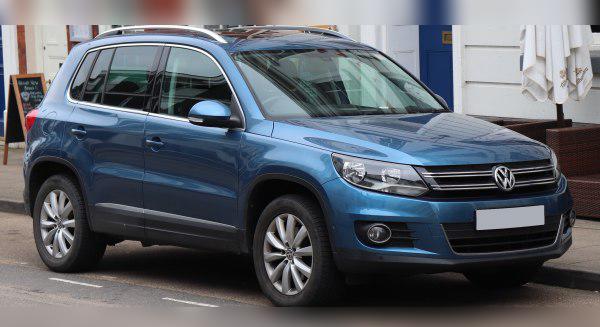
VW 2.0 TSI (EA888 / CCTA): Experiences, Problems, Fuel Consumption and Maintenance
1. The most important in short (TL;DR)
- Biggest issue: Timing chain tensioner. Older revisions are prone to failure, which can lead to complete engine damage. Mandatory check!
- Oil consumption: Present. The causes are often the PCV valve or (less frequently on CCTA than on newer versions) worn piston rings.
- Performance: Excellent. The engine is flexible and powerful enough for the Tiguan, overtaking is safe.
- Water pump: The housing is plastic and often cracks, causing coolant leaks.
- Intake manifold: Frequent failure of the intake flap system (error code P2015).
- Fuel consumption: High in city driving, especially combined with 4MOTION and an automatic transmission.
- Recommendation: Buy only if the chain has been checked/replaced and if you are prepared for somewhat higher maintenance costs in exchange for good performance.
Contents
- Introduction and engine significance
- Technical specifications
- Reliability, Maintenance and Failures
- Specific parts and costs
- Consumption and Performance
- LPG and Tuning (Remap)
- Transmission and Drivetrain
- Buying tips and Conclusion
Introduction
The CCTA engine belongs to the famous but also controversial EA888 family of Volkswagen petrol engines (first/second generation). It was primarily installed in the VW Tiguan I (facelift), but also in the Golf GTI (US market) and Jetta GLI. This unit replaced the older EA113 engines (which used a timing belt).
For Tiguan drivers, this engine represents the “golden middle ground” in terms of performance – it is much stronger than the basic diesels, quieter, and offers a sporty feel in an SUV. However, it requires a meticulous owner who understands that the 2.0 TSI is not an engine you just fill with fuel and drive; it demands regular attention under the hood.
Technical specifications
| Parameter | Value |
|---|---|
| Displacement | 1984 cc (2.0 L) |
| Power | 147 kW (200 hp) at 5100-6000 rpm |
| Torque | 280 Nm at 1700-5000 rpm |
| Engine code | CCTA (also related to CBFA/CCZA) |
| Injection type | Direct injection (TSI / FSI) |
| Forced induction | Turbocharger (BorgWarner K03) + intercooler |
| Camshaft drive | Timing chain |
Reliability and Maintenance
Does this engine have a timing belt or a chain?
The CCTA engine uses a chain to drive the camshafts. Unfortunately, this is also the weakest point of this engine. The factory timing chain tensioner on older models had a design flaw that allowed it to fail, letting the chain jump teeth. If the chain jumps, the pistons hit the valves, causing catastrophic engine damage. Preventive replacement of the tensioner with a newer revision (and the chain itself if it is stretched) is recommended immediately after purchase, unless you have proof that it has already been done.
What are the most common failures on this engine?
Apart from the chain, CCTA owners most often encounter:
- Water pump and thermostat: The pump housing is plastic. Over time it cracks due to heat cycles and coolant starts to leak. This is a very common issue.
- Intake manifold: The variable intake runner system (flaps) gets stuck or the position sensor fails. The "Check Engine" light comes on with error code P2015. Often the entire intake manifold has to be replaced.
- PCV valve (oil separator): When the membrane in this valve tears, the engine starts consuming oil, idles roughly, and a whistling noise may be heard. Crankcase pressure increases, which can lead to leaks at the crankshaft rear main seal.
- Ignition coils: They often fail, causing the engine to run on 3 cylinders (misfire).
At what mileage is the “major service” done?
Since the engine has a chain, a classic “major service” like with a belt is not strictly defined by mileage, but in practice:
- Chain and tensioners: Check condition (via diagnostics or inspection port) every 60,000 - 80,000 km. Replacement is done when rattling is heard on cold start or diagnostics show chain stretch (the “phase position” exceeds a certain number of degrees).
- Serpentine belt and tensioners: Replace at around 100,000 - 120,000 km or every 5 years.
How many liters of oil does this engine take and which grade is recommended?
The sump holds approximately 4.6 to 4.7 liters of oil. Only fully synthetic oil of grade 5W-30 or 5W-40 that meets the strict VW 502.00 / 504.00 specification is recommended. Considering the operating temperatures of the turbo, 5W-40 is often a better choice for warmer climates or spirited driving.
Does it consume oil between services?
Yes, it does. CCTA engines are known for oil consumption. Consumption of up to 0.5 liters per 1,000 km is considered “normal” by the (very tolerant) factory standards, but in reality a healthy engine uses around 1 liter per 3,000 - 5,000 km. If consumption is drastically higher, the likely culprits are the piston rings or the PCV valve. Always keep a liter of oil in the trunk.
At what mileage should the spark plugs be replaced?
On 2.0 TSI engines, spark plugs are replaced every 60,000 km. However, if you mostly drive in the city or the engine is remapped, it is recommended to shorten the interval to 30,000 - 40,000 km. Use only Iridium or Platinum plugs (NGK or Bosch) specified for this engine.
Specific Parts (Costs)
Does this engine have a dual-mass flywheel?
Yes. If the vehicle is equipped with a DSG or manual transmission, it has a dual-mass flywheel. With the Tiptronic (conventional automatic) transmission, a different system is used (torque converter), which does not use a typical dual-mass flywheel prone to the same failures as on manual/DSG versions.
What type of injection system does it have and are the injectors problematic?
The system is direct fuel injection into the cylinder (GDI). The injectors themselves are quite robust and rarely fail. However, direct injection has one major downside: fuel does not wash over the intake valves. This leads to carbon buildup on the intake valves. Symptoms include poorer throttle response, rough running and power loss. Mechanical intake cleaning (“walnut blasting”) is needed every 80,000 - 100,000 km.
Does this engine have a turbocharger and what is its lifespan?
It has a single turbocharger (usually IHI or BorgWarner K03). The turbo is generally reliable and can last over 200,000 km with regular oil changes and proper cooldown after driving. Its biggest enemies are old oil and a clogged oil feed line.
Does this model have a DPF, EGR valve or AdBlue?
Since this is a petrol engine:
- No DPF filter (it has a catalytic converter).
- No AdBlue fluid.
- The EGR function is often handled via variable valve timing (VVT), so a classic EGR valve that clogs like on diesels is not the main issue here, but the crankcase ventilation/oil vapor recirculation system (PCV) is critical.
Fuel Consumption and Performance
What is the real-world consumption in city driving?
Be prepared for high numbers. The Tiguan is a heavy vehicle, and 4MOTION plus a Tiptronic transmission put additional load on the engine.
City driving: Realistically expect between 11 and 14 liters per 100 km. In heavy traffic (“stop-and-go”) and in winter, this figure easily goes above 15 liters.
Is this engine “lazy” for the weight of the car?
No, quite the opposite. With 200 hp and 280 Nm available from as low as 1700 rpm, the Tiguan with this engine is very agile. 0–100 km/h takes about 8–9 seconds (depending on the transmission), which is an excellent result for compact SUVs of that era. The engine “wakes up” early and pulls linearly up to the redline.
How does the engine perform on the highway?
This is the natural habitat of this engine. At 130 km/h in top gear the engine spins at around 2,500 - 3,000 rpm (depending on the transmission), which provides quiet cruising and enough power reserve for overtaking without necessarily downshifting. Fuel consumption on the open road is around 8 - 10 l/100 km.
Additional Options and Modifications
Is this engine suitable for LPG conversion?
Installation is possible, but expensive and complex. Due to direct injection, cheap sequential systems cannot be used. You need a system that either injects liquid gas directly through the petrol injectors (very expensive, over 1000 EUR) or a system that mixes petrol and LPG (for example, using 20% petrol and 80% LPG to cool the injectors). Given the installation cost, you should carefully calculate whether it pays off.
How far can this engine be safely tuned (Stage 1)?
EA888 engines are very popular among tuners. With a simple software remap (Stage 1), power can easily be raised to 240 - 250 hp, and torque to over 350 Nm.
Warning: Before tuning, the engine must be 100% healthy (especially the chain and turbo). Tuning puts additional stress on the ignition coils and requires more frequent spark plug and oil changes.
Transmission
Which transmissions are used?
On the Tiguan I (facelift) with the CCTA engine you will most commonly find:
- 6-speed automatic Tiptronic (Aisin 09M): Conventional automatic with a torque converter. More common on the US market and some European models.
- 7-speed DSG (DQ500) or 6-speed DSG (DQ250): More common in Europe with 4MOTION.
- 6-speed manual transmission.
What are the most common failures and maintenance items for the transmission?
Tiptronic (Aisin): A very robust and smooth transmission. It does not have a dual-mass flywheel. Its biggest enemy is so-called “lifetime fluid”.
Maintenance: The automatic transmission fluid must be changed every 60,000 - 80,000 km. If it is not changed, you will get harsh shifts and jerking, and the valve body can fail. Rebuild cost is (very expensive).
Haldex coupling (4MOTION): If your Tiguan has 4x4, it uses a Haldex system. It has its own oil and filter that must be changed every 45,000 - 60,000 km. Neglecting this service leads to pump failure and loss of drive to the rear wheels.
Buying Used and Conclusion
When buying a used Tiguan with the 2.0 TSI CCTA engine, make sure to do the following:
- Listen to a cold start: If you hear chain rattling in the first 3–5 seconds (or longer), walk away or negotiate a price reduction to cover a complete timing chain kit replacement (expensive).
- Check for coolant leaks: Look under the intake manifold for traces of pink coolant (water pump).
- Diagnostics: Check the “phase position” (chain stretch) and whether there are any errors related to the intake manifold (P2015).
- Exhaust smoke: Bluish smoke when revving or after idling indicates high oil consumption (turbo or piston rings).
Conclusion: The VW Tiguan 2.0 TSI is a fantastic car to drive – fast, comfortable and capable. However, the CCTA engine requires an owner who is willing to pay for that enjoyment. It is not for those who want “just fill it up and drive” economy. If you find a car with a replaced timing chain and regular transmission/Haldex services, it is an excellent purchase that offers a lot of fun.
Was this content useful to you?
Your opinion helps us to improve the quality of the content.