CCZD Engine
- Engine
- 1984 cm3
- Aspiration
- Turbocharger, Intercooler
- Fuel
- Petrol (Gasoline)
- Fuel injection system
- Direct injection
- Power
- 180 hp
- Torque
- 280 Nm
- Cylinders
- 4
- Valves
- 16, 4 per cylinder
- Cylinders position
- Inline
- Valvetrain
- DOHC
- Oil capacity
- 4.7 l
# Vehicles powered by this engine
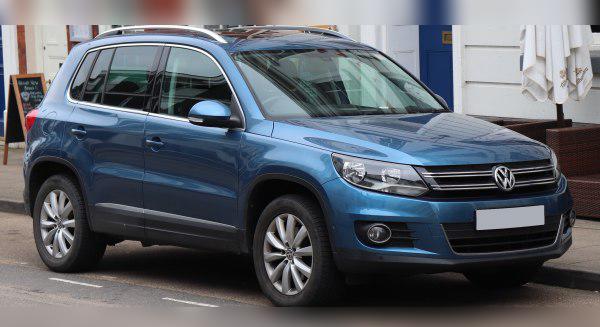
VW 2.0 TSI (CCZD) Experiences, Problems, Fuel Consumption and Used Car Buying Guide
Volkswagen’s 2.0 TSI engine with the code CCZD is a specific iteration from the EA888 family (second generation), which was primarily installed in the facelifted first-generation Tiguan. With its 180 hp, this unit was designed to fill the gap between the weaker 1.4 TSI engines and the more powerful 2.0 TSI variants (200+ hp) that were reserved for sporty models. Although it offers excellent performance and refinement, this engine comes with a set of characteristic mechanical issues that can be expensive if ignored.
Key points (TL;DR)
- Oil consumption: This is the biggest downside. Due to the design of the piston rings, the engine is prone to increased oil consumption.
- Timing chain: A sensitive chain tensioner can lead to chain skipping and catastrophic engine failure. Inspection and preventive replacement are a must.
- Water pump: The thermostat and pump housing are plastic and often crack, causing coolant leaks.
- Carbon buildup: As a direct-injection engine, the valves are prone to carbon deposits, which gradually choke the engine.
- Performance: Excellent power and torque balance for the Tiguan, especially in the 4MOTION version.
- Recommendation: Buy only with a verifiable service history (whether the chain and piston issues have been resolved) or with a budget for a potential full engine overhaul.
Contents
- Technical Specifications
- Reliability and Maintenance
- Specific Parts and Costs
- Fuel Consumption and Performance
- Additional Options and Modifications
- Gearbox and Drivetrain
- Conclusion and Buying Tips
Technical Specifications
| Parameter | Value |
|---|---|
| Engine code | CCZD |
| Displacement | 1984 ccm (2.0 L) |
| Power | 132 kW (180 hp) @ 4500-6200 rpm |
| Torque | 280 Nm @ 1700-4500 rpm |
| Fuel type | Petrol (Recommended 95/98 RON) |
| Injection system | Direct injection (TSI / FSI) |
| Forced induction | Turbocharger + Intercooler |
| Camshaft drive | Chain |
Reliability and Maintenance
When talking about the CCZD engine, we are entering territory where regular maintenance is crucial for survival. This is not an engine that tolerates neglect. The biggest question buyers ask is related to the timing system. This engine uses a timing chain, not a timing belt. Unfortunately, the chain and especially the hydraulic chain tensioner are weak points of this EA888 generation. Symptoms include rattling at cold start (a diesel-like sound) that lasts a few seconds. If ignored, the chain can jump a tooth, causing piston-to-valve contact – a catastrophic failure.
A “major service” in the classic sense (as with a belt) is not strictly prescribed, but preventive replacement of the chain, guides and tensioner is recommended between 100,000 and 120,000 km, or earlier if noise is present. This is a cost you must factor in.
Oil consumption is the second big topic. Due to the design of the piston rings, which are too thin and have small drainage holes, they quickly clog with carbon. Oil consumption of 0.5 liter up to even 1 liter per 1,000 km is not uncommon on engines that have not been repaired. This is solved only by an expensive intervention – replacing pistons and rings with modified versions. The manufacturer often claims that consumption up to 0.5 l/1000 km is “within normal limits”, but in practice this is a sign that the engine needs attention.
As for regular maintenance, the engine takes approximately 4.6 to 4.7 liters of engine oil. Only fully synthetic oil of grade 5W-30 or 5W-40 that meets VW 502.00 or 504.00 standards is recommended. The oil change interval should never be “Long Life” (30,000 km). Change the oil every 10,000 km to a maximum of 15,000 km to extend the life of the chain and turbo.
Spark plugs on this turbo petrol engine are replaced every 60,000 km. However, if the engine is remapped or driven aggressively, it is advisable to shorten this interval to 30,000 - 40,000 km. Faulty spark plugs can overload the ignition coils, which are also consumable items on this engine (symptoms: rough idle and “Check Engine” light).
Specific Parts (Costs)
Dual mass flywheel: Yes, this engine is equipped with a dual mass flywheel, regardless of whether it is paired with a manual or automatic (DSG) gearbox. Its role is to dampen engine vibrations. On petrol engines it lasts longer than on diesels due to lower vibrations, but expect replacement around 150,000 - 200,000 km. The price is high (depends on the market).
Injection system: The engine uses high-pressure direct injection. The injectors are generally reliable, but sensitive to poor fuel quality. Injector failure manifests as fuel leaking into the cylinder (washing oil off the cylinder walls) or improper spray pattern. A single injector is quite expensive.
Turbocharger: The CCZD uses a single turbocharger (usually an IHI or BorgWarner K03 variant). Turbo lifespan is directly linked to oil quality and change intervals. With proper maintenance, the turbo can last over 200,000 km. A common issue is the electromagnetic valve (diverter valve) or the wastegate flap developing play, resulting in power loss or rattling noises.
Emissions (DPF, EGR, AdBlue): Good news – as a petrol engine, it does not have a DPF filter nor does it use AdBlue fluid. As for the EGR valve, exhaust gas recirculation is often handled via internal valve overlap (variable cam timing), although external systems exist depending on the market. However, the main problem is not EGR, but carbon buildup on the intake valves. Since fuel does not pass over the intake valves (direct injection), there is nothing to “wash” them, so carbon accumulates and reduces airflow. Cleaning (“decoking” or walnut shell blasting) is needed every 80,000 - 100,000 km.
Another specific part is the PCV valve (oil vapor separator). When the membrane inside it tears (a very common failure), the engine starts consuming oil, smoking, and has an unstable idle. Fortunately, this is not a very expensive repair.
Fuel Consumption and Performance
Do not expect diesel-like economy. The VW Tiguan is a heavy car and its aerodynamics are not its strong point (a “boxy” design). Combined with 4MOTION all-wheel drive, fuel consumption is noticeable.
- City driving: Realistically expect between 11 and 14 liters per 100 km, depending on traffic and how heavy your right foot is. In winter this figure easily goes higher.
- Country roads: On secondary roads it is possible to bring consumption down to 7.5 - 8.5 liters.
- Highway: At 130 km/h, consumption is around 9 - 10 liters. Thanks to 7th gear (on DSG gearboxes) or a long 6th gear, the engine runs at acceptable revs (around 2800-3000 rpm), making the drive quiet and comfortable.
Is the engine sluggish? Absolutely not. With 280 Nm available from just 1700 rpm, the CCZD engine moves the Tiguan’s body with ease. Acceleration is linear, and overtaking is safe and quick. Compared to a 2.0 TDI of similar power, the petrol feels livelier and is much quieter.
Additional Options and Modifications
LPG conversion: Is it worth it? This is a direct-injection (TSI) engine. That means a “regular” sequential LPG system cannot be installed. Systems designed for direct injection must be used, which either inject a small amount of petrol to cool the petrol injectors, or inject liquid gas directly through the petrol injectors (Liquid Direct). These systems are very expensive (often over 1000 EUR) and complex to tune. Because of this, LPG conversion only pays off if you plan to cover very high annual mileage (30,000+ km per year).
Remapping (Stage 1): This engine is a detuned version of the more powerful 2.0 TSI units. That means it has huge potential for unlocking extra power. A safe Stage 1 remap easily raises power from the stock 180 hp to 240-250 hp, and torque to over 350 Nm. The difference in driving is dramatic. However, before remapping, the engine must be mechanically perfect (chain, turbo, spark plugs), and after remapping the oil change intervals should be shortened.
Gearbox
With the CCZD engine in the Tiguan, three gearbox options were available depending on the market, but in Europe the most common are manual and DSG.
Manual gearbox (6-speed): Very robust and precise. The most common failures are related to the clutch kit and dual mass flywheel. Replacing the clutch kit together with the flywheel is a significant expense (expensive).
DSG gearbox (automatic): This is where attention is needed. The Tiguan 2.0 TSI 4MOTION usually uses the DQ500 (7-speed with wet clutch), which is extremely durable and can handle high torque, or the older DQ250 (6-speed with wet clutch). Both are excellent if properly maintained.
There is also the option of a conventional automatic gearbox (Tiptronic – torque converter) which was mainly fitted for the US market (but can be found on imports). It is slower than DSG but very comfortable.
Gearbox maintenance: On DSG gearboxes (and Tiptronic), oil and filter changes are mandatory every 60,000 km. If this is skipped, the mechatronics unit (the gearbox “brain”) fails, and repairs cost a small fortune. Mechatronics failures manifest as jerks when shifting, delay when setting off, or complete loss of gears.
Used Car Buying and Conclusion
When buying a Tiguan with the CCZD engine, your inspection must be thorough:
- Cold start: Insist that the engine is completely cold. Listen carefully during the first 3-5 seconds. Any rattling or chain “chatter” is a red flag (a 500+ EUR expense right away).
- Exhaust smoke: Rev the engine while stationary. Bluish smoke or black sooty rings on the exhaust tips are a clear sign that the engine is burning oil.
- Service history: Check whether the oil in the gearbox (DSG/Haldex for 4Motion) has been changed and whether the timing chain or water pump have ever been replaced.
- Leaks: Look under the intake manifold for traces of red/pink fluid (coolant leak from the water pump).
Conclusion: The VW Tiguan with the 2.0 TSI (180 hp) engine is a driver’s car. It offers great dynamics, the safety of 4MOTION all-wheel drive and cabin quietness that diesels cannot match. It is intended for drivers who do not cover huge mileage (due to fuel consumption) and who are willing to pay for proper maintenance. If you are looking for a “fill up and drive” car with minimal running costs, this engine is not for you. But if you find an example where the chain and oil consumption issues have been resolved, you will get a fantastic SUV that is a pleasure to drive.
Was this content useful to you?
Your opinion helps us to improve the quality of the content.