CUWA Engine
- Engine
- 1968 cm3
- Aspiration
- Turbocharger, Intercooler
- Fuel
- Diesel
- Fuel injection system
- Diesel Commonrail
- Power
- 184 hp
- Torque
- 380 Nm
- Cylinders
- 4
- Valves
- 16, 4 per cylinder
- Cylinders position
- Inline
- Valvetrain
- DOHC
- Oil capacity
- 4.7 l
- Systems
- Start & Stop System, Particulate filter
# Vehicles powered by this engine
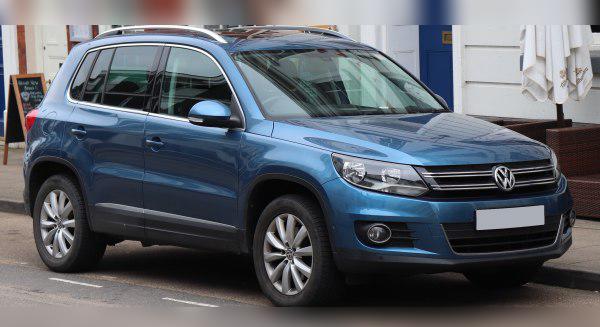
2.0 TDI Engine (CUWA): Experiences, Problems, Fuel Consumption and Buying Tips
Key points in short (TL;DR)
- Power and Agility: With 184 hp and 380 Nm, this is the most powerful diesel option in the first-generation Tiguan. It’s anything but sluggish.
- EA288 Generation: This is a more modern engine than the older 2.0 TDI (EA189) units – quieter and more refined, but also more complex.
- AdBlue System: The CUWA engine code implies Euro 6 compliance, which means the presence of an AdBlue (SCR) system that requires maintenance.
- Gearbox: Paired with a durable DSG gearbox (most often the DQ500), which can handle high torque.
- Water Pump: A well-known weak point of this engine generation – it often leaks or seizes before the scheduled timing belt service.
- DPF and EGR: Sensitive to exclusively city driving. They need regular “blow-out” runs on open roads.
- Recommendation: An excellent choice for those who want Golf GTD performance in an SUV body.
Contents
Introduction and Applications
The engine with the code CUWA represents the top of the diesel range in the first-generation Volkswagen Tiguan (facelift model). It belongs to the EA288 family and is the direct successor to the famous but problematic older 2.0 TDI engines. This engine is essentially the same unit used in the Golf 7 GTD, Octavia RS or SEAT Leon FR, but adapted for a heavier body and all-wheel drive.
Its role is to reconcile the need for fuel efficiency with the desire for a sporty feel. Unlike the weaker versions (140 or 150 hp), the CUWA engine delivers that “kick in the back” when overtaking, making the Tiguan a serious long-distance car.
Technical Specifications
| Characteristic | Data |
|---|---|
| Engine displacement | 1968 ccm (2.0 l) |
| Power | 135 kW (184 hp) at 3500–4000 rpm |
| Torque | 380 Nm at 1750–3000 rpm |
| Engine code | CUWA (EA288 family) |
| Injection type | Common Rail (Direct injection) |
| Charging system | Variable-geometry turbocharger + intercooler |
| Emissions standard | Euro 6 (with AdBlue system) |
Reliability and Maintenance
Timing belt or chain?
The CUWA engine uses a timing belt to drive the camshafts. This is good news because belts on EA288 engines are quieter and generally more reliable than chains on older VW engines. The factory often specifies an optimistic replacement interval of 210,000 km, but real-world experience and mechanics strongly recommend doing the full timing service at a maximum of 150,000 to 160,000 km or after 5 to 7 years, whichever comes first. A snapped belt will cause catastrophic engine damage.
Most common failures
Although more reliable than its predecessors, this engine has its weak spots:
- Water pump: This is the “Achilles’ heel” of EA288 engines. The pump has a variable “shutter” that regulates coolant flow for faster warm-up. That mechanism often seizes, which leads to engine overheating. Leaks from the pump shaft are also common, even before 100,000 km.
- Cooling system (G13 coolant): The expansion tank cap often contains a small silicate bag that can burst. The silicate then clogs the small heater core (cabin heater radiator), and the interior heating stops working. The recommendation is to switch to G12 evo coolant with a full system flush.
- Exhaust gas temperature sensors: Due to high exhaust temperatures and Euro 6 requirements, these sensors are consumable items.
Oil and oil consumption
The engine takes approximately 4.6 to 4.7 liters of oil. You must use 5W-30 or 0W-30 oil that meets the strict VW specification 507.00. Because of the DPF filter, you must not use oils that do not meet this “Low SAPS” specification.
As for oil consumption, these engines are quite “tight.” Consumption of about 0.5 liters per 10,000 km is considered completely normal and acceptable. If it consumes more than 1 liter over a service interval, the turbocharger or piston rings should be checked, although this is rare at lower mileages.
Injectors
The system uses Bosch Common Rail injection with piezoelectric or solenoid injectors (depending on the batch, but the 184 hp versions more often use piezo for precision). They have proven to be very durable. With good-quality fuel and regular fuel filter changes, the injectors easily last 250,000+ km. Symptoms of worn injectors include rough idle (fluctuating rpm) and increased smoke, but this is less common on this generation compared to the old PD engines.
Specific Components (Costs)
Dual-mass flywheel
Yes, this engine always comes paired with a dual-mass flywheel. Given the high torque of 380 Nm, the flywheel is under heavy load, especially in stop-and-go city driving. Symptoms of failure include metallic rattling noises when switching the engine off and vibrations at idle. Replacement is expensive (varies by market), but it is an unavoidable part of maintaining a modern diesel.
Turbocharger
The engine uses a single turbocharger with variable geometry. Service life is long if the car is driven properly (no hard acceleration when cold, and allowing it to cool down after fast driving). Failures are most often related to the turbo actuator (electronics) or clogged variable vanes from city driving, and less often to the turbo’s mechanical core itself.
DPF, EGR and AdBlue
This is a Euro 6 engine, which means the emissions system is complex:
- DPF filter: It will clog if the car is used only in city traffic. Regeneration is automatic but requires regular driving on open roads.
- EGR valve: There are two exhaust gas recirculation circuits (high and low pressure). The EGR cooler is prone to leaking or clogging with soot.
- AdBlue (SCR): The CUWA engine has an AdBlue system. This is an additional cost and a potential source of problems. The heater in the AdBlue tank, the pump or the urea dosing injector can fail. When the system logs a fault, the car will often start counting down the remaining kilometers until it will no longer start unless the fault is fixed.
Fuel Consumption and Performance
Real-world fuel consumption
The first-generation Tiguan is not very aerodynamic, and the 184 hp version always comes with 4MOTION all-wheel drive, which increases fuel consumption.
- City driving: Expect between 8.5 and 10 l/100 km, depending on traffic and how heavy your right foot is. In winter it can be even higher.
- Country roads: This is where it’s most economical, around 6.0 to 6.5 l/100 km.
- Motorway (130 km/h): Consumption is around 7.0 to 7.8 l/100 km.
Performance and “Sluggishness”
This engine is by no means sluggish. On the contrary, 184 hp and 380 Nm make the Tiguan very lively. The 0–100 km/h sprint takes about 8 seconds, which is an excellent result for an SUV of that age. In-gear acceleration is strong, and overtaking is easy even with a full load of passengers and luggage.
Motorway cruising
Thanks to the 7-speed DSG gearbox, the engine is not heavily stressed. At 130 km/h in 7th gear, the engine spins at around 2,200 to 2,300 rpm. This provides relatively quiet cruising and leaves plenty of power in reserve for acceleration without needing to downshift.
Additional Options and Modifications
Chiptuning (Stage 1)
This engine responds very well to remapping. Since it shares its base with more powerful versions, a Stage 1 tune safely raises power to around 215–220 hp and torque to 440–450 Nm. However, before remapping, you must check the condition of the DPF and turbo. Also keep in mind that higher torque puts additional stress on the dual-mass flywheel.
LPG (autogas) is not fitted to diesel engines in passenger cars in a cost-effective way (technically, dual-fuel setups are possible, but they are uneconomical and overly complex for this type of vehicle).
Gearbox and Drivetrain
Which gearbox is used?
With the 2.0 TDI 184 hp (CUWA) engine in the Tiguan I facelift, the standard fitment is a 7-speed DSG automatic gearbox. The code for this gearbox is most often DQ500. This is very important: the DQ500 is a wet-clutch gearbox designed for high loads (it is also used in Transporter vans). It is much more robust and durable than the notorious DQ200 (dry clutch) or the older DQ250 (6-speed).
Gearbox issues and maintenance
- Failures: Although the DQ500 is a “tank” among gearboxes, problems can occur with the mechatronics unit (the gearbox “brain”) or the internal speed sensors. Symptoms include harsh gear changes or delayed engagement when setting off (so-called hesitation).
- Flywheel: As mentioned, the dual-mass flywheel is a wear item located between the engine and gearbox. Replacement cost is high (varies by market).
- Service (Oil change): The manufacturer and service network prescribe an oil and filter change in the DSG gearbox every 60,000 km. This is MANDATORY. Skipping this service drastically shortens the life of the clutches and mechatronics.
Buying Used and Conclusion
What to check before buying?
- Cold start: Listen to the engine when it’s cold. There should be no rattling (even though it has a belt, pumps can make noise) and no uneven running.
- Coolant: Check the coolant reservoir. The fluid must be clean and pink (G13/G12evo), and the level stable. Traces of leakage around the timing belt area are a sign of a failing water pump.
- DSG behavior: The gearbox should start moving smoothly when you release the brake, without jerks. Test it on an uphill and when reversing.
- AdBlue history: Use diagnostics to check for any fault codes related to the “reductant system” or NOx sensors.
Final conclusion
The Tiguan 2.0 TDI (184 hp) with the CUWA engine code is probably the best version of the first generation of this model. You get a robust, newer-generation engine, a durable gearbox (DQ500) and excellent performance.
This engine is intended for drivers who spend a lot of time on open roads and want plenty of power in reserve for safe overtaking, and who are prepared to pay somewhat higher maintenance costs (AdBlue, DPF, DSG servicing) in exchange for a top-notch driving experience. If you drive only short trips around town, this engine (and its DPF/EGR system) will give you headaches – in that case, look for a petrol version.
Was this content useful to you?
Your opinion helps us to improve the quality of the content.