EA189 / CBAB, CLJA, CFFB Engine
- Engine
- 1968 cm3
- Aspiration
- Turbocharger, Intercooler
- Fuel
- Diesel
- Fuel injection system
- Diesel Commonrail
- Power
- 140 hp @ 4200 rpm
- Torque
- 320 Nm
- Cylinders
- 4
- Valves
- 16, 4 per cylinder
- Cylinders position
- Inline
- Valvetrain
- DOHC
- Oil capacity
- 4 l
- Coolant
- 8 l
- Systems
- Particulate filter
# Vehicles powered by this engine
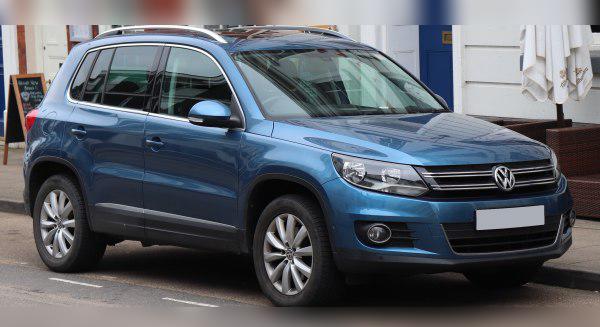
2.0 TDI (EA189) in the VW Tiguan: Real-world experience, issues, fuel consumption and buying tips
Key points in short (TL;DR)
- Common Rail technology: Engines with codes CBAB, CFFB and CLJA are Common Rail (CR), which means they are quieter and more refined than the old "Pumpe-Düse" (PD) engines.
- Reliability: Considered among the most reliable 2.0 TDI engines, provided they are regularly maintained. The main weak points are the EGR valve and the DPF system.
- Timing belt service: The engine is driven by a timing belt. It is recommended to replace it earlier than the factory interval (around 160,000–180,000 km).
- Gearbox: DSG gearboxes require an oil change every 60,000 km without exception. Manual gearboxes are robust, but the dual-mass flywheel is a wear item.
- Fuel consumption: Since the Tiguan is not very aerodynamic and often has 4MOTION all-wheel drive, expect slightly higher fuel consumption than in a Golf or Passat (average around 7–8 l/100 km).
- Recommendation: An excellent balance of power and efficiency for a family SUV.
Contents
Introduction: EA189 generation in the Tiguan
The 2.0 TDI engine from the EA189 family represents a turning point for the Volkswagen Group. Installed in the first-generation Tiguan (especially the facelift model from 2011 onwards), this engine marked the transition from the noisy "Pumpe-Düse" system to the modern Common Rail injection system. The variants we are talking about (CBAB as the earlier one, and CFFB and CLJA as later and more common in the facelift) with 140 hp represent the "golden middle ground". They are not as stressed as the 170/177 hp versions, yet they offer more than enough torque to move the not-so-light Tiguan. Despite the "Dieselgate" scandal, this engine is mechanically highly regarded by mechanics across Europe.
Technical specifications
| Parameter | Data |
|---|---|
| Engine displacement | 1968 cc (2.0 L) |
| Power | 103 kW / 140 hp |
| Torque | 320 Nm at 1750–2500 rpm |
| Engine codes | CBAB, CFFB, CLJA |
| Injection type | Common Rail (Bosch) |
| Charging | Variable-geometry turbocharger (VGT) + intercooler |
| Camshaft drive | Timing belt |
Reliability and maintenance
Timing belt or chain?
All engines from this series (CBAB, CFFB, CLJA) use a timing belt to drive the camshafts. This is good news because the system is quieter and generally more predictable than chains, which have caused problems on some other VW engines.
Major service and intervals
For these engines, the factory often specifies an optimistic timing belt replacement interval of 210,000 km. However, experienced mechanics and real-world practice suggest doing the major service at a maximum of 160,000 to 180,000 km or at 5 to 7 years of age, whichever comes first. During the major service, the water pump (which can start leaking or seize), tensioners and idler pulleys must be replaced. A snapped belt leads to "contact" between pistons and valves, which is a catastrophic failure that often requires replacing the entire engine.
Oil: quantity and consumption
The engine takes approximately 4.3 litres of engine oil (with filter). You must use fully synthetic 5W-30 oil that meets the strict VW 507.00 specification. This standard is crucial for preserving the DPF filter (Low SAPS oil).
As for oil consumption, TDI engines are known to "like to drink" a bit. Consumption of up to 0.5 litres per 5,000–7,000 km is considered acceptable, especially if the car is driven harder or mainly on the motorway. If the engine uses a litre per 1,000 km, this points to a problem with the turbocharger or piston rings. It is important to regularly check the level on the dipstick.
Injectors
Unlike the old PD elements (especially the problematic Siemens piezo injectors), the Common Rail system in these engines mostly uses Bosch solenoid injectors (in CFFB engines). They have proven to be very durable and often cover more than 250,000 km without overhaul. Symptoms of bad injectors include rough idle, increased smoke under acceleration and difficult cold starts.
Most common failures
- EGR valve: Soot and oil vapours cause it to stick. Symptoms are the "Check Engine" light coming on and loss of power (safe mode).
- DPF differential pressure sensor: A cheap part that often fails, but can falsely indicate that the DPF is full.
- Turbo actuator (vacuum): The rubber membrane in the "mushroom" on the turbo can tear, so the turbo cannot build boost pressure.
- Thermostat: If the engine struggles to reach the operating temperature of 90°C in winter, the thermostat is stuck open. This increases fuel consumption and harms the engine.
Specific parts (costs)
Dual-mass flywheel
Yes, this engine, in combination with both manual and DSG gearboxes, uses a dual-mass flywheel. Its lifespan is usually between 150,000 and 250,000 km, depending on driving style (stop-and-go city driving wears it out faster). Symptoms include a metallic knocking/clattering noise when starting and switching off the engine, as well as vibrations in the clutch pedal or in the cabin while the car is idling. Replacement is expensive (depends on the market, but count on it as one of the bigger costs).
Turbocharger
The engine has a single variable-geometry turbocharger. The turbo is generally reliable and often outlasts the engine if the rules are followed: regular oil changes and letting the engine idle to cool down after fast motorway driving. Failures are more often related to dirty variable geometry (the vanes get stuck due to soot so the car "cuts" power) than to the turbocharger mechanically falling apart.
DPF and EGR
First-generation Tiguan facelift models have both a DPF (diesel particulate filter) and an EGR valve.
DPF: Sensitive to city driving. If you only drive short distances, the DPF will not be able to regenerate and will clog up. Replacement is very expensive, while professional cleaning is a cheaper option.
EGR: As mentioned, this is a weak point. In CFFB engines, the EGR module is integrated with the exhaust gas cooler and is located in a hard-to-reach place (behind the engine), which makes replacement complicated and more expensive due to labour.
AdBlue system
Most first-generation Tiguan models with the EA189 engine (2.0 TDI 140 hp) do not have an AdBlue system (SCR catalyst), but rely only on the DPF and EGR to meet the Euro 5 standard. This is an advantage from a maintenance standpoint because there are no urea pumps, heaters and injectors that can fail. Still, check the specific car, as some variants for specific markets (e.g. BlueTDI badge, although rare on the first generation) could have AdBlue. If it doesn’t – that’s one less thing to worry about.
Fuel consumption and performance
City driving
The Tiguan is not a light car (over 1,600 kg) and has a tall body. In the city, with 4MOTION and an automatic gearbox, real-world fuel consumption is between 8.5 and 10 litres per 100 km. With a manual gearbox and a light right foot, it can be brought down to around 7.5–8 litres, but don’t expect miracles in heavy traffic.
Open road and motorway
This is where the engine shows its best side. On country roads, consumption drops to 5.5–6.5 litres. At 130 km/h, fuel consumption is usually around 7.0–7.5 litres, which is excellent for an SUV. Due to its "brick-like" aerodynamics, any increase in speed above 130 km/h drastically raises fuel consumption.
Is the engine "sluggish"?
With 140 hp and 320 Nm, the Tiguan is not a sports car, but it is far from sluggish. Torque is available low down, which makes overtaking and driving uphill easier. For an average family driver, the power is more than sufficient. Cruising at 130 km/h is done quietly and effortlessly, usually at around 2,200–2,400 rpm (in top gear), which contributes to comfort.
Additional options and modifications (chip tuning)
The EA189 engine responds very well to remapping (chip tuning).
Stage 1: Power can safely be raised to around 170–175 hp, and torque to 380–400 Nm.
This significantly changes the character of the vehicle – the car becomes much more lively, and fuel consumption during normal driving can even slightly decrease. However, keep in mind that the increased power puts additional stress on the dual-mass flywheel and clutch (on manuals) or the DSG gearbox, so it is recommended only if those components are in top condition.
Gearbox: DSG vs manual
Gearbox options
With this engine in the first-generation Tiguan facelift you get:
- 6-speed manual: Precise and robust.
- 7-speed DSG (DQ500): Installed in the most powerful versions and often in 4MOTION models after 2010/2011. This is a gearbox with wet clutches, extremely durable (can handle up to 600 Nm).
- 6-speed DSG (DQ250): An older but very reliable version with wet clutches, also common.
Issues and maintenance
Manual: Failures of the gearbox itself are rare. The main cost is the clutch kit with the dual-mass flywheel.
DSG: Requires oil and filter changes strictly every 60,000 km. If this is neglected, the mechatronics (the gearbox "brain") or the clutch pack will fail. Mechatronics repair is very expensive (often over 1,000 EUR). A healthy DSG must shift imperceptibly, without jerks when moving off or when coming to a stop.
Used car buying guide and conclusion
What to check before buying?
- Cold start: The engine should start instantly. If it cranks for a long time or emits a cloud of white/blue smoke, suspect injectors or glow plugs.
- Flywheel noise: Listen for metallic rattling while the car is idling. Press the clutch pedal halfway (on manuals) – if the noise changes, the flywheel is near the end of its life.
- Diagnostics (VCDS): Check DPF saturation (soot mass) and injector corrections.
- 4MOTION (if fitted): The Haldex coupling for the all-wheel drive also requires oil changes. Check if it works by accelerating hard on a slippery surface/sand – the rear wheels must engage immediately.
Conclusion: The VW Tiguan 2.0 TDI (140 hp) with this engine is probably the most rational purchase in the compact SUV class of its era. The engine is powerful enough, parts are available everywhere (as it shares its platform with the Golf and Passat), and comfort is at a high level. If you find a car with a well-documented service history (especially for the DSG and major service), this engine can serve you for hundreds of thousands of kilometres.
Was this content useful to you?
Your opinion helps us to improve the quality of the content.