EA189 / CFFD, CUVE Engine
- Engine
- 1968 cm3
- Aspiration
- Turbocharger, Intercooler
- Fuel
- Diesel
- Fuel injection system
- Diesel Commonrail
- Power
- 110 hp
- Torque
- 280 Nm
- Cylinders
- 4
- Valves
- 16, 4 per cylinder
- Cylinders position
- Inline
- Valvetrain
- DOHC
- Oil capacity
- 4.3 l
- Coolant
- 8 l
- Systems
- Start & Stop System, Particulate filter
# Vehicles powered by this engine
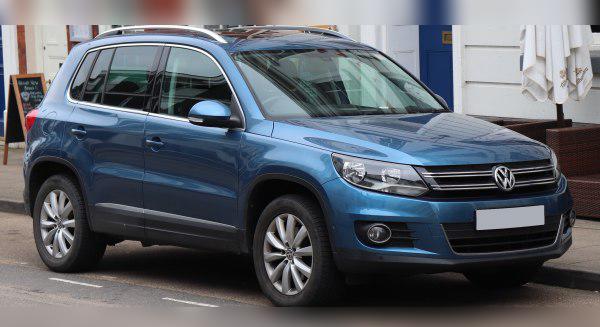
2.0 TDI EA189 (CFFD, CUVE) - 110 HP: Real-world experience, issues, fuel consumption and used-buying guide
Key points (TL;DR)
- Reliability: Generally a very robust common-rail engine, significantly quieter and smoother than the previous Pump-Düse (PD) units.
- Performance: With 110 HP (81 kW) in the heavy Tiguan, this is the base engine option. Expect sluggishness when overtaking, but decent cruising ability.
- Main weak points: EGR valve (often fails after the Dieselgate software update), water pump (leaks) and DPF in predominantly city driving.
- Maintenance: Requires strict adherence to timing belt replacement intervals and the use of oil that meets the VW 507.00 specification.
- Potential: The engine is software-detuned. Mechanically it is almost identical to the more powerful versions (140 HP), which makes it extremely suitable for a Stage 1 remap.
- Recommendation: Ideal for calm drivers who want economy and longevity, but do not expect sporty performance without modifications.
Contents
- Technical specifications
- Reliability and maintenance
- Specific parts and costs
- Fuel consumption and performance
- Additional options and modifications
- Gearbox and drivetrain
- Buying used and conclusion
Introduction
The 2.0 TDI engine with the EA189 designation (engine code CFFD for the 110 HP version) is the backbone of Volkswagen’s diesel line-up from the Euro 5 era. It was installed in the facelifted first-generation Tiguan as the entry-level, economical option. This is a common-rail diesel, which means it solved many refinement issues that plagued the older PD engines. Although it carries the burden of the Dieselgate scandal, mechanically speaking this is one of the most durable powerplants VW Group has produced, provided it is properly maintained. The CUVE variant (EA288) is its successor that appeared towards the end of the model’s production run and brought Euro 6 compliance, but the focus of this text is primarily on the more widespread CFFD (EA189) engine.
Technical specifications
| Specification | Value |
|---|---|
| Displacement | 1968 cc (2.0 L) |
| Power output | 81 kW / 110 HP |
| Torque | 280 Nm at 1750–2750 rpm |
| Engine codes | CFFD (Euro 5), CUVE (Euro 6 - EA288) |
| Injection type | Common rail (piezo or solenoid injectors) |
| Forced induction | Variable-geometry turbocharger (VGT) |
| Camshaft drive | Timing belt |
Reliability and maintenance
Timing belt or chain?
This engine uses a timing belt to drive the camshafts. That’s good news, as chains on some VW engines have proven problematic. The system is reliable, but it does not tolerate delayed replacement.
Major service and critical point
The factory interval for the major service (replacement of belt, tensioners and water pump) is often stated as 210,000 km, which is overly optimistic for real-world use. Experienced mechanics recommend doing the major service at 160,000 km to a maximum of 180,000 km or every 5 to 7 years (whichever comes first).
Important: The water pump is the Achilles’ heel of this system. It often starts leaking or the plastic impeller breaks before the scheduled belt replacement interval. If you notice coolant loss, have the pump checked immediately.
Oil: capacity and consumption
The engine takes about 4.3 litres of engine oil (buy a 5L can). You must use 5W-30 oil that meets the VW 507.00 specification. This spec is crucial because of the DPF (low-SAPS oil).
As for oil consumption, CR engines are better than the old PD versions. Consumption of 0.5 to 0.8 litres per 10,000 km is perfectly acceptable and considered normal, especially with more spirited driving. If it uses a litre every 2,000 km, you likely have an issue with the turbocharger or piston rings.
Most common failures
- EGR valve: Soot builds up and blocks the valve. Symptoms are loss of power, a Check Engine light and the car going into limp mode. This is particularly common on vehicles that have had the emissions recall software update.
- High-pressure fuel pump (Bosch CP4): Although less common on the 110 HP version than on earlier models, the pump can fail internally and send metal shavings through the entire fuel system, which requires an expensive overhaul of the whole system.
- Oil cooler: Oil and coolant can mix, which shows up as “mayonnaise” on the oil filler cap or oily residue in the coolant reservoir.
Injectors
The injectors on EA189 (CFFD) engines are mostly Bosch common-rail units and have proven to be very durable. They are not prone to sudden failures like the Siemens injectors on the old 2.0 TDI PD engines. With good-quality fuel, they can easily exceed 300,000 km without overhaul. Symptoms of bad injectors include rough idle (the rev needle “wanders”) and increased smoke when you press the accelerator.
Specific parts (costs)
Dual-mass flywheel
Yes, this engine uses a dual-mass flywheel. Its lifespan is usually between 150,000 and 200,000 km, depending on driving style. In the Tiguan, which is a heavier car, the flywheel is under more stress. Replacement (clutch kit + flywheel) falls into the expensive category (exact price depends on the market).
Turbocharger
The engine uses a single variable-geometry turbocharger. The turbo is reliable if you respect proper warm-up and cool-down procedures. It is not prone to failure before 250,000 km unless there have been lubrication issues or foreign-object damage.
DPF and EGR
This engine is equipped with both a DPF and an EGR valve.
DPF issues: If the Tiguan is driven exclusively in the city (stop-and-go), the DPF will not be able to regenerate properly. The symptom is a DPF warning light and a message on the dashboard. A clogged DPF raises exhaust backpressure and can kill the turbo.
EGR: As mentioned, a very common problem. Many owners opt for software EGR delete and physical blanking (although this is illegal in many countries).
AdBlue
This requires attention:
CFFD (Euro 5): Usually does NOT have an AdBlue system. It relies only on EGR and DPF.
CUVE (Euro 6): This later variant DOES have an AdBlue (SCR) system. If you have this model, the system is sensitive to low temperatures and fluid quality. The AdBlue tank heater is a common failure point and repairs are expensive (often the entire module has to be replaced).
Fuel consumption and performance
Is the engine “sluggish”?
To be realistic – yes, it is somewhat sluggish. The Tiguan is a heavy SUV (over 1,500 kg), and 110 HP is the lower limit of what’s acceptable. In the city it’s perfectly adequate thanks to the 280 Nm of torque available low down, but on open roads, at speeds above 100 km/h, overtakes require planning and a downshift.
Fuel consumption
- City driving: Realistically expect between 7.5 and 9.0 l/100 km. The vehicle’s weight and aerodynamics take their toll.
- Country roads: This is where it’s most economical, you can get it down to around 5.0 - 5.5 l/100 km.
- Motorway (130 km/h): Consumption is around 6.5 - 7.5 l/100 km.
Behaviour on the motorway
At 130 km/h in 6th gear the engine spins at about 2,200 - 2,400 rpm (depending on gearbox and tyre size). That’s a comfortable cruising zone, engine noise is not excessive, but wind noise dominates due to the body shape.
Additional options and modifications
Remap (Stage 1)
This is one of the best aspects of this engine. The 110 HP version is often just a software-limited version of the 140 HP engine.
Safe power increase: With a quality Stage 1 remap, this engine can safely be taken to 140–150 HP and over 320 Nm of torque. This modification drastically changes the Tiguan’s character, making it much more agile, and it often even reduces fuel consumption in normal driving because the engine doesn’t have to “struggle” as much with the body weight.
Gearbox
Types of gearboxes
The 110 HP engine is most commonly paired with a 6-speed manual gearbox. Drive is usually to the front wheels (FWD), although there are also 4Motion versions (rarer with this power output). The automatic DSG gearbox is less common with the 110 HP engine, but if fitted, it is usually the DQ250 (6-speed, wet clutch) or the more robust DQ500 on 4Motion versions.
Failures and maintenance
- Manual gearbox: Very reliable. There are no specific issues with the gearbox itself, but as mentioned, the dual-mass flywheel is a wear item. VW does not officially prescribe oil changes in the manual gearbox (“lifetime fill”), but it is strongly recommended to change it every 150,000 km.
- DSG gearbox (if fitted): Requires strict oil and filter changes every 60,000 km. If this is neglected, the mechatronics unit (the gearbox “brain”) and clutch packs can fail. DSG repairs fall into the very expensive category.
Buying used and conclusion
When buying a used Tiguan with this engine, pay attention to the following:
- Cold start: Listen to the engine when it’s cold. Metallic knocking or rattling that disappears when you press the clutch pedal points to a worn dual-mass flywheel.
- Coolant: Check the coolant reservoir. The level must be correct and the coolant should be clean pink (G12/G13). If it’s dirty or coolant is missing, suspect a leaking water pump or an issue with the EGR cooler.
- Diagnostics: Always check DPF load (soot mass) and injector correction values.
Conclusion: The Tiguan 2.0 TDI with 110 HP is a rational choice. It’s not fast, it’s not sporty, but it is durable, relatively economical and holds its value well. If you don’t mind the modest performance or you plan a remap, this is an engine that can cover huge mileages with regular maintenance. Avoid cars with dubious service history, as the common-rail system does not forgive poor maintenance.
Was this content useful to you?
Your opinion helps us to improve the quality of the content.