EA111 / CAVD, CTHD, CTKA Engine
- Engine
- 1390 cm3
- Aspiration
- Turbocharging and Supercharger, Intercooler
- Fuel
- Petrol (Gasoline)
- Fuel injection system
- Direct injection
- Power
- 160 hp @ 5800 rpm
- Torque
- 240 Nm
- Cylinders
- 4
- Valves
- 16, 4 per cylinder
- Cylinders position
- Inline
- Valvetrain
- DOHC
- Oil capacity
- 4 l
# Vehicles powered by this engine
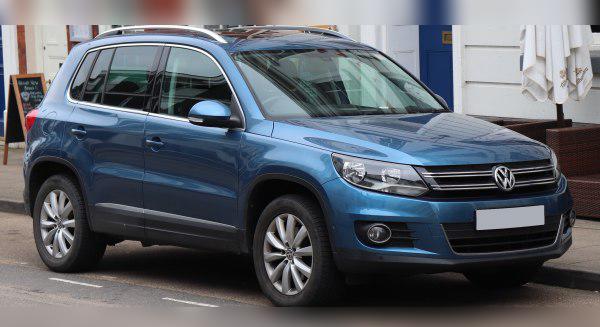
1.4 TSI Twincharger (EA111) – 160 HP: Experiences, Problems and Maintenance
Key points (TL;DR)
- Technological marvel (and headache): This is a "Twincharger" engine – it has both a mechanical supercharger and a turbocharger. Great performance, but a very complex design.
- Achilles' heel – Pistons: On the version with engine code CAVD, piston and ring failures are common and expensive. The CTHD and CTKA versions (later series) are reinforced and significantly more reliable.
- Timing chain: Uses a chain that is prone to stretching. A cold start must be completely quiet (no rattling).
- Oil consumption: Often consumes oil, which can be caused by bad piston rings or PCV valve issues.
- Water pump: Specific and expensive because it contains a magnetic clutch for engaging the supercharger.
- Recommendation: Look exclusively for models with engine codes CTHD or CTKA (installed towards the end of Tiguan I production).
Contents
- Technical specifications
- Reliability and Maintenance
- Specific Parts and Costs
- Fuel Consumption and Performance
- Additional Options and Modifications (LPG & Chip)
- Gearbox
- Buying Used and Conclusion
Introduction
The 1.4 TSI engine in its 160 HP variant (from the EA111 family) is one of Volkswagen’s most controversial powerplants. When it was introduced, it won "Engine of the Year" awards thanks to its incredible displacement-to-power ratio. The combination of a mechanical supercharger (working at low revs) and a turbocharger (taking over at higher revs) eliminates turbo lag and provides linear acceleration.
In the Volkswagen Tiguan (Facelift 2011–2016), this engine replaced older and larger naturally aspirated engines, offering better torque with lower fuel consumption on paper. However, the complexity of this system also brought specific maintenance challenges that can be very costly for owners if they don’t choose the right engine code.
Technical specifications
| Parameter | Value |
|---|---|
| Engine displacement | 1390 cc (1.4 L) |
| Power | 118 kW (160 HP) at 5800 rpm |
| Torque | 240 Nm at 1500–4500 rpm |
| Engine codes | CAVD (early models), CTHD, CTKA (revised models) |
| Injection system | Direct injection (TSI/FSI) |
| Induction | Twincharger (Roots supercharger + turbocharger) |
| Number of cylinders / valves | 4 cylinders / 16 valves |
Reliability and Maintenance
Chain or belt?
This engine (EA111) uses a timing chain. Unfortunately, this is one of its weak points. The chain is prone to stretching, and the hydraulic tensioner can fail, especially if the oil is not changed regularly or the car is used mainly for short city trips. A typical symptom is a metallic rattling noise on cold start that lasts a few seconds. If you hear this, replacement is urgent, because if the chain jumps, pistons and valves will collide.
Most common failures – Pistons and rings
The most serious problem on the CAVD version is piston failure (ringland failure). This happens due to a combination of factors: poor fuel causing detonation (LSPI), overheating of the piston crown, and material that was not strong enough for the pressures generated by the Twincharger system. Symptoms include loss of compression, running on 3 cylinders, and high oil consumption.
Important note: The CTHD and CTKA versions (introduced later, roughly from 2012/2013 depending on the market) have reinforced pistons, different rings, and a revised ignition system, so these failures are drastically less common on them.
Service intervals and spark plugs
Although the manufacturer often specifies longer "Long Life" intervals, for this engine it is crucial to change the oil every 10,000 to 12,000 km at most, or once a year. A minor service is cheaper than a full rebuild.
- Oil capacity: The engine takes about 3.6 liters of oil. Recommended grades are 5W-30 or 5W-40 (VW 504.00 or 502.00 standard). Due to the high thermal load, high-quality oil is mandatory.
- Oil consumption: These engines are known to consume oil. Consumption up to 0.5 liters per 1000 km is considered "acceptable" by VW specification, but in practice, anything over 1 liter per 3000–4000 km points to problems with piston rings or the turbo.
- Spark plugs: Due to complex combustion, spark plugs are critical. They are replaced more often than on regular naturally aspirated engines – recommended every 30,000 to 40,000 km. A bad spark plug can cause poor mixture ignition, which directly destroys pistons.
Specific Parts (Costs)
Dual mass flywheel
Yes, the 1.4 TSI 160 HP has a dual mass flywheel, regardless of whether it is paired with a manual gearbox or DSG. Its purpose is to reduce engine vibrations. Its lifespan is usually between 150,000 and 200,000 km, depending on driving style. Replacement is not cheap (it falls into the "expensive" category for the average driver).
Injection system and injectors
The engine uses high-pressure direct fuel injection. Injectors are generally reliable but sensitive to poor fuel quality. A bigger problem than the injectors themselves is carbon buildup on the intake valves, because fuel does not wash the valves as it did on older port-injected engines. This can lead to reduced performance and rough running after 100,000+ km. Cleaning (so-called "walnut blasting" or chemical cleaning) solves the issue.
Turbo and supercharger (Twincharger)
This system is complex.
1. Mechanical supercharger (Roots): Works from idle up to about 2400–3500 rpm. It is engaged via a magnetic clutch integrated into the water pump. If you hear squealing when you press the throttle at low revs, it is often the water pump/clutch. Replacing the water pump is more expensive than on regular cars.
2. Turbocharger: A standard KKK turbo takes over at higher revs. Their lifespan is decent, but they require proper cooling before shutting the engine off after fast driving.
EGR, DPF, AdBlue
Since this is a petrol engine:
- DPF: None.
- AdBlue: None.
- EGR: Exhaust gas recirculation is often achieved via variable valve timing (internal EGR), although some models also have an external valve. The main "clogging" issue on this engine is not the EGR, but the aforementioned carbon buildup on the intake valves. There is a catalytic converter, and it can fail if the engine burns a lot of oil.
Fuel Consumption and Performance
Fuel consumption
The Tiguan is a heavy car with poor aerodynamics (SUV shape). Don’t expect miracles from a small engine.
- City driving: Realistically expect between 10 and 12 l/100 km. In heavy winter traffic, this easily goes over 13 liters, especially with 4MOTION all-wheel drive.
- Country roads: Here the engine is more efficient. On secondary roads it can use around 7–8 liters.
- Motorway: At 130 km/h, consumption is around 9–10 liters, depending on wind and load.
Is the engine "lazy"?
Absolutely not. With 160 HP and 240 Nm available from just 1500 rpm, a Tiguan with this engine goes surprisingly well. The supercharger eliminates turbo lag, so the car pulls instantly from a standstill. It is more than adequate for overtaking and towing a trailer.
Motorway driving
Thanks to the 6-speed gearbox, at 130 km/h the engine runs at comfortable revs (around 3000 rpm, depending on the gearbox). The cabin is quiet, and the engine has enough power reserve to accelerate to 150–160 km/h without strain.
Additional Options and Modifications
LPG conversion
This is an engine with direct injection. LPG conversion is possible, but the system is much more expensive than a regular sequential LPG system. There are two options:
1. A system that injects liquid LPG through the petrol injectors (the best, but very expensive solution).
2. A system that uses a mixture of LPG and petrol (it constantly uses about 15–20% petrol to cool the injectors).
Given the engine’s complexity and injector sensitivity, conversion only pays off if you drive very high annual mileage.
Chiptuning (Stage 1)
In theory, this engine can be taken to 190–200 HP with software alone. However, it is strongly NOT recommended for CAVD engine versions. The pistons are already at the limit of their strength from the factory. Increasing turbo and supercharger pressure drastically raises the risk of piston failure. On the CTHD version it is somewhat safer, but given the age of these cars and the complexity of the Twincharger system, the risk of expensive failures rises exponentially with tuning.
Gearbox
Manual and automatic
- Manual: Comes with 6 gears as standard. Precise and reliable. It is advisable to change the gearbox oil preventively every 60,000–80,000 km, even though VW often claims it is "lifetime". Clutch life depends on driving style, and replacing the clutch kit with the dual mass flywheel is a significant expense.
- Automatic (DSG): The Tiguan 1.4 TSI could be equipped with a DSG gearbox. Caution is needed here.
- If it is front-wheel drive only, it often came with the DQ200 (dry clutch, 7-speed). This gearbox is known for mechatronic failures and rapid clutch wear in heavy vehicles like the Tiguan.
- If it is 4MOTION (all-wheel drive), it usually has the DQ250 (wet clutch, 6-speed). This is a much more reliable and robust gearbox. It requires oil and filter changes strictly every 60,000 km.
Buying Used and Conclusion
Before buying a Tiguan with this engine, you must do the following:
- Listen to a cold start: The engine must be completely cold. If you hear "rrr-rrr-rrr" chain rattling for more than 2–3 seconds, walk away or negotiate the price to cover chain replacement.
- Compression test: MANDATORY. Measure compression on all 4 cylinders. If one cylinder is off, a piston or ring has probably failed. This is the most important test for the 1.4 TSI 160 HP.
- Check the engine code: Look for the sticker in the boot under the carpet or on the engine itself. If it says CAVD, the risk is higher. If it says CTHD or CTKA, the engine is a safer purchase.
- Test drive: Accelerate hard from low revs (around 1500 rpm). There should be no hesitation ("flat spots") or strange squealing noises (magnetic clutch).
Conclusion: The Volkswagen Tiguan 1.4 TSI (160 HP) is a car with excellent driving characteristics. It is comfortable, fast, and capable. However, as a used car it carries a high risk of expensive failures, especially if you buy an early version (before 2012/2013). It is intended for enthusiasts who are willing to pay for preventive maintenance and who know the full history of the specific vehicle. For the average driver who wants a "fill up and drive" car, the 2.0 TDI (Common Rail) in this Tiguan generation is more boring, but financially a much safer option.
Was this content useful to you?
Your opinion helps us to improve the quality of the content.