CZDB Engine
- Engine
- 1395 cm3
- Aspiration
- Turbocharger, Intercooler
- Fuel
- Petrol (Gasoline)
- Fuel injection system
- Direct injection
- Power
- 125 hp
- Torque
- 220 Nm
- Cylinders
- 4
- Valves
- 16, 4 per cylinder
- Cylinders position
- Inline
- Valvetrain
- DOHC
- Oil capacity
- 4 l
- Systems
- Start & Stop System
# Vehicles powered by this engine
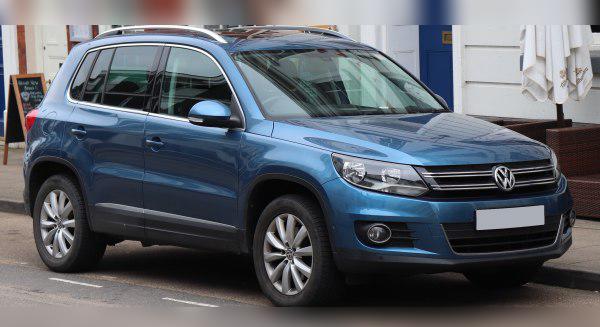
1.4 TSI CZDB (125 HP) – Experiences, problems, fuel consumption and used-car buying tips
Key points in short (TL;DR)
- Biggest advantage: This is an EA211-series engine, which means it has a timing belt instead of the problematic chain used on older 1.4 TSI engines.
- Performance in the Tiguan: With 125 HP, this is the base engine. Perfectly adequate for city driving, but it lacks “breath” for overtaking on open roads when the car is fully loaded.
- Fuel consumption: Expect higher figures in the city (over 9–10 l/100 km) because the engine has to cope with the weight of the SUV body.
- DSG gearbox: If you choose an automatic, it’s the DQ200 with “dry” clutch, which requires caution and a thorough check of the mechatronics.
- Recommendation: An excellent choice for drivers who spend most of their time in the city and want a petrol engine without the complications of diesel (DPF, AdBlue), but are looking for a more reliable option than the old TSI engines.
Contents
- Introduction and engine positioning
- Technical specifications
- Reliability and maintenance
- Specific parts and costs
- Fuel consumption and performance
- Additional options and modifications (LPG, tuning)
- Gearbox: Manual vs Automatic
- Buying used and conclusion
Introduction and engine positioning
The engine with the code CZDB represents an important turning point in Volkswagen’s petrol lineup. It belongs to the EA211 family and was fitted to the first-generation Tiguan (facelift) right at the end of that model’s production run. Why does this matter? Because many buyers avoid used 1.4 TSI engines, thinking of the older EA111 series, which was notorious for timing chain failures and cracked pistons. CZDB is a completely different, modernized story. It was installed as the entry-level option for those who didn’t need a diesel or all-wheel drive, offering refined operation and, finally, better reliability.
Technical specifications
| Parameter | Value |
|---|---|
| Engine code | CZDB (EA211 family) |
| Displacement | 1395 cc (1.4 L) |
| Power | 92 kW (125 HP) at 5000–6000 rpm |
| Torque | 220 Nm at 1500–4000 rpm |
| Fuel type | Petrol (Unleaded 95/98) |
| Induction | Turbocharger with intercooler (water-cooled) |
| Injection system | Direct injection (TSI) |
Reliability and maintenance
Belt or chain?
This is the most common question, and the answer is positive: The CZDB engine has a timing belt. This is a huge advantage over the older 1.4 TSI engines with a chain. The belt on EA211 engines is designed to last long, run more quietly and eliminate the risk of catastrophic chain “jumping” that destroyed engines in the previous generation.
Most common failures
Although more reliable, the CZDB is not immune to problems:
- Water pump and thermostat housing: This is a weak point of EA211 engines. The housing is plastic and contains a pump driven by a small separate belt from the camshaft. Coolant leaks or thermostat jamming are common. Symptoms include loss of coolant or engine overheating.
- Oil consumption (piston rings): Although much less frequent than before, on high-mileage examples that have been driven hard (which is common with the heavy Tiguan), the oil control rings can get stuck, resulting in increased oil consumption.
- Turbo actuator (wastegate): The electronic actuator can sometimes stick, leading to loss of power and the “Check Engine” light coming on (EPC fault).
- Carbon buildup: Due to direct injection, the intake valves are not washed by fuel, so over time carbon deposits build up, which can reduce performance and cause rough running.
Major service
The manufacturer specifies optimistic intervals (often inspection of the belt at 240,000 km), but practice and common sense say otherwise. It is recommended to replace the timing belt kit, tensioner and water pump at no more than 160,000 to 210,000 km or every 8 to 10 years, whichever comes first. Better safe than sorry.
Oil and spark plugs
The engine takes approximately 4.0 liters of engine oil. The recommended grade is usually 5W-30 (VW 504.00/507.00 standard), although 0W-20 is being pushed more recently for ecological reasons. For older engines, 5W-30 is the safer choice. Oil consumption of up to 0.5 liters per 1,000 km is considered “acceptable” by factory standards, but in practice a healthy engine should not consume more than 0.5–1 liter between service intervals (10–15 thousand km). If it consumes more, that’s a red flag.
Spark plugs should be replaced every 60,000 km or 4 years. Use only iridium/platinum plugs recommended for TSI engines, as they withstand high temperatures.
Specific parts (costs)
Dual-mass flywheel
Yes, this engine has a dual-mass flywheel. Although it’s a petrol engine, the 220 Nm of torque combined with the heavy Tiguan body requires a dual-mass flywheel for comfort and gearbox protection. Its lifespan is usually longer than on diesels (often over 150–180 thousand km), but when it needs replacement, it’s a major expense (expensive, varies by market).
Injection system and turbo
It uses high-pressure direct injection. The injectors are generally reliable but sensitive to poor fuel quality. Injector failure manifests as misfiring, a smell of petrol and a cylinder misfire error. The engine has a single turbocharger integrated with the exhaust manifold (to warm up faster). The turbo’s lifespan is long if the oil is changed regularly and the engine is not switched off immediately after hard driving.
DPF, EGR and AdBlue
As a petrol engine, this unit does not have a DPF filter in the classic sense (although newer models have a GPF – gasoline particulate filter, on first-generation Tiguans this is usually not the case; check by VIN and model year, transition around 2017/18). It also does not have an AdBlue system. It does have an EGR valve, but on petrol engines it causes far fewer issues than on diesels and rarely clogs.
Fuel consumption and performance
Real-world fuel consumption
Here you need to be realistic. The Tiguan is a heavy car with significant aerodynamic drag.
- City driving: Expect between 9 and 11 l/100 km. In heavy traffic and winter, this can easily be higher. The small engine has to rev quite a bit to get the mass moving from a standstill.
- Country roads: On secondary roads you can get consumption down to around 6.5–7.5 liters.
- Motorway (130 km/h): Consumption is around 8–9 liters.
Is the engine “sluggish”?
It depends on your expectations. For an average city driver, the engine is perfectly adequate thanks to the turbo, which provides torque at low revs. However, if you plan to drive five people and a full boot up into the mountains, you will feel the lack of power. The engine will struggle when overtaking uphill and will require frequent downshifts.
Behaviour on the motorway
At 130 km/h in sixth gear (manual gearbox), the engine spins at around 2,800 to 3,000 rpm. That’s acceptable for a petrol engine, but not as quiet as the 2.0 TDI units. The Tiguan’s sound insulation helps, but at higher speeds fuel consumption rises exponentially.
Additional options and modifications
LPG conversion
This is a TSI engine with direct injection. LPG conversion is possible, but expensive and complicated. It requires a special “direct injection” kit that still uses a small amount of petrol while running on gas (to cool the petrol injectors), or a very expensive liquid LPG injection system. Given the installation cost (very expensive, varies by market), the payback is questionable unless you drive more than 20–30 thousand km per year.
Chip tuning (Stage 1)
This engine responds well to remapping. The stock 125 HP is software-limited. A safe Stage 1 can raise power to around 145–150 HP and torque to about 250–260 Nm. This significantly improves the driving dynamics of the heavy Tiguan, especially in-gear acceleration. However, keep in mind that higher torque wears the clutch and flywheel faster.
Gearbox
Gearbox options
With the CZDB engine in the first-generation Tiguan, there were two options:
- 6-speed manual gearbox: Very precise, easy to use and robust.
- 7-speed DSG (DQ200): Dual-clutch automatic gearbox.
Gearbox issues
Manual: Rarely fails. The biggest expense is the clutch kit and dual-mass flywheel. An oil change in the manual gearbox is not prescribed, but is recommended every 100,000 km for longevity.
DSG (DQ200): This is the version with “dry” clutches. It is known for struggling with stop‑and‑go driving in heavy cars. The most common failures are worn clutch packs (symptoms: shuddering when setting off) and failure of the mechatronic unit (the gearbox’s “brain”). Repairs are expensive (varies by market). On this gearbox, oil is changed only in the mechatronics and gear sets; there is no classic filter as on “wet” DSG units, but regular checks are essential.
Buying used and conclusion
Before buying a Tiguan with the 1.4 TSI (CZDB) engine, pay attention to:
- Coolant leaks: Check for traces of coolant around the thermostat housing (on the right-hand side of the engine when viewed from the front).
- Cold start: The engine should run smoothly immediately after starting. If you hear rattling (even though it has a belt, the cam phaser can be heard) or if the revs fluctuate too much, this may indicate injector issues or carbon buildup.
- Test drive (DSG): If it’s an automatic, the car should move off smoothly without jerking when you release the brake. Any shuddering is a sign of worn clutches.
Final verdict: The VW Tiguan 1.4 TSI (125 HP) with the CZDB engine is a good choice for families living in the city, covering moderate mileage (up to 15–20 thousand km per year) and wanting a comfortable, high‑riding car. It is much more reliable than the older versions. However, if you often drive on motorways, tow a trailer or enjoy spirited driving, the 2.0 TDI or the more powerful 2.0 TSI are better, albeit more expensive, options to run.
Was this content useful to you?
Your opinion helps us to improve the quality of the content.