CFFD Engine
- Engine
- 1968 cm3
- Aspiration
- Turbocharger, Intercooler
- Fuel
- Diesel
- Fuel injection system
- Diesel Commonrail
- Power
- 110 hp
- Torque
- 280 Nm
- Cylinders
- 4
- Valves
- 16, 4 per cylinder
- Cylinders position
- Inline
- Valvetrain
- DOHC
- Oil capacity
- 4.3 l
- Systems
- Start & Stop System, Particulate filter
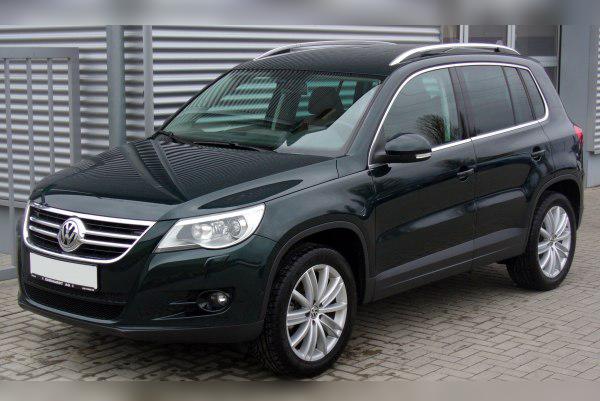
# Vehicles powered by this engine
Key Takeaways (TL;DR)
- Proven technology: The CFFD belongs to the EA189 Common Rail generation, which is mechanically far more reliable than the old "Pumpe Duse" engines.
- Power vs. Weight: With 110 hp, this engine is the bare minimum optimum for the Tiguan. It’s no racer; overtaking requires planning.
- EGR valve and DPF: These are the most sensitive points, especially if the vehicle has gone through the “Dieselgate” software update.
- Major service: It uses a timing belt. Although the factory says 210,000 km, in practice it should be replaced earlier.
- Fuel consumption: Very economical for an SUV, but in the city the body weight takes its toll.
- Ideal purchase for: Drivers looking for a reliable family SUV who don’t care about performance, but about longevity and low fuel consumption.
Contents
VW 2.0 TDI CFFD (110 hp) – Experiences, issues, fuel consumption and buying used
The engine with the code CFFD is one of the entry-level variants of the 2.0 diesel in the first generation of the Volkswagen Tiguan (facelift models). It belongs to the EA189 family with Common Rail injection. This unit was developed as a response to the need for a more economical, quieter and more environmentally friendly engine compared to the old PD (Pumpe Duse) units.
Although 110 horsepower on paper seems modest for a vehicle that weighs over 1,500 kg empty, this engine was a popular choice for fleet sales and for buyers who wanted the reliability of the 2.0 block with lower registration and insurance costs. Its architecture is almost identical to the more powerful 140 hp versions, which gives it a large mechanical reserve and longevity, provided it is properly maintained.
Technical Specifications
| Specification | Data |
|---|---|
| Engine displacement | 1968 ccm |
| Power | 81 kW (110 hp) |
| Torque | 280 Nm at 1750–2750 rpm |
| Engine code | CFFD |
| Injection system | Common Rail (Piezo injectors) |
| Charging type | Turbocharger (VGT) + Intercooler |
Reliability and Maintenance
When we talk about the “major service”, it’s important to know that the CFFD engine uses a timing belt for the valvetrain, not a chain. This is actually good news, because timing belts on these engines are quieter and more predictable than the chains on some other VW engines of that era. The factory replacement interval is optimistically set at 210,000 km. However, as an experienced editor, I recommend shortening that interval. Due to material aging and harsh operating conditions (city driving, temperature variations), the major service should be done at 160,000 to 180,000 km or every 5 to 7 years, whichever comes first. When replacing the belt, the water pump must also be replaced, as it is a known weak point and can start leaking before the official interval.
As for lubrication, the sump holds approximately 4.3 liters of oil (always buy 5 liters). Since this engine has a DPF filter, it is mandatory to use oil that meets the VW 507.00 specification. Most often this is a 5W-30 grade. If you use oil that is not “Low SAPS” (low ash), you will permanently damage the DPF filter.
Oil consumption is present, but not alarming as with older models. It is considered normal for the engine to consume between 0.3 to 0.5 liters of oil per 10,000 km. If you have to top up a liter every 1,000 km, this indicates an issue with the piston rings or the turbocharger.
The most common failures affecting this engine are not related to the block itself (pistons and crankshaft), but to the peripherals. The EGR valve (exhaust gas recirculation valve) tends to stick due to soot buildup. Symptoms include loss of power, entering “safe mode” and the “Check Engine” light coming on. Also, the EGR cooler can fail, which leads to coolant loss without visible leaks under the car (the coolant goes into the engine).
The injectors on this Common Rail system have proven to be significantly more durable than on the old PD engines. With good-quality fuel, they easily last 250,000–300,000 km. Symptoms of bad injectors are rough idle, increased smoke under acceleration and harder starting. However, they are not a systemic problem of this engine.
Specific Parts (Costs)
Like every modern diesel, the CFFD in the Tiguan has a dual-mass flywheel. Its lifespan directly depends on driving style. City driving, hard acceleration from low revs and towing a trailer will “kill” it quickly. Symptoms of wear are metallic rattling when switching off the engine and vibrations in the clutch pedal. The replacement cost (clutch kit + flywheel) is high (depends on the market) and is one of the bigger expenses.
The engine uses a single turbocharger with variable geometry (VGT). The turbo is generally robust, but the variable geometry mechanism can seize up from soot if the car is driven “pensioner-style”. The symptom is a sudden loss of power during overtaking (overboost) and going into limp mode. A rebuild is possible and the cost is moderate.
The vehicle is equipped with a DPF filter and an EGR valve. The DPF filter often clogs if the Tiguan is driven exclusively in the city. The system requires regular runs on open roads in order to perform regeneration. Symptoms of a clogged DPF are frequent regenerations (elevated idle speed, radiator fan running even after the engine is switched off).
AdBlue system: First-generation Tiguans with the CFFD engine (Euro 5 standard) in most cases do not have an AdBlue system (SCR catalyst), but rely only on the DPF and EGR. However, there are rare “BlueMotion” variants or later models towards the end of production that may have this system. The easiest way to check is to open the fuel filler flap – if there is no smaller blue cap next to the diesel cap, you don’t have AdBlue, which is one less worry (and cost).
Fuel Consumption and Performance
Let’s be realistic: 110 hp and 280 Nm in a tall SUV like the Tiguan is not a recipe for sporty performance. The engine can be described as “adequate” for relaxed driving. In the city it feels agile thanks to the torque available from low revs, but on open roads at speeds above 100 km/h you feel the lack of power when overtaking, especially if the car is loaded with passengers and luggage. In those situations you’ll have to use the gearbox more often.
Real-world fuel consumption:
In strictly city driving, expect between 7.5 and 9.0 liters per 100 km. Weight and poor aerodynamics play a big role here.
On rural roads (single carriageway), consumption drops to an impressive 5.0 to 5.5 liters.
On the motorway, at 130 km/h, the engine spins at a pleasant 2,200–2,400 rpm (in 6th gear) and uses about 6.5 to 7.0 liters.
Additional Options and Modifications
Since the CFFD engine is hardware-wise very similar (often identical in key components such as the block and head) to the more powerful 140 hp version (CFFB), it has huge potential for remapping (Stage 1). It can safely be taken to 140–150 hp and around 340 Nm of torque.
This modification drastically changes the character of the vehicle – the Tiguan becomes livelier, overtaking is safer, and fuel consumption during normal driving can even slightly decrease. Still, keep in mind that the higher torque puts additional stress on the clutch and dual-mass flywheel.
Gearbox
The CFFD 110 hp engine in the Tiguan most commonly comes with a 6-speed manual gearbox. This gearbox is precise, robust and rarely fails. The only regular expense related to it is replacement of the clutch kit and dual-mass flywheel. Oil change in the manual gearbox is not prescribed by the factory (“lifetime fill”), but it is strongly recommended every 100,000 km to preserve the bearings and synchros.
Automatic gearboxes (DSG) are rarer in combination with the weakest diesel and front-wheel drive in this generation, but if you come across one, it is most likely a DQ500 (7-speed, wet clutch) if it’s 4Motion, or a DQ250 (6-speed, wet clutch). The most common DSG issues are related to the mechatronics unit and clutch pack wear.
Key rule for DSG: Oil and filter must be changed every 60,000 km. If you don’t have proof this has been done, skip that car. Rebuilding a DSG gearbox is very expensive.
Buying Used and Conclusion
Before buying a Tiguan with this engine, make sure to check the following:
- Cold start: The engine must start immediately, without long cranking and without clouds of white or blue smoke.
- Flywheel noise: Listen for knocking while the engine is idling and whether the sound changes when you press the clutch.
- Diagnostics: Check DPF load (soot mass) and injector correction values.
- Coolant leaks: Look around the timing belt area for traces of coolant (water pump).
Conclusion: The VW Tiguan 2.0 TDI (CFFD) with 110 hp is a choice of reason, not of passion. It is intended for drivers whose priorities are low fuel consumption, cheaper registration and proven mechanics, and who are willing to sacrifice performance. If you are a calm family driver who spends most of the time in the city and on country roads, this is an excellent choice. If you often drive a fully loaded car on the motorway or enjoy faster driving, look for the 140 hp version or plan a Stage 1 remap right after purchase.
Was this content useful to you?
Your opinion helps us to improve the quality of the content.