BWK, CAVA Engine
- Engine
- 1390 cm3
- Aspiration
- Turbocharging and Supercharger, Intercooler
- Fuel
- Petrol (Gasoline)
- Fuel injection system
- Direct injection
- Power
- 150 hp @ 5800 rpm
- Torque
- 240 Nm
- Cylinders
- 4
- Valves
- 16, 4 per cylinder
- Cylinders position
- Inline
- Valvetrain
- DOHC
- Oil capacity
- 4 l
- Systems
- Start & Stop System
# Vehicles powered by this engine
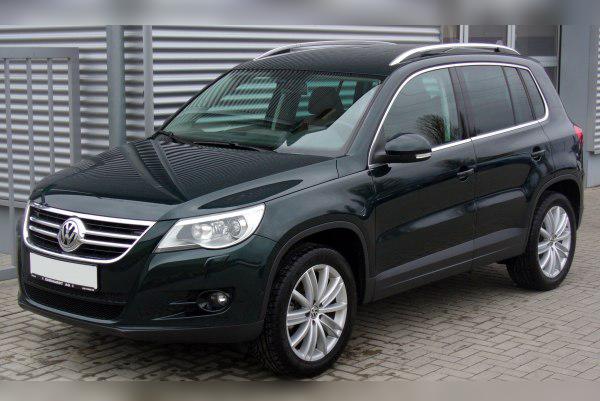
VW Tiguan 1.4 TSI (BWK, CAVA) – Experiences, problems, fuel consumption and used-car buying tips
Key points (TL;DR)
- Technology: This is a "Twincharger" engine – it uses both a supercharger and a turbocharger for linear power delivery.
- Biggest risk: Piston and piston ring failure (especially with BWK code) due to poor-quality fuel or detonation.
- Timing: It uses a timing chain that is prone to stretching and skipping if not replaced preventively.
- Performance: Excellent power-to-displacement ratio; a Tiguan with this engine is not “sluggish”, but it is very sensitive to maintenance.
- Fuel consumption: Because of the vehicle’s weight and SUV body shape, city consumption is significantly higher than the official figures.
- Maintenance: Requires strict adherence to service intervals and top-quality oil. This is not an engine for people who cut corners on parts.
Contents
Introduction: VW Tiguan 1.4 TSI – A revolution with a price
The 1.4 TSI engine with codes BWK and CAVA represents Volkswagen’s bold step into the era of downsizing. Installed in the first-generation Tiguan, this unit had a tough task: to replace larger naturally aspirated engines (such as the 2.0 FSI) while offering the same torque with, at least in theory, lower fuel consumption.
The key feature of these engines is the Twincharger system. At low revs a mechanical supercharger is engaged, eliminating turbo lag, and at higher revs a conventional turbocharger takes over. The result is an impressive 150 hp and 240 Nm from just 1.4 litres of displacement. However, this complexity also brought specific mechanical challenges that every potential owner must be aware of before buying.
Technical specifications
| Specification | Data |
|---|---|
| Displacement | 1390 ccm |
| Power | 110 kW (150 hp) at 5800 rpm |
| Torque | 240 Nm at 1750–4000 rpm |
| Engine codes | BWK, CAVA |
| Injection type | Direct injection (TSI/FSI) |
| Forced induction | Turbo + Supercharger (Twincharger) |
| Emissions standard | Euro 4 / Euro 5 (depending on model year and code) |
Reliability and maintenance
Chain or belt?
BWK and CAVA engines use a timing chain. Unfortunately, this is one of the weakest points of this engine. The factory chain is prone to stretching, and the hydraulic chain tensioner can fail. Symptoms include a metallic rattling noise on cold start (first few seconds). If ignored, the chain can skip, causing piston-to-valve contact – a complete engine failure. The recommendation is preventive replacement of the complete chain kit, guides and tensioner.
Most common failures and the “Achilles’ heel”
The most serious problem, especially on early BWK units, is piston or piston ring failure. Due to high boost pressure and possible detonation (poor-quality fuel), the ring lands can crack. Symptoms include loss of compression, rough idle and blue smoke. CAVA engines were slightly revised (stronger pistons), but the risk still exists if the engine is driven hard while cold or if poor fuel is used.
Another common issue is the magnetic clutch on the water pump. The water pump on this engine is complex because via a pulley and magnetic clutch it also drives the mechanical supercharger. If you hear squealing or the clutch does not engage the supercharger (loss of low-end power), the entire pump needs to be replaced.
Service intervals and oil
This engine takes approximately 3.6 to 4.0 litres of oil (always check with the dipstick). Only fully synthetic oil of grade 5W-30 or 5W-40 that meets VW specifications (VW 504.00 / 502.00) is recommended.
Oil consumption: These engines are known to consume some oil. The manufacturer tolerates up to 0.5 L/1000 km, but in practice a healthy engine should not consume more than 1–1.5 litres between services. Increased consumption may indicate a problem with the turbocharger or, as mentioned above, the piston rings.
Minor service: Although VW specifies LongLife intervals (30,000 km), for the health of the chain and turbo, change the oil every 10,000–12,000 km at most or once a year. Major service: The chain has no fixed replacement interval, but in practice it becomes risky after around 100,000–120,000 km.
Spark plugs and ignition coils
Spark plugs on the 1.4 TSI Twincharger should be replaced every 40,000 to 60,000 km. It is advisable to use high-quality iridium plugs (NGK or Bosch). Due to high temperatures and pressures in the cylinders, a bad plug can cause detonation (“knocking”), which is a direct cause of piston failure. Ignition coils are also wear items and should be replaced when the engine starts to misfire or jerk.
Specific parts (costs)
Dual-mass flywheel and clutch
Yes, this engine uses a dual-mass flywheel. Even though it’s a petrol engine, the 240 Nm of torque and the need to protect the gearbox require this part. Its lifespan is generally longer than on diesels, but replacement is still a significant expense. Failure manifests as knocking at idle that disappears when you press the clutch, or vibrations under acceleration.
Fuel injection system
The engine uses direct injection (GDI). Injectors are generally reliable but sensitive to fuel quality. A bigger issue than the injectors themselves is carbon build-up on the intake valves. Since fuel does not wash over the valves (as on older port-injected engines), carbon deposits accumulate and gradually restrict airflow, leading to power loss and rough running. Cleaning (“decoking”) may be required at higher mileages.
Turbo and supercharger
This engine has one turbocharger and one mechanical (Roots-type) supercharger. The typical lifespan of the turbo is around 150,000–200,000 km, depending on driving style and oil change frequency. A common problem is a sticking wastegate valve or actuator. The supercharger itself is mechanically robust, but its drive (via the water pump) is a weak point.
EGR and emissions
This engine does not have a DPF filter (that’s for diesels), but it does have a catalytic converter. It is also equipped with an EGR system for exhaust gas recirculation. The EGR valve can get dirty from city driving, but it can often be cleaned instead of replaced. AdBlue fluid is not used on this engine.
Fuel consumption and performance
City driving: Expectations need to be realistic. The Tiguan is a heavy SUV with the aerodynamics of a “brick”. Although the engine is only 1.4 litres, real-world city consumption is between 10 and 12 litres per 100 km. In heavy traffic and winter conditions, it can easily go higher.
Is the engine “sluggish”? Absolutely not. Thanks to the supercharger that provides boost right off idle and the turbo that takes over later, the engine pulls well across the entire rev range. 0–100 km/h takes under 10 seconds, which is perfectly acceptable for a family SUV. The driving feel is better than the numbers on paper suggest.
Motorway: On the open road the situation is better. At 130 km/h in sixth gear, the engine spins at around 3,000–3,200 rpm. Fuel consumption then stabilises at about 8 to 9 litres. Thanks to direct injection and turbocharging, overtaking is safe and does not require frequent downshifts.
Additional options and modifications
LPG conversion
Since this is a direct-injection engine, LPG conversion is complex and expensive (very expensive). A special system is required (“Direct Liquid Mechanical” or a system that also injects a small amount of petrol to cool the injectors). Considering the cost of installation and the age of these vehicles, economic viability is questionable unless you cover very high annual mileage. A classic sequential LPG system cannot be installed here.
Remapping (Stage 1)
The engine can be remapped to around 170–180 hp and 280–300 Nm. However, as an editor, I do not recommend remapping this particular engine, especially the BWK variant. The pistons are already under significant thermal and mechanical stress from the factory. Further increasing boost pressure drastically raises the risk of piston failure and timing chain issues. Leave it at stock settings for longevity.
Gearbox
6-speed manual gearbox: Very precise and robust. Failures are rare and mostly limited to normal wear of the clutch kit and dual-mass flywheel. An oil change in the gearbox is recommended every 60,000–80,000 km, even though VW claims it is “lifetime fill”.
Automatic gearbox: On first-generation Tiguan 1.4 TSI models, depending on drivetrain (FWD or 4Motion) and model year, different variants can be found, including DSG.
- If it is a 6-speed DSG (DQ250) with wet clutch: It is more reliable, but requires oil and filter changes strictly every 60,000 km.
- If it is a 7-speed DSG (DQ200) with dry clutch (more common on FWD models): This gearbox is more problematic. The most common failures are the mechatronics unit and premature clutch pack wear. Repairs are expensive.
Buying used and conclusion
Buying a used Tiguan with the 1.4 TSI Twincharger engine requires caution. This is a technological gem that, if not properly maintained, turns into a money pit.
What to check before buying?
- Cold start: Insist that the engine is completely cold. Listen carefully during the first 3–5 seconds after starting. If you hear rattling or chain noise, budget for a timing chain replacement.
- Test drive: Accelerate hard in higher gears from 1500 rpm. There should be no hesitation or “stuttering” (a sign of issues with spark plugs, coils or compression).
- Water pump: Check for traces of coolant leaks and listen for squeaking noises from the belt area.
- Diagnostics: Always check for misfire counts on individual cylinders. If present, it can be something minor (spark plug) or catastrophic (cracked piston).
Final verdict
The VW Tiguan 1.4 TSI (BWK, CAVA) is aimed at drivers who want petrol-engine performance and comfort, cover moderate annual mileage (up to about 15,000 km), and for whom high city fuel consumption is not a decisive factor.
If you are choosing between these two engine codes, CAVA (later versions) is a slightly safer choice than BWK due to revised pistons, but both require a meticulous service history. If your budget allows, look for facelifted models (after 2011/2012) where many early issues were resolved, or consider the 2.0 TDI if you drive high mileage annually.
Was this content useful to you?
Your opinion helps us to improve the quality of the content.