DCB Engine
- Engine
- 2995 cm3
- Aspiration
- Turbocharger, Intercooler
- Fuel
- Petrol / electricity
- Fuel injection system
- Direct injection
- Power
- 340 hp
- Torque
- 450 Nm
- Cylinders
- 6
- Valves
- 24, 4 per cylinder
- Cylinders position
- V-engine
- Valvetrain
- DOHC
- Oil capacity
- 7.6 l
- Systems
- Start & Stop System, Particulate filter
# Vehicles powered by this engine
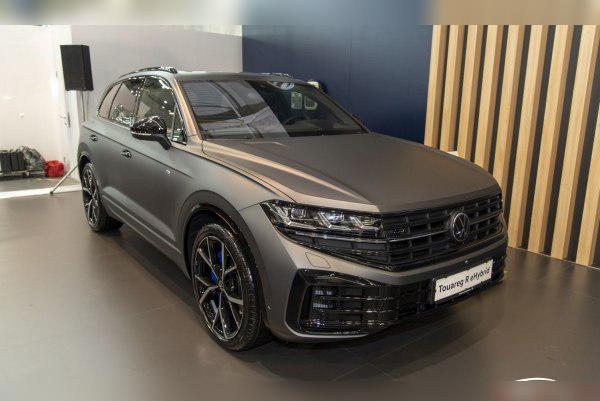
VW 3.0 V6 TFSI (DCB) eHybrid – Experiences, problems, fuel consumption and maintenance of the Touareg R
Key points (TL;DR)
- Powerful hybrid system: The combination of a V6 turbo petrol engine and an electric motor delivers impressive performance, but also high complexity.
- Timing chain: The engine uses a timing chain located at the rear of the engine (towards the gearbox), which makes any repairs expensive (engine removal).
- Fuel consumption: Varies drastically. With a full battery in the city: 0 l/100 km; with an empty battery on the motorway it easily exceeds 10–12 l/100 km.
- Maintenance: Requires strict adherence to oil and spark plug change intervals. Sensitive to poor-quality fuel.
- Thermal load: The “Hot V” configuration (turbocharger inside the V) generates high temperatures, so the cooling system is a critical point.
- Gearbox: Robust ZF 8-speed automatic (Tiptronic), very reliable with regular maintenance.
Contents
- Introduction and applications
- Technical specifications
- Reliability and maintenance
- Specific components and injection system
- Fuel consumption and performance
- Additional options and LPG
- Gearbox and drivetrain
- Used-buying tips and conclusion
Introduction and applications
The engine with the code DCB (often considered part of the EA839 family) represents the pinnacle of modern Volkswagen technology when it comes to six-cylinder petrol engines paired with a hybrid drivetrain. This 3.0 V6 TFSI unit is the heart of the most powerful Volkswagen Touareg III R eHybrid model.
Unlike older naturally aspirated engines or diesels that used to dominate the SUV segment, this engine combines direct injection, a turbocharger and electric assistance to deliver sports-car performance with (theoretically) low emissions. It is a complex engineering project that requires an owner who understands what they are driving and how it needs to be maintained.
Technical specifications
| Parameter | Value |
|---|---|
| Displacement | 2995 cc (3.0 L) |
| Configuration | V6 (90-degree angle) |
| Power (ICE only) | 250 kW (340 hp) |
| System power (Hybrid) | 340 kW (462 hp) – in the R version |
| Torque (ICE only) | 450 Nm |
| System torque | 700 Nm |
| Injection type | Direct injection (TFSI) |
| Charging method | Twin-scroll turbocharger (single turbo in the V) |
| Engine code | DCB / DCBE |
Reliability and maintenance
Timing system: chain or belt?
This engine uses a timing chain. However, it is important to know that the chain system (there are several chains) is located at the rear of the engine, next to the gearbox (flywheel side). This was done from an engineering standpoint for better weight distribution and compactness, but it is a nightmare for mechanics.
Although the chain is designed to last “a long time”, in practice stretching or issues with the tensioners can appear after 150,000–200,000 km (or earlier with poor maintenance). A rattling noise on cold start (lasting longer than 2–3 seconds) is the first warning sign. Replacing the chain requires removing the engine, which makes the job very expensive (expensive to very expensive, depending on the market).
Most common failures
In addition to potential timing chain issues at higher mileage, owners and mechanics report the following:
- Coolant leaks: Due to the “Hot V” configuration (turbo between the cylinder banks), temperatures are extreme. Plastic parts of the cooling system, thermostat housings and valves in the V-section are prone to cracking and leaking.
- PCV valve (oil separator): Failure of this valve can lead to increased oil consumption and a whistling noise from the engine.
- Carbon buildup: As a direct-injection engine, the intake valves are not “washed” by fuel, so deposits build up over time, which can reduce power and cause rough running.
- Hybrid system electronics: Although not directly part of the ICE, sensors and high-voltage cables in the engine bay are exposed to heat, which can cause hybrid system faults.
Major and minor service
Since the engine has a chain, a classic “major service” (as with a timing belt) is not done preventively at a fixed mileage; instead, the condition of the chain is monitored. However, the auxiliary (serpentine) belt and related pulleys are replaced at around 120,000 km or based on condition.
Oil capacity: The engine takes approximately 7.5 to 8.0 litres of oil (check precisely by VIN, as sumps can vary). Oil grade: VW insists on specification VW 508.00 / 509.00, which is usually a 0W-20 oil. This “thin” oil is used to reduce friction and fuel consumption, but many enthusiasts and mechanics in warmer climates or with more spirited driving recommend switching to VW 504.00 (5W-30) for better protection, but only if the vehicle manual for your market explicitly allows it.
Oil consumption
Modern TFSI engines are much better than older generations in this regard. Still, consumption of 0.5 to 1 litre per 10,000 km is considered completely normal and acceptable, especially with hard driving. If it uses more than that, first check the PCV valve and the turbocharger.
Spark plugs
On this petrol engine, the spark plugs are heavily stressed due to turbocharging and frequent cold starts (hybrid operation). The recommended replacement interval is 60,000 km, although for “chipped” cars or in severe operating conditions it is advisable to shorten this to 40,000 km. Use only iridium or platinum plugs to OEM specification.
Specific components and costs
Dual-mass flywheel
Yes, this model has a flywheel adapted for the automatic gearbox. In the hybrid, the situation is specific because there is an electric motor between the engine and the gearbox. A vibration-damping system is present and can be expensive to replace if play develops, which manifests as knocking when the engine is switched off or vibrations at idle.
Injection system and turbo
The system uses high-pressure direct injection. The injectors are precise (piezo), but sensitive to poor fuel quality. They are not as problematic as on older diesels, but replacing a full set is expensive (expensive to very expensive).
The engine uses a single twin-scroll turbocharger located inside the V-block. Its lifespan is long (over 200,000 km with regular oil changes), but shutting the engine off immediately after hard driving is detrimental. Fortunately, the hybrid system often has electric pumps that continue circulating coolant even after the engine is turned off.
GPF, EGR and AdBlue
As a modern petrol engine (Euro 6d and newer), it has a GPF filter (Gasoline Particulate Filter). Unlike diesels, it clogs less because petrol exhaust gas temperatures are higher. However, driving exclusively on electric power and then suddenly starting a cold engine for short trips can cause problems in the long run.
There is an EGR valve for emissions control. It can get dirty, but far less often than on diesels. AdBlue: NO. This is a petrol engine; AdBlue is used only on diesel engines.
Fuel consumption and performance
Real-world city consumption
This is the trickiest question for a PHEV (plug-in hybrid).
Scenario A (full battery): Fuel consumption is 0–2 l/100 km. You drive on electric power until the battery is depleted (realistically 35–45 km of range).
Scenario B (empty battery): Once the battery is empty, the engine has to haul a heavy body (Touareg + batteries = over 2.4 tonnes). Then city consumption is 12–16 l/100 km.
Performance and “sluggishness”
The engine is anything but sluggish. The combined output of 462 hp and 700 Nm makes this heavy SUV “fly”. 0–100 km/h takes about 5 seconds. The electric motor fills in the “gap” until the turbo spools up, so throttle response is instant. The feeling of weight disappears under acceleration, but you can feel it under braking and in fast corners.
Motorway and cruising
On the motorway, the hybrid system helps less. There the V6 petrol does most of the work. At 130 km/h, fuel consumption is around 9.5–11.5 l/100 km. Thanks to the 8-speed gearbox, at 130 km/h the engine turns at a low 1,800–2,000 rpm, which makes driving extremely quiet and comfortable.
Additional options and modifications
LPG conversion
Technically, it is possible to install a liquid direct-injection LPG system, but this is economically unviable and technically risky for this model. The system is too complex (hybrid + turbo + direct injection), installation would cost a small fortune (very expensive), you would lose boot space due to the batteries, and the savings would be questionable because even on LPG the engine has to use a certain amount of petrol to cool the injectors. Recommendation: do not install LPG.
Remapping (Stage 1)
The engine has great potential. With a simple remap of the petrol engine (Stage 1), ICE power can be raised from 340 hp to around 380–400 hp, and torque to 550–600 Nm.
Caution: On hybrids you must be very careful. The increase in torque must be matched to the limits of the automatic gearbox and the electric motor. Overly aggressive tuning can lead to battery overheating or clutch pack slip inside the gearbox.
Gearbox
Type of gearbox
In the Touareg, this engine is paired exclusively with an automatic gearbox. It is the famous ZF 8HP (8 speeds), which VW markets as “Tiptronic”. This is not a DSG (dual-clutch) gearbox, but a traditional automatic with a torque converter, which is excellent news.
Most common gearbox issues and maintenance
The ZF 8HP is one of the best gearboxes in the world. Failures are rare and mostly the result of neglected maintenance.
Symptoms of problems: Jerking when shifting from 1st to 2nd gear, hesitation when setting off, or oil leaks from the gearbox pan (which is plastic).
Gearbox service: Although VW often states that the oil is “lifetime”, the gearbox manufacturer (ZF) strongly recommends changing the oil and filter (pan) every 80,000 to 120,000 km or 8 years. Replacement is mandatory if you want the gearbox to last. The service cost is in the “moderately expensive” category.
There is no clutch replacement cost in the classic sense as with a manual gearbox, but overhauling the torque converter or clutch packs inside the automatic is a very expensive repair.
Buying used and conclusion
When buying a Touareg with this engine, make sure to check:
- Noise at cold start: Listen for the chain. Any rattling from the rear of the engine is a red flag.
- Signs of coolant leaks: Look into the V-section of the engine (under the plastic cover). The sweet smell of coolant indicates a leaking thermostat module.
- Hybrid battery condition: Use diagnostics to check the battery SOH (State of Health). Battery replacement is extremely expensive.
- Service history: Oil must have been changed at a maximum of every 15,000 km, not 30,000 km (Long Life), if you want longevity.
Conclusion:
The DCB engine in the Touareg R is a fantastic piece of engineering. It offers sports-car performance in a luxury SUV body, with the option of silent city driving. It is intended for buyers who have the budget not only for purchase, but also for meticulous (and not exactly cheap) maintenance. It is not for those who want to save fuel on long-distance trips – diesel is still king there. This is an engine for enjoyment and prestige.
Was this content useful to you?
Your opinion helps us to improve the quality of the content.