EA888 / CYRC Engine
- Engine
- 1984 cm3
- Aspiration
- Turbocharger, Intercooler
- Fuel
- Petrol (Gasoline)
- Fuel injection system
- Direct injection and Multi-port manifold injection
- Power
- 249 hp
- Torque
- 370 Nm
- Cylinders
- 4
- Valves
- 16, 4 per cylinder
- Cylinders position
- Inline
- Valvetrain
- DOHC
- Oil capacity
- 5.2 l
- Systems
- Start & Stop System
# Vehicles powered by this engine
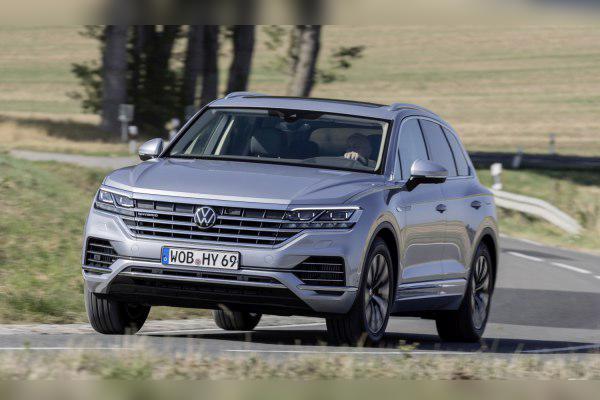
2.0 TSI (EA888 Gen 3b / CYRC) – Experiences, issues, fuel consumption and used-buying guide
Key points (TL;DR)
- Timing system: It is driven by a chain. This generation (Gen 3b) has solved the tensioner issues that plagued older models, but the chain still needs to be checked at higher mileage.
- Cooling system: The weakest point. The thermostat housing and water pump are made of plastic and prone to leaking or cracking.
- Gearbox: In the Touareg III this engine is paired with the excellent ZF 8‑speed automatic (Tiptronic), not a DSG. That’s great news for reliability.
- Oil consumption: Significantly lower than on older TFSI/TSI engines, but with aggressive driving or high mileage, topping up is still a reality.
- Performance in a heavy body: Even though it has 249 hp, the Touareg is a heavy car. The engine is adequate, but it lacks the torque “punch” that the V6 diesels have.
- Recommendation: An excellent choice for those who want to avoid the complications of modern diesels (AdBlue, DPF in city driving) and don’t rack up huge motorway mileage.
Contents
Introduction: 2.0 TSI in a large SUV?
The engine with the code CYRC belongs to the well‑known EA888 Gen 3b family from the Volkswagen Group. This is a “Miller cycle” (or B‑cycle) engine, optimized for efficiency under partial load. Installing a four‑cylinder 2.0 engine in the massive VW Touareg III (weighing over 2 tons) may seem like a risky move, but thanks to modern turbocharging technology, this unit changes the perception of what is “enough” power.
This engine is primarily aimed at markets that are turning away from diesel or have strict tax laws based on engine displacement. It is a ticket into the world of luxury SUVs, offering refined operation without diesel vibrations, but with certain compromises in terms of fuel consumption.
Technical specifications
| Parameter | Data |
|---|---|
| Displacement | 1984 cc (2.0 L) |
| Power | 183 kW (249 hp) @ 5000-6000 rpm |
| Torque | 370 Nm @ 1600-4500 rpm |
| Engine code | CYRC (EA888 Gen 3b) |
| Injection system | TSI (Direct injection + multipoint in certain modes) |
| Forced induction | Turbocharger (IHI IS20 variant), intercooler |
| Camshaft drive | Chain (timing chain) |
Reliability and maintenance
Does this engine have a timing belt or a chain?
This engine uses a timing chain. Unlike the notorious earlier generations of EA888 engines (where chains failed before 100,000 km), the Gen 3b used in the Touareg CR has a significantly improved tensioner system and a higher‑quality chain. Still, the chain is not “lifetime”. It is recommended to check its condition (stretch) via diagnostics or visually after around 150,000 km. A symptom of trouble is a metallic rattling on cold start that lasts longer than 2–3 seconds.
What are the most common failures on this engine?
The biggest weak point of this engine is the thermostat and water pump. They are integrated into a single module (Thermal Management Module) made of plastic. Due to the high temperatures this engine runs at, the plastic deforms and coolant starts to leak. Symptoms include loss of coolant without a visible puddle under the car (because it evaporates on the block) or engine overheating.
Another common issue can be the PCV valve (oil separator), whose failure leads to rough running, whistling noises from the engine and increased oil consumption.
At what mileage is the “major service” done?
Since it has a chain, the classic “major service” (timing belt replacement) doesn’t exist in that sense. However, the serpentine belt with tensioners and the water pump (if it hasn’t already started leaking) are usually replaced preventively at around 120,000 – 150,000 km. The chain is only replaced if stretch is confirmed.
How many liters of oil does it take and what grade?
The engine takes approximately 5.7 liters of oil. For Gen 3b engines, VW often recommends 0W‑20 (VW 508.00 / 509.00 standard) for fuel economy and the specific “B‑cycle” operation. However, many experienced mechanics advise switching to 5W‑30 (VW 504.00) if you live in warmer climates or drive the car hard, for better oil film protection at high temperatures.
Oil consumption – myth or reality?
The EA888 Gen 3b is drastically better than its predecessors. Consumption of around 0.5 liters per 10,000 km is completely normal and acceptable. If the engine uses more than 0.5 liters per 1,000 km, that points to an issue with the piston rings or the PCV valve. Regular oil changes every 10,000 – 12,000 km (and not at the factory‑stated 30,000 km) are key to preventing oil consumption issues.
Spark plugs and injectors
Given that this is a turbocharged petrol engine with direct injection, spark plugs should be replaced every 60,000 km (or 4 years). Using worn spark plugs can lead to ignition coil failure; there are 4 coils (one per cylinder).
Specific parts (costs)
Dual‑mass flywheel
The Touareg with this engine comes exclusively with an automatic gearbox (torque converter). It does not have a conventional dual‑mass flywheel like manual or DSG models, where it is a wear item. It has a flexplate that connects the engine and the converter, and this part is extremely durable and rarely needs replacement. This is a major saving compared to DSG models.
Injection system and turbo
This engine uses a combination of direct (FSI) and port (MPI) injection (depending on the market and specific revision, some are DI only). The injectors are generally reliable but sensitive to poor fuel quality. The turbocharger (IHI IS20) is water‑cooled and very robust. With regular maintenance, the turbo’s lifespan exceeds 200,000 km. Failures are most often related to the electronic actuator (wastegate) rather than the turbine itself.
Emissions: DPF, GPF, EGR, AdBlue
- GPF (Gasoline Particulate Filter): Yes, newer models (from 2018/2019) have a GPF filter (the petrol equivalent of a diesel DPF). It rarely clogs because exhaust gas temperatures on petrol engines are higher, so passive regeneration happens constantly.
- EGR: Petrol engines use a different exhaust gas recirculation concept. It is often implemented via variable valve timing (internal EGR), so there is no conventional EGR valve that clogs with soot like on diesels.
- AdBlue: This engine does NOT have AdBlue. That is reserved exclusively for diesels.
Fuel consumption and performance
Real‑world fuel consumption
Be realistic – this is a petrol engine in a vehicle weighing over 2 tons with all‑wheel drive.
- City driving: Expect between 12 and 15 l/100 km. In heavy stop‑and‑go traffic, the figure can easily be higher.
- Country roads: It is possible to get down to 8 – 9 l/100 km with a gentle right foot.
- Motorway (130 km/h): Consumption is around 10 – 11 l/100 km.
Is the engine “lazy”?
With 249 hp and 370 Nm, the engine is not “lazy” in the sense that it can’t pull, but it lacks the ease of the 3.0 TDI V6 with 600 Nm. The engine has to rev higher to move the Touareg’s mass during overtakes, which results in more noise and a spike in fuel consumption. It reaches 100 km/h in about 6.8 seconds, which is respectable, but the driving impression is that the engine is working harder than a diesel.
Motorway cruising
Thanks to the 8‑speed gearbox, at 130 km/h the engine spins at a relatively low 2,000 – 2,200 rpm, which contributes to cabin quietness.
Additional options and modifications
LPG conversion
This engine has direct injection. LPG conversion is possible but very expensive (systems for direct liquid‑phase injection or setups that use a petrol‑LPG mix). The price of a quality system can be over 1,000 – 1,200 EUR (depending on the market). Given the engine’s complexity, the risk of injector overheating and the cost of installation, the economic benefit is questionable unless you drive very high annual mileage.
Chiptuning (Stage 1)
EA888 engines are known for their strong tuning potential. A Stage 1 remap safely raises power to around 290 – 310 hp and torque to over 420 – 440 Nm. This significantly improves the driving characteristics of the heavy Touareg. However, keep in mind that higher torque puts additional stress on drivetrain components.
Gearbox
Which gearbox is used?
This is where the story gets really good. The Touareg III (CR) does not use a dual‑clutch DSG gearbox. It uses a conventional automatic with a torque converter – the famous ZF 8HP (8‑speed), which VW markets as “Tiptronic”.
Gearbox failures and maintenance
This is probably the best automatic gearbox on the market. It is extremely reliable, smooth and quick. It doesn’t suffer from mechatronics or clutch issues like DSG units.
- Oil change: Although VW often states that the oil is “lifetime fill”, the gearbox manufacturer (ZF) strictly recommends changing the oil and filter (the sump is integrated with the filter) every 80,000 to 100,000 km. The service is not cheap (depends on the market), but it is crucial for longevity.
- Clutch costs: There is no clutch kit replacement as with manual or DSG gearboxes. Torque converter overhauls are only done at very high mileage (300k+ km) if issues arise.
Buying used and conclusion
When buying a used Touareg with the 2.0 TSI engine, pay attention to the following:
- Signs of coolant leaks: Look around and under the intake manifold (thermostat housing). A “sweet” smell from the engine bay is a sign of a leak.
- Cold start: The engine should run smoothly immediately after starting. Any chain rattle lasting more than a couple of seconds is a red flag.
- Gearbox service history: If the car has over 100,000 km, check whether the oil in the ZF gearbox has been changed.
Conclusion:
The VW Touareg 2.0 TSI (249 hp) is an excellent choice for drivers who live in cities with strict emissions regulations or simply don’t like diesels. You get top‑class comfort, quietness and solid performance while avoiding issues with AdBlue systems and clogged DPF filters. The main compromise is high fuel consumption in city driving. Overall maintenance is cheaper than on V6 TDI models (less oil, no DPF/AdBlue, simpler system), but don’t expect it to be as cheap to run as a Golf – this is still a premium‑segment vehicle.
Was this content useful to you?
Your opinion helps us to improve the quality of the content.