CKDA Engine
- Engine
- 4134 cm3
- Aspiration
- Turbocharger, Intercooler
- Fuel
- Diesel
- Fuel injection system
- Diesel Commonrail
- Power
- 340 hp @ 4000 rpm
- Torque
- 800 Nm
- Cylinders
- 8
- Valves
- 32, 4 per cylinder
- Cylinders position
- V-engine
- Oil capacity
- 9.4 l
- Systems
- Particulate filter
# Vehicles powered by this engine
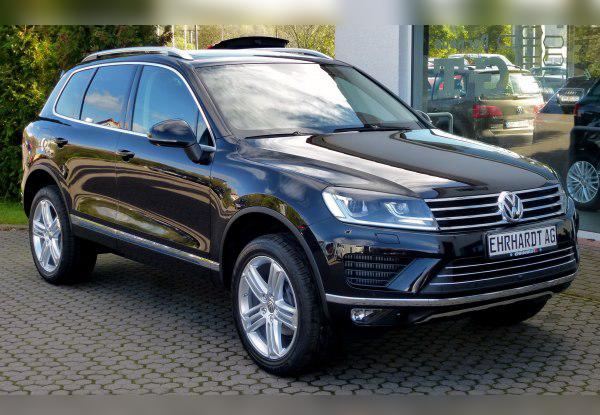
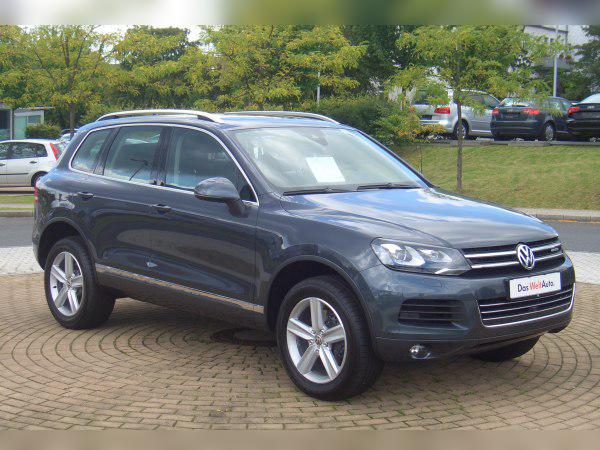
VW 4.2 TDI V8 (CKDA) – Experiences, problems, fuel consumption and buying used
Key points (TL;DR)
- Truck performance, sedan comfort: With 800 Nm of torque, this is one of the most powerful diesel engines in its class, ideal for towing heavy trailers.
- Complex timing system: The engine uses chains located at the rear of the engine. Replacement is extremely expensive and requires engine removal.
- Two turbochargers: The twin-turbo system provides linear power delivery, but potential failures mean double the cost.
- Fuel consumption: Surprisingly economical on the open road, but in city traffic it "gulps" fuel (expect over 13–14 liters).
- Maintenance: Not for shallow pockets. Parts are expensive, and access to the engine bay is tight, which increases labor costs.
- Gearbox: Comes exclusively with the top-notch 8-speed Aisin automatic, which is more reliable than DSG gearboxes in this torque class.
Contents
- Introduction and applications
- Technical specifications
- Reliability and maintenance
- Specific parts and costs
- Fuel consumption and performance
- Additional options and modifications
- Gearbox and drivetrain
- Buying used and conclusion
Introduction: The last true V8 diesel giant
The engine with the code CKDA represents the top of the range in the second generation of the Volkswagen Touareg (7P). It is a 4.2-liter V8 TDI unit that replaced the older V10 engines, bringing better efficiency, lower weight and more modern common-rail technology.
This engine is not just "a means of transport", it is a statement of power. It was installed in the Touareg both before and after the facelift (2014+), giving drivers the feeling of endless power. Unlike its smaller 3.0 TDI sibling, the 4.2 TDI is intended for those who want sports-car performance in a heavy SUV body, and who often tow speedboats, horse trailers or camper trailers. It is important to note that this engine is technically very similar to the one in the Audi A8 and Q7, which guarantees a premium pedigree, but also premium maintenance costs.
Technical specifications
| Specification | Value |
|---|---|
| Engine displacement | 4134 cc (4.2 L) |
| Configuration | V8 (8 cylinders in V layout) |
| Power | 250 kW (340 hp) @ 4000 rpm |
| Torque | 800 Nm @ 1750–2750 rpm |
| Engine code | CKDA |
| Injection type | Common Rail (Bosch), piezo injectors |
| Charging | Bi-turbo (two turbochargers with variable geometry) |
| Camshaft drive | Chain (multiple chains at the rear of the engine) |
Reliability and maintenance
Timing system: Chain or belt?
The CKDA engine uses a chain system to drive the camshafts. Although the chain is designed to last "for the lifetime of the engine", in practice this is not always the case, especially on vehicles with high mileage and extended oil change intervals.
Main issue: The chains are located at the rear of the engine (towards the gearbox/cabin). If the chain stretches (you can hear rattling on cold start that does not disappear after 3 seconds) or the tensioners fail, the engine has to be removed. This makes the job extremely expensive due to the large number of labor hours, even though the parts themselves are not that expensive compared to the value of the vehicle (depends on the market).
Most common failures and symptoms
Although the engine block (CGI cast) is virtually indestructible, the peripherals can cause problems:
- Oil leaks: Often occur at the junction between engine and gearbox, as well as on valve covers. Due to the tight space, fixing leaks is complicated.
- Coolant leaks: Plastic parts in the "V" area (between the cylinder heads) are exposed to high temperatures and eventually crack. The symptom is loss of coolant without a visible puddle under the car (because the fluid evaporates on the hot block).
- Alternator and starter: On some versions they are water-cooled or buried deep in the engine bay. Overhauling them is expensive due to difficult access.
Service intervals and oil
There is no major service in the classic sense (as with a timing belt), but it is recommended to check and, if necessary, replace the auxiliary (serpentine) belt and its tensioners at around 100,000–120,000 km.
Oil: This engine takes a huge amount of oil – approximately 9.5 liters (always check by VIN, it can vary by +/- 0.5 L).
Only fully synthetic 5W-30 oil that meets the strict VW 507.00 specification (because of the DPF filter) is recommended.
Oil consumption: V8 TDI engines can consume some oil, but this should not be alarming. Consumption of 0.5 to 1 liter per 10,000 km is considered acceptable, especially if driven aggressively on the highway. If it consumes more than that, check the turbochargers and for leaks.
Injectors
The CKDA uses advanced Bosch piezo injectors. They are generally reliable and can easily exceed 250,000 km with good-quality fuel.
Failure symptoms: Rough idle, increased fuel consumption, smoke when accelerating or difficult starting. Overhauling piezo injectors is difficult and often unsuccessful, so they are usually replaced with new or factory-refurbished units, which is very expensive (depends on the market).
Specific parts (costs)
Dual-mass flywheel
Since this engine is paired exclusively with an automatic gearbox (Tiptronic), it does not have a conventional dual-mass flywheel like manual gearboxes or DSG units. It has a drive plate (flexplate) for the automatic, which connects the engine to the torque converter. This part very rarely fails. So there is no characteristic knocking and the cost of flywheel replacement every 150k km.
Turbochargers
The engine has two turbochargers (bi-turbo). One operates at lower, and both at higher revs/load. Their lifespan is long (over 200,000 km) with regular oil changes. However, the actuators (electronic controllers) on the turbos can fail. If a turbocharger fails, it is recommended to replace them as a pair or at least thoroughly check the other one, because they work in synchronization. The cost is high.
DPF, EGR and AdBlue
All CKDA engines in the second-generation Touareg have a DPF filter and an EGR valve.
- DPF: If you drive only in the city, it will clog quickly. These engines need open road to reach the temperature required for regeneration.
- EGR: The EGR cooler is prone to internal coolant leaks, which the engine can "swallow".
- AdBlue: Most models (especially facelift and those with the "BlueMotion" badge) have an SCR system with AdBlue fluid. A common issue is the AdBlue tank heater or pump, which can cause a dashboard warning and prevent the engine from starting ("No start in 1000 km"). Repair involves replacing the pump/heater module.
Fuel consumption and performance
Real-world fuel consumption
Do not be fooled by factory figures. This is a heavy car with a large engine.
- City driving: Expect between 12 and 16 l/100 km, depending on traffic and how heavy your right foot is. In winter it can be even higher.
- Open road (secondary roads): It is possible to get it down to around 8–9 l/100 km with smooth driving.
- Highway (130 km/h): It uses around 10–11 l/100 km.
Performance: Is it "lazy"?
Absolutely not. With 800 Nm of torque available from just 1750 rpm, this engine makes the heavy Touareg (over 2.2 tons) feel like it’s been launched from a slingshot. In-gear acceleration is brutal. Overtaking is almost a matter of thought – you press the throttle and you’re already past.
At 130 km/h the engine cruises at very low revs (around 1800–2000 rpm in 8th gear), which contributes to cabin quietness and relatively acceptable fuel consumption on long journeys.
Additional options and modifications
Remapping (Stage 1)
The 4.2 TDI responds extremely well to remapping. A safe Stage 1 (software only) can raise power to around 380–400 hp, and torque to a monstrous 900–950 Nm. However, before doing this, make sure that the gearbox and cooling system are in perfect condition. The gearbox can handle high torque, but approaching the 1000 Nm mark can shorten its lifespan if driven aggressively.
Gearbox
Which gearbox is used?
The CKDA engine is always paired with an 8-speed automatic gearbox from the Japanese manufacturer Aisin (code TR-80SD / AL1000). This is NOT a DSG dual-clutch gearbox. It is a conventional automatic with a torque converter.
Gearbox reliability and maintenance
This is one of the best gearboxes on the market for heavy vehicles. It is very robust and handles high torque much better than DSG. It shifts smoothly and almost imperceptibly.
- Failures: They are rare. Sometimes you may notice a jolt when shifting from "R" to "D" or harsher shifts in lower gears if the oil is old or the gearbox software is outdated.
- Service: Although VW often claims the oil is "LongLife" (lifetime fill), Aisin (the manufacturer) recommends replacement. Always change the gearbox oil every 60,000 to 80,000 km. This is the key to longevity. Use only the specified ATF oil.
Buying used and conclusion
What to check before buying?
- Cold start: Listen to the engine when it is completely cold. Chain rattling longer than 2–3 seconds is a red flag and a potential cost of several thousand euros.
- Leaks: Put the car on a lift. Remove the plastic engine undertray. Look for oil traces at the junction between engine and gearbox.
- Diagnostics: Check injector correction values and DPF filter status (ash loading).
- Gearbox: It must shift imperceptibly, both cold and hot. Try hard acceleration; there must be no slipping.
Conclusion
The VW Touareg with the 4.2 V8 TDI (CKDA) engine is a vehicle for enthusiasts and for those with specific needs (heavy towing, frequent long-distance trips). It is not meant for short city runs. Maintenance is expensive – on par with premium brands like Porsche (with which it shares a platform), but in return you get one of the best and most powerful diesel powertrains ever made. If you find a well-maintained example and are prepared to pay for proper maintenance, this engine will put a smile on your face every time you touch the accelerator pedal.
Was this content useful to you?
Your opinion helps us to improve the quality of the content.