BJN, CFRA Engine
- Engine
- 5998 cm3
- Aspiration
- Naturally aspirated engine
- Fuel
- Petrol (Gasoline)
- Fuel injection system
- Multi-port manifold injection
- Power
- 500 hp @ 6000 rpm
- Torque
- 550 Nm @ 3500 rpm
- Cylinders
- 12
- Valves
- 48, 4 per cylinder
- Cylinders position
- W-engine
- Valvetrain
- DOHC
- Oil capacity
- 14 l
- Coolant
- 10 l
# Vehicles powered by this engine
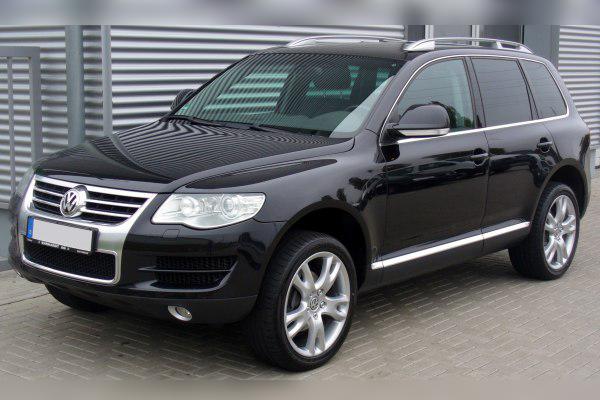
6.0 W12 (BJN, CFRA): Experiences, issues, fuel consumption and maintenance of the king of luxury
Key points (TL;DR)
- Supercar performance in an SUV body: With 500 hp, this engine (a combination of two VR6 engines) offers brutal acceleration and an unforgettable sound.
- Extreme maintenance costs: The engine is packed in very tightly; for many services (including replacement of oxygen sensors or timing chain) you need to remove the engine from the car.
- Fuel consumption is not for everyone: Expect average consumption of 16 to 25 liters per 100 km. In the city even more.
- Complex timing system: It uses a timing chain, which is generally durable, but if it stretches, the repair costs as much as a used smaller car (depending on the market).
- Exclusivity: This is a collector’s item. Parts are specific and often have long waiting times.
- Gearbox: It comes exclusively with an automatic transmission that handles high torque and requires regular maintenance.
Contents
- Introduction and applications
- Technical specifications
- Reliability and maintenance
- Specific parts and costs
- Fuel consumption and performance
- Additional options and modifications
- Transmission and drivetrain
- Buying used and conclusion
Introduction and applications
Volkswagen’s 6.0 W12 (engine codes BJN, CFRA) is an engineering marvel created under the direction of Ferdinand Piëch. It is an engine constructed by combining two VR6 blocks at a 72-degree angle. In the Volkswagen Touareg I (7L), this engine is a status symbol. It represents the top of the range and makes the Touareg one of the fastest SUVs of its time. The 500 hp version (Sport Edition or the petrol equivalent of the R50) is not just a means of transport, but a demonstration of power. Although it shares DNA with engines from Bentley and the VW Phaeton, in the Touareg it is adapted for all-wheel drive and off-road challenges, even though very few owners with this model ever leave the tarmac.
Technical specifications
| Specification | Value |
|---|---|
| Engine displacement | 5998 ccm (6.0 L) |
| Configuration | W12 (Two VR6 blocks) |
| Power | 368 kW (500 hp) |
| Torque | 550 - 600 Nm (depending on tune) |
| Engine codes | BJN, CFRA |
| Injection type | MPI (Multi-Point Injection) - indirect |
| Aspiration | Naturally aspirated |
Reliability and maintenance
Does this engine have a timing belt or a chain?
The engine uses a timing chain. The system is extremely complex and is located at the rear of the engine (next to the gearbox). Although the chain is designed to last “for life” (which in practice means around 250,000 - 300,000 km), its replacement requires removing the entire engine from the vehicle. Symptoms of problems are rattling on cold start or camshaft sensor errors.
What are the most common failures on this engine?
Although the core mechanics (pistons, crankshaft) are very robust, the peripherals are problematic:
- Cooling system: The engine runs very hot. Plastic hoses and junctions become brittle over time and crack, causing coolant leaks. The thermostat is hard to access.
- Ignition coils: There are 12 of them. They often fail due to the high temperatures under the bonnet, causing misfires.
- Oil leaks: Valve cover gaskets and crankshaft seals tend to start leaking after 10+ years.
- Sensors: Failures of MAF sensors or lambda sensors are common, and access to the O2 sensors is extremely difficult.
At what mileage is the major service done?
With this engine, a classic “major service” (as with a timing belt) does not exist at the same kind of interval. However, at around 150,000 - 200,000 km it is recommended to thoroughly check the chain, tensioners and guides, as well as replace all auxiliary belts (serpentine belt) that drive the accessories (alternator, AC, power steering). Replacing the serpentine belt is also challenging due to the lack of space.
How many liters of oil does this engine take and which grade is recommended?
This is a huge system. The engine takes approximately 12.5 to 13 liters of oil (depending on whether the filter is changed and how much drains from the oil cooler). It is recommended to use only high-quality synthetic oil of grade 5W-40 or 0W-40 that meets VW standards (e.g. VW 502 00 / 505 00).
Does it consume oil between services?
Yes, W12 engines are known to “drink” some oil, especially under aggressive driving. Consumption of 0.5 to 1 liter per 2,000 - 3,000 km is often considered acceptable for such a large engine. If it consumes more than 1L per 1,000 km, this indicates an issue with piston rings or valve stem seals.
At what mileage should the spark plugs be replaced?
Spark plugs should be replaced every 40,000 to 60,000 km. Keep in mind that the engine has 12 spark plugs and that replacement often requires removing parts of the intake manifold, which increases labor cost.
Specific parts (Costs)
Does the engine have a dual-mass flywheel?
Not in the classic sense. Since this Touareg comes exclusively with an automatic gearbox (Tiptronic), it uses a torque converter. There is no dual-mass flywheel as in manual gearboxes that is replaced as a wear item, but the converter itself can fail at high mileage.
What type of injection system does it have and are the injectors problematic?
The engine uses an MPI (Multi-Point Injection) system injecting into the intake manifold (unlike later FSI direct injection in some other VW models). The injectors are generally very reliable and not as sensitive as on diesels or FSI engines. They rarely cause problems unless extremely poor fuel is used or an electrical fault occurs.
Does the engine have a turbocharger?
No. BJN and CFRA are naturally aspirated engines. They do not have a turbocharger, which is one less thing to worry about. Power comes solely from the huge displacement and number of cylinders.
Does it have a DPF filter or EGR valve?
There is no DPF filter (because it’s a petrol engine) and no AdBlue. It does have an exhaust gas recirculation system (EGR) and a secondary air system (pumps that run on cold start to heat up the catalytic converters). The EGR valve can get dirty, but it can often be cleaned. A more common issue is secondary air pumps which can fail and trigger the “Check Engine” light.
Fuel consumption and performance
What is the real fuel consumption in city driving?
Be prepared for a shock. In heavy city traffic, real-world consumption ranges from 22 to 28 l/100km. In winter or with a “heavy right foot”, this figure easily exceeds 30 liters. This is not a car for stop-and-go driving if fuel prices worry you.
Is this engine “lazy” for the weight of the body?
Absolutely not. With 500 hp and 550+ Nm of torque available over a wide rev range, the Touareg W12 “launches” like a slingshot. Acceleration to 100 km/h takes about 5.9 seconds, which is impressive for a vehicle weighing almost 2.5 tons. The sense of power is linear and seemingly endless.
What is the engine like on the motorway and at what revs does it cruise?
This is the W12’s natural habitat. On the motorway it is king. At 130 km/h the engine runs relaxed, at around 2,200 - 2,500 rpm (thanks to the 6th gear). The ride is quiet, with no vibrations. Highway consumption can drop to around 13 to 16 l/100km with moderate driving.
Additional options and modifications
Is this engine suitable for LPG (autogas) conversion?
Theoretically – yes, because it has an MPI injection system. In practice – it is complicated and expensive. You need a system for 12 cylinders (usually two vaporizers and two LPG ECUs). Installation is very expensive, takes up a lot of space, and given the collector value of the W12 model, LPG conversion is often considered “sacrilege” and can reduce its value on resale.
How much can this engine be safely tuned (Stage 1)?
Since this is a naturally aspirated engine, “chipping” (remapping) does not bring dramatic results as with turbo engines. A realistic power increase is about 15 to 25 hp and about 20-30 Nm of torque. The main advantages of a remap are better throttle response and possibly removal of the speed limiter (V-max), but do not expect miracles.
Transmission
Which gearboxes are fitted?
The W12 engine comes exclusively with a 6-speed automatic gearbox (Tiptronic), manufactured by Aisin (code 09D). A manual gearbox was not an option because it could not provide the level of comfort expected in this class, and the clutch would struggle with the weight and power.
Most common automatic gearbox issues?
Aisin gearboxes are robust, but the W12 engine puts them to a hard test.
- Valve body: Solenoids can get dirty or worn, leading to harsh gear changes (“thumps” when shifting from 5th to 4th or when taking off).
- Overheating: Due to the high power, the transmission fluid gets hot. If the transmission oil cooler is not efficient, the oil can degrade and the clutches inside the gearbox can fail.
Costs and servicing of the gearbox?
VW often states that the oil is “lifetime”, but that is a myth. The transmission fluid and filter must be changed every 60,000 km. If the gearbox starts to “slam” into gears, rebuilding the valve body or the entire gearbox is very expensive (depending on the market, but count on 1,500 EUR and up).
Buying used and conclusion
Before buying a Touareg W12, make sure you do the following:
- Cold start: Listen for chain rattle in the first 3–5 seconds. If it rattles longer, walk away or prepare thousands of euros.
- Check for leaks: Put the car on a lift. The W12 engine fills the entire engine bay, so it is hard to see leaks from above. Look at the junction between engine and gearbox.
- Diagnostics: Check for misfire codes on all cylinders and the condition of the catalytic converters.
- Suspension and air suspension: The heavy engine (the W12 is massive) wears front suspension components faster and puts extra stress on the air springs.
Final conclusion
The VW Touareg 6.0 W12 is not a car for everyone. It is a demonstration of prestige and engineering. It is intended for collectors and enthusiasts who have the budget not only for the purchase, but also for the steep maintenance and fuel costs. If you are looking for a reliable family SUV, look at a diesel or V6 petrol. If you want a unique 12-cylinder sound and a feeling of power every time you touch the throttle, and costs do not worry you – this is one of the most interesting sleeper cars ever made.
Was this content useful to you?
Your opinion helps us to improve the quality of the content.