BLE, BWF Engine
- Engine
- 4921 cm3
- Aspiration
- Twin-Turbo, Intercooler
- Fuel
- Diesel
- Fuel injection system
- Pump-nozzle (Unit Injector)
- Power
- 313 hp @ 3750 rpm
- Torque
- 750 Nm @ 2000 rpm
- Cylinders
- 10
- Valves
- 20, 2 per cylinder
- Cylinders position
- V-engine
- Valvetrain
- SOHC
- Oil capacity
- 11.5 l
- Coolant
- 13 l
- Systems
- Particulate filter
# Vehicles powered by this engine
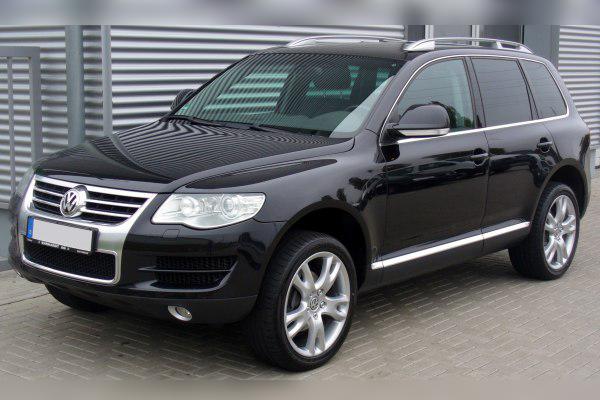
VW 5.0 V10 TDI (BLE, BWF): An engineering marvel, a maintenance nightmare and incredible power – experiences and issues
Key points (TL;DR)
- Monstrous torque: With 750 Nm, this engine pulls like a locomotive; the vehicle’s weight is barely noticeable.
- Gear-driven timing: No timing belt or chain – the engine uses a cascade of gears, which is a permanent solution, but with a “catch”.
- Expensive maintenance: For most serious jobs (turbo, alternator, manifolds) you usually need to pull the engine out.
- Fuel consumption: Not for shallow pockets – city driving easily exceeds 17–18 liters.
- Sensitivity to oil: Using the wrong oil destroys camshafts and turbo bearings.
- Gearbox: The automatic transmission is under enormous stress and requires regular maintenance.
- Conclusion: A fantastic engine for enthusiasts who have the budget to maintain it; a risky purchase for the average driver.
Contents
Introduction: The V10 TDI legend
Volkswagen’s 5.0 V10 TDI is a relic of an era when Ferdinand Piëch wanted to prove that VW could build anything, regardless of cost and complexity. Installed primarily in the first-generation Touareg (and the Phaeton), this engine is essentially two inline five-cylinders joined together. The codes BLE and BWF refer to later variants used in the facelift models (from 2006 onwards), where BWF is specific in that it came from the factory with a DPF filter (Euro 4 standard), while BLE was often delivered without a DPF for certain markets. This is an engine you buy with your heart and maintain with a “credit card”. Its presence on the road commands respect, but also fear among mechanics who don’t have the special tools.
Technical specifications
| Specification | Data |
|---|---|
| Displacement | 4921 cc (5.0 L) |
| Configuration | V10 (90 degrees) |
| Power | 230 kW (313 hp) @ 3750 rpm |
| Torque | 750 Nm @ 2000 rpm |
| Engine codes | BLE, BWF |
| Injection type | Pumpe-Düse (PD) – unit injector |
| Turbo | Twin-turbo (two variable-geometry turbochargers) |
Reliability and Maintenance
Does this engine have a timing belt or chain?
Neither. The 5.0 V10 TDI uses gear-driven timing. In theory this is a “lifetime” solution because there is no chain to stretch or belt to snap. However, the system is extremely complex. While the gears themselves rarely cause trouble, the auxiliary units (alternator, A/C compressor) are driven via specific elastic couplings (Gates couplings) and one-way bearings. These couplings must be replaced preventively at around 150,000 km. If they fail, you lose charging or air conditioning, and access for replacement is extremely difficult.
What are the most common failures on this engine?
The list is specific and expensive:
- Cracked exhaust manifolds: A common issue. The manifolds crack from heat and vibration, which leads to exhaust gases entering the cabin and loss of turbo power.
- Camshaft wear: This is a direct consequence of using the wrong oil. PD engines put enormous stress on the cam lobes.
- Tandem pumps: They can leak and mix oil with diesel or let fuel into the cooling system.
- Flaking of the cylinder plasma coating: A catastrophic failure on older blocks, less common on BLE/BWF but possible with poor maintenance. The engine loses compression and burns oil.
At what mileage is the “major service” done?
The classic “major service” (belts) doesn’t exist here. Instead, every 150,000 km it is recommended to replace the mentioned elastic couplings (Gates couplings) and the one-way bearings of the alternator and A/C compressor. The water pump is also gear-driven and should be inspected. This service is expensive due to labor hours.
How many liters of oil does this engine take and which grade is recommended?
This is a crucial question. The engine takes a massive 11.5 liters of oil.
WARNING:
If you have a BWF (with DPF), you must use oil to VW 507.00 specification (usually 5W-30).
If you have a BLE (without DPF, depending on market), some sources still strictly recommend VW 506.01 (0W-30) because of specific bearings, although VW later unified recommendations to 507.00. Still, check the exact recommendation by VIN, because the wrong oil will destroy this engine in less than 30,000 km.
Does it consume oil between services?
Yes, the V10 TDI is known for oil consumption. Usage of 0.5 to 1 liter per 2,000–3,000 km is not unusual, especially with aggressive driving. Anything over 1 L per 1,000 km points to a problem with the turbos or piston rings/cylinders.
How long do the injectors last and how reliable are they?
The engine uses 10 Pumpe-Düse (PD) units. They are generally robust and can easily exceed 250,000 km without issues. However, the problem is not the injectors themselves but the seals (O-rings) around them. When the seals fail, diesel enters the oil (oil level rises) or the system loses fuel pressure (hard starting). Refurbishing all 10 units is a very expensive job (depends on the market).
Specific Parts (Costs)
Does the engine have a dual-mass flywheel?
This model comes exclusively with an automatic gearbox, so it does not have a classic dual-mass flywheel like manual transmissions. Instead, it has a torque converter. There is, however, a “drive plate” (flex plate) connecting the engine and gearbox, which rarely fails.
Does this engine have one or two turbochargers and what is their lifespan?
It has two variable-geometry Garrett turbochargers (twin-turbo), one for each bank (5 cylinders). Each has its own electronic actuator. Their lifespan is around 200,000–250,000 km, depending on oil quality and driving style (cooling down after highway runs).
The problem: To replace or overhaul the turbochargers, the engine has to come out. This drastically increases the repair cost.
Does this model have a DPF filter or EGR valve?
The BWF engine has a factory DPF filter and it is prone to clogging, especially in city driving, because the engine rarely reaches full operating temperature on short trips. BLE engines often don’t have a DPF (Euro 3/4 hybrid depending on market).
Both engines have two EGR valves. They often clog with soot, which causes the engine to choke and produce black smoke. Cleaning is possible, but replacement is a more permanent solution.
Does this engine use AdBlue?
No, this generation (7L facelift) of the V10 engine does not have an AdBlue system. It relies on sheer displacement, catalytic converters and (on BWF) the DPF filter for emissions control.
Fuel Consumption and Performance
What is the real fuel consumption in city driving?
Be prepared for a shock. In heavy city traffic, this engine in the heavy Touareg consumes between 16 and 22 liters per 100 km. In winter and on short trips, the trip computer often shows even more.
Is this engine “lazy” for the weight of the body?
Absolutely not. With 750 Nm available from just 2000 rpm, the V10 TDI “plays” with the 2.5-ton weight. The feeling of acceleration is violent, similar to an airplane taking off. In-gear acceleration is brutal and overtaking becomes a routine operation.
How does the engine behave on the highway?
This is its natural habitat. At 130 km/h the engine runs at very low revs (around 2200 rpm in 6th gear) and is almost silent. Fuel consumption on the open road drops to a tolerable 10 to 12 liters with normal driving. Top speed is electronically limited or reaches around 225–230 km/h.
Additional Options and Modifications
How far can this engine be safely tuned (Stage 1)?
The engine has huge potential. With a Stage 1 remap, power easily rises to 350–360 hp, and torque to a frightening 850+ Nm.
Warning: Although the engine can handle it, the automatic gearbox is at its limit. The stock transmission is designed to handle roughly 750–800 Nm. Aggressive chip tuning can drastically shorten the life of the torque converter and clutch packs in the gearbox.
Gearbox
Which gearboxes are used?
The V10 TDI (BLE, BWF) was paired exclusively with a 6-speed Tiptronic automatic gearbox (manufacturer Aisin, code 09D / TR-60SN). A manual gearbox was not an option because it wouldn’t be able to handle that much torque while keeping the clutch usable for a human leg.
What are the most common automatic gearbox failures?
The main enemies are torque and heat.
- Valve body: Symptoms are harsh shifts (especially from 5th to 4th or when taking off).
- Torque converter: It can slip or cause vibrations at constant speed.
- Cooling: The gearbox has its own thermostat and cooler; if they clog, overheating of the transmission is guaranteed.
At what mileage should the gearbox be serviced?
Although VW often says “sealed for life”, that is misleading. On this engine, the gearbox oil and filter must be changed every 60,000 km. This is critical for the longevity of the valve body.
Buying used and Conclusion
What should you check before buying?
- Driveshaft: The center bearing of the driveshaft often fails (you hear knocking under the armrest area).
- Air suspension: The V10 usually comes with air suspension. Check whether the car “sags” overnight and whether the compressor runs quietly.
- Starting: The engine should fire up instantly, without long cranking. Long cranking indicates a fuel pressure issue (injector seals or tandem pump).
- Diagnostics: Check injector corrections and DPF status (on BWF models).
Final verdict:
The VW Touareg V10 TDI (BLE/BWF) is not a car for everyone. It is intended for enthusiasts who want ultimate power, the sound of a V10 and prestige, and who are ready to pay for it through high fuel consumption and very expensive maintenance (often involving engine removal). If you are looking for a reliable family SUV on a budget, stay away from this engine and look for the 3.0 V6 TDI. If you want a collectible example of engineering overkill and have the budget for unexpected expenses – the V10 is an unforgettable experience.
Was this content useful to you?
Your opinion helps us to improve the quality of the content.