BKS, CATA Engine
- Engine
- 2967 cm3
- Aspiration
- Turbocharger, Intercooler
- Fuel
- Diesel
- Fuel injection system
- Diesel Commonrail
- Power
- 225 hp @ 3500 rpm
- Torque
- 550 Nm
- Cylinders
- 6
- Valves
- 24, 4 per cylinder
- Cylinders position
- V-engine
- Valvetrain
- DOHC
- Oil capacity
- 8.3 l
- Coolant
- 9 l
- Systems
- Particulate filter
# Vehicles powered by this engine
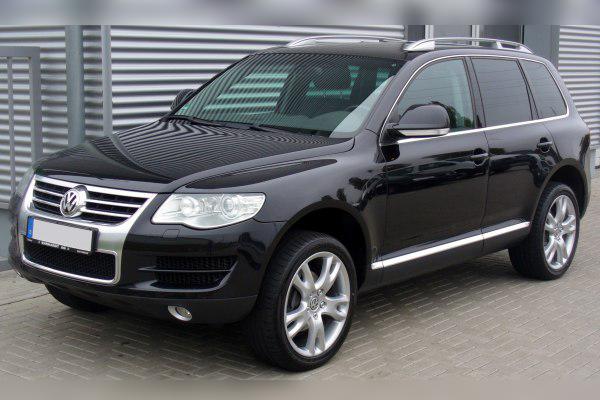
VW 3.0 TDI V6 (BKS, CATA) – Experiences, issues, fuel consumption and maintenance
Key points in short (TL;DR)
- Timing chain drive: Uses a complex chain system located at the rear of the engine. A rattling sound on cold start is a warning sign.
- Intake manifold: Known issue with the throttle body and swirl flaps in the intake manifold, which often triggers the “Check Engine” light.
- Injectors: Piezo injectors are sensitive to poor-quality fuel and expensive to replace, but they offer excellent performance.
- Fuel consumption: In the heavy Touareg, this is not a frugal engine in the city (expect a two-digit figure), but it is a king of highway cruising.
- BKS vs CATA: BKS is a standard Euro 4 engine (more common in Europe up to 2008/9), while CATA is a “Clean Diesel” with an AdBlue system (more complex to maintain).
- Recommendation: An excellent engine for towing and long-distance travel, provided you have the budget for preventive maintenance of the chain and injection system.
Contents
Introduction: The golden middle ground for a heavyweight
The 3.0 TDI V6 engine, especially in versions marked BKS and CATA, represents a turning point for the Volkswagen Group in the mid-2000s. Installed in the facelifted first-generation Touareg (7L), this engine arrived as a much-needed balance. It was far more refined and reliable than the problematic 2.5 TDI inline-five, and significantly more economical and easier to maintain than the monstrous V10 TDI unit.
This is the engine that gave the Touareg the character of a true luxury cruiser. Although it shares its base with Audi units, in the Touareg it is adapted for harsher operating conditions, trailer towing and off-road challenges. Still, the complexity of the V6 design brings certain costs that owners need to be aware of.
Technical specifications
| Specification | Data |
|---|---|
| Engine displacement | 2967 cc (3.0 L) |
| Configuration | V6 (90-degree angle) |
| Power | 165 kW / 225 hp |
| Torque | 550 Nm at 1750–2750 rpm |
| Engine codes | BKS (Euro 4), CATA (Euro 6 Clean Diesel) |
| Injection type | Common Rail (Piezo injectors) |
| Induction | Variable geometry turbocharger (VGT) + intercooler |
| Camshaft drive | Chain |
Reliability and maintenance
Timing system: Chain or belt?
This engine uses a chain system to drive the camshafts. It is a complex system located at the rear of the engine (next to the gearbox), which makes any major intervention expensive because the engine has to be removed. Although the chain is designed to be “lifetime”, in practice the hydraulic tensioners tend to wear out, usually after around 200,000 km.
Symptoms: A brief rattle on cold start. If the sound disappears after 2–3 seconds, it is often tolerated. If it lasts longer or can be heard with the engine warm, the chain is stretched or the tensioners have weakened, which requires urgent and costly work (depending on the market, but it is among the very expensive repairs).
Most common failures
Besides the chain, the best-known issue is the intake manifold swirl flaps. The plastic linkages that actuate these flaps wear out, which leads to an engine fault code (P2015). Symptoms are loss of power or just a warning light. The solution is to replace the intake manifolds (expensive) or repair them with aftermarket repair kits (cheaper solution). Also, the EGR cooler is known to develop leaks, which leads to coolant loss without visible traces of leakage under the car.
Service intervals and oil
A minor service is recommended every 10,000 to 15,000 km, or once a year. A major service in the classic sense (timing belt replacement) does not exist because the engine uses a chain, but the auxiliary (serpentine) belt with tensioners and the water pump is usually replaced at around 120,000–150,000 km or as needed.
This engine holds a large amount of oil – approximately 8.3 liters. A 5W-30 grade with VW 507.00 specification is recommended (especially important for models with a DPF filter).
Oil consumption: A healthy 3.0 TDI should not consume a significant amount of oil. Consumption of 0.5 to 1 liter per 10,000 km can be considered acceptable for older engines, but anything above that points to an issue with the turbocharger or piston rings.
Specific parts (costs)
Torque converter and injectors
Since your model is a Tiptronic (automatic), it does not have a conventional dual-mass flywheel that is replaced like on manual gearboxes. Instead, it has a torque converter, which is part of the gearbox and is rarely replaced as a wear item, except during a gearbox overhaul.
Injectors: BKS and CATA engines use Bosch Piezo injectors. They are very precise but sensitive. Their average lifespan is around 200,000–250,000 km. Symptoms of bad injectors: White smoke at idle, rough running, rising oil level (an injector is “leaking” fuel into the cylinder which then runs down into the sump). This is dangerous because diluted oil can destroy the engine. Repairing piezo injectors is difficult, so buying new or factory-refurbished ones is often recommended, which is very expensive (depending on the market).
Turbo, DPF, EGR and AdBlue
The engine has a single variable geometry turbocharger. It is very durable if the oil is changed regularly. Sometimes the electronic turbo actuator fails, which can be fixed without replacing the entire turbo.
DPF and EGR: Both systems are standard weak points of modern diesels in city driving. Clogging is a common problem if the car is used mainly on short trips.
AdBlue (Difference between BKS and CATA):
BKS: Usually does not have an AdBlue system (Euro 4), which makes it simpler and more desirable to maintain in regions with poorer fuel quality.
CATA: This is the “Clean Diesel” version intended primarily for the US market (but also found in Europe). It DOES have an AdBlue system.
AdBlue issues: The heater in the AdBlue tank often fails, as do the pump or the urea dosing injector. Repairs to this system are expensive (depending on the market), and software deletion is often the “solution” owners resort to once the car is out of warranty.
Fuel consumption and performance
City driving: To be realistic – the Touareg is heavy (over 2.2 tons) and has permanent 4Motion all-wheel drive. In the city, real-world consumption ranges from 11 to 14 l/100 km, and even more in winter. This is not an economical city car.
Highway: This is where the engine shines. At 130 km/h, the engine spins at a low 2200–2400 rpm (in 6th gear). Consumption drops to 8.5 to 10 l/100 km.
Is the engine sluggish? With 225 hp and 550 Nm, the engine is not sluggish. Torque is available low down, which makes the car “jump” at throttle input. Overtaking is safe, although the vehicle’s high mass can be felt under braking and in corners. For this body, the 3.0 TDI is the real minimum and the optimal choice.
Additional options and modifications
Chiptuning (Stage 1)
This engine is extremely suitable for remapping. From the factory it is “detuned” for emissions and model-range positioning reasons. A safe Stage 1 can raise power to around 260–270 hp and torque to over 600 Nm. This significantly improves throttle response and can even slightly reduce fuel consumption in normal driving because the engine moves the body more easily. However, before remapping, it is essential to check the condition of the injectors, timing chain and gearbox.
Gearbox
With this engine in the Touareg, the most commonly fitted transmission is the Aisin 6-speed automatic gearbox (Tiptronic). Manual gearboxes in this combination are extremely rare.
Automatic reliability: The Aisin gearbox is robust and can handle high torque, and is better than many competitors from that period. However, it is not indestructible. Most common failures: Wear of the valve body. Symptoms are harsh shifts (jerks) when changing gears, especially from 5th to 4th or when setting off.
Gearbox maintenance: Although the manufacturer often states that the oil is “lifetime”, in practice the oil and filter in the gearbox must be changed every 60,000 to 80,000 km. Regular changes drastically extend the life of the valve body and torque converter. The cost of an oil change is not negligible (depending on the market) due to the amount of oil and the procedure, but it is far cheaper than a gearbox overhaul.
Buying used and conclusion
When buying a Touareg with the 3.0 TDI engine, make sure to do the following:
- Cold start: Insist that the engine is completely cold. Listen to the chain. Rattling longer than 3 seconds is a red flag.
- Exhaust smoke: White smoke when warm = injector or cylinder head issue. Blue smoke = oil (turbo/rings).
- Diagnostics: Check injector corrections (values in measuring blocks 13 and 14) and DPF status (soot loading). Check for any faults related to intake flaps (P2015).
- Transfer case and driveshaft: Check whether the driveshaft knocks (common issue with the rubber center bearing) and whether the transfer case shifts without faults.
Final conclusion
The VW 3.0 TDI (BKS/CATA) in the Touareg is a powerful, refined and capable engine that offers an excellent compromise between performance and fuel consumption for a vehicle of this size. It is an ideal purchase for drivers who often travel on open roads or tow trailers.
However, it is not cheap to maintain. It requires an owner who is willing to pay for quality oil, fuel and preventive servicing. If you are looking for cheap “fill up and drive” ownership, this engine (and car) is not for you. If you are ready to maintain it properly, it will reward you with top-notch comfort and safety.
Was this content useful to you?
Your opinion helps us to improve the quality of the content.