CJZD, CYVB Engine
- Engine
- 1197 cm3
- Aspiration
- Turbocharger, Intercooler
- Fuel
- Petrol (Gasoline)
- Fuel injection system
- Direct injection
- Power
- 110 hp
- Torque
- 175 Nm
- Cylinders
- 4
- Valves
- 16, 4 per cylinder
- Cylinders position
- Inline
- Oil capacity
- 4 l
# Vehicles powered by this engine
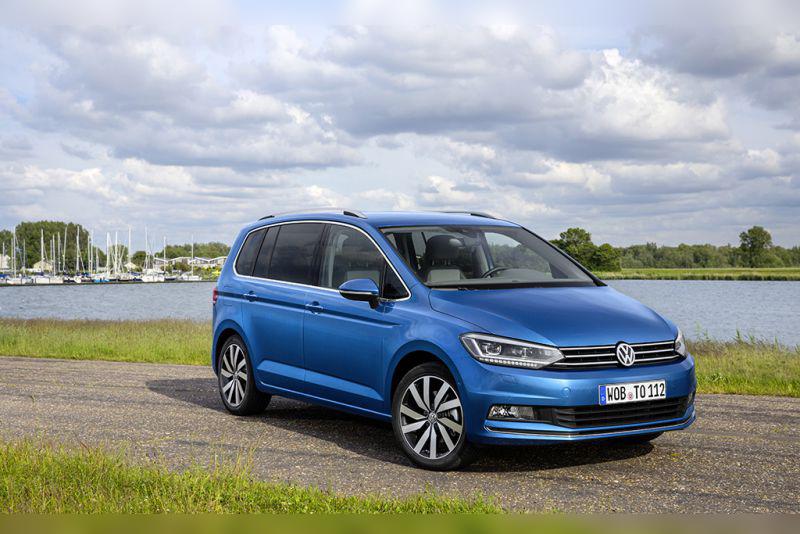
1.2 TSI (110 hp) CJZD / CYVB in VW Touran II – Experiences, problems, fuel consumption and used car buying guide
Key points (TL;DR)
- Big plus: This is the EA211 engine generation, which means it uses a timing belt, not the problematic chain from previous versions.
- Most common failure: The thermostat housing and water pump are prone to coolant leaks.
- Performance: With 110 hp and 175 Nm, this engine is adequate for city and country roads, but it lacks “breath” in a fully loaded Touran on the motorway.
- Oil consumption: Significantly lower than on older TSI engines, but still present with more aggressive driving.
- Gearbox: The manual gearbox is “indestructible” with regular maintenance, while the DSG (DQ200) with dry clutch requires caution and a careful check of the mechatronics.
- Recommendation: An excellent choice for family drivers who spend most of their time in city and suburban driving.
Contents
- Introduction: Small engine in a big body?
- Technical specifications
- Reliability and Maintenance: Belt or Chain?
- Specific Parts and Costs
- Fuel Consumption and Performance
- Additional Options and Modifications (LPG & Chip)
- Gearbox: Manual vs DSG
- Buying used and Conclusion
Introduction: Small engine in a big body?
When you open the hood of the massive second-generation Volkswagen Touran and see the small 1.2 TSI unit inside, most drivers’ first reaction is skepticism. However, the engines with codes CJZD and CYVB belong to the modern EA211 family. This is a key piece of information because it means that VW has corrected most of the “childhood diseases” that plagued the older generation (EA111).
This engine is designed to be the entry ticket into the world of the Touran – it offers lower registration costs, cheaper maintenance than a diesel and perfectly acceptable driving characteristics for the average user. Although the displacement of 1197 cc sounds modest, the turbocharger does the main job here.
Technical specifications
| Parameter | Data |
|---|---|
| Engine codes | CJZD, CYVB (EA211 series) |
| Displacement | 1197 cc (1.2 L) |
| Power | 81 kW (110 hp) at 4600–5600 rpm |
| Torque | 175 Nm at 1400–4000 rpm |
| Number of cylinders / Valves | 4 / 16v |
| Injection type | Direct injection (TSI/GDI) |
| Charging | Turbocharger + Intercooler (water-air) |
| Emission standard | Euro 6 |
Reliability and Maintenance: Belt or Chain?
The first and most important question everyone asks: Does this engine have a timing belt or a chain? Unlike the old 1.2 TSI engines that had a problematic chain prone to stretching, the CJZD and CYVB engines have a timing belt. This has drastically improved reliability. The belt is quiet, durable and does not snap suddenly.
Major and Minor Service
The manufacturer often states optimistic intervals for timing belt replacement (up to 210,000 km or 10 years), but real-world practice and mechanics’ experience say otherwise. The recommendation is to do the major service at 150,000 to 180,000 km or at the latest after 8–9 years of age, whichever comes first. A complete timing belt kit with water pump is not excessively expensive (Price: mid-range, depending on the market).
As for the oil, the sump holds approximately 4.0 liters. Fully synthetic oil of grade 5W-30 (VW 504.00/507.00 standard) is recommended, or for newer variants that require “long life” standards and lower viscosity, 0W-20 (VW 508.00). Check the exact specification in the service book or by VIN.
Oil consumption and Spark plugs
Does it consume oil? These engines are much better than their predecessors (EA111), but moderate oil consumption (up to 0.3–0.5 liters per 1,000 km according to factory specs, realistically around 1 liter between services) is possible, especially if the engine is often “revved” hard. If it consumes more than that, the problem may be the piston rings or valve stem seals, although this is rarer at lower mileage.
Since this is a petrol engine with direct injection, spark plugs are crucial for proper operation. Spark plugs should be replaced every 60,000 km. Do not skimp on them; bad plugs can damage the ignition coils (which are individual for each cylinder).
Most common failures
The weakest point of this engine is the thermostat housing and water pump. They are often made of plastic/composite that deforms over time from heat, which leads to coolant leaks. The symptom is a dropping coolant level in the expansion tank without visible puddles under the car (because the fluid evaporates on the hot block). Also, the turbo actuator (wastegate valve) can stick, which leads to loss of power and the “Check Engine” light coming on.
Specific Parts (Costs)
Dual-mass flywheel:
Good news for your wallet: Most 1.2 TSI models with a manual gearbox do not have a dual-mass flywheel, but use a classic solid flywheel. This significantly reduces the cost of clutch kit replacement. However, in models with a DSG gearbox the situation is different and the flywheel (which is part of the drivetrain) can be a notable expense.
Turbo and Injection:
The engine has a single turbocharger with variable geometry integrated into the exhaust manifold on some versions. Their service life is long with regular oil changes. If the engine is switched off hot immediately after fast driving, the turbo can fail earlier.
The injection system uses high-pressure injectors (Direct Injection). The injectors are generally reliable, but sensitive to poor fuel quality. The main issue with direct injection is carbon buildup on the intake valves because the fuel does not wash them. Symptoms are rough idle and a slight loss of power after 100,000+ km. Cleaning the valves (walnut shell blasting) is recommended at higher mileage.
Emissions (DPF, EGR, AdBlue):
This engine does not have a DPF filter (that’s for diesels), but newer models (from around 2017/2018 onwards) may have a GPF (Gasoline Particulate Filter). Check by model year. It does not use AdBlue. It does have an EGR valve, but on petrol engines it clogs less often than on diesels, although it is not immune to failure if the car is driven exclusively in the city.
Fuel Consumption and Performance
City driving:
The Touran is a heavy car with boxy aerodynamics. In real-world city driving, you can expect fuel consumption between 7.5 and 9.0 liters per 100 km. The start-stop system helps, but the weight takes its toll every time you pull away from a traffic light.
Is the engine “lazy”?
With 110 hp and 175 Nm available from just 1400 rpm, the car is surprisingly lively in the city and at speeds up to 80 km/h. However, if you load the Touran with 5–7 passengers and luggage, you will feel the lack of power on uphill sections. Overtaking on country roads requires downshifting and high revs.
Motorway:
The engine can easily maintain 130 km/h. At that speed, in sixth gear, the revs are usually around 2800–3000 rpm. The cabin is well insulated, so noise is not an issue. Fuel consumption on the motorway at 130 km/h is around 6.5–7.5 l/100 km, depending on wind and terrain.
Additional Options and Modifications
LPG conversion:
This is a direct-injection (TSI) engine. LPG installation is possible, but it is significantly more expensive and more complex than on conventional port-injection petrol engines. It requires a system that either uses liquid-phase LPG through the petrol injectors (very expensive) or a system that injects a mixture of petrol and LPG (to cool the petrol injectors). Cost-effectiveness is questionable unless you cover very high mileage (over 20–30k km per year).
Chip Tuning (Stage 1):
1.2 TSI engines can be remapped. A Stage 1 tune usually raises power to about 130–135 hp and torque to 200–215 Nm. This is clearly noticeable in driving; the car “breathes” more easily. However, keep in mind that the higher torque puts additional stress on the clutch (or DSG gearbox), so it is recommended only if the car is mechanically in perfect condition.
Gearbox: Manual vs DSG
With this engine in the Touran II you get two gearbox options:
- 6-speed manual gearbox: Precise, easy to operate and very reliable. Maintenance comes down to replacing the clutch kit (the cost is moderate because there is usually no dual-mass flywheel) and changing the gearbox oil preventively at around 100,000–150,000 km, even though VW claims it is “lifetime fill”.
- 7-speed DSG (DQ200): This is an automatic gearbox with a dual dry clutch. Although it offers comfort and lightning-fast gear changes, DQ200 is known for its sensitivity.
Most common failures: Wear of the clutch pack (symptom: shuddering when moving off or when shifting from 1st to 2nd gear) and failure of the Mechatronics unit (the electro-hydraulic unit that controls the gearbox). Mechatronics repair is expensive (depending on the market: expensive to very expensive). The oil in the mechatronics and gear section should be changed, even though the manufacturer does not insist on it – the recommendation is every 60,000 km to extend service life.
Buying used and Conclusion
When buying a used Touran 1.2 TSI, pay attention to the following:
- Cold start: Listen to the engine while it is cold. Although there is no chain, the camshaft phase variator can rattle if it is faulty.
- Signs of leaks: Look around the water pump and thermostat area (on the side of the engine). Pink deposits are a sign of coolant leakage.
- DSG test: If it is an automatic, release the brake on an uphill – the car should not roll back before the clutch engages, and it should not shudder during gentle take-off.
- Diagnostics: Check for any fault codes related to turbocharger pressure (wastegate) or misfires.
Conclusion:
The VW Touran II with the 1.2 TSI (110 hp) engine is a rational choice. It is not a racer, but it is significantly cheaper to maintain than a diesel (no DPF, no expensive injectors, often no dual-mass flywheel on manuals). It is primarily intended for urban families who use the car for school runs, shopping and occasional trips. If you plan to tow a trailer or drive on the motorway at high speeds on a daily basis, look for a 2.0 TDI. For everyone else, the 1.2 TSI is a perfectly sufficient and reliable partner.
Was this content useful to you?
Your opinion helps us to improve the quality of the content.