DKRB Engine
- Engine
- 999 cm3
- Aspiration
- Turbocharger, Intercooler
- Fuel
- Petrol (Gasoline)
- Fuel injection system
- Direct injection
- Power
- 116 hp
- Torque
- 190 Nm
- Cylinders
- 3
- Valves
- 12, 4 per cylinder
- Cylinders position
- Inline
- Oil capacity
- 4 l
- Systems
- Particulate filter
# Vehicles powered by this engine
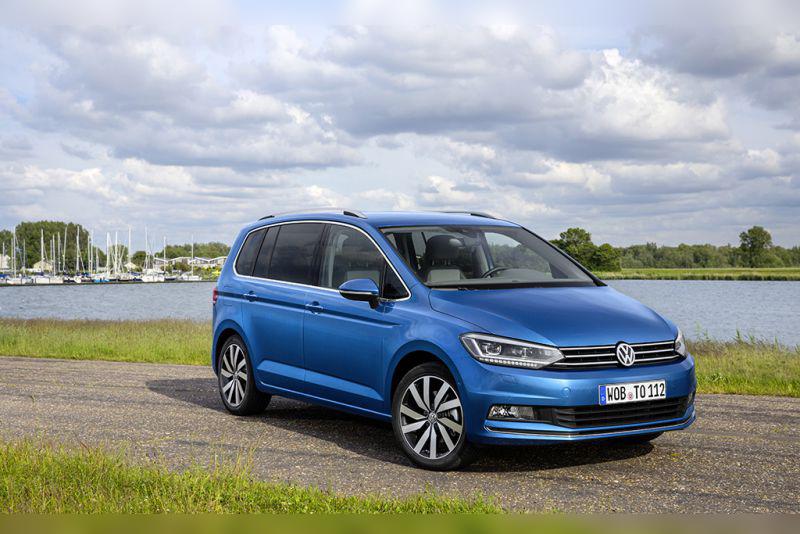
1.0 TSI (DKRB) in VW Touran: Experiences, problems, fuel consumption and used car buying guide
Key points (TL;DR)
- Small engine, big body: Although the 1.0 TSI seems weak for the Touran, 116 hp is perfectly adequate for city and moderate driving, but it runs out of breath under full load.
- Drive: It uses a timing belt, which is an improvement over older TSI engines with a chain.
- Fuel consumption: Very economical if driven gently, but it “gulps” fuel if you push it hard on the motorway.
- Dual-mass flywheel: Yes, this 116 hp version usually has one to reduce three‑cylinder vibrations.
- GPF filter: As a newer petrol engine, it has a particulate filter (OPF/GPF) that requires occasional driving on open roads.
- Recommendation: Ideal for families who mostly drive in the city and suburbs. Not for those who constantly tow a trailer or drive a fully loaded car uphill.
Contents
Introduction: Is 1.0 litre enough for a family MPV?
The engine with the code DKRB belongs to Volkswagen’s modern EA211 engine family. It is a three‑cylinder turbo petrol engine that produces 116 horsepower from one litre of displacement. Installing such a small engine in a Volkswagen Touran II (a serious family MPV) raises a lot of scepticism among traditional drivers who believe that “there’s no proper driving without a 2.0 diesel”.
However, technology has moved on. This engine was designed to replace the older 1.2 TSI and even the weaker 1.6 TDI engines. Its purpose is low exhaust emissions and efficiency in urban conditions, while maintaining decent performance thanks to the turbocharger. But like every modern downsized engine, it has its specific maintenance requirements and durability limits.
Technical specifications
| Specification | Data |
|---|---|
| Displacement | 999 cc (1.0 L) |
| Configuration | Inline, 3 cylinders |
| Power | 85 kW (116 hp) |
| Torque | 190 - 200 Nm (depending on tune/market) |
| Engine code | DKRB |
| Injection type | Direct injection (TSI) |
| Charging | Turbocharger + intercooler |
| Emission standard | Euro 6d-TEMP (usually with OPF filter) |
Reliability and maintenance
Belt or chain?
Unlike the old EA111 engines, which had a bad reputation due to timing chain stretch, the 1.0 TSI DKRB uses a timing belt. This is great news for owners. The belt is reinforced and designed to last a long time. The manufacturer often states a replacement interval of up to 210,000 km, but that is overly optimistic for real‑world use. Recommendation: Do the major service (replacement of belt, tensioner and water pump) at a maximum of 150,000 to 180,000 km or every 5 to 7 years, whichever comes first. A snapped belt will cause catastrophic engine damage.
Most common failures
Although the EA211 series is reliable, there are some specific weak points:
- Water pump and thermostat housing: This is the most common issue. The module is made of plastic and over time it can start leaking coolant or the thermostat can get stuck. If you notice the car losing coolant, this is the first “suspect”.
- Carbon buildup: Due to direct injection, the intake valves are not washed by fuel. Over time, carbon deposits build up, which can reduce power and cause rough running.
- Turbo actuator: The electric actuator can sometimes seize, leading to loss of power (limp mode).
Oil: quantity and consumption
This engine takes approximately 4.0 litres of engine oil (always check the dipstick after pouring in 3.5 L). The recommended grade for DKRB engines is usually 0W-20 (VW 508.00 specification) for lower fuel consumption. However, in warmer climates or for higher‑mileage engines, many owners switch to 5W-30 (VW 504.00), which provides better protection at high temperatures.
Does it burn oil? Modern TSI engines are more tolerant, but consumption of up to 0.5 litres per 5,000 km can be considered acceptable, especially if driven aggressively. If it burns a litre per 1,000 km, you have a problem with piston rings or the turbo. Check the oil level regularly because small engines are less tolerant of low oil levels.
Spark plugs
In petrol engines with direct injection, spark plugs are heavily stressed. The replacement interval is every 60,000 km or 4 years. Do not postpone this, because bad plugs can burn out the ignition coils (which are also wear items) and damage the catalytic converter/GPF.
Specific parts and costs
Dual-mass flywheel
Many people think petrol engines don’t have a dual‑mass flywheel. That’s wrong. The 116 hp variant (especially in the heavier Touran) usually has a dual‑mass flywheel. Three‑cylinder engines are naturally not as well balanced as four‑cylinders, so a dual‑mass flywheel is necessary to cancel out vibrations and protect the gearbox. Replacement is expensive (depends on the market), but it usually lasts longer than on diesels (often over 180,000 km).
Fuel injection system
The system uses high‑pressure pumps and piezo injectors. The injectors are generally reliable but very sensitive to poor fuel quality. Failure of a single injector can cause a piston to “melt” due to a lean mixture. Prevention means using quality petrol and occasionally adding fuel system cleaners.
Turbocharger
The engine has a single small turbocharger with low inertia, which means it responds quickly to throttle input. Its lifespan is long (often as long as the engine) with regular oil changes. Turbo killers are switching off a hot engine immediately after fast driving and infrequent oil changes (so‑called long‑life intervals of 30,000 km – avoid them, change the oil every 10,000 - 15,000 km).
GPF (OPF) filter and EGR
The DKRB code indicates a newer generation that comes with a GPF (Gasoline Particulate Filter), the petrol equivalent of the DPF on diesels. Fortunately, petrol engines run at higher exhaust gas temperatures, so the GPF regenerates (cleans) much more easily and quickly during driving than a DPF. Clogging is rare, unless the car is driven exclusively on 2 km trips to the shop in winter. An EGR valve is present, but it causes fewer problems than on diesels due to cleaner fuel. AdBlue: This engine does not use AdBlue; that is reserved for diesels.
Fuel consumption and performance
Real‑world fuel consumption
This is where marketing often misleads. The 1.0 TSI in the Touran is economical only if you are gentle with the throttle.
- City driving: Expect between 7.0 and 8.5 l/100 km. In heavy traffic it can go up to 9–10 litres, because you have to “push” the engine to move the heavy body.
- Country roads: This is where it shines, with consumption dropping to 5.0 - 6.0 l/100 km.
- Motorway (130 km/h): Consumption rises to around 6.5 - 7.5 l/100 km. The “boxy” aerodynamics of the Touran take their toll here.
Is the engine “sluggish” and how does it behave on the motorway?
An unladen Touran with just the driver feels surprisingly lively thanks to the turbo and torque available at low revs. However, once you add 5 passengers and luggage, the engine becomes “sluggish”. You will feel the lack of power on long climbs and when overtaking.
At 130 km/h in 6th gear, the engine spins at about 2,800 - 3,000 rpm. The cabin is quiet, there is no excessive engine noise, but for any serious acceleration at that speed you need to shift down to 5th or even 4th gear.
Additional options and modifications
LPG conversion
Since this is an engine with direct injection, LPG conversion is complicated and expensive (depends on the market, but significantly more expensive than conventional systems). It requires a system that either injects liquid gas or uses a petrol‑LPG mix (e.g. 20% petrol, 80% LPG) to cool the petrol injectors. Given the fuel consumption, the cost‑effectiveness is questionable unless you drive more than 30,000 km per year.
Remapping (Stage 1)
This engine has potential. A Stage 1 remap can raise power to about 130–140 hp and torque to 230–240 Nm. Risk: Although the engine can handle it, keep in mind that the clutch and turbo are already under stress due to the Touran’s weight. Remapping can shorten the lifespan of the dual‑mass flywheel and turbo.
Gearbox: Manual and automatic
Manual gearbox (6‑speed):
Precise and easy to use. The most common issues are related to the clutch kit and dual‑mass flywheel. The gearbox oil is “fill for life” according to the manufacturer, but it is recommended to change it every 80,000 - 100,000 km to preserve the bearings and synchros.
Automatic gearbox (DSG - DQ200):
With the 1.0 TSI, it usually comes with a seven‑speed DSG with dry clutches (code DQ200). Problems: This is VW’s most sensitive gearbox. In a heavy car like the Touran, city stop‑and‑go driving quickly wears out the clutch plates. The mechatronics unit (the gearbox “brain”) is also prone to failure. Repairs are very expensive (depending on the market). Maintenance: Although the manufacturer says the oil in the “dry” part does not need changing, the oil in the mechatronics does.
Used car buying guide and conclusion
Before buying a Touran with the 1.0 TSI engine, make sure to check:
- Cold start: Listen to the engine when it’s cold. There should be no metallic rattling (a sign of issues with variable valve timing or lifters) or rough idle.
- Coolant leaks: Look around the thermostat housing (on the right side of the engine block). White residue means coolant is leaking.
- Test drive: Select a high gear (e.g. 5th or 6th) at low revs and floor the throttle. If the revs rise but the car doesn’t accelerate – the clutch is slipping. If the car shudders when taking off or shutting down – the flywheel is worn.
Conclusion:
The Volkswagen Touran 1.0 TSI (DKRB) is a rational choice. It’s not a sports car, but it does the job of a family hauler quite well, with moderate registration and maintenance costs. It is recommended for drivers who spend most of their time in the city and on regional roads. If you plan to tow a caravan or constantly drive a fully loaded car on the motorway at high speeds, look for a 2.0 TDI. For everyone else – this little engine will pleasantly surprise you.
Was this content useful to you?
Your opinion helps us to improve the quality of the content.